

The publication of Standard Bank’s Africa Trade Barometer was inaugurated this week. The barometer is expected to become Africa’s leading trade index.
Present in 20 African markets and supporting trade activities in many more, Standard Bank enjoys a uniquely privileged view of Africa, “especially its rapidly emerging enterprises heavily focused on domestic, cross-border and global trade,” said Philip Myburgh, Head of Trade and Africa-China at Standard Bank.
Trade is deeply rooted in Africa’s DNA and integral to its history and future development. As such, Myburgh believes Africa’s largest bank by assets and so single-mindedly committed to Africa’s growth has a duty to “leverage its privileged position, presence and insight to intelligently inform and grow the continent’s trade ecosystem.”
Over the long term, rapidly growing markets in East and West Africa and the re-emergence of global growth post Covid-19, currently combine with the broadly ratified African Continental Free Trade Area (AfCFTA) to present considerable opportunity for Africa’s small, medium, and larger domestic businesses.
Short-term challenges also demand closer coordination.
Standard Bank launches first-ever biannual African trade index

Sugar bid back to square one
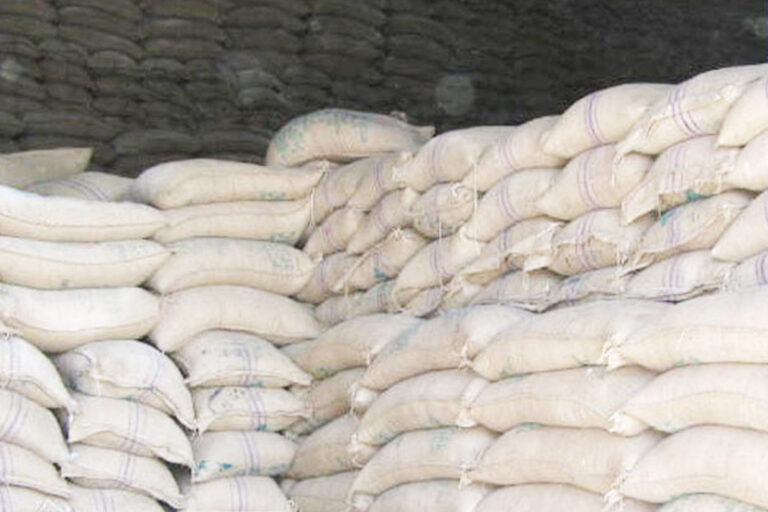
Despite the Sugar Industry Group being expected to grab one of the offers from the recently closed sweat bid, the corporation has annulled the bid and switched it up to another round restricted bid in order to obtain a lower price point for the commodity.
Prior to this, it was signaled that the Industry Group had managed the recent bid swiftly and even was able to get a better rate compared with the previous unsuccessful and lengthy patterned regular bidding processes.
However, the Industry Group wasn’t content with the offer tabled and as sources explain, it wanted a lower price point for the commodity.
On the recent restricted international tender for ‘plantation white sugarcane’ that attracted about seven companies including four new comers, opened the financial document of four companies, who qualified for the technical evaluation. Despite being new to the Ethiopia bidding process, the US company, Osirius Group offered a competitive rate for the 200,000 metric tons of Brazilian sugar.
However, the corporation has disclosed early this week that it canceled the bidding process on the aim of better option as it said for bidders via the cancelation letter.
The latest information Capital secured from the Sugar Industry Group indicated that it has refloated another round of restricted tender for selected companies that have shown their interest in the past to supply the basic commodity for Ethiopian households.
According to the information, the latest tender that was issued on Thursday June 2, the Industry Group demands to buy 200, 000 metric tons of the sweat and the bid will be opened in the second week of June.
Regularly the corporation is engaged on importing the product at competitive bid to fill the market gap that could not be attained by local production.
As far as the budget year that will come to an end in five weeks time is concerned, it will not see the Industry Group buying the product despite floating the bid on multiple occasions.
The latest move of India, which is the second supplier of sugar after Brazil, to limit its export until the coming production season is expressed by experts to have a ripple effect on the price increase in the product.
The country annually imports up to 350,000 metric tons of sugar to address the gap. For the budget year SC targeted to produce 413,000 metric tons.
Sugar Industry Group said that in the budget year the corporation planned to supply about 720,000 metric tons of sugar for consumption.
The sugar demand has been growing from time to time and it is estimated that the country’s annual sugar demand stands at 1.2 million metric tons. Thus the remaining gap is covered by other importers who have special permit from the government and those who have franco-valuta privileges.
Stiff cement prices dries out builders’ pockets
Contractors and builders shed light on heavy concerns which has forced them to access cement at twice its rate, with the doubling price not even being accounted for by a receipt. As the matter keeps on loosing grip, they have requested government to intervene.
Contractors who are involved in different sized projects explained that they are engaged on building the backbone of the economy yet they face the hurdle of accessing cement as per the required market rate.
“We are forced to access the resource with double rate from distributors,” they explained their claim to Capital.
“As per the current status, we are forced to pay about 520 birr per quintal with receipt but there is also an additional similar payment without legal receipt to secure the product,” contractors and builders alike said, adding, “in total we are paying about 1,100 per quintal which has become difficult for us to give narrations or audits of our actual cost because half of the payment does not have legal document.”
Currently, the legal price of cement is about 500 per quintal as per the rate that the government disclosed but actually at the market the price is double. Some middlemen that Capital communicated with affirmed that that is true. The middlemen further explained that the factories do sell at the standard rates; however, there lie individuals who have cracked the code. Staff who have links with the marketing and distribution have twisted the access for their benefit, hacking the system and as a result have reaped the benefits of selling twice the original amount.
A builder who currently has different ongoing projects said that since there is no alternative, he has been forced to buy the product by over a thousand birr, “if we tried to argued with the distributors to sale the product as per the expected price we will not get the product at all. Thus we are forced to pay the amount that distributers demand,” he said, adding, “Otherwise our projects will be halted.”
Builders and contractors asked the government to change the scheme at least for the short term, if controlling the market has proven hard in the long haul.
“We demand the government to facilitate direct access for projects as per its actual demand,” they claimed.
“We don’t want to get cement over our actual demand due to that the government shall evaluate project statuses and the actual cement they need to run their activities, and as per the evaluation it should create conditions for projects to access the cement from factories,” they said.
“Or it should consider their costs which they pay for distributers to get the product,” they added.
Meanwhile, the government disclosed that it has taken several measures regarding cement distribution and the retail market the price. However things on ground seem different.
Despite the production being stated to be lesser than the market demand, experts who follow the sector claimed that the product is available in the market but the price is highly inflated.
Experts argued that the so called distributors are the major reason for the market cruelty, “it should not be difficult for the government to control such illegal acts.”
“We are undertaking projects that are vital for the country and the economy to which the government should directly support, otherwise on this trend project costs are extravagated that directly have effect on the economy,” they added.
Mid this week, Oromia region disclosed that to curb the cement price hike in the market and to cut the illegal market chain it has organized 300 distribution associations which have duly started their activity.
NBE cracks whip on notorious Somali town

The new measure that the National Bank of Ethiopian (NBE) has introduced in bank branches at the border town of Somali region is said to cut off the emerging illegal trade that surrogates the luggage based business activity from Dubai.
It is to be recalled that the government imposed customs duty for frequent travelers, who are mostly business people who travel to UAE’s business hub, Dubai, to use the alternative that government wavered a tariff for, on some basic commodities and house wares about five years ago.
Capital sources that have close information about the situation said that since then the trade route has changed its course making Tog Wajaale, 700 km south east of Addis Ababa in Somali region at the border of Somaliland, the destination through Hargeisa.
As per the observation of travelers Capital spoke to, the trend at the Ethiopian Airlines fleet from Jigjiga, 628 km south east of Addis Ababa, have changed and the cargo loaded from Somali region’s capital, has shown sudden increment.
While on Thursday June 2, the financial sector regulatory body notified banks that as of the stated date bank branches located at Tog Wajaale faced a downgrade to the sub branch level, which is a step down from a full-fledged branch.
A bank president that Capital spoke to with regards to NBE’s new decision said that it means that branches there would serve the community on the basis of cash withdrawal and saving.
“Transferring money to or from Tog Wajaale has been suspended as per the new sub branch level,” they explained.
They added that the new decision mainly targets to curb the illegal transaction and erode the parallel market. Experts said that Tog Wajaale is one of the illegal foreign currency fleet hubs, while bank branches there have played some role.
“Now banks would be discouraged to do only retail banking service, while besides the transfer forex activity will not be allowed for sub branches,” one of the senior bank experts told Capital.
NBE has also disclosed that the new decision was applied since it understood that branches at border towns are having rising cases in the illegal transfer.
Experts said that new decision will hopefully cut the new trade hub. They explained that the new decision would make it difficult to settle payments for smugglers, who manage to transport commodities that come from Dubai to Somaliland through border areas.
However, they have also insisted that the role of customs officers to be investigated at both airports in Jigjiga and Addis Ababa, since they might be linked in the smuggling of goods to the centre.
Bankers have also agreed that the illegal activity will be curbed on the latest measure taken by NBE.
After the move the black market in the area dramatically decreased. The price of dollar decreased by a staggering 12 birr to be sold around 70 birr from the previous 82 birr before the move.
According to the NBE branch opening directive, sub branches shall not execute international banking or trade finance, and processing loan and advances services.
Experts said that almost all banks have branches at the town.
