

Ethiopian Women’s football national team Coach Ferew H/Gebreal has called 23 players to camp to begin preparations for the coming 2022 CECAFA Women’s zonal championship to be held in Uganda.
Since preparation time for the tourney is much shorter, the newly appointed boss who led Ethiopian U-20 Women side to first ever CECAFA champion and steered his side to Women’s World Cup qualification final knockout stage Ferew kicked off his campaign as of last Monday at Ethiopian Youth Academy.
Reigning champions Ethiopia NegedBank throwing in the biggest number of players (7) along with first ever international Losa Aberra and veteran playmaker Bertukan G/Kristos. Six players from Mekelakeya, three from Hawassa, two each from Adama and Addis Ababa, one each from Electric, Diredawa and Bole Sub City, a total of 23 players reported to camp.
Goalkeepers: Tarikua Bergena (Bank), Ymewedesh Girma (Adama), Betelehem Yohannes (Addis Ababa)
Defenders: Betlehem Bekele (Mekelakeya), Bezuayehu Tadelle and Asabe Moso (Bank), Kidist Zeleke (Hawassa), Nardos Getnet (Adama), Bereke Amare Diredawa)
Midfielders: Nebone Yen (Electric), Embet Addisu (Bank),Genet Hailu, Maeden Sahelu & Mesay Temesgen (Mekelakeya), Bertukan G/Kristos(Bank)
Forwards: Redeat Asresahne (Hawasa), Aregash Kalsa (Bank), Loza Abera( BANK), Rehima Zergaw (Mekelakeya), Senaf Wakuma (Mekelakeya) Aryat Odong (Addis Ababa) Turist Lemma (Hawasa) Negeset Bekele( Bole Sub city).
Group (A) Hosts Uganda, Burundi, Rwanda, Djibouti
Group (B) Ethiopia, Tanzania, South Sudan
Ethiopian Lucy kicks-off preparation for CECAFA Women Zonal Championship
Gebremedin Haile booted out of Sidama bunna
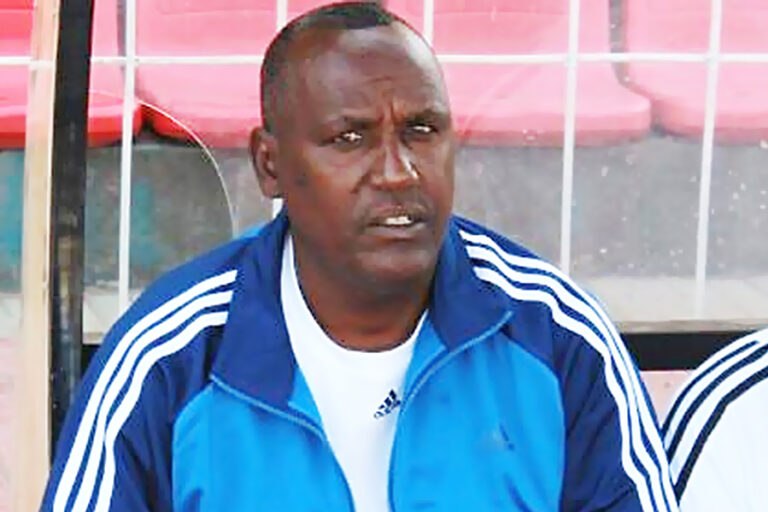
Sidama Bunna handed Ethiopian premier league former twice champion Gebremdin Haile a shocking boot from the back following the teams third consecutive defeat including the 5-3 by Mekelakeya.
A slow start at the beginning of the new season, Gebremedin managed to build a humble side that swam through the tough times to finish third in the table behind St George and Wolayta Dicha at the end of the first round.
But following the shocking second round performance from which Sidama won only two of its eight consecutive matches, the club handed Gebremedin a marching order after no more than one full year service.
Same 1-0 defeats at the hand of league leaders St George and defending champions Fasil Ketema followed by the hard to believe 5-3 loss to Mekelakeya, Gebremedin left the club unceremoniously handing over the reign to his assistant Wondemagne Teshome.
The only coach to win two premier league titles with Jimma AbaJifar and Mekele Ketema and two knock out trophies with Mekelakeya, Gebremedin was one of the most wandering premier league coaches bossing more than eight teams in15 years.
Though he boasts two premier league titles and two knockout cups a shining armoires for the former St George and Ethiopian national team player turned coach, Gebremedin’s stay at Guna Trade, NegedBank, Ethiopia Medin, Ethiopia Bunna and Dedebit considered failures for he walked out of most of the clubs before his contract expired.
Digital Earth Africa to deliver robust data infrastructure for the continent
Digital Earth Africa is steadfastly becoming the “connecting-the-dots” part of Africa’s efforts to harness information resources for the society and knowledge-led economy, says Oliver Chinganya, Director, Africa Centre for Statistics at the Economic Commission for Africa (ECA).
“The Programme has started paving a new way to build a robust data infrastructure that can help us have a better understanding of our changing landscape and provide insights that can enable African governments, NGOs, businesses, and individuals to make more informed decisions,” said Chinganya.
The ECA director who is also a Board Member of Digital Earth Africa was speaking at a side event on Digital Earth Africa: Earth observations for sustainability in Africa organized by the African Centre for Statistics division of ECA and Digital Earth Africa on the margins of the Economic Commission for Africa’s annual Conference of Ministers of Finance, Economic Planning and Development (CoM2022) in Dakar, Senegal.
The objective of the side event is to showcase the development of Digital Earth Africa as a unique information resource for sustainable development across Africa and to explain how Digital Earth Africa is being applied in areas such as national statistics, agriculture and water resources.
Chinganya noted that ECA will continue to use its convening power to foster the dialogue with member States, African sciences and research institutions, existing networks and programmes, as well as other sectors to increase awareness in space science and technology insights for economic growth and social development. The Commission remains engaged to promote and support the Digital Earth Africa vision, goals and anticipated activities for the benefit of our continent.
Lisa Hall, managing director Digital Earth Africa Establishment Team said the goal of Digital Earth Africa is to deliver an exceptional fit-for-purpose platform of Earth observation satellite imagery into information and insights on the changing African landscape and coastline, which will open new data frontiers for tracking progress towards the Sustainable Development Goals.
“Digital Earth Africa catalogues changes across Africa in unprecedented detail and provides spatially enabled data on a vast number of issues, including soil and coastal erosion, agriculture, forest and desert development, water quality and changes to human settlements,” said Hall.
Zviko Mudamu, Head of Operations, Digital Earth Africa said, Digital earth Africa is helping provide the data required which was already a gap before with the various partnerships we engaged with the various governments in Africa.
“Digital Earth is empowering communities with access to satellite information; communities have been empowered and are sharing their impact stories such as conservation of mangroves in Zanzibar, roaming of giraffes at Lake Baringo in Kenya,” said Mudamu
Health reforms are key to economic recovery in Africa
Amadou Hott, Senegalese Minister of Finance says Africa had to go through the COVID-19 crisis to realise the importance of investing in strong health systems and pharmaceutical companies that can produce medicines locally. He was speaking during a round table discussion on, “the Future of health and Economic Resiliency” at the ECA Conference of Ministers (CoM2022) in Dakar, Senegal.
Mr. Hott said that the Senegalese President, Macky Sall, had made implementation of strong health reforms a top priority, allocating 200 billion FCFA to tangible reforms. The first phase involved coming up with health guidelines under four pillars: the governance to bring about paradigm shift; a business-oriented model which is result based; improved renumeration; complete digitalization of the system and an efficient pharmaceutical value chain that is guided by a pharmaceutical regulatory agency.
The planning phase was followed by concrete measures that included: mobilizing 10% of health expenditure from the private sector; hiring more and better qualified health personnel; investing in pharmaceutical companies to producing medicines locally and overhauling the whole health infrastructure that dates from independence.
Algerian minister of pharmaceutical industry, Lotfi Benbahmed, said his country has put in place health regulations to ensure that all drugs are produced locally. “We are advocating to buy medicines produced in Africa and when there is a health crisis, we can have easy access to drugs. One of the reasons we have no vaccine for Malaria is because we are not able to produce the vaccine in Africa. We have made great strides, now three out of four drugs are manufactured locally, and this generates revenue and prevents losing local health expertise that tend to go and work abroad when there are no employment opportunities”.
The State Minister of Planning, Ministry of Finance and Planning of Uganda, Amos Lugoolobi said “We also must address the question of how best to help the under-privileged population to have access to proper health systems”.
“Africa has a young population that we can turn into riches, but this also means since the population is young, we must invest into a significant young rate of human capital in education and health. In Uganda the biggest government budget is human capital. This leads to challenges such as malaria, we need to come together to eradicate malaria. Africa needs to invest more on prevention, which will help Africa. We need to put in place right fiscal strategy in tax collection and monitoring to generate resources. This is the way forward and we can learn from Egypt and other Africa countries who have started improving their tax systems”, she added.
Amadiou Dialllo from Africa Solidarity Fund spoke about funding of health project in Africa and the link between health and economic growth. “66 billion dollars is needed for health funding in Africa, we need to catalyze private funds to ensure that our countries have ownership of private and public health enterprises, and these efforts should be part of economic growth and health creation”.
The United Nations perspective was given by UNAIDS Executive Director, Winnie Byanyima. She informed the meeting that twenty years ago the Abuja declaration promised to put 20% of their budget in heath and improve health facilities. Unfortunately, little progress has been made and the crisis has forced the continental to face reality and the impact of lack of action on the poor segment of the population who are forced to pay for health care.
The event concluded with a call for youth employment in the health sector. Achaleke Christian Leke, Executive Director for Local Youth Corner in Cameroon, whose organisation produced hand sanitizers and masks from prisons during the COVID-19 pandemic, said “Over 100 000 hand sensitizers were distributed for free during the crisis to the government, youth should be the answer to Africa’s rising need for innovative health solutions”.
The session brought together a panel of eight including Ministers of Health, pharmaceutical experts, the UNAIDS and Youth entrepreneurs to discuss post-covid19 health strategies and share best practices from countries that are already implementing tangible health reforms that are already changing the economic spectrum of their respective countries.
