

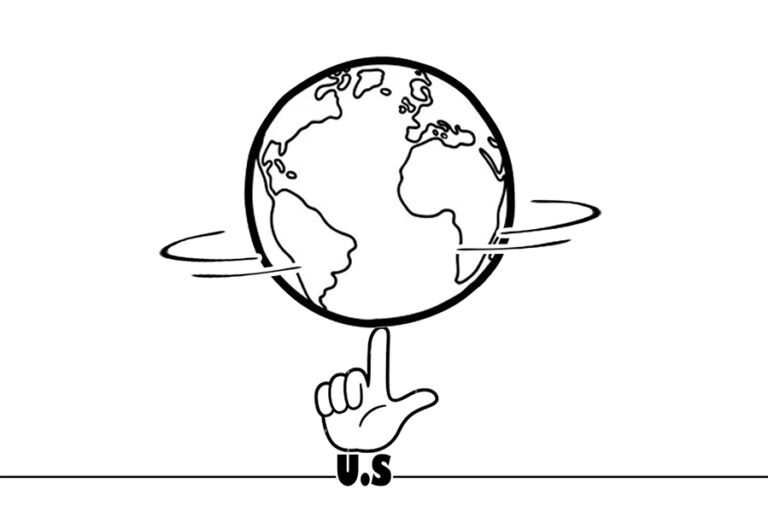
Enduring leadership cannot flourish if entrusted only to one particular agency; political party, parochial group, (ethnic or otherwise) class, etc. The classical state organs, comprising of the legislature, executive and judiciary are no longer functioning well, anywhere! This is primarily due to the dominance of transnational capital in global social existence. The dominance of international/monopoly capital has rendered western democracy a mere tool to its accumulation agenda operating at the global scale! As a result, the multiparty system of the west lost its critical function, namely, the potential to bring about policy change, economic or otherwise, to entrenched programs. The manifestation of this dominant global regime (transnational capital) in the political systems of countries in the peripheries/semi-peripheries has now taken a strange protracted twist!
Governments in the peripheries or semi-peripheries willing to facilitate private accumulation are clearly supported by the dominant global regime. Any government unwilling to obey this commandment of capital is bound to be destabilized, even removed from power (regime change). This is the basic foundation of the prevailing global political economy. In light of all the various problems countries in the peripheries/semi-peripheries are facing, there is a need to reexamine their critical institutions with a view to replacing them with more enduring peoples’ institutions, so that there will be no room for flippant political parties (at the service of transnational capital) bent on undermining the sheeple’s (human mass) basic and lasting interests/welfare! Like everywhere in the world, the state organs in Africa are also classically/formally constituted, nonetheless, these are now proving increasingly inadequate, particularly in keeping the peace, because of their shortcomings in the critical areas of economic and political governance.
We believe the time has come to seriously interrogate the traditional state-government structure/system vis-à-vis arising problems, particularly in the context of diverse and diversely oriented humanity. It seems there is a need to establish credible leadership whose core values are independently institutionalized, outside the ambit of the ever-changing governments (not necessarily the state). In this regard, we might need to strengthen the institution of the ‘state’. The state, besides its traditional organs, might be appended with such new institutions as ‘council of elders’ or ‘council of conscience’ or ‘Council of the wise’, etc., (but not the usual ‘council of state,’ of the mostly ‘socialist’ genre). Its constitution, its members (numbers, types, etc.), its election/appointment/selection, etc. are issues that need to be hammered out by the people in their subsequent and transparent deliberations facilitated by activist intellectuals, civil society organizations, etc. Nevertheless, its core functions can be broadly outlined. For instance, it has to serve as a mediator between elected governments and the people. Besides doing what the current ‘head of state’ is obligated to do (in the Ethiopian case) it has to also oversee the various ombudsman (including one for the media) along with the anti-corruption authority/movement. Otherwise, how is one to regulate the proper functioning of the various executive organs if the anti-corruption agency itself is reporting to the executive or even to the legislature? Aspects of the judiciary, like the ‘court of cassation’, must also be under this entity. In a situation where the ruling party directly controls both the legislature and the executive and indirectly the judiciary, governance can easily be cartelized!
It is imperative that we look for useable and practical solutions that will help us solve our concrete and potential problems rather than blindly and rigidly adhere to established but hardly effective institutions of classic state structures. In our case, as mentioned above, we believe the existing set up of the ‘institution of head of state’ is not adequate, as it assigns mostly a ceremonial role to the post, as a one man/person operation, to say nothing about the very system of election. When a single party dominates the parliament, chooses the president and is also the executive, to say nothing about its undue influence on the judiciary, the tendency is not to listen to outside voices, including the sheeples’! Such a state is a democracy only in name while it functions as a totalitarian one! To some extent, this is also what prevails in the USA. The two parties dominate all state functions. There is hardly any other political entity that is allowed to present alternative views to the American sheeple. Since the two parties represent capital and certainly not the people/labor, they are only two sides of the same species. In these countries, it is usually less than 50% of the electorates that actually votes. Even here meaningful change is necessary. Just look how frightened the ‘deep state’ has become, due to the emergence of a candidate that is not vetted by it!
Deep inside, the sheeple (in the rich countries) has concluded that a large majority of the professional politicos are seeking offices only to benefit themselves, at its expense. When such perception reaches a certain critical level, democracy becomes only a tool for politicos to secure parasitic interests. On the other hand, simmering frustration of the dormant sheeple can suddenly erupt and morph into insurrections.
ESTABLISHING ENDURING STATE LEADERSHIP
Tele applies for license to dish out loans
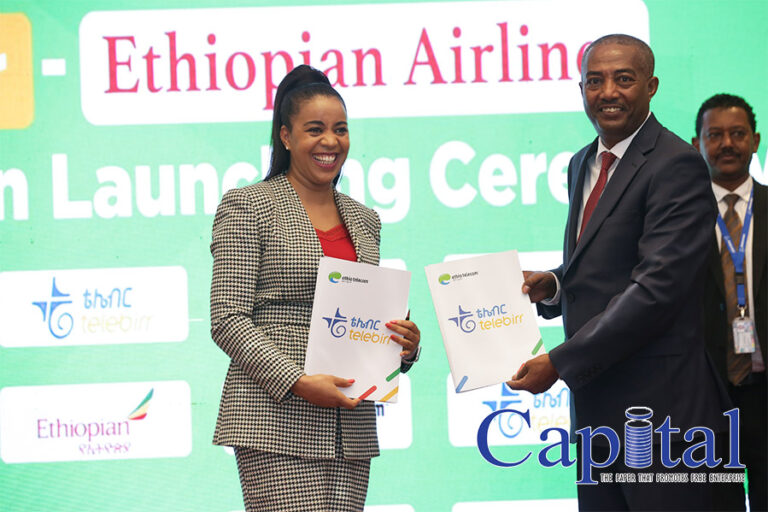
Ethio telecom applies for a license to the National Bank of Ethiopia to start giving loans and saving services through telebirr as part of expanding its digital financial service.
“We are working to strength the digital economy in order to enable citizens to have an easy system whilst promoting financial inclusion,” said Firehiwot Tamiru, CEO of Ethio telecom. The CEO indicated that Ethio telecom is waiting the permit which is said to be issue soon.
To ensure the existence of various online payment options, on Wednesday April 20, 2022, the telecommunications firm signed an agreement with Ethiopian airlines on domestic flights ticket online purchasing system through telebirr.
“E-money service is playing a pivotal role in fostering the digital economy that the nation aspires to achieve along with improving our community’s digital payment system experience and in modernizing the existing customary cash transactions of institutions’ payment systems,” expressed Firehiwot.
Chief Commercial Officer of Ethiopian Airlines, Lemma Yadecha, who signed the agreement on behalf of the airline, said that the airline had challenges making transactions of over 30,000 birr round trip. He said now it has become possible to make direct sales for the stated amount.
The payment system integration agreement signed between the two government enterprises and the major revenue earners for the Ethiopian government would enable the Ethiopian Airlines’ passengers to have access to flight ticket online purchasing service at any time and everywhere using telebirr.
With few days left to mark its one year anniversary, following its launch in May 2021, telebirr has been able to garner a customer base of 17.6 million.
Through the year over 12.58-billion-birr local money transfer or transaction has been undertaken; while over half a million USD (528.4 thousand dollars) financial transfer has been made via telebirr from 34 countries in cooperation with eight international telebirr remittance partners with in only 5 months.
Telebirr now has 353 shops and through 80 master agents, 64,000 agents and over 16 thousand merchants service rendering partners and is also integrated with 12 commercial banks to render financial transfer service via the platform.
So far, over 52 institutions including traffic penalty payments, have integrated their services with telebirr to operate their businesses online, collect monthly bills and provide a number of online services to their customers. Furthermore, Ethio Telecom has already made the necessary preparations to integrate telebirr payment system with more than 20 governmental and non-governmental organizations and will soon officially launch the service accordingly.
“Enabling various business transaction payments ranging from making payments for small transaction to transferring large amount of money via telebirr, has significantly contributed to the adoption of digital payment system,” remarked the firm’s CEO in recent settings.
Bamboo shelters proposed to refurbish Lalibela churches
Lalibela projects led by Agence Française de Développement /AFD/ propose bamboo made shelters for the Lalibela rock-hewn churches to replace the old metal shelters set by UNESCO.
The eleven rock-hewn churches in Lalibela, which has been designated a UNESCO World Heritage site in 1978 have existed for almost a millennium. The United Nations, Educational, Scientific and Cultural Organization /UNESCO/ lead an effort in 2008 with help from the European Union to launch the project and built the industrial shelters which covered and protected several of the churches at risk.
Despite four protective shelters being erected over five of the rock-hewn churches with the aim to protect them from weathering, in particular water infiltration from the roofs; this project, have encountered several problems with its design and construction, and has caused controversy among the local community. Similarly, questions about the success of the project have been raised from time to time.
“Defining a sustainable solution for the protection of a World heritage site such as Lalibela required a very deep multi-disciplinary feasibility study. The results of the diagnosis showed the necessity to cover not only the churches but also the courtyards. Thus, it is necessary to remove the metal shelter,” said Feven Tewolde, Lalibela Project Manager, adding that a canopy option was selected as most conducive.
According to the project’s feasibility study, this option consists covering the churches and their courtyards with continuous structure resembling a light organic bamboo covered with waterproof membrane or canvas.
“Given the ownership of the project to the local community both construction and maintenance of the project will involve local resource and labor,” said Feven.
As Feven elaborates, although three alternative shelters have been proposed, UNESCO has been informed of this possibility on its 44th annual meeting held in July 2021, to which the organization has given its agreements in principle while requesting a detailed architectural design with heritage impact assessments, environmental and social impacts assessments including the final design.
Currently, the project is working to hire a company to do these various assessments, and is expecting to present the results on the 2023 UNESCO annual meeting. The conservation work is expected to start after the approval of UNESCO.
Initially presented as temporary, the metal shelters which have been a matter of concern to the World Heritage Committee since the project’s introduction in 2006, now represent a challenging issue affecting the churches and community of Lalibela.
Many residents and religious leaders of Lalibela town have complained repeatedly that the metal rods are causing immense damage to the ancient world heritage sites.
In 2018 UNESCO has also sent its advisory mission to Lalibela and stressed the necessity to remove the shelters after the necessary conservation works to the churches are carried out
In 2019, Ethiopia, under the initiative of Prime Minister Abiy Ahmed, requested support from the French authorities in the management of Ethiopian national heritage, and especially on the site of the churches in Lalibela, to which the French rose to the call.
President Emmanuel Macron of France in his first official trip to Ethiopia on March 2019 met Prime Minister Abiy Ahmed in Lalibela, and expressed support for PM Abiy’s ambitious reforms and diplomatic peace efforts during the Prime Minister’s Paris visit last October. To this end, the French president promised France would help Ethiopia restore the UNESCO registered heritages of Lalibela churches. A bilateral project aiming to conserve, restore and enhance the touristic experience was born.
The first stage of the project was the performance of a feasibility study which was set to define the most appropriate solution for the long-term conservation of the churches. This also include the restoration of the cracks and damages and to that end a training will be given to local craftsmen and Ethiopian heritage specialists, so that the country will be in the capacity to continue restoring alone the site. The project also incorporates urgent restoration and exhibition activities. The exhibition was set to first be presented in the Lalibela cultural center and then moved to Addis Ababa before finally becoming a traveling international exhibition.
Cut directly from the volcanic rock of the area, the churches have attracted foreign attention. Recently, new attention is being given to the churches in an attempt to save them from deterioration that threatens both the structural integrity of the buildings and the priceless artwork inside.
Inflation peaks a third higher than previous March

According to the Ethiopian Statistics Service’s monthly inflation data for March 2022, the general inflation has seen highs of 34.7 percent when compared to a similar period of last year.
During the month under evaluation, prices have been on a sharp rise and according to the report there has been a slight increase in the price of vegetables.
Teff, wheat, maize, beans, peas, shrimp and lentils and sorghum showed price increase in most cases, as, milk, cheese and eggs, and spices (mainly salt and pepper) cooking oil and butter slightly increased in the current month. In addition coffee beans and non-alcoholic beverages prices have also increased continuously.
On the other hand, the non-food index inflation in March 2022 has shown an increase of 23.5 percent. The rise in non-food inflation was mainly due to rise in the prices of alcohol and tobacco, stimulants (chat), clothing and footwear, housing repair and maintenance (house rent, cement and corrugated iron sheets), and energy (firewood and charcoal), furniture and home furnishings, fuel, medical care and jewelry (gold).
According to the report, the February 2022 country level CPI has increased by 34.7 percent as compared to March 2022.
The country level food inflation increased by 43.4 percent as compared to the one observed a year ago while non-food inflation rate increased by 23.5 percent in March 2022 as compared to the one observed in March 2021.
The total inflation in March 2022 stood 4.0 percent higher than in February 2022, while the Food index increased by 4.3 percentage points. At the same time, non-food inflation Increased by 3.4 percentage points.
Economists say a shortage of products, containers, rising shipping costs, the Western-led war in Ukraine and Russia, and subsequent rising oil prices, as well as food shortages for wheat and oil, are exacerbating global and domestic food prices.
