

Exporters claim that the country is losing big on hard currency that can be generated from exporting commodity through the transferable letter of credit (LC) scheme.
On the flipside, experts in the banking system argue that a strong capacity and proper due diligence plays a vital role when exposing the Ethiopian market to such a scheme.
Exporters that Capital spoke to regarding the matter explained that they indeed have trading partner like buyers and suppliers of commodities mainly agriculture commodities. However, they are not able to facilitate the trading because the financial system of the country does not allow for a transferable LC in financial its scheme.
Addisu Alemayehu, a prominent researcher and market expert on species, herbs and related agricultural commodities and export, explained that he once got the opportunity to export commodity to India from other African countries. However, he could not capitalize on the opportunity because of the system in the country.
“One of my customers in India requested me to supply a pulse and spice, while ample supply of the two products was very limited in Ethiopia, I used my well established network that I got because of my role on the sector for the past several decades which led me to get the products in Tanzania and west Africa. My customer from India was happy to get the products through my channel but I wasn’t able to facilitate the product because transferable LC is not permitted in Ethiopia,” Addisu explained his experiences on the issue that has hindered his business endeavor.
“If I were able to facilitate the trading both I and the country would stand the chance to get at the bare minimum a dollar per kg from exporting the two commodities. However that has not come to pass,” Addisu, who is also founder and board secretary of the Ethiopian Spices, Aromatic and Herbs Growers and Processors Association (ESAHGPA) told Capital.
“I was trying to communicate with the regulatory body at the National Bank of Ethiopia, but the short response I got from them is that a transferable LC is not allowed in Ethiopia,” he added.
Experts agreed that the country should opt for new dimensions to expand the export trade and earnings. They said that sometimes foreign buyers that have long established trade relations with Ethiopian exporters simply demand to get more commodities through their channel which presents quite the stretch when the commodity may not necessarily be produced in Ethiopia and or instances when the product shortage is seen locally.
Experts explained that through the transferable LC scheme, exporters facilitate the consignment from their partners in other African countries that are mainly new for the commodities which Ethiopia exports for years to foreign buyers in other parts of the world.
On the scheme, Ethiopian traders open LC for the commodity holder in other African country and the commodity receivers in the other part of the world shall open LC for Ethiopian customers. As per the process, the Ethiopian trader settle the payment for the African partner and he or she directly exports the commodity for instance in India and the final buyer or importer settles the whole agreed payment to the Ethiopian trader when the shipment arrives at the set destination.
“It is common in other countries where the emerging economies are using the scheme to boost their commerce,” experts said.
“In Ethiopia we may communicate with exporters in Singapore, Dubai or other major trading hubs for import of commodities that these countries are not actually producing. We may finalize the trading at Dubai but the commodity shipment may be in other Asian countries or ports in different corridors in the world, but when it come for Ethiopian traders this is not allowed,” experts said while justifying the need for opening up the scheme to the Ethiopian market.
Experts in the financial sector like Dereje Zebebne, President of Zemen Bank, appreciated the concept as he indicated how the country stands the chance to benefit from the scheme in term of hard currency generation and acceleration in financial transactions. On the flipside though, the banking sector guru also warned that the scheme might offer bad consequences.
He explained that knowing both supplier and importer very well is the pillar on such an approach.
Dereje explained that trust and long-established partnership is crucial whilst doing business in this manner but more than that prudent analysis and study on commodity receivers that may have cost, is mandatory.
“On my view pure due diligence is a must to make money and generate foreign currency on transferable LC, the scheme in itself is a highly risky business,” Dereje told Capital.
The banking expert believes that it shall be workable but insisted that trust of counterparts and the background for the supplier and importer are a basic foundational piece to complete the jig-saw puzzle of a successful scheme.
He said that the trading partner here must have tangible and trusted documents like financial capability, reputation, and reliability in terms of settling payments for the commodity buyer, which is crucial. “But the regulatory body is the right authority to explain the reason why it is not allowed for Ethiopia,” he said pushing the case to NBE to evaluate the situation.
Dereje reminded that on the import side, banks in Ethiopia are opening LC for importers on similar approach, “intermediaries let’s say that are based in Dubai know the suppliers or manufacturers very well.”
Exporters push to reap untapped benefits of transferable LC
Gov’t takes stern measure on foreign currency confiscation

Experts push for leniency and consideration
Confiscating foreign currencies from individuals ought to have significant weight that also considers the circumstances of the holders, experts opine.
The government is taking various measures on confiscating foreign currencies without taking to full account of conditions from those who hold and face the ensuing legal consequences for having the foreign notes.
A letter issued by the Minister of Justice (MoJ) and later sent to the Economic Crimes Affairs Attorney General Directorate at MoJ, a few weeks ago, has been easing the process allowing the law enforcement apparatus to just confiscate foreign currency that is worth USD 100 and below. It added that criminal charges against those who hold said foreign currency, with the stated amount and below face being held in for further questioning.
However, legal experts are expressing their concern signaling that government may not benefit from this enforcement. The experts opine that it would be best to line alternatives ways to mitigate illegal currency circulation and put in place instruments to identify which ones are acquired illegally and currency that is flowing through a regular or lawful manner.
According to legal expert, Daniel Getnent, this understanding is backed by the human element that, ‘Money benefits the holders rather than the government.’ “These types of measures expand the illegal activity rather than individuals going to legal transaction centers. To this regard, confiscating does not benefit the government,” Daniel said whilst elaborating on the matter.
He recommended that government ought to introduce a legal exchange market to formalize the scheme as opposed to tightening the controlling, “that I believe only expand crimes on the sector,” Daniel underlined.
He added that the latest decision also allows security personnel to be involved in corruption since it allows for the confiscation of money from individuals pockets without charge.
“Compromising the situation and undertaking detailed studies to introduce a new scheme to improve the sector is vital on the aim to expand the hard currency flow to the legal system,” Daniel expounded.
The latest decision of the law enforcement body regarding confiscating foreign currency without charge has led voices to pouring out their suggestion to government, hoping that the system will be considerate of the circumstances of the individuals in possession of the foreign currency.
A business man who has frequent travels abroad told Capital that from his observation at Bole International Airport, porters who support travelers are tipped for their service in foreign currency, “In the case that security forces come cross them on the way home, their money will be automatically confiscated, which is not fair,” the business man expressed whilst sharing a case scenario.
“Does that mean that they stand to face criminal charges if the money is more than USD 100?” he asked, puzzled by the severity of the matter.
Dereje Zebene, President of Zemen Bank, to this end explained that under the National Bank of Ethiopia directive ‘establishment and operation of foreign currency saving account for residents of Ethiopia, non-resident Ethiopia and non-resident of Ethiopian origin directive no. FXD/68/2020’ which was issued about two years ago, gives every Ethiopian a right to open a foreign currency saving account if she or he shall have the required document for the source of the foreign currency.
Experts said that an individual who may return from overseas trip with some cash or get a gift form loved ones shall open a foreign currency account with not less than USD 50 and deposit their foreign currency money legally.
“Say, if a certain man is strolling to the bank to change or deposit his foreign currency and is stopped amid trip by the police and charged for the possession of foreign currency, he stands the chance of losing his money’s worth, when confiscated and charged. This kind of issues must be answered by the law enforcement body than the case being opened for abuse. Questions ought to be asked and considered, such as how the foreign currency was obtained, before jumping to confiscate the currency,” Dereje underlined while showing various circumstances that may occur that often require the law to be considerate of the issues and condition.
Japan embassy shares post war economy bounce back
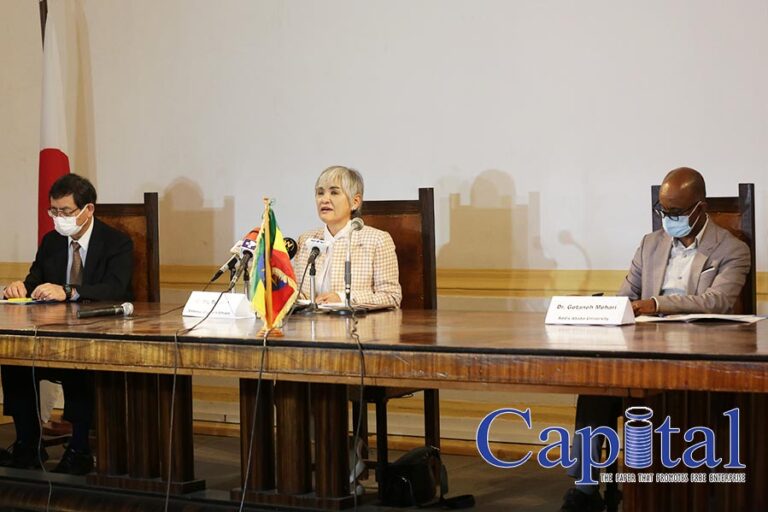
The Japanese embassy to Ethiopia in collaboration with Japan International Corporation Agency (JICA) shares a postwar economy recovery alongside their development goal and high growth approach with Ethiopia.
The event which had sensational bounce back strategies was held in the premises of Addis Ababa University 6kilo campus on 19, 2022 with the attendance of Amb. Ito Takako, JICA staffs, members of the African Union Commission, lecturers of AAU and students.
In her opening remark Amb. Ito Takako explained that Japan is ready to share its experience with Ethiopia and will continue assisting the latter to achieve growth and prosperity.
Presenting a lecture entitled ‘Japan’s Postwar Recovery and High Growth 1946-1970’, Prof. Kenichi Ohno from Japanese National Graduate Institute for Policy Studies (GRIPS) said that, Ethiopia can draw important lessons from Japan to meet development goals and record economic recovery after the pressing times.


Sustainable energy proves pivotal for poultry farming
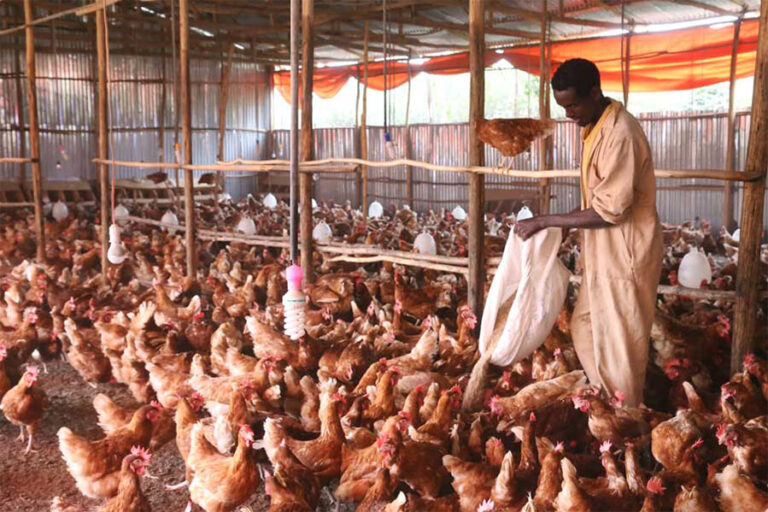
New study reveals lack of sustainable energy as the major challenge to smallholder poultry farming which accounts to almost all of the chicken production in Ethiopia.
The report conducted by Precise Consults Ethiopia Market Accelerator Programme (EMA), Selco Foundation, and Selco Foundations initiative Global SDG 7 Hubs, under the theme, ‘empowering smallholder poultry production through renewable energy: challenges and the way forward’ identified and presented three critical energy-related challenges that obstruct the overall poultry welfare and productivity of smallholder farmers in Ethiopia.
The first to be noted was the ineffective incubation process, caused by an inconsistent supply of electricity, which causes the DOC supply to decrease, making some smallholder farmers idle for up to 7 months. The second was poor lighting and heating in poultry sheds during brooding, also caused by lack of electricity. This has caused low productivity in smallholders’ poultry products as it directly affects feed intake, growth, and meat yield. The lack of cold chain storage is another crucial energy-related challenge that affects vaccine effectiveness, leading to the high mortality of chickens. This has also affected smallholder farmers’ ability to regulate their chicken meat supply as they cannot store slaughtered meat.
The assessment which focused on small-scale intensive farmers or backyard poultry farmers stated that renewable and off-grid source of energy as alternative solutions which will go a long way to reducing the sector challenge.
“Implementing renewable energy solutions in the poultry value chain enables smallholder farmers to address their challenges in accessing high-quality day old chicks and vaccines and helps them acquire better yields of meat and eggs,” the report explained.
“Solar appliances can help poultry farmers overcome these critical challenges and increase efficiency and productivity. Solar incubators increase egg productivity and ensure a better hatchability rate by minimizing the side effects of unreliable power supply,” the report said.
It added that providing adequate solar lighting can improve feed intake at night and maximize egg production in layer chickens, “moreover, providing sufficient heat in poultry sheds decreases chick mortality.”
According to the report, it improves feed conversion rate by encouraging growing chickens to use consumed feed to gain weight instead of maintaining a constant body temperature.
The report also identified that solar refrigerators can be used to ensure vaccine effectiveness and unlock the potential of engaging in value-adding processing activities for smallholder farmers.
It revealed that based on the assessment, solar energy interventions that can have a high impact on smallholder poultry farmers include solar egg incubators, solar lighting and heating systems for brooding, and solar cold storage systems to ensure the quality of inputs and poultry products.
Regarding access to the solution and the technology the assessment stated that there are challenges.
The report explained solar companies in Ethiopia have been partnering with microfinance institutions to provide loans to end-users to make solar home systems affordable to the farmers. However, the high collateral requirements to acquire the loans and the short repayment periods are challenges these farmers face. Poultry farmers also face challenges accessing loans to purchase the inputs needed to sustain their farms.
Small scale poultry farmers comprise about 97 percent of the poultry producers in Ethiopia, where rearing poultry provides a source of income and ensures food and job security for these farmers. Also, the regional states of Oromia, Amhara, SNNP, and Tigray account for 96 percent of the chicken population in Ethiopia.
