

The AGRF, Africa’s premier forum for food and agriculture, has launched its 12th annual summit under the theme ‘Grow, Nourish and Reward – Bold Actions for Resilient Food Systems’ to be held in Kigali Rwanda from September 5 to 9, 2022.
This year’s summit will call for accelerated action by leaders, innovators, businesses, private institutions, civil society, and development agencies to put forward bold actions and unite efforts towards the continental food security agenda
Recognizing the urgency to deliver on the Malabo commitments and the sustainable development goals (SDGs), the AGRF 2022 summit will spotlight the ongoing efforts and country-led actions that can be scaled up towards food systems that deliver for the people, planet, and prosperity.
The Summit will mobilize private and public investments, innovations, and country-based solutions and celebrate initiatives that are actionable and scalable initiatives in delivering food systems transformation.
Hailemariam Dessalegn, the former Prime Minister of Ethiopia and the AGRF Chair said that while African leaders have shown commitment to support food systems transformation, collective action will be needed to accelerate progress and real change.
AGRF 2022 Summit to be held in Rwanda
AfDB approves health infrastructure strategy
The Board of Directors of the African Development Bank Group has approved its Strategy for Quality Health Infrastructure in Africa 2022-2030, a first for the Bank. The strategy was developed in response to a call by the Bank’s Governors for the institution to define its role in addressing Africa’s health infrastructure deficits, highlighted by the ongoing pandemic.
The strategy focuses on three categories of health infrastructure that match the African Development Bank’s comparative advantage, providing the flexibility to respond to the diverse needs of the Bank’s African member countries. It will be anchored in national health systems and sets out three cross-cutting themes: improved internet and communications technology connectivity, to strengthen health information systems and support innovation; promoting regional collaboration and harmonizing health policies and regulation; and policy dialogue and technical assistance.
“We must give hope to the poor and the vulnerable, by ensuring that every African, regardless of their income level, gets access to quality health care, as well as health insurance and social protection,” Bank President Akinwumi A. Adesina commented.
INTERNATIONAL WOMAN’S DAY IN ETHIOPIA: ‘BREAKING THE BIAS’ OR ‘RESTORING RECOGNITION’
Various Woman’s Day celebrations appeared in Austria, Denmark, Germany, Switzerland, UK and USA in the early 1900’s with keen focus on the Suffrage Movement. Stalwarts such as Emmeline Pankhurst, mother of historian Richard Pankhurst, was amongst other forerunners, who was inspired by her experience as an art student. During her 1904-06 time at the Royal College of Art, she “witnessed gender inequality in the art profession” which set fire to the fledgling artist who would use her artistic skills to create logos, posters and other ephemera promoting the message of the movement. The United Nations recognized March 8th officially in 1977 and an annual theme is circulated for public/private sectors and the general public to commemorate through programs, art exhibitions, films, and special events for both the day and month of March.
The IWD theme for 2022 is ” ‘breaking the bias’ … working towards a world free of stereotypes and discrimination that is diverse, equitable and inclusive.” What does this year’s theme mean for African women based on history and current affairs? In the pre-colonial era African women, such as Ethiopia’s Queen Saba and Angola’s Nzingah, enjoyed roles as monarchs, healers, warriors and more. “Equitable and inclusive” was the order of the day. Fast forward to the 21st century, equitable inclusivity “free of stereotypes” are proffered with little regard or interrogation into the colonial infrastructure, established to maintain misogynistic capitalist systems which impact African women immensely. As with this and other international days, should Africans jump blindly on the bandwagon or use it as a platform to present agendas expressing African women’s concerns, in the case of IWD.
Just days before this significant celebration of women worldwide, the double standards set for women of European and African ancestry has been flaunted in the face of the world. Main Stream Media (MSM) rears its ugly head, AGAIN, reporting on Ukraine and the Russian military invasion in the most insulting and devaluing manner to Africans. While Ukrainian women and children were shepherded to safety from bombs and bullets, African women and children were denied access to safe transportation, bomb shelters and border crossings. MSM described these “civilized Europeans…blonde haired and blue eyed (women) and children being killed…” whilst emphasizing “…this is Europe, not like Africa…”. Is the message because conflicts are the norm in Africa, African women and children need not be provided for? Radio silence from women’s groups is deafening. An ambiguous note from Ms. E. Tendayi Achiume, UN Expert with UN Human Office of the High Commissioner released on March 3rd sums up her sentiments and sends a coded message that she does not speak for the UN. “…I have joined other independent experts to call attention specifically to the discriminatory treatment of people of African Descent and others.” That’s it!
No surprise here as the UN, Europe and other allies have treated Ethiopia ‘stereotypically’ with little to no value for the countless lives of women and children lost over the past 16 months. Self-determination, (kugichalia in Swahili) however, led Ethiopian women to rule, fight and serve this nation from time immemorial to present, proudly. A recent homage to the Ethiopian woman and her role in the production of wealth was realized in the approximately 10 meter-high brass statue gracing the entrance of the 49 story Commercial Bank building. Designed by well-known Professor/Artist Bekele Mekonnen, administered by Curator Mifta Zeleke (with a team of numerous artist) the statue, “Habt kaleh besimai menged alle” loosely translated in English, “If you are rich, there is a road in sky…” was unveiled. According to Prof. Bekele, “The statue represents the truth of a society, where the woman is the center of the family… they not only produce but manage…through proper use of reproduction, the constitution of wealth is realized. The woman ready to fly is standing on the point of a diamond which speaks to the (piercing) pain women go through…while the preciousness of a woman is aesthetically portrayed with aerodynamics seen in her clothing and hair flying in the wind.” He goes on to say, “…reproducing positively is not encouraged…poverty is romanticized, though we should not abuse wealth.” The latter was a significant point in Prof. Bekele’s answer to my question, what was the message of this statue to and about women and girls.
Frankly, as Ethiopia incorporates art into public spaces, serious consideration must be given to themes, messages and imagery, especially in regard to how women are depicted. Though art is subjective and this and other statues will feed debates on a range of related topics, priority should be given to women in art. This means supporting Ethiopian women, their aspirations and agendas; integrating their visions of identity, values and systems held dear. This goes beyond mercantile interests, focusing on family, community and country development; security, health and legal rights from land ownership to other forms of wealth. IWD 2022 should be promoted in Ethiopian with a clear consciousness towards recognition of our rich history, current roles and future positions in important decision-making seats across sectors.
Dr. Desta Meghoo is a Jamaican born
Creative Consultant, Curator and cultural promoter based in Ethiopia since 2005. She also serves as Liaison to the AU for the Ghana based, Diaspora African Forum.
LABOR MIGRATION HARMONIZATION
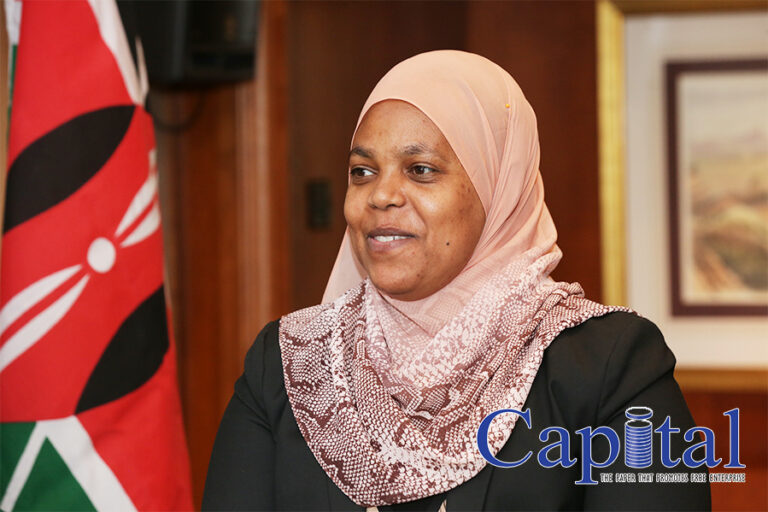
As Ethiopia takes over the Chairmanship of the Ministerial Forum on Harmonizing Labor Migration Policies in East and Horn of Africa from Kenya, Capital reached out to the Ethiopian Labor and Skills Minister Muferihat Kamil for an inside view on ways of enhancing governance of labor migration in the region as well as what to expect in Ethiopia’s tenure as chair of the forum. Excerpts;
Capital: What does the Regional Ministerial Forum on Migration for East and Horn of Africa do?
Muferihat Kamil: Two years ago, 11 countries from the horn of Africa established the ‘Ministerial Forum on Migration for East and Horn of Africa’ in Nairobi, Kenya in January 2020 with the solid aim to protect people or migrants flowing from this region to the other parts of the world. Moreover the forum was formed to harmonize labor migration policies in east and horn of Africa as well as to Participating states agreed to collaborate to strengthen labor migration governance in the east and horn of Africa region by establishing a platform for experience sharing, consultation on issues, dialogue, and the review and implementation of recommendations. The forum has since then promoted regional common approaches and social dialogues in the formulation and implementation of evidence-based, human rights and gender-sensitive harmonized labor migration policies.
For the last two and half years, Kenya was leading the forum and now Ethiopia has been selected and will lead the forum for the next two years. We have already started discussions on what has been done for the past two years, and we have also looked ahead on what ought to be done in future. In doing so, we have been identifying sensitive issues that need necessary solutions. Moreover, we have looked into avenues where Ethiopia can play a role to improve the lives of migrants, protect their rights as well as aid in the strengthening of their working capacity based on the demand of the migrants from these member countries.
Capital: With Ethiopia being selected to chair the forum, how is the country set to benefit from the selection?
Muferihat Kamil: Ethiopia as a nation is working to improve and create skilled and semi-skilled labor. We are working to solve challenges in the sector by engaging with different stake holders regional and inter regional organization as well as assessing experiences of countries to change the sector. Thus being given this chair position presents us with an array of benefits. We will be able to effectively solve challenges and strengthen our capacity through the experience that we are able to draw from the various countries. Moreover, we will benefit greatly in laying solid foundations for partnerships and coordination between governments thus we will play a crucial role in bilateral and regional efforts to tackle issues of mutual interests.
Capital: How has Ethiopia’s participation been like for the last two years in the forum?
Muferihat Kamil: Ethiopia has been participating in the forum actively since its establishment. However, the past few years owing to the effect of the pandemic, our normal plans were derailed in terms of planned activities. Nonetheless, as a country within the forum we worked on major key issues despite the challenges posed by COVID-19.
Capital: What benefit does the forum present with regards to improving the issue related to labor migration in the region?
Muferihat Kamil: The forum promotes regional common approaches and social dialogue in the formulation and implementation of evidence-based, human rights and gender-sensitive harmonized labor migration policies. It thus supports member states and regional economic communities to develop, adopt and implement bilateral and multilateral labor migration agreements.
Within the region it also promotes for a common African policy response to implement existing legal and policy frameworks. It achieves this through formulating new policy responses where protection gaps have been identified and further involves multilateral stakeholders and development partners to protect the human, social, economic and labor rights of African migrant workers in countries of origin, transit and countries of destination.
Another upside of the forum is that it establishes or reinforces existing labor market information systems within Africa to identify labor market needs for migrant workers and in doing so strengthens the capacity of labor market institutions on labor migration.
Furthermore, the forum serves as a platform to push governments to support the overall strengthening of social security and welfare institutions in member states in order to extend social security to migrant workers, promoting in particular the mainstreaming of gender and disability issues, induced mental health and psychosocial issues through access and portability regimes compatible with international standards and good practice.
Capital: What effort is the government of Ethiopia doing with regards to oversees labor migration?
Muferihat Kamil: Ethiopians who are interested in overseas employment has shown a steady growth, and this increasing labor migration has been mostly to the Middle East and Gulf Cooperation Council countries.
Due to unemployment and labor surplus in the country as well as the interest of the youth to work abroad, the Ethiopian government is making an effort to diversify sectors and countries for Ethiopian migrant workers, including skilled and semi-skilled workers as building a labor force with stronger skills will open up more opportunities for potential migrants wanting to work oversees.
Thus the government has continually identified key initiatives to determine the skill profiles, gaps and surpluses. Moreover it has keenly looked into skills development initiatives that can be framed and improved to better meet labor market demand and economic opportunity in Ethiopia and key destination countries.
Accordingly, the more skilled (semi and highly skilled) Ethiopian migrant workers, the more opportunity and competitive they will become, and get jobs in diversified sectors and occupation. Additionally, diversification of potential market on one hand, and improving the employability of Ethiopian workers through enhancing technical and vocational skills on the other will have a positive outcome not just for fostering regular migration, but also to enhance access to decent employment whilst sustaining the demand and supply of the Ethiopian labor market.
Overall, when we have a great labor migration we stand to benefit the most as this will automatically lead to increase in remittance which goes a long way in supporting the economy.
Capital: Are there any identified areas that need improvement in the future?
Muferihat kamil: We are continuously trying to improve labor migration governance so as to protect migrant workers and combat irregular migration.
Moreover, identifying skills gaps and surpluses locally, with a view to making policy recommendations to avoid migration-induced skills shortages are part of the improvement plans since it is mandatory for the oversee labor demand market.
We also want to better examine evolving labor-market dynamics in order to best provide projections of the demand for low-, medium-skilled and skilled migrant workers in selected major labor-receiving countries by sector and qualification level, taking into consideration changes in priority sectors, in the destination countries.
In Ethiopia annually 1.5 million people participate in short trainings and around 500,000 people are trained in TVETs. And to this end, we can improve in areas that fall under modernizing institutions, and developing capacity of teachers.
Capital: Since the ministerial office is relatively new, how has your activities been like for the last six months?
Muferihat Kamil: For the last six month we have been conducting our day to day activities as well as organizing our office. We have also looked into various assessments and areas that we need to put more emphasis on. For example there are certain issues which need to be reformed such as oversees labor migration which need to be technology based in order to gain accuracy and efficiency.
Capital: How are you organizing information to know the number of Ethiopian working force overseas?
Muferihat Kamil: Currently, we are preparing information regarding labor for both Ethiopians working oversees and foreigners working in Ethiopia through a system called ‘Labor Market Information System’ /LMIS/. This system will help us to know how many people are working oversees, in addition to further information such as their destination and their respective jobs which will help greatly in organizing our data.
