

Throughout the history of human collectives, political leadership, almost invariably, was predicated on raw power. All embracing humanity, as an objective, was hardly the substance of leadership relying on raw power. Common sense, integrity, justice, empathy, humility, etc. did not feature prominently in the psyche of raw power operators. As a corollary; all empires, without exception, displayed aggression towards less fortunate nations and peoples. The current declining empire is no different. Here we are talking about the empire with capital E, i.e., the USA! Another axiom; all empires ultimately decline. Coherence or the lack of it, is one of the symptoms of a fast declining empire. The petty bickering and embarrassingly clownish demeanor of the political leadership within the prevailing hegemon testify to its accelerating demise! Another feature of a declining empire is denial. No wonder the honchos of empire have become quite oblivious to the sea of change that is taking place in the world system!
On the other hand, ascending countries dismantling the old order know, almost always, where the declining empire’s raw power lie. In the current context, the reserve currency status (petrodollar) of the US dollar is one such formidable strength. If that privileged is withdrawn, due to multifarious challenges posed by ascending collectives, the raw power of the reigning empire will diminish, literally speaking! In this regard, China and Russia along with countries like Iran are cautiously but meticulously rearranging with a view to dismantling the prevailing world order. Amongst the top Chinese political leadership, capitalism is not considered an end on its own, but only a means to achieve socialism or a king of social democracy. In the words of the Chinese leader, Xi; ‘China should study contemporary capitalism, its essence and patters, but Marxism should remain the guiding light.’ To many, not only a simpleton, this might sound a bit perplexing. The fact that today’s China is the biggest capitalist economy in the world (PPP) doesn’t change the fact that its ultimate objective is to create an equitable and harmonious state, with or without capitalism. China, a country that employed capitalist methods to propel itself to the apex of the world system, still considers itself a novice when it comes to understanding capitalism. That says a lot about the general attitude of its political leadership. Respect for knowledge cements perennial modesty. Pomposity cannot and will not convey wisdom, as its shallow glaring remains unsubstantiated. Africa’s learned/credentialed elites should take note! ‘Only modesty groomed and cultivated with deep knowledge can come to our rescue! “Forty years of reform and opening up has made it possible for our people to lead decent, even comfortable lives. It’s my conviction that the great rejuvenation of the Chinese nation will become a reality.’ Xi remarked.
Another historic fact that should be recognized when discussing emerging global leadership is; Russia is too solid a country to intimidate, let alone dismantle. The boisterous shallow thinking that permeates political engagements in the west, particularly in regards to Russia, is misleading. As the rest of humanity becomes increasingly aware of the machinations of the ‘deep state’, exodus from the camp of the downtrodden is accelerating. For instance, the quagmire in the Middle East that is/was intentionally created by the deep state of the west is now unraveling. The Russians (directly) and the Chinese (indirectly) are making sure unbridled chaos won’t become the reigning order of the region. Even the oil kingdoms are gradually realizing their callously destructive ambitions are not going to help anyone. Turkey is now squarely against NATO’s policy towards Russia and China; another key country shifting alliances. Emerging multipolar geopolitics has grown teeth!
On the other hand, western approach to continents like Africa remains the same. NATO, after destroying Libya, is eying control of other nations’ resources. The neighboring countries of Mali, Niger, Chad, et al, have, amongst other things, uranium, gold and oil. France, Germany and of course the US, are increasing their military presence in the region, using all kinds of pretexts. AFRICOM (the African Command of the US military) is set up to secure the continent’s natural resources for the western world, thereby restricting or even denying resource access to other emerging powers. The consent of the large majority of these countries’ inhabitants is not to be considered, at least not seriously. That is why many are calling this new western offensive as ‘Scramble for Africa-Round II (Julius Nyerere). At the same time, China, who is flexing its muscle on the continent, prefer the old ‘give and take’ approach, which seems to work, at least for the time being. One way or the other, the continuous intransigence of empire, coupled with its military arrogance, will not be without costs! Djibouti is already swarming with ‘boots’ from western countries. China has also made its military foray to the continent via Djibouti. This is bound to spell trouble in the region. Unfortunately, the continent’s incompetent politicos, advised by learned useless/useful idiots, are bound to make Africa’s situation worse than it already is!
It is clear where potential global leadership is heading. It is certainly not towards the direction of the old powers, like the US, UK, France, etc. On their part, these countries are desperately trying to bring back what has already been lost! Their weapon of choice, yet again, is violence and more violence. Compromise with foresight, is not a strategy pursued by their political establishments.
LEADERSHIP IN TRANSITION

Monthly inflation shows slight decrease

Month on month general inflation rate in January 2022 caps at 34.5 percent showing slight decrease from 35.1 percent in December, the Central Statistics Service reveals.
According to the monthly inflation rate report of the statisticians, the month on month food inflation rate for January 2022 decreased by 1.7 percentage points in comparison to the preceding month, however, during the similar period, the non-food inflation rate increased by 0.7 percent.
On similar trends, the ‘12 months Moving Average Inflation rate’ at country level rose by 28.1 percent in January 2022 when compared to a similar period of a year back. The country level food inflation increased by 33.1 percent as compared to last year similar period while the country level non-food inflation rate increased by 21.5 percent. Most of the components of the food index showed increase as compared to a similar period of last year.
Likewise January 2022 General year-on-year inflation has increased by 34.5 percent when viewed against January 2021. The year-on-year food inflation to that regard has peaked at 39.9 percent.
In the current month, cereals and vegetables in addition to teff, wheat, barely, maize and sorghum have shown a decline in most cases. However, meat, milk, cheese, eggs, and spices (mainly salt and pepper) have slightly increased in the current month. Cooking oil and butter prices similarly have shown increase.
Additionally, coffee beans and non-alcoholic beverages prices have also increased consistently.
When looking into non-food inflation, an increase of 27.3 percent in January 2022 has been seen. The rise in non-food Inflation is mainly due to rise in the prices of alcohol, tobacco, stimulants (chat), clothing and footwear, housing repair and maintenance (House rent, cement and corrugated iron sheets). Also adding to the weight on the list is the rise in price of energy (firewood and charcoal), furniture and home furnishings, fuel, medical care and jewelry (gold).
The month-on-month general Consumer Price Index (CPI) for January 2022 has showed a slight increase of 1.2 percentage points while the food item CPI in complementary trend showed increase by 0.8 percentage points as compared to the preceding month of December 2021. In similar fashion a 1.6 percent increase has been note for non-food CPI showed for the same period.
The monthly inflation rate measures the price change between the two latest months. Although up to date, it can be affected by seasonal and other short term effects.
Trade policy deemed crucial in up scaling local, international commerce
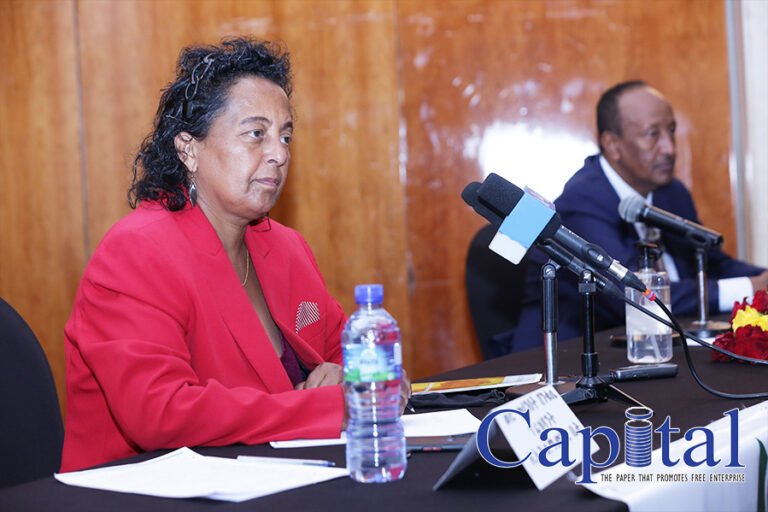
Crafting a trade policy has been underlined as a crucial move to augment Ethiopia’s trade and export.
During the discussion that Addis Ababa Chamber of Commerce and Sectoral Association (AACCSA) held with regards to the export sector, Shibeshi Bettemariam, Acting Secretary General of AACCSA, on his inception presentation expressed his hope that the new incoming policy will bring change for trade in general and for export in particular.
Shibeshi said that lack of similar policy was one of the major reasons for the stagnation of Ethiopia’s export in terms of earning and diversification. Challenges like low production, productivity and low value addition, limited quality and standards of export goods, and lack of comprehensive trade policy were stated as the Achilles’ heel of the export sector.
For the 8 year period of 2010/11-2018/19, the import and export of Ethiopia’s goods and services had grown by 4.3 percent and 10.46 percent respectively.
He said that the trade balance has consistently been negative, with average deficit per year standing at USD 10.6 billion. Of these, the peak was USD 13.8 billion in 2015/16, while imports have been more than double the exports in almost all years.
Figures that were included on the study conducted by the chamber indicated that in the last ten years the export trade contributed on average only 5.5 percent of the GDP, which is razor thin when compared to other countries.
“At the same time the import trade contribution for the GDP is 23.3 percent on average which shows the largest gap between export and import,” the Acting Sec. Gen remarked.
He added that compared to regional economies such as Tanzania, Uganda, Rwanda and Kenya, Ethiopia’s export performance as a percentage of GDP was the lowest, implying our economy has been classified as relatively closed.
“The country is joining continental and international free trade areas but because of productivity and efficiency at the current status we can’t compete with other countries around the region,” he said, adding, “the gap on the private sector must be identified and solved.”
He emphasized that the private sector is the pride of the country and the flag carrier in the global market competition rather than the government, thus it is wise to keenly focus on export development through the private sector.
“To attain the required growth, a trade policy is crucial,” Shibeshi said.
According to the expert, who is an economist by profession and an investor, trade policies are a necessity, and even seat atop of the international relations agenda for countries that even have trade policy negotiators that specialize on market intelligence and statistics, in addition to lawyers in diplomatic missions. He emphasizes that as a country, we ought to emulate the same.
Ethiopia export’s puzzling challenge is one that is seen to be solved through structural arrangement and policy.
The agricultural productivity is crucial to expand the expected growth since the ecosystem of the country is a good advantage followed by agricultural processing.
Trade logistics improvements in the areas of technology like the telecom infrastructure are crucial to conduct frequent and speedy communication. Allocating efficiently the earned foreign currency through administrative measure has also been stated as a supportive measure that will expand export.
The trade policy that is currently under drafting stage is the main pillar for the export sector.
The new policy will center different government directions and policy contents that are related with trade and export.
“Currently trade and trade related issues are included under industrialization policy, different five year development plans, and other policies that shall be governed independently and proactively through structural manner in the new trade policy,” he added.
Shibeshi reminded that there were efforts to expand the export commodity diversification, though they could not materialize as per the expectation because of different reasons. He gave an example of the failure in the pharmaceutical sector which faced the market challenge and access to finance. However in the past over a decade up to three sectors like horticulture products, and textile and garment have diversified the composition of Ethiopian export.
Export facilitation services are stated as crucial and are to be largely included on the trade policy similar to other countries. Export trade results have been in flux since 2011 to which the trajectory showed some improvements in 2020 and in the last budget year.
The government through Ministry of Trade and Regional Integration is responding to disappointing results in both local and international commerce by drafting its first trade policy.
The policy will evaluate everything from scratch and indicate the end goal of the commercial sector and will show the actors and contributors in commerce.
Crafting the policy started in 2019 and has taken much time to which experts said that it has faced delays since the policy work ought to include international experts’ view thus having wider validations.
Besides the export trade, in the local market hording, smuggling, overstating price increases, and uncontrollable and lack of adequate supply in terms of goods and services have been major problems over the past several years. The Ministry has attempted to come up with solutions by imposing laws and controlling mechanisms to smash illegality and or supply products on its own but things have not improved.
Green Tech joins Ethiopia’s electric car space

Green Tech Ethiopia introduces six models of imported rechargeable solar and electric powered cars with the aim to promote renewable energy in the country.
“Our company is established with the aim to promote renewable energy in our society by providing new renewable energy technologies and services including different types of affordable electric and solar cars,” said Fitsum Deresa, Managing Director of Green Tech Ethiopia.
The company imported the cars from Chinese car manufacturer Dongfeng Motor Corporation and has plans to establish a car assembly factory in the near future.
“From the six different electric car models so far 70 have arrived in Addis Ababa while additional 200 cars have reached Djibouti port,” Fitsum explained. The company also plans to import 5000 electric cars within the coming 5 years and is also planning to delve in to the transportation industry through its “green transport initiative service.”
Similarly, in order to support the middle and low income societies and promote entrepreneurship in the country, the company has facilitated a 40/60 electric car sale package to its potential customers.
“The financing scheme will help all our potential customers to secure automobiles enabling them to create income streams for themselves and their families in the process” stated the green company. To this end, Green Tech is working with Africa Village micro finance and other banks.
As the managing director indicated, 60 percent of the payment will be covered by customers and Green Tech will cover the remaining 40 percent. Customers can pay 30% of their 60% ownership which is only 18 percent of the total price to purchase their cars and the remaining 70% payment will be down paid as per the directives of the agreement.
Of course the energy cost that powers the cars is a huge point in getting one of these auto mobiles. For instance the solar charged electric cars can travel 60-120 kilometers. The 4 seater automobiles have a 26kWh capacity and with full charge can be driven to a distance of 200km with only 9.10 birr while that of the minibus can be driven to a distance of 360km once its 80kWh battery is fully charged with only 28 birr. With the price of gas being sold at 31 birr per liter, this is definitely worth the interest of any prospective buyer. Similarly, the cars also present a minimum maintenance cost which is very beneficial to its future owners.
Of benefit to Green Tech is that the green movement is very much needed in Ethiopia. In fact the government has a resilient vision that encourages the use of electric vehicles to help reduce pollution caused by transportation services through introducing renewable energy transport services.
Green Tech Ethiopia now becomes the second firm to officially enter the electric cars market in the country after Marathon Motors.
