

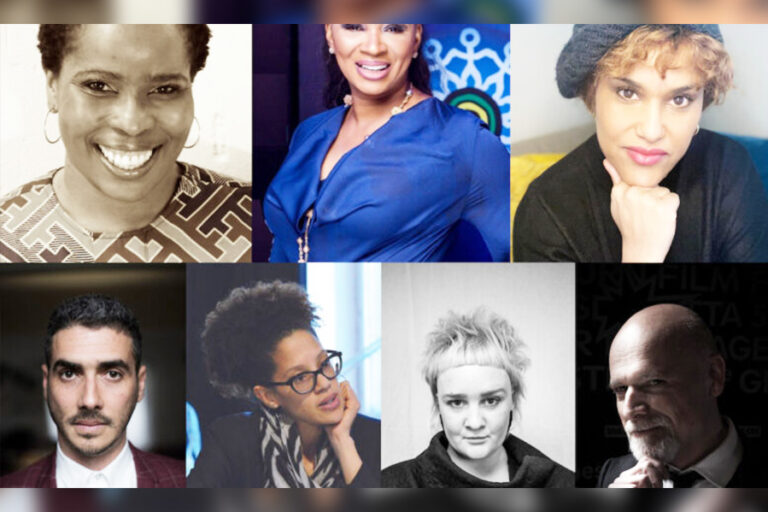
Six African filmmakers will have a once-in-a-lifetime opportunity to develop their fiction film story ideas and work-in-progress scripts in a three-month residency that includes attending film industry programmes in three countries in the 2022 edition of the Realness African Screenwriters’ Residency.
Now in its 7th year, the residency takes place from 3 August to 13 November, and is open to any African on the continent or living in the Diaspora.
This year’s exciting news is that the Realness Institute has partnered with the Locarno Filmmakers’ Academy (Switzerland) so that these filmmakers can attend the Locarno Film Festival, and the Academy’s creative incubation programme “BaseCamp”. In addition, one of the selected six will also attend the Academy, the festival’s industry development programme.
Following this, the cohort will spend 6 weeks at the tranquil and nurturing Nirox and Farmhouse 58 in The Cradle of Humankind, in South Africa, where they will be mentored by Story Consultants Selina Ukwuoma and Mmabatho Kau and Creative Producer, at Urucu Media, Cait Pansegrouw. Elias Ribeiro, Executive Director of the Realness Institute, will accompany the group to the Locarno Film Festival and Mehret Mandefro, Director of Development and Partnerships at the Realness Institute, will accompany the cohort to the Africa International Film Festival (AFRIFF).
From 7 to 13 November they will attend AFRIFF, in Lagos, Nigeria. Here they will have the chance to attend the festival to take meetings and present their projects to an audience of potential stakeholders. The Realness team will develop and present a two-day programme, dedicated to development, during AFRIFF’s Industry event.
Head of Locarno Filmmakers’ Academy and Project Manager for BaseCamp, Stefano Knuchel says, “After five years of an inspiring and fruitful collaboration between Realness and the Locarno Film Festival, by selecting every year one Realness talent for our prestigious Filmmakers Academy, we’re happy to deepen our exchanges by welcoming all the Realness participants in our new creative initiative called BaseCamp. The BaseCamp is a unique space in the context of film festivals, where 200 young talents from very different creative fields and from all over the world gather in a huge ex-military headquarters during the Locarno Film Festival to enjoy privileged access to the content of the Festival and also to create an utopian space, where they give shape to different forms of creations. An innovative concept that allows the experimentation of new languages and new hybrid forms of creation.”
“Africa has been at the forefront of storytelling from the very beginning. We are passionate about telling our authentic stories. It is important to script our stories well for the global audience hence the partnership with the Realness Institute,” says Chioma Ude, Founder and Executive Director of AFRIFF.
Finally, the most promising projects will be awarded participation in the prestigious La Fabrique des Cinémas du Monde in Cannes, receive an EAVE Producers’ Workshop partial Scholarship, invitation to TorinoFilmLab Meetings Event and Locarno Filmmakers Academy.
“We are thankful to our old partners and excited to welcome our new. Nigeria is an exciting market we have long been interested in entering so it’s wonderful that our writers will get a chance to showcase their projects at AFRIFF,” says Mehret Mandefro, Director of Development and Partnerships for the Realness Institute
Online submissions are now open for this intensive programme that is offered by the Realness Institute, the South African-based NPO that aims to develop African stories created by Africans for a global film market.
The programme is open to anyone who has a valid African passport. Full application criteria and how to apply can be found on the Realness Institute’s website: https://www.realness.institute/realness-residency
The highly regarded programme is presented in partnership with Urucu Media, Nirox Foundation, Farmhouse 58, AFRIFF, the French Institute of South Africa and Institute Français’ La Fabrique des Cinémas du Monde, TorinoFilmLab, Locarno Filmmakers’ Academy, Cocoon, CNC, EAVE, IFFR Pro, IEFTA , Berlinale Talents and Area51.
Deadline for submissions is 7 March 2022.
Opportunity for African Filmmakers to develop scripts in South Africa, Nigeria and Switzerland
Rise of M-Commerce in Africa

There has been a shift from desktop to mobile as Africa embraces the m-commerce shopping experience. Smollan, retail specialist, unpacks what m-commerce means to the African retail market and what retailers need to do to stay relevant and benefit from this movement.
In these quick-connection times, Africa’s mobile economy is on the move as shoppers dial in to multi-functionality, convenience, affordability, super apps, digital wallets, instant accessibility, and services that changes lives as m-commerce platforms a new era. The transactional power shifting from desktops to smartphones and tablets allows mobile commerce to become part of an on-the-move lifestyle for consumers and gives retailers real time access to user information allowing them to reach their audience anytime, anywhere.
A recent European Investment Bank (EIB) article paints the picture pointing out how it took 128 years to bring landline phones to one billion people. Then, in 20 years six billion people bought mobile phones – including those in regions previously cut off from any means of communication. Swinging the pendulum that doesn’t just serve the purpose of keeping in touch, creates a completely new financial landscape.
Global research documents the rise of m-commerce, with mobile bringing in 46% of the sector’s revenue, compared to 25% from desktop and 9% from tablets and the global m-commerce market predicted to rise at a considerable rate between 2021 and 2026 [Market Watch, Dec 2021]. With the release of new phone technology, including 5G, this mobile-obsessed market is getting to grips with the feeding frenzy. Shopifyplus shared some interesting #whattheactual survey results in 2021 – highlighting the fact that the average person taps their mobile phone once every 10 minutes; one in five people would rather go without shoes for a week than take a break from their phone, and people reporting withdrawal symptoms – including increased blood pressure and heart rate – when separated from their phones.
Closer to home as we turn the corner after a smothering past two years, it’s time to tell a different story of Africa, as expansion and innovation is put on the pedestal it deserves affording new and existing players to improve market penetration across the retailing African landscape. TechCrunch published a 2021 GSMA Intelligence Report observing that across sub-Saharan Africa, 303 million people, about 28% of the population, are connected to the mobile internet and that this number is expected to rise to 40% in the next three years. The proof is in the pudding, as Jumia reported 30% growth in the value of goods sold on its platform during Black Friday last year.
Writing for BizCommunity, Christele Chokossa a research consultant at Euromonitor observes that the influx of entry-level smartphones and lowering data bundle prices has created room for a mobile app culture in sub-Saharan Africa, and subsequently m-commerce services. The trend also benefits from the diversification of leading telecommunication companies, with mobile money making its way from physical stores to online platforms backed by over 500 million users across the continent.
“The adoption of m-commerce services will be accelerated by the modernisation of payment systems as it facilities transactions with the overwhelming number of unbanked populations, overcoming payment and safety challenges. A noticeable example can be taken for the launch of the e-naira in Nigeria in 2021, and the implementation of the Rapid Payment Programme (RPP) in South Africa. Both offer an efficient digital solution across income groups,” said Christele.
The question is, how can African retailers successfully penetrate the m-commerce economy to reap the rewards and grow their business? A research article by Richard Pankomera and Darelle van Greunen from the Nelson Mandela Metropolitan University (PE), report that besides technical, social, and financial barriers in Africa that m-commerce can bring production, transformation, and incremental benefits to the user. The study revealed that key adoption factors must be top of mind as retailers both formally and informally, find their m-commerce fit in Africa. From a tech aspect to awareness campaigns, ease of use, affordability, perceived security and trust, access to financial services, regulatory support and the availability of mobile money and application services.
Retailers who want to ride this wave for a sustainable future need to understand that in Africa a one-size fits all solution cannot work with EIB suggesting that three key areas must be mindfully addressed. Positioning content by taking local cultures and languages into account. Affordability by pricing services in line with local conditions and accessibility and reaching all consumers regardless of their device or internet access.
While Africa faces some challenges around using m-commerce efficiently, iTouch online reporting on South African mobilisation, true for the rest of Africa suggests there are two practices to remember to improve mobile sales and uplift brands, namely, the fewer clicks the better and a consistent brand experience. Retailers and brand owners need solid, well-planned, and well-executed e-commerce offerings. Websites have to be easy to navigate with products that are appropriately categorised and priced. Consumers should only have to click three times to find exactly what they are looking for. Because of the omnichannel approach retailers and brand owners must create a consistent brand experience for consumers – that means that, whether your customers are on Twitter, on a specific App, Facebook or Instagram, the spirit of the customer experience should be the same.
M-commerce is not the next big thing – it’s already in full swing. Retailers need to stay relevant and pivot or risk being swallowed
What States Can Do to Protect African Culture & National Sovereignty:
7 Key Questions for African States to ask the EU
By Dr Seyoum Antonios
If African States pose the following questions to the European Commission, the EU’s answers (or their refusal to answer) will reveal the EU’s cultural imperialistic, sexual, social, ideological and abortion agendas for Africa.
Article 36.2 of the EU-ACP Agreement requires African states to implement “sexual and reproductive health and rights” (SRHR). The EU in a June 22 resolution titled “On the situation of sexual and reproductive health and rights in the EU” defined SRHR to encompass, sexuality education, sexual orientation and gender identity (SOGI).
Question 1: Does the EU consider the SRHR reference in Article 36.2 of the Agreement to encompass LGBT rights or rights related to abortion or comprehensive sexuality education for African children? If not, how can this be clarified in the treaty?
The term “human rights” appears over 100 times in the EU-ACP Agreement including a reference obligating African States in Article 65.5 to “protect human rights defenders acting at national, regional and continental level.”
Question 2: Will any of the references to “human rights” or the reference to “human rights defenders” be interpreted by the EU to obligate African States to advance LGBT rights of any kind or to protect the work of LGBT or abortion rights campaigners or “defenders” to advance LGBT rights currently outlawed in many African states?
The EU-ACP Agreement requires ACP countries to implement the outcome documents of review conferences of ICPD and Beijing (see Article 36.20).
Question 3: Can the EU provide a list of the review outcome documents African States will be required to implement? For example, does this obligate African states to implement the outcome document of the human rights review of ICPD, which has 5 references to “transgender,” 8 references to “sexual orientation and gender identity,” 65 references to “abortion,” 12 references to “sex work,” and 14 references to “comprehensive sexuality education?” Can the EU add a footnote to the Agreement specifying the full list of outcome documents African states must implement?
The Agreement obligates ACP governments to “cooperate with the UN’s human rights bodies and mechanisms” and to “fully support the work of the UN Human Rights Council” (HRC) (Article 80.3). Yet these UN human rights mechanisms include UN experts, rapporteurs and treaty body committees that intentionally misinterpret international human rights law and have issued multiple documents mandating African countries to advance abortion, sexual rights, LGBT rights and autonomous sexual rights for children.
Question 4: Will African countries under Article 80.3 be required to “cooperate” with all these UN bodies and mechanisms mandating changes in laws to advance LGBT and abortion rights, sexual rights and sexuality education for children? For example, will African countries be obligated to “support” the work for example, of the UN Independent Expert on Sexual
Orientation and Gender Identity – SOGI that has called on nations to legalize homosexuality and same-sex marriage and to provide “comprehensive sexuality education” to children to mainstream acceptance of homosexuality and transgenderism?
The Agreement requires ACP governments to provide access to “comprehensive sexual and reproductive health information and education [CSRHE]” taking into account the UN’s controversial “International Technical Guidance on Sexuality Education” (Article 40.6). Yet this UN- published sex education “Guidance” includes teachings on homophobia, transphobia, sexual pleasure and more. In fact, CSRHE is the new euphemism for controversial Comprehensive Sexuality Education (CSE).
Question 5: Does the EU intend to fund and implement sexuality education programs in ACP countries that align with these highly controversial UN standards? How can African states ensure that this provision will not be used to promote CSE that teaches about LGBT issues or that includes explicit materials and concepts that run counter to African culture and values? Also, how will the rights of parents to guide the sex education of their children as per the Universal Declaration of Human Rights and international human rights instruments be protected and respected in this binding Agreement?
Article 97 states, “No treaty, convention, agreement or arrangement of any kind between one or more Member States of the European Union and one or more OACPS Members shall impede the implementation of this Agreement.”
Question 6: Is Article 97 or any other article of the Agreement to be understood to be a supremacy clause, meaning that the EU-ACP Agreement is to trump other agreements African states may have entered into such as AU agreements, African regional economic commission agreements or arrangements, or existing agreements between ACP countries?
It appears the EU-ACP Agreement may not include any mechanism whereby African states can make reservations or declarations exempting their countries from controversial provisions or provisions that conflict with their national laws. Yet this binding, 20-year EU-ACP Agreement contains too many vague (possibly deliberately so) and undefined terms.
Question 7: Is the EU willing to add a national sovereignty clause stating that the EU-ACP Agreement must be implemented with full respect for the national sovereignty and religious and cultural values of ACP countries? Or is the EU willing to add a provision stating that nothing in the Agreement can be construed to obligate ACP countries to advance LGBT or abortion rights, or sexuality education or sexual rights for children?
Seyoum Antonios, MD is Director of United for Life Ethiopia. You can reach the writer via unitedforlifeethiopia@yahoo.com
Tedros Yitayal
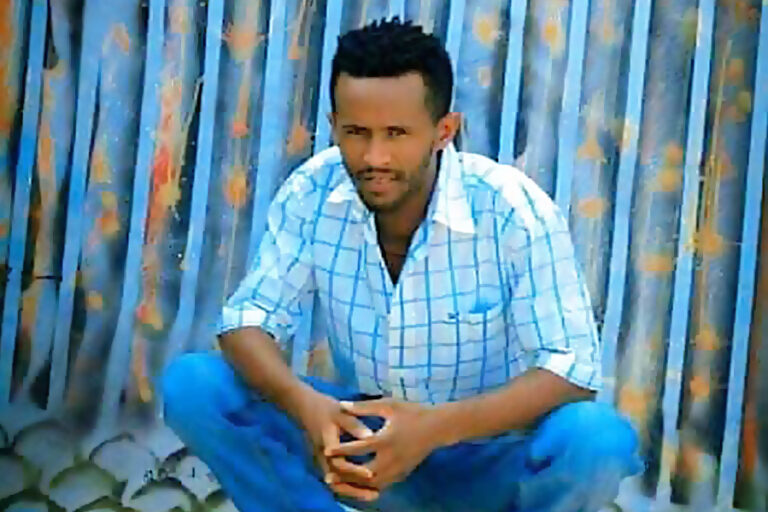
Name: Tedros Yitayal
Education: 12th
Company name: Tuka Handmade Leather Crafts
Title: Co-owner
Founded in: 2021
What it does: Handmade leather products
HQ: Hawassa
Number of employees: 3
Startup Capital: 150,000 birr
Current Capital: Growing
Reasons for starting the business: My passion for fashion
Biggest perk of ownership: Struggling for myself
Biggest strength: Hard worker
Biggest challenging: —–
Plan: To open branches
First career: Driving teacher
Most interested in meeting: Haile Gebresilassie
Most admired person: No one
Stress reducer: Working
Favourite past time: Traveling
Favourite book: Bible
Favourite destination: Jamaica
Favourite automobile: Hyundai
