

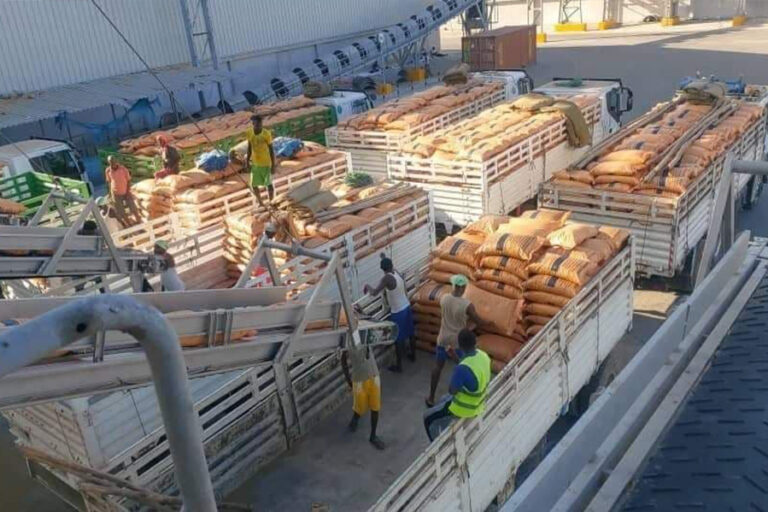
The Ethiopian Shipping and Logistics Services Enterprise (ESLSE) disclosed that the fertilizer cargo that arrived at Djibouti’s Doraleh Multipurpose Port (DMP) is swiftly transported to the centre in coordination manner. In the budget year, USD 1.6 billion worth of different type of fertilizer will be imported.
The enterprise disclosed that more vessels carrying Morocco’s fertilizer will dock their anchorage in the coming weeks.
On February 1, ESLSE disclosed that the Marshall Islands flag carrier, Draftzilla, vessel reached DMP with 64,470 metric tones.
It has been recalled that the shipment of fertilizers has been slightly delayed as per the expectation, while the government stated that the commodity that is crucial for the agricultural productivity will arrived prior to the coming rainy season.
Roba Megersa, CEO of the state owned mammoth logistics enterprise, ESLSE, said that despite the procurement delay, the shipping enterprise shall manage the dispatch as soon as possible unless aid cargo suddenly arrive.
“The vessels are coming frequently, we can manage it,” Roba stated.
“We are not concerned about the consignment of fertilizer cargo, while if other bulk cargos like relief and market stabilization wheat come at similar time, it would be a challenge to transport cargos to the center,” he added.
He said that mostly ESLSE is using ultramax vessels like Draftzilla that have a capacity to carry over 60,000 metric tones.
Aid partners like World Food Program are using vessels with medium size that is one of the reasons for berth congestion at the port.
He has also stated that availability of trucks shall be a problem for the dispatch.
The information ESLSE disclosed indicated that transporting the latest fertilizer consignment to the central destination has immediately embarked.
It said that it has concluded ample preparation to transport the cargos in coordination manner without any delay.
The current fertilizer cargo loaded on January 18 at Port of Jorf Lasfar, Morocco shall be stated as the first consignment for the current budget year.
ESLSE said that in the coming weeks additional two vessels are expected to arrive at Djibouti with similar cargo.
The Ethiopian Agricultural Businesses Corporation (EABC) stated that based on the demand of Ministry of Agriculture close to 1.29 million metric tones of different type of fertilizer will be imported for the upcoming agriculture season.
The expected cost of the fertilizer that will be bought and imported until May 2022 is estimated to be USD 1.64 billion.
EABC said that the latest cargo which arrived at DMP is part of the fertilizer that is planned to be imported in the year.
From the total over 1.2 million metric tones of fertilizer that will be imported in the coming few months 219 thousand metric tones is NPS, while the 569 thousand is NPSB and UREA type of fertilizer takes the balance.
This year fertilizer procurement is so far lower than the volume compared with the same period of last year.
In the 2020/21 budget year EABC procured about 1.7 million metric tones. Roba said that this year procurement shall not stand on the stated amount since they purchase on different lots.
Recently, the World Bank disclosed that the global price of fertilizer surged stating most fertilizers prices increased sharply in 2021’s third quarter and continued rising in early November, reaching levels unseen since the 2008-09 global financial crisis.
“Prices have been driven by surging energy costs, supply curtailments, and trade policies,” the report revealed.
Most reports predict that the price will continue to soar in 2022.
Much awaited fertilizers swiftly brought home, ESLSE report
Shabelle Bank to open its doors as country’s third IFB

The third interest free banking (IFB) provider, Shabelle Bank, is to commence operation with dual head quarter concept.
The bank which was formed with the merger of one of the strongest micro finance institutions, Somali Micro Finance Institution (SMFI) and the under formation Shabelle Bank, has officially received its commercial banking license to boost its operation under full-scale financial scheme.
SMFI jointly with the under formation IFB, filed its application in May last year to the National Bank of Ethiopia (NBE) to evolve itself to become a bank under the brand name Shabelle.
During the license receiving ceremony which was held on Sunday January 30, the bank announced that its fresh share selling which has recently been floated will play a huge role to boost its paid up capital by five folds, from its current about half a billion birr mark.
The bank that drew its name from one of the longest rivers in the Horn of Africa, Wabi Shabelle, a river that runs across the river basin of southern Ethiopia through Somali region flowing to the Indian Ocean via Somalia, said that it will commence commercial banking operation in less than two months time.
Khadar Ahmed, President of Shabelle said that his bank has set a target to introduce inclusive service within 45 days.
Khadar, who is the former General Manager of SMFI, formed in 2011, said that the bank will continue its micro finance operation like in past times, while the banking operation which may include different services such as international banking, shall be introduced in the near future.
He said that the bank has continued providing its MFI services through its 42 branches which includes one each at Dire Dawa and Addis Ababa.
The President told Capital that the bank is currently under preparation to commence operation from its one of the two head quarter in Addis Ababa, “we have already leased a building around Wollo Sefer at Bole to open our main branch and head office.”
“We have a plan to operate within a twin head office concept from Addis Ababa and Jigjiga, which is the capital of Somali region,” he added.
Even though it is not mandatory by the regulatory body to operate the head office at Addis Ababa, most of the relation that is highly frequent with NBE has made requisite for Shabelle to open its head office in the nation’s capital.
Khadar said that the bank should have a head office at Addis Ababa to keep the harmony and run regular communications with the regulation body.
“It’s safe to say, the business headquarter of our bank is Addis Ababa and the political head office at Jigjiga, though the final decision may be seen in future,” he explained.
According to the plan, the bank will aggressively expand its branches throughout the country in the near future.
Regarding capital expansion, the bank has targeted to sell additional two billion birr worth of shares for interested share buyers from locals and the diaspora in the coming six months time.
Currently, the bank’s paid up capital is 513 million birr which will surge by five folds in the coming six months’ time, when the shares floated are bought.
The under formation IFB, that is now merged as Shabelle, boasts of a diaspora community who have already bought shares of the bank. “The new shares being floated is expected to receive a boost from their contributions,” Khadar remarked.
The access to finance in Somali region is very low due to religious issues which have now recently been eased by the government.
The under formation IFB was handled by the Somali community to narrow the gap to access to finance under Sharia law in the region.
Since the government allowed the operation of full-fledged IFB, so far Zamzam and Hijra banks are the two banks that have opened their door. Shabelle now is to become the third to get the license, while Ramis is also expected to get its business license in the near future as the fourth and last IFB bank that will be formed under former minimum paid up capital requirement of 500 million birr.
SMFI under Sharia compliant has provided financial service in Somali region and other places like Dire Dawa and Addis Ababa. It has registered extraordinary achievement on mobile banking that is power by Bel Cash.
Few months ago Khadar expressed, “we are confident that our hello cash mobile money service is the leading in the country since we have 750,000 users from urban to rural transactions starting from 2015.”
In a directive issued August 2020, NBE allowed microfinance institutions to upgrade into full-fledged banks. So far the two giant, Amhara and Oromia MFIs, have upgraded to a bank under the name of Tsedey and Sinqe respectably.
Under the revised directive of NBE for banks minimum capital requirement that was issued in the second week of April 2021, the newly coming Shebele Bank will fulfill its minimum paid up capital to 5 billion birr in seven years time.
Local brews spike in price
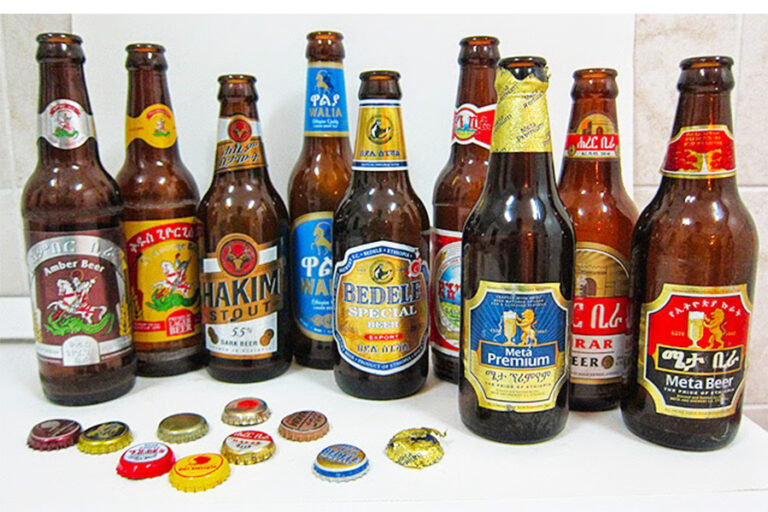
Local breweries are set to introduce price adjustments to their products due to price hikes to inputs, Capital has learnt.
Draft and bottled beers, two of the most consumed beer types in Ethiopia, have seen one of the sharpest price increases this week.
“The time has come to make upward adjustments in the prices in the face of the recent currency devaluation and fuel price surge that affected the production cost,” said sources. According to sources from the breweries, the significant inputs’ price increase forced them to re-adjust their final products’ rate.
This price adjustment on beer products is the second one in two years. The least price adjustment made by breweries was a year ago which the Ministry of Trade made them to restore the adjustment. A year ago in 2020, breweries adjusted prices following the amendment of excise tax law in the country. The excise tax reintroduced in 2020 levies 40 percent tax on beverages with alcoholic content of less than seven percent. The alternative for this is 11 birr per liter, which will be implemented if it is higher than the 40 percent calculated amount.
BGI Ethiopia, the bottler of St. George, one of the highly consumed beers in the country has already adjusted its price this week, attributing the change to a price surge in raw materials. Officials from BGI’s factories speaking anonymously said that the existing market price of inputs, especially the increasing malt price, has forced the factory to increase price on its products. Currently, BGI’s crate of beer sales at 600 birr up from 500 birr, and similarly the company is selling its barrel of draft beer for about 1660 birr which was selling by 1360 birr few days ago, also showing a significant increase, according to sources.
ESLSE wraps up technical evaluation to procure heavy duty trucks
The Ethiopian Shipping and Logistics Services Enterprise’s (ESLSE) concludes a technical evaluation of bidders for the procurement of 150 heavy duty trucks. Currently newly procured 38 trucks are being transported from China to expand the cross border movement.
The logistics giant that procured 150 general trucks last budget year with the total cost of 11 million dollars has allocated its own budget to procure additional 38 trucks directly from the prominent Chinese manufacturer, Jinan Sinotruck Co.
The Chinese company won the bid to supply the 150 Sinotrucks last year, and the new purchasing value rate is similar with that of last year’s price, which means about USD 73,000 per a single truck.
Roba Megersa, CEO of ESLSE, said that as per the procurement rule the enterprise shall buy on free order up to 25 percent of the volume that it bought from last year’s process, “due to that we enabled to buy 38 trucks as per 25 percent direct procurement cap.”
Wondimu Denbu, Deputy CEO for Corporate Service, told Capital that the new coming trucks have started their voyage early this week and are expected to arrive in Ethiopia in the coming few weeks.
Wondimu said that the trucks will be assembled in Ethiopia un-like the previous experience. The 150 brand new trucks were assembled at the port site in Djibouti, while these coming trucks assembly will be carried on in Ethiopia.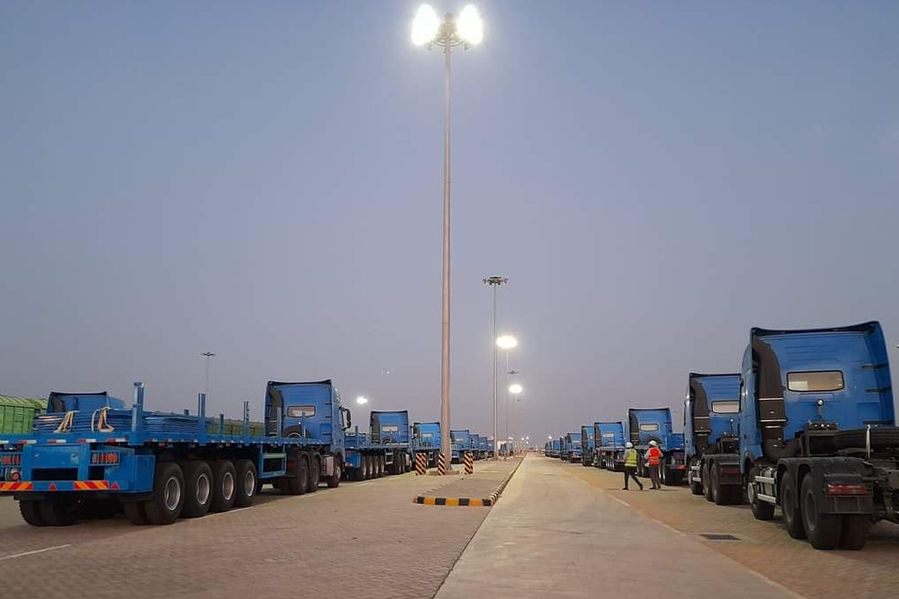
Roba told Capital that the arrival of the new trucks shall ease the dispatch activity of the state enterprise that is the sole multimodal operator in the country.
“The new trucks will get in the traffic as soon as possible to accelerate the outgoing and incoming cargos like fertilizer and other bulk consignments,” Roba explained.
On the initiative embarked by Ministry of Transport and Logistics that gave an opportunity for 168 transport companies to import 3,200 general cargo trucks through differed letter of credit (LC) ESLSE has engaged on the bidding process to buy its quota.
“As per the approval from the ministry we are on the procurement process to buy 150 trucks on different LC,” the CEO said, adding, “meanwhile our demand is to get over 300 brand new general cargo trucks thus we are using the opportunity offered by the government.”
Wondimu said that the technical evaluation of the biding process has finalized this week and the next step will be the financial evaluation.
He said that as per the differed LC scheme the enterprise has opened the LC by 30 percent of the procurement value and the balance will be paid in the coming two years time. The government has given the guarantee for the payment that will be settled in the timeframe given by the scheme.
Currently, ESLSE has 450 operation heavy duty trucks and the new coming 38 trucks will increase the number to 488.
About five years ago, 215 trucks were purchased from the French automotive company, Renault Trucks. As the norm of ESLSE, the new coming trucks will allow the enterprise to exclude the long serving and economically inefficient trucks from its cross border operation.
