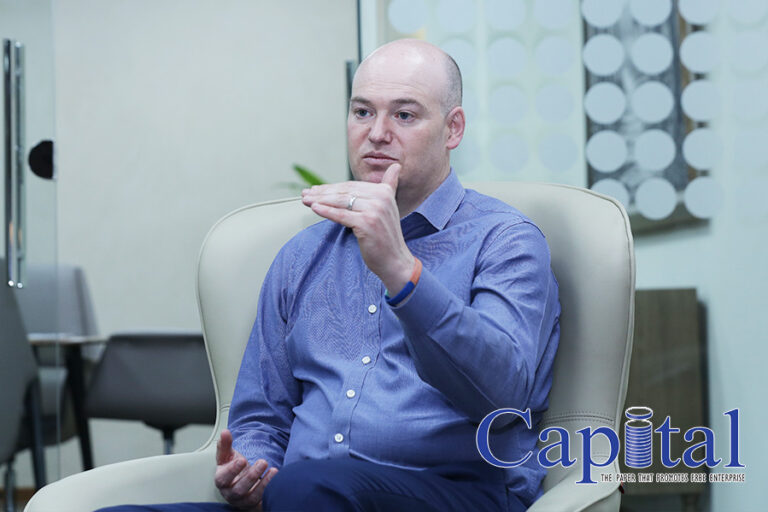
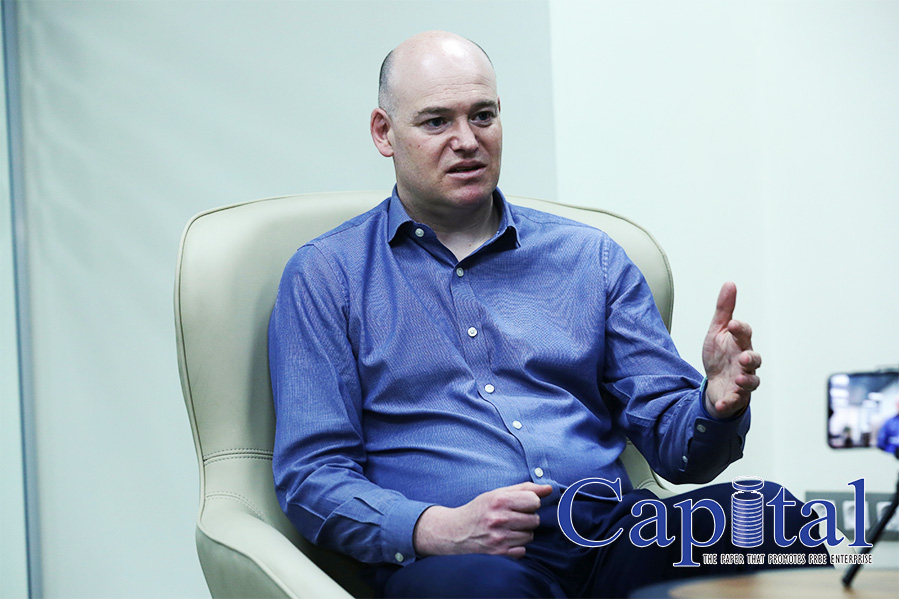
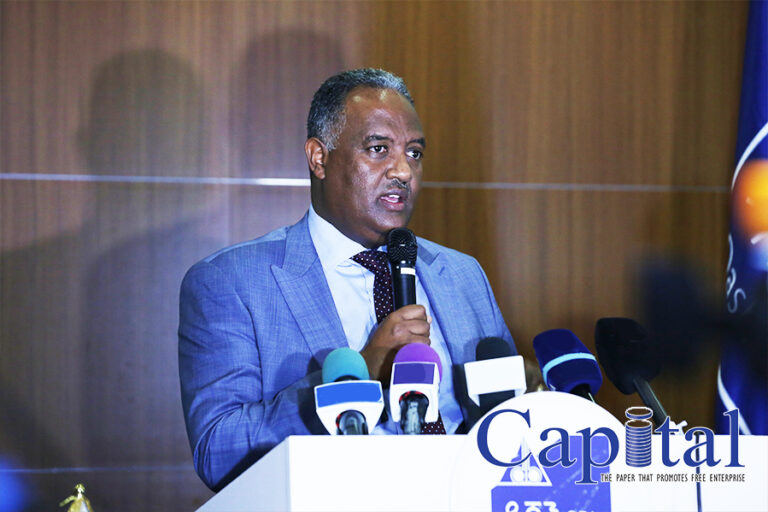
As Safaricom Ethiopia preps for its commercial launch, Capital caught up with Matthew Harrison-Harvey, Chief Regulatory and External Affairs Officer, for the new telecommunications entrant. Matthew, a UK national has held several senior legal, regulatory, and external affairs roles within the Vodafone Group over the last 20 years including as a Legal, Regulatory, and External Affairs Director at Vodafone Qatar between 2008 and 2012.The following are excerpts from the candid interview he held with Capital;
Capital: How did Safaricom Ethiopia enter the country’s telecommunications market?
Matthew Harrison: Ethiopia has a very long meaningful history for us in the telecommunications space. For our shareholders, Ethiopia had been on the radar, since we had been interested in investing in Ethiopia for at least, the last ten years.
We had been in talks with different government division sides in the past and three years ago, the government decided to liberalize the telecommunication sector, which for over a century was operated by one telecommunications provider. Now following our entry into the sector, there will be an additional option of choice for customers.
The genesis of our entry began three years back when the government commenced and called for a license request for proposals to which we decided to participate in that process. To this regard, I would also like to state that it was a very well-run process by government.
Our Consortium is made up of different shareholders. The Vodafone group, which is headquartered in London, is the largest telecoms operator in Europe and also the largest in Africa and through M-PESA, it’s the largest fin-tech company in Africa as well. Vodafone has two main companies in Africa, Safaricom which has long term partnership with the government of Kenya and the other company is Vodacom Group which is headquartered in South Africa. For us here in Ethiopia, Safaricom is the majority shareholder and we will be providing services as Safaricom Ethiopia.
The other company within the consortium is the Vodacom Group which is headquartered in South Africa, and covers eight markets across the African continent. Furthermore, in the partnership, we have the Sumitomo Corporation, which is a Japanese conglomerate dating back four centuries with investments in many other countries. Last but certainly not least is the CDC group based out of the UK, which serves as the government’s financial investment arm in sustainable development.
The Consortium thus came together for this opportunity, the opportunity to contribute to the digital transformation and digital inclusion for all Ethiopians. Ethiopia being a country with over 110 million people, it’s of course an honor for us to be providing such services.
Capital: Apart from basic telecommunication services what else will you be doing to impact peoples’ lives? And also how will you support Ethiopia’s Digital Transformation Agenda?
Matthew Harrison: Firstly, we were inspired by the macroeconomic strategy of the government, which saw Telecom as a key socio economic sector that contributes to the growth of the country, both economically and socially leading to improvements in people’s lives. Ethiopia also has a digital strategy, that is, ‘DIGITAL ETHIOPIA 2025’ and a new Communications Proclamation that was adopted in 2019.
Of course this strategy and proclamation brings a good framework and road map for change. For example, if I was to speak to you 15 years ago, we would talk about providing voice communications, and maybe SMS. But now the conversation has changed, we focus on providing access to the internet but not only that, we focus on how the internet accessed has positive lasting changes to our users.
In order to provide such impact to people through digital transformation we are working in partnership with the Ministry of Education on digital education so that students and teachers can use these tools to advance themselves in education.
Similarly in healthcare, we are working with the Ministry of Health to bring digital tools to help with healthcare. Our involvement in the health sector can also be noted when during this pandemic where Vodafone, Vodacom and Safaricom aided in the supplying of Covid-19 vaccination amongst other Covid-19 response initiatives.
When you also view Ethiopia from the standpoint of entrepreneurship, one can’t help but be excited because the Ethiopian community has a thriving entrepreneurial spirit particularly in the agricultural sector. The agro-sector which is the biggest employer of in the country is one that is crucial to the economy. Many businesses thrive from this industry. If we are granted the license to provide mobile financial services, which am certain will come later on in our operations, we will be able to use M-Pesa for the greater benefit of our customers. M-Pesa which is among if not the largest digital fin tech services in the continent will really help to transform the sector bringing financial inclusion to play.
So these services really have the opportunity to help people with their lives, whilst connecting people with their loved ones. Overall it will help to transform businesses to newer heights and also improve public services.
Capital: When are you going to start your operation?
Matthew Harrison: Our license states that, nine months from the date of the license award which is round about April this year. So starting early April we are working towards our commercial launch.
We are working to launch our quality services as we continue to invest in the services and infrastructure of the country.
Capital: In the spirit of promoting financial inclusion, will you be rolling out M-Pesa in the country?
Matthew Harrison: So currently we’re waiting on the government since the mobile financial services were not part of the telecoms license tender. The Prime Minister, I think it was in May 2021, essentially said that they would look to open up the mobile financial services sector to foreign operators within 12 months. So we’re waiting for the government to confirm that and then once they have done so, we will apply for that license.
Technically, there’s a directive that restricts foreign ownership of over financial services. Therefore, the government and the national bank have to amend that directive and once they have done so, we will commence our application process for the same.
We remain hopeful, that we will get to introduce M-Pesa in due course in Ethiopia.
Capital: As part of your commitment to this project, we have heard that Safaricom-Ethiopia is in the process of “buying a building” here in the capital around ‘Wollo Sefer’, what are the developments on this, if it is true? If not, where is your head office going to be? How is the overall process to lease offices not only in Addis Ababa but also in other regions panning out?
Matthew Harrison: We are currently leasing our office in Wello Sefer for a number of years and it is going to be our home and head quarter for our staff. We will also be taking other buildings including for our data center and call center which we are finalizing the process of location. We will be looking to have different call centers throughout the country. In addition, we will open up stores and shops throughout the country.
Capital: As you are building your network, you recently announced that you have a data center in the capital. What are the types of infrastructure that you’re planning to build in the near future?
Matthew Harrison: Since we don’t have a legacy within the country, we will have to build it from the ground up. And for us, it’s a great time, since it will give us the opportunity of building world class infrastructure. We will house a data center that is state of the art, with the best tech which will help us provide seamless service.
As we look forward to bringing the best tech, ideas and services, it is worth mentioning that we are also in the process of rolling out our network and mobile towers. We have had lots of surveys done on various lands and we are in talks with land owners, the federal and regional governments on the approvals.
Since infrastructure also encompasses call centers and retail stores distribution points, we look forward to owning our own as well as leasing some in partnership with other parties.
Capital: How would you describe the infrastructure sharing with Ethio telecom? What’s your evaluation of the readiness of Ethio telecom in working with you?
Matthew Harrison: We are currently under the negotiations stage. Negotiations and agreements are important since they lay the much needed foundational base. For example we are in agreements over the connections that will enable Safaricom customers and Ethio telecom customers to call each other.
We are also negotiating on the infrastructure sharing agreement which is taking place now and we hope to come to final agreements soon.
Our focus is primarily a win-win partnership that will see us working together in the telecom sector. Globally, as well, you can note that operators particularly with regards to infrastructure tend to work in partnership with one another. The reason for that is you will be able to invest more because you’re working together. Ultimately, our focus in the partnership is having the ability to provide our customers with world class infrastructure and I believe we will achieve that given both our zeal to achieve the same.
Capital: Since your company is going to invest 8.5 billion USD over the course of 10 years, how much are you planning to invest in 2022? Can you give breakdowns in the investment areas?
Matthew Harrison: So since July, we have invested 1 billion dollars. This partly includes the license fee and we are also investing three hundred million dollars for the equipment through imports for our commercial launch.
We will be committed in investing similar amounts each year with focuses on networks, amongst other infrastructure roll outs in the country. Ethio-Telecom has been doing this for over 120 years, and we are still in year one, and thus we have to catch up to them. So through wise investment in priority areas, we look forward to providing excellent products and services to ensure that customers have a quality service that they need.
Capital: You chose Nokia and Huawei for network installation; can you brief us on that?
Matthew Harrison: We have two network vendors Nokia that focus on the core Network infrastructure in Addis and the surrounding areas and then Huawei will be covering the rest of the country.
Capital: What are some of the challenges you have faced thus far?
Matthew Harrison: Before addressing any challenge, I love to approach everything with positivity thus I will address the opportunities first. We are investing 8.5 billion dollars over the span of a decade which I believe is a significant investment in the country. Secondly it is an opportunity that will help improve the lives of people as well as aid in the digital transformation of Ethiopia. We estimate that there will be a significant impact on the country’s economic development and over the 10 years, around 6%, increase of GDP is projected following government’s decision to liberalize the sector.
From our study, about 1 to 1.5 million jobs will be created over the span of ten years which will improve people’s lives.
When you’re a new company its natural that challenges may arise since its new waters, however the Ethiopian government has been very supportive. Of course, since the laws, regulations, procedures and administrative processes are designed for one governmental telecom service provider. Thus on this issue, we are working with government or the Ethiopian Communications Authority and other parties to shape new changes.
Timely importation of equipment is stated by many as a hurdle, and we are working with various parties and government to improve on this matter, not just for ourselves, but for other importers as well. So every day is a learning curve and I can say we are learning all the time whilst solving the issues together.
Capital: What kind of changes or new things do you present to benefit the customers?
Matthew Harrison: Customers are already benefiting from the government’s decision to bring competition in the market. So if I think back to when I first visited here a year ago, I’m seeing the multiple improvements in services from Ethio telecom. Competition always drives people to be smarter and work harder at giving out services, and I believe for us coming as new entrants to the market have had a ripple effect.
In addition to this, we are also getting ready with our world class products and services which customers should look out for.
Capital: Will your SIM cards be compatible with other networks you have in other countries?
Matthew Harrison: Regarding being able to call internationally to other countries, you’ll be able to, with what we call international roaming. Particularly since Vodafone group is renowned for its roaming services across numerous countries, it will be great presenting such services to Ethiopia.
Capital: How has the conflict in the country affected you?
Matthew Harrison: First of all we would like to wish for a peaceful resolution to the conflict, which I think is of utmost importance.
Of course security is really important and we have had talks with government in identifying safe areas since we have to invest in various areas for our networks.
One important this to note, is that the company is made up of four partners that have operated in wide spectrum of environments and have overcome challenges that have risen from those environs. Since we have experiences in similar situations we will be able to manage the situation. But above all we hope for a peaceful resolution to the conflict as we forge to provide our best services to the country.
Capital: What kind of ecosystem does Safaricom have?
Matthew Harrison: Safaricom’s ecosystem is made of the opportunity to provide connectivity to customers as well as a range of beneficial products and services.
As a service provider, we hope to meet the demands of what customers inquire from us and also present them with the platform of running their businesses and improve government services on top of keeping customers connected. We hope to understand Ethiopians needs and deliver what’s required from us.
Capital: How will you source your human capital?
Matthew Harrison: I believe that there are really talented people in Ethiopia. What we want to do is provide them with the opportunity. We are currently in the process of hiring and so far we have more than 100 employees in different types of roles. Also recently, we made an announcement to have 150 graduates under our programs for the coming month. For this vacancy we had an outstanding number of applications and we will do follow ups to have graduates join us in similar fashion for the next three years.
Following our commercial launch we target to have 1000 employees and we hope to present the job opportunities to many in the future. Ethiopian employees are at the heart of our companies operations and we look forward to working with them in providing our services.