

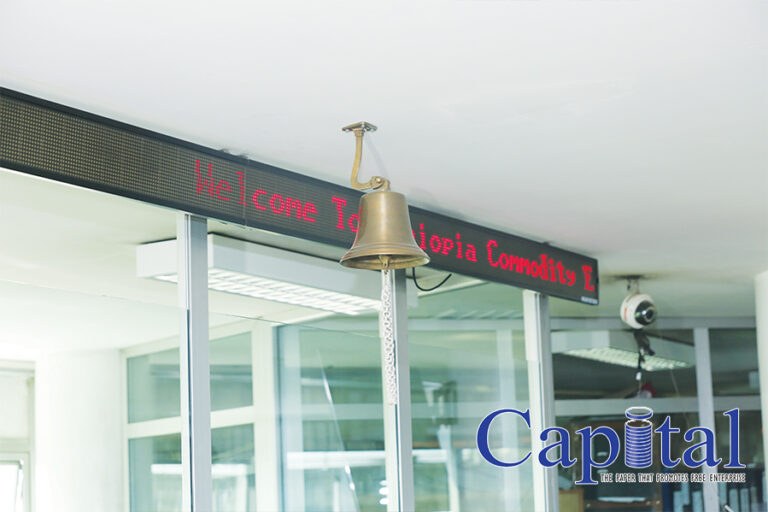
The price of coffee at the Ethiopian Commodity Exchange (ECX) has spiked by almost a thousand birr per feresula (17 kilograms) in the first half of this budget year when compared with the same period from last year.
Owing to the bad weather which has backpedaled Brazilian coffee as well as logistical constraints, the global coffee prices have sharply increased starting from the past budget year. On the other hand, the global circumstance has also benefited Ethiopia in terms of generating more hard currency from coffee export in the period starting from last year.
An attribute to this success is also the efforts of the Ethiopian Coffee and Tea Authority and regional bureaus which encompass the coffee production and trading which has led to increment of trading, both in volume and value.
Similar to last budget year’s performance which saw the country securing over USD 907 million, the current budget is surpassing the expectation with marvelous trends.
In likewise manner to the price increment in the international market, the price of the bean in the local market has also registered significant increment including on the modern trading floor, ECX.
As per Capital’s evaluation of coffee price trends which are drawn from the past one year’s market data of ECX, the country’s top hard currency earner has surged in price, on average by over one thousand birr.
The ECX market data that Capital evaluated indicated that few weeks ago the average price of export coffee, which is Arabica, at ECX was about 3, 400 birr to the maximum and close to 2,000 birr to the minimum per feresula (17 KG) based on their origin and quality.
Most of the price has over a thousand birr difference compared with the same period of last year.
It is to be recalled that Capital through inside sources, reported that the volume of export coffee available through the trading platform has shown reduction in the current budget year. Sources state that the reduction of coffee on ECX has narrowed in the past few months as a result of the drifting away of Oromia region from the platform to the recently introduced alternative vertical integration market scheme. The volume of coffee at ECX naturally plunged because Oromia region is one of the major sources of the coffee bean.
However, most of the coffee coming from other regions like SNNP, Sidama, South West, Gambela and Benshangul Gumuz still mainly trade through the electronic trading floor which is widely recognized for its trust in terms of payment.
Experts in the sector said that the price of coffee at the initial market of the vertical integration or at ECX has climbed on average more than a half in the first half of the budget year compared with the same period of last year.
Coffee prices bulge on ECX
Ethio Engineering Group pairs with HST to sift efficient operational strategy
Ethio Engineering Group (EEG) and HST Consulting team up to undertake a study to identify pivotal areas of focus for the industrial giant.
It is recalled that the Group was formed about two years ago when the manufacturing giant and ill-functioning Metal and Engineering Corporation, well known by its abbreviation MetEC, was separated in two, that is, as military and civil industrial conglomerates.
Before and even after the split, the current government has been noted to have given prudent attention to formerly MetEC, with regards to reform activities so as to get the public enterprise back on its effective track.
According to the latest information, EEG, which now manages the civil manufacturing industries, has agreed with the prominent and inclusive consultancy firm HST to conduct a study that enables the group to make transformational changes on its operation.
Based on the agreement, HST shall conduct an indicative study and reassessment on the enterprise’s business portfolio which shall shape the company’s strategy and enable it to achieve the reform activity that it already commenced over three years ago.
As per the agreement between the two bodies, the local consultancy firm will also provide practical assistance to attain the reform work through revised strategy and preferable direction.
MetEC was criticized over the years by commentators on the industry by the way it conducted its business activities, which ranged from delving into new business projects without evaluation of the current endeavors in businesses it had at the time, in addition to speculations of misuse of resources and corruption.
One of the top criticisms was that the corporation showed interest to undertake works or production and projects from very big projects down to the very small ones, which was noted by some to be all over the place.
Experts criticized that the state enterprise was engaging in all sectors even in the very small ones that are undertaken by SME and the lower level private sector.
The upcoming indication study may help EEG to sort areas and operations that it manages as a big group which controls about nine huge manufacturing industries.
Early this week, the management of the EEG and HST conducted an inception meeting on the upcoming study. EEG stated at the initial meeting that the failure of the enterprise, which previously engaged on every field without restriction or prudent study beforehand, was looked into at the discussions.
The study will also include and evaluate the technological capacity of the enterprise and show the way forward in terms modernizing the group. EEG announced that based on the consultancy study, a strategy will be developed.
HST is a well-known local consultancy firm which is involved on different momentous studies independently and in partnership with prominent international firms.
Recently, EEG has had a change in leadership as new CEO, Misganu Arega (Amb), replaced Hiwot Mossisa, who served the enterprise before and after the split. Currently, Hiwot has been assigned to represent Ethiopia at the International Civil Aviation Organization based in Montreal, Canada.
EEG manages about nine heavy and light manufacturing industries including; agricultural machinery factory, basic metal and machine building, automotive, and power engineering.
Solomon Gizaw Managing Director of HST said that the task they are given is huge and added that it is in its early stage to further comment.
With international competency, HST has been providing several supports to the private sector including huge international companies and public sector for almost 18 years now.
17th round auction of 20/80 condominium shops put to a halt
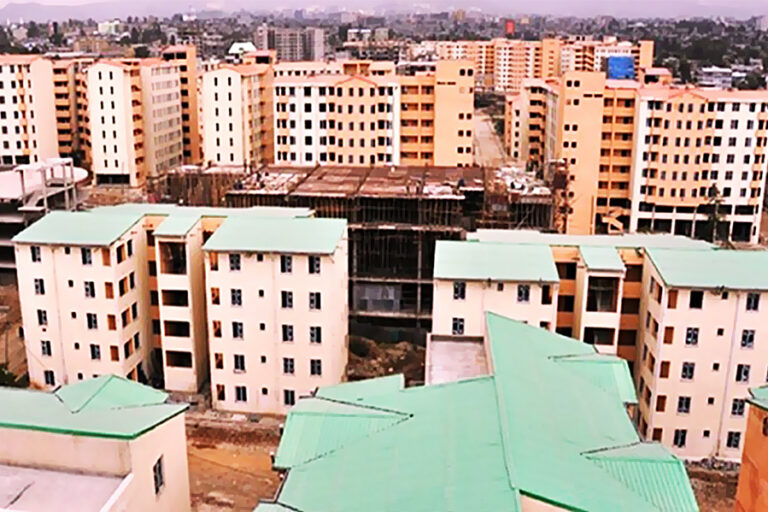
Addis Ababa Housing Development Corporation cancels the 17th round auction of 20/80 condominium shops.
The auction was made for 2573 available shops for interested buyers in various locations across the city under 20/80 low cost condominium schemes. The shops were located in a low-cost condominium housing schemes across five sub cities namely; Bole, Akaki Kality, Arada, Lemikura and Nifas Silk Lafto.
The bid which was opened starting from November 26, 2021 to December 8 announced the cancellation on Friday January 21, 2022. The corporation did not provide full details with regards to the said termination and Capital’s effort to get officials from the corporation to get information on the issue was unsuccessful.
“Based on the bid document article 2, sub article 40 the corporation has fully canceled the bid,” reads the notice later.
From the total 2573 condo shops, 86 of them are located in two sites of Bole sub city; Bole Bulbula 1 and 2, whereas Lemikura has 321 shops located in four sites whilst Arada has 8. Akaki Kality shares the largest number with 2155 shops for the auction in nine sites and Nifas Silk has the remaining 3 condo shops for sell.
For this round of bid, the Agency set the floor price of all the shops at 15,068 birr per square meter which is equivalent to the total cost spent while building the shop. In previous bids the price was 10,000 birr for the 16th round and 9,170 birr for the 15th round. At the time, banking and micro-finance institutions were the ones that gave the highest offers.
According to the document, the total width of the condo shops range between 235.50 square meters and minimum 21.15 square meters.
The shops were part of houses located in the aforementioned sites. It is to be recalled that these houses were completed and inaugurated last year after a public outcry over the delay on the completion of the houses.
Non-communicable disease triggers half of Ethiopia’s mortality deaths

Ministry of Health indicates that 52 percent of annual mortality rates in Ethiopia are caused by Non-communicable disease. With regards to increase in specialized treatments in the country, the ministry is working with the Ministry of Finance to build hospitals with a public private partnership scheme.
According to the Ministry, in previous years the major death rates in the country were the infant and maternal mortality rate which has now declined over time in the country.
“The epidemiological transition that is happening in Ethiopia has made transition from predominantly infectious diseases to non-communicable diseases,” said Dr. Lia Tadesse, Minister of Health on an event hosted by Ethiopian Investment Commission to promote investment areas in the country. “Ethiopia has been successful in reducing common infectious, maternal, neonatal, and nutritional deficiency which causes premature mortality,” Dr. Lia explained.
As the Minister highlighted, this trend showed that generally, non-communicable diseases had existed to be problematic which became even more evident following greater reductions in common infectious, maternal, and nutritional diseases.
Medical treatment for such Non-communicable disease is one of the priority areas the government is working on, and as Dr. Lia revealed; her Ministry is working closely with the Ministry of Finance and has now approved public private partnership projects on the sector with auction or bidding announcements underway. Oncology projects, diagnostic centers are some of the projects that will benefit from this.
According to the information from the Ministry of Finance, there are three ongoing public private partnership projects on the health sector.
“Project management team has been established to retain a consultant for detailed feasibility study,” the finance Ministry disclosed with regards to the oncology project.
World Health Organization (WHO) estimated in 2011 that 34% of Ethiopian population is dying from non-communicable diseases to which the number has now grown to 52 percent within a space of ten years. The major non-communicable diseases such as cardiovascular disease, cancer, diabetes mellitus, and chronic obstructive pulmonary disease are causing higher proportions of morbidity and mortality, impacting both in the rural and urban populations of Ethiopia.
Their impact varies with type of disease, age, and region. Hospitalization impacts of cardiovascular diseases have increased over time within the last five decades. This burden is becoming a big challenge to the healthcare delivery system of the country.
As a result of this transition, according to reports ischemic heart disease, hemorrhagic stroke, ischemic stroke, diabetes, and hypertensive heart disease were found to be among the 10 leading causes of age-standardized death rates in Ethiopia.
Ethiopia’s success in decreasing the mortality rates of lower respiratory infections, diarrheal diseases, tuberculosis, HIV/AIDS, measles, malaria, protein-energy malnutrition, and other diseases supports the directions and investment of the HSDP on MDG.
Infant mortality rate has decreased from 96.9 per 1000 births in 2000 to 48 per 1000 births in 2016, however as the Minister said in recent reports the death rate is 54 per 1000.
“There are many projects areas to be worked on, in the health sector and the public private partnerships are one of the options of the advancing the sector,” noted Dr. Lia whilst calling upon the diaspora community to invest in the sector; and as she indicated, Ethiopia losses about 100 million dollars annually for medical treatment abroad.
After massive study and legal document development through the Ministry of Finance, the government enacted the PPP 1076/2018 proclamation that makes it formalized for private sector involvement through public projects for the benefit of both sides.
The February 2018 proclamation allows establishing a favorable and binding legislative framework that promotes and facilitates the implementation of privately financed infrastructure projects by enhancing transparency, fairness and long terms suitability.
