Saturday, October 3, 2026
Home Blog Page 310

Ethiopia’s Next Opportunity: Building on Government-Led Urban Transformation to Unlock Real Estate Potential

0

In recent years, the role of government in improving the urban environment across Ethiopia has been both visible and significant. Large-scale corridor development projects, city renewal initiatives, expanded public spaces, and infrastructure upgrades are elevating the standard of Ethiopian cities to a level not seen before. These efforts are not only improving mobility and service delivery for citizens, but also reshaping how cities look, feel, and function.

This progress deserves recognition. Creating cleaner, better-planned, and more livable cities is not easy, and the government’s leadership has been central in setting direction, mobilizing resources, and maintaining momentum. The changes underway in Addis Ababa and other cities have laid a strong foundation for the next phase of development.

The question, from my perspective, is how Ethiopia can build on this foundation to generate sustainable economic returns.

One area that stands out is real estate. Urban transformation has already improved the physical environment. With the right approach, real estate development could convert these improvements into long-term capital inflows, employment opportunities, and foreign exchange earnings.

Looking at Dubai’s experience helps put this opportunity into context. Over the past decade, Dubai has turned real estate into a major economic driver by attracting billions of dollars in annual investment. In recent years, the city has received around 10 to 15 billion dollars each year in foreign direct investment, with real estate playing a central role. In 2024 alone, property transactions exceeded 200 billion dollars. These numbers reflect more than construction activity; they reflect confidence, policy clarity, and long-term investor commitment.

Ethiopia does not need to replicate Dubai’s model, but it can learn from its scale. If Ethiopia were to attract even 10 percent of the real estate-related capital that flows into Dubai annually, this could mean roughly 1 to 1.5 billion dollars a year. At 20 percent, the figure could reach 2 to 3 billion dollars. For Ethiopia’s economy, these amounts would be transformative, especially in terms of foreign exchange availability.

Addis Ababa, in particular, has a unique advantage. As the seat of the African Union, it already carries symbolic and political weight. The government’s ongoing efforts to modernize the city create an opportunity to position Addis Ababa not only as Africa’s diplomatic capital, but also as a place where Africans feel welcome to live, invest, and build long-term ties.

The government’s current urban reforms show that bold action is possible. Extending that reform mindset to the real estate sector could open a new chapter of growth, while still protecting citizens’ interests. Affordability, transparency, and orderly urban planning must remain central, but they should go hand in hand with openness to long-term investment.

Ethiopia’s transformation so far has been driven by vision and state leadership. By building on the improved urban environment that is already taking shape, the real estate sector could become a powerful complement to existing development efforts and help carry Ethiopia’s cities, and its economy, to a new level.

The Politics of Performance and Economic Development

0

Economic development has never been a purely technocratic exercise. While it is often framed in the language of growth rates, productivity, infrastructure, and investment flows, development is also deeply political. In recent decades, this political dimension has increasingly taken the form of “performance” which is the staging, measurement, communication, and symbolic demonstration of economic progress. Governments today are judged not only by what they deliver materially, but by how convincingly they perform development through metrics, narratives, rankings, flagship projects, and carefully curated success stories. This politics of performance has reshaped how economic development is designed, implemented, and perceived, with significant consequences for policy priorities and social outcomes.

At its core, the politics of performance reflects a shift from outcomes to appearances. Development is no longer evaluated solely by long-term structural transformation, such as industrial upgrading, broad-based income growth, or reductions in inequality, but by short-term, visible indicators that can be showcased to voters, investors, and international institutions. Gross domestic product growth, ease-of-doing-business rankings, infrastructure megaprojects, and startup ecosystems become proxies for progress, regardless of whether they translate into durable improvements in living standards. Performance, in this sense, is not deception per se; it is a strategic simplification of complex realities into legible signals that can be politically mobilized.

This emphasis on performance is partly driven by globalization. In a world of mobile capital and intense intergovernmental competition, states feel compelled to market themselves as “investment-ready” and “reform-oriented.” International benchmarks produced by multilateral organizations and private consultancies exert powerful disciplining effects. Governments adapt their policies to improve scores rather than to address local economic constraints. Regulatory reforms may be designed to signal openness rather than to enhance enforcement capacity. Industrial zones may be announced with fanfare while skills development and supplier linkages lag behind. The performance of reform becomes as important as reform itself.

Domestic politics reinforces this dynamic. Electoral cycles reward policies that generate visible, short-term gains over those whose benefits accrue gradually. A new airport terminal, a high-speed rail line, or a technology park offers a tangible symbol of competence and ambition. In contrast, investments in early childhood education, institutional capacity, or rural productivity, though often more impactful in the long run, lack the same performative appeal. Political leaders therefore rationally prioritize projects that can be photographed, inaugurated, and branded. Economic development becomes a stage on which political legitimacy is enacted.

The politics of performance also shapes how success and failure are narrated. When development is framed as a performance, setbacks are attributed to external shocks global downturns, pandemics, geopolitical tensions while successes are personalized and politicized. Leaders present themselves as CEOs of the national economy, claiming credit for growth while distancing themselves from distributional consequences. Inequality, informality, and precarity are often reframed as transitional costs rather than structural features of the development model. This narrative management sustains the legitimacy of policies that may disproportionately benefit elites or urban centers.

However, the performative turn in economic development carries significant risks. First, it encourages policy mimicry. Governments replicate “best practices” from other contexts not because they are appropriate, but because they are recognizable and rewarded by external audiences. Silicon Valley-style innovation hubs, fintech sandboxes, and smart cities proliferate even where basic manufacturing or agricultural productivity remains stagnant. This leads to what might be called “isomorphic development”: economies that look modern on paper but lack deep productive capabilities.

Second, performance politics can crowd out accountability. When success is measured by headline indicators, policymakers face fewer incentives to engage with underlying constraints such as weak state capacity, fragmented labor markets, or unequal access to finance. Data itself becomes politicized. Statistical revisions, selective reporting, and indicator gaming are not anomalies but predictable responses to high-stakes performance pressures. Citizens are left to navigate a gap between official narratives of progress and their lived economic experiences, eroding trust in institutions.

Third, the focus on performance often marginalizes distributional concerns. Growth that is spatially or socially uneven can still be performed as national success. Rising GDP coexists with stagnant wages, youth unemployment, or regional decline, yet the performance remains intact as long as aggregate indicators improve. This disconnect fuels political polarization and populist backlash. When large segments of society feel excluded from the celebrated story of development, they become receptive to narratives that challenge both economic orthodoxy and democratic norms.

Yet it would be misleading to dismiss performance altogether as hollow or manipulative. Performance is an intrinsic feature of politics. Symbolism, signaling, and narrative are unavoidable tools of governance. Moreover, performance can be productive when aligned with substantive reform. Clear targets, transparent metrics, and public commitments can discipline bureaucracies and coordinate expectations. East Asian developmental states, for example, used performance benchmarks not as substitutes for policy, but as instruments to enforce learning, export discipline, and industrial upgrading. The issue is not performance per se, but performance divorced from structural transformation.

The challenge, therefore, is to reclaim performance as a means rather than an end. This requires rethinking what is measured and showcased. Instead of privileging aggregate growth alone, governments could emphasize indicators related to job quality, productivity dispersion, regional convergence, and social mobility. Instead of celebrating isolated megaprojects, they could perform success through credible institutional reforms, such as improvements in tax capacity, regulatory enforcement, or public service delivery. Such performances may be less spectacular, but they are more honest reflections of developmental progress.

It also requires longer political time horizons. Economic development is inherently intertemporal, yet performance politics compresses time into election cycles and quarterly reports. Building cross-party consensus around core development strategies, industrial policy, human capital formation, climate transition, can reduce the pressure to constantly perform novelty. In this sense, institutional stability is itself a form of performance: a signal that development is a collective project rather than a personal achievement.

Ultimately, the politics of performance reveals a deeper tension in modern governance: the need to make complex economic processes visible and legitimate without reducing them to empty spectacle. Economic development must be seen to be working, but it must also work. Bridging this gap is one of the central political challenges of our time. If performance continues to substitute for substance, development will remain fragile and contested. If, however, performance is harnessed to illuminate genuine transformation, it can become a powerful ally of inclusive and sustainable growth.

Run Confident, Live Smart: Ethiopia’s Women First 5km Kicks Off Registration

0

Registration has officially opened for the 2026 Safaricom Women First 5km, set for Sunday, March 22. The 23rd edition of the all-women’s race continues to celebrate women’s achievements while promoting health, fitness, and empowerment across Ethiopia.

Organizers said 16,000 race slots are available, with participants following the traditional 5km route near the Atlas Hotel in the Bole area, a course known for its lively atmosphere and strong community engagement.

Dagmawit Amare, Managing Director of Great Ethiopian Run, emphasized the organization’s commitment to inclusivity. Despite rising operational costs, the race entry fee remains ETB 590 to ensure participation across a broad demographic of women and girls. To ease the financial burden, digital payment incentives have been introduced, offering discounts for those registering via M-Pesa and the Dashen SuperApp.

HermelaYilma, Head of Brand and Communications at Safaricom Ethiopia, expressed pride in the company’s role as title sponsor. She said, “We feel a deep sense of honor to support this competition, which reflects the hard work of women and amplifies their voices,” reaffirming Safaricom’s long-standing partnership with the race.

This year’s edition carries the theme “Live Smart – Run Confident”, promoted by DKT Ethiopia. Aditya Putra, Country Director of DKT Ethiopia, said the theme aligns with the organization’s focus on reproductive health awareness. “The theme reflects our belief that informed reproductive health choices build lifelong confidence,” he said, highlighting the race as a bridge between health awareness and community engagement.

Registration opens on February 21, 2026, and participants can sign up via M-Pesa, the Dashen SuperApp, or in person at four designated Safaricom shops. The event is supported by a wide range of partners, including M-Pesa, DKT, Dashen Bank, Aktive, the Embassy of Ireland, UNICEF, Fab Beauty Soap, Top Water, Hyatt Regency, ETV, and Afran Hospital.

Unlocking Ethiopia’s Capital Market: Governance, Trust and the Road to Sustainable Growth

0

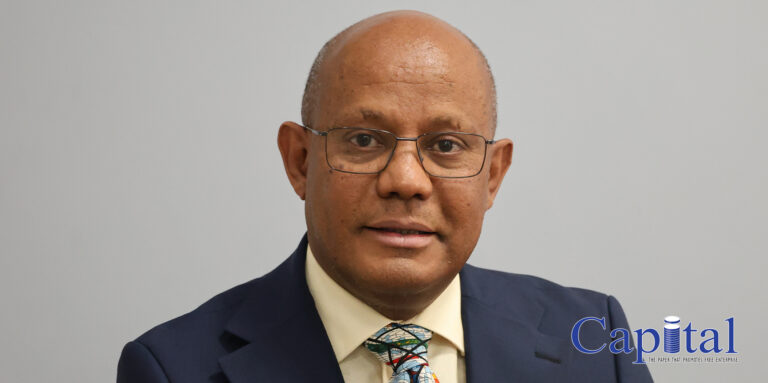
As Ethiopia stands on the threshold of a historic economic transformation with the launch of its first-ever capital market, attention is turning to the professionals tasked with shaping its foundation. In an exclusive interview with Capital, Million Kibret, Managing Partner at BDO Ethiopia, shares insights into the opportunities, challenges, and critical prerequisites for building a vibrant, transparent, and trustworthy financial ecosystem.

Armed with a newly secured license from the Ethiopian Capital Market Authority, BDO Ethiopia — a member firm of the global BDO network operating in 169 countries — is positioning itself to play a pivotal role in guiding businesses from private, family-dominated structures toward broader public participation.

In this wide-ranging conversation, Million explains how BDO is leveraging international expertise to strengthen local capacity, why restoring and safeguarding public trust is essential following past unregulated investment schemes, and why the most pressing challenge facing Ethiopian enterprises today is the absence of sustainable systems and corporate governance. Excerpts:

Capital: What unique professional support is BDO bringing to the newly launching Capital Market in Ethiopia?

Million Kibret : BDO in Ethiopia is a member firm of BDO International, an organization operating in 169 countries providing financial advisory, accounting, and audit services. As a member firm in Ethiopia, we have been advising organizations with international scale and quality, specifically in the financial management area.

Since 2013—meaning for the last 13 years—we have been providing consulting services in Ethiopia, particularly regarding investment and finance. Until now, we have been advising family-founded companies to help them grow.

Now, the license we received from the Capital Market Authority will enable us to assist these companies go beyond growing using their own resources; it allows them to seize the opportunity to raise the funds they need for growth from the public in addition to banks.

Capital: What specific strategies does BDO use to strengthen Ethiopia’s capital market and build public trust?

Million: Well, our local banks have tried their level best to the best of their capacities. However, their resources are limited. When enterprises need more money than local banks can provide, going public is a good alternative. However, as we witnessed in the recent past, innocent people have historically been taken advantage of by others saying, “We will do this for you, investing like this, get you this benefit…” The main reason for this was the absence of strict regulations.

The Ethiopian Capital Market Authority now responsibly oversees these strict regulations. Under it, licensed advisors and other service providers ensure that money collected from the public is managed according to applicable laws and regulations.

What makes BDO Ethiopia unique is that, as a member of BDO International, it brings the experience of 169 countries. Since Ethiopia is just starting its capital market, we bring people from other countries to train local professionals.

We learn from the mistakes of others while taking best practices, so that our professionals, working alongside international BDO experts, can strengthen the Ethiopian capital market ecosystem, to make it more credible and vibrant.

Often, as you know, the problem is that when an industry starts, people without much credibility or ethical, moral backgrounds grab for their short-term benefits, and the industry is cut short. Then that industry is labeled as “untrustworthy”.

Among our top priorities is to educate the public and people in business. We plan to be engaged in awareness creation with the public at large: “What does a capital market mean? How do you participate in the capital market?” Then, we help those who plan to participate in the market to do so, providing support and advice for them join the Ethiopian capital market.

Our biggest advantage is that we are able to pull resources and accumulated knowledge from many countries around the world, including those in Africa and others like the US and Europe that have been doing this for over a hundred or two hundred years, and we ensure Ethiopians learn from it as we should rely on our local resources.

Capital: During your 13-year stay in Ethiopia, what was the main challenge?

Million: The main problem we observe in most Ethiopian companies is a lack of sustainability. Since many organizations are founded at a family level, when the founder or owner encounters problems like illness or death, the organization often faces the fate of collapsing along with the founders.

Companies are national assets and pillars of the economy; therefore, when a company that delivered for 50 years collapses because of the owner’s absence, the national economy suffers as well.

The big problem we encountered is that companies are not operating based on well-established systems and procedures. Since most started in the aftermath of the fall of the Derg regime, the identity of the organization is closely tied to the personality of the owner.

Because of this, there was no such thing as “Corporate Governance.” Our biggest challenge was bringing companies into a standard operating system and ensuring their long-term sustainability. Additionally, growing without systems and rules is very difficult. One person’s capacity and knowledge can only grow a company to a certain level. For organizations to grow beyond that, operating systems and corporate governance is mandatory.

When companies come to us, the first thing we tell them is: “Even though you are comfortable operating currently, you need a system for your growth and to continue for the years to come.” For example, if we look at giant companies like Boeing, Airbus, or Apple, their creators are gone, but the organizations are still growing. Apple didn’t stop after Steve Jobs died; rather, it continued expanding.

This happened because they have strong systems and guidelines. Our major challenge was to detach companies from the identities of their owners and make them run using their systems.

Capital: The Ethiopian financial sector is in transition. With bank mergers and the entry of foreign banks expected, what is BDO doing in its advisory service?

Million: BDO works with banks, insurance, and financial institutions in many countries. Bringing that international experience to Ethiopia, we are planning to enhance our engagement with local banks helping to assist them strengthen themselves as the country opens the sector to foreign investment.

This can take two ways: one is providing advisory services to enable banks to increase their capacity by working together and merging, and the second is helping them modernize their systems.

Working with banks and similar institutions, we share international experiences and advise them on what they should do to withstand the competition.

Now that we have obtained a capital market advisory license, we will strive to help financial institutions to enhance their capabilities according to the license given to us. To make Ethiopian banks competitive, we are working to bring selected professionals from countries where the sector has flourished to a level becoming the pillar of economic growth and financial inclusion.

Capital: The late start of Ethiopia’s capital market can be seen as a good opportunity. As a professional, in which direction do you say the country should move to use this opportunity?

Million: Going forward, organizations that have been moving through private effort must grow and become larger by utilizing the benefits of the capital market following the law. Although Ethiopia is a large country, we do not have many large companies relative to the country’s size and level. For example, Ethiopian Airlines is a world-renowned institution we are proud of. However, we need many more companies as large as the airline to build the country’s economy. Such giant institutions cannot be built by the effort of one person or one family alone.

Therefore, organizations must strengthen their corporate governance, systems and structures, join the capital market, collect additional capital, and grow. This process has great benefits for the owners as well.

Mostly, when business organizations are established, the founder or owner must be there 24 hours a day and take all the suffering and worry. But when they join the capital market, because there is a clear operation system, and accountability, the owner doesn’t necessarily have to be there all the time. A successor can be assigned to take the institution forward. This creates great relief and opportunity for the founders to explore other opportunities and enjoy the dividends of their lifetime efforts.

Capital: What would you say was a major success story in your tenure?

Million: The stories of many strong traders can be mentioned as examples.

After working for 40 or 50 years on an enterprise, they come to us saying, “We are tired, what should we do?” We take time to build a business system, procedures, and corporate governance for them. This enables them to pass their organization to their children or have it led by a professional manager.

Because of this, many of our clients have informed us, “Until now, we were slaves in the organization we created ourselves; now you have set us free.” Although they initially feared, “What will happen to the organization without me?” once they set up the system and let it go, they find freedom.

This freedom, besides giving relief to the owner, allows the organization to grow beyond one person’s capacity and effort. Overall, seeing organizations that its owner said “we were tied up and couldn’t grow farther” fix the bottlenecks of their operations and reach a high level is our greatest success.

Capital: In addition to the points you mentioned, what do you say is the unique reason that family businesses fail to continue or remain a bottleneck?

Million: Recently, at the 3rd Ethiopian Family Business Forum organized by HST Consulting, Commander Haile Gebrselassie said: “From time to time I’m being engaged in mediating between successor children when company founders become absent. The problem aggravates to the extent of companies being closed by court orders.  This problem stems from the company not having a succession plan and clear operating systems and procedures in advance.

To solve the problem, founders must answer the question “Who will replace me if I am not there?” and prepare their succession plan properly, so that, in cases of the founder departing from the company for various reasons, the appointed person can immediately take over and continue the operation of the company.

Capital: Do you believe the government should play a role in guiding family businesses toward more sustainable governance and operational structures?

Million:  The relevant government bodies should collaborate with the family business community to establish frameworks that ensure the sustainable operation of family-owned enterprises, particularly when founders step down or are no longer able to lead. Company closures have far-reaching impacts—not just on the family, but also on employees, suppliers, customers, and the wider economy.

By working together, the government and business community can develop legal mechanisms to enable businesses to continue operating in the absence of founders, including appointing professional managers and family representatives to oversee succession and continuity.

Capital: Do you see scope for collaboration with peer institutions to initiate and advance policy reforms that strengthen the sustainability of family businesses in Ethiopia?

Million: Certainly! It is possible to prepare a draft document with service-providing institutions like HST and present it to the government. It is not always appropriate to just blame the government. Initiatives for new legal instruments can originate from the private sector, the professional associations and individuals. Therefore, BDO and others working in the local business environment can coordinate and provide advice and support to the government presenting draft policy documents for better results to emerge.