

Government has formed a committee to assess ways to support investors and exporters in order to minimize the effect of Ethiopia’s suspension from the African Growth Opportunity Act (AGOA).
On December 23, 2021-U.S. President Joe Biden announced that he has determined that Ethiopia, Guinea, and Mali do not meet the AGOA requirements. Due to the conflict that erupted last year between the federal government and the Tigray People’s Liberation Front (TPLF) requirements described in section 506A(a)(1) made Ethiopia ineligible to be part of the act.
Aimed to support investors to resist the effect of Ethiopian termination from the AGOA, a committee has been established from the Prime Minister’s office, Ministry of Finance and the Ethiopia Investment Commission.
In order to find alternative market options especially for the textile industries, rearranging tax and tariffs, expanding duty free schemes, giving loan relief, minimizing transport subsidy and also minimizing shade leasing cost are some strategies to be used.
Since Ethiopia is not a WTO Member State, the country’s standard tariff schedule for access to the US market has far higher tariffs than would be the case under normal tariff relations (NTR). A loss of AGOA removes preferential access to 6,500 tariff lines.
Following the temporary suspension of Ethiopia on November 2, 2021, Ethiopian officials had warned that the suspension could take away 1 million jobs, disproportionately hurting poor women who are the majority of garment workers.
Experts at the time explained that one of the efforts that the government is working on was to change the decision of the US government and also going forward, perhaps finding alternative market and increasing the product is the mainstream market which will be impactful for the future.
In a statement issued by the Ministry of Foreign Affairs, “Removing the preferential agreement will affect the livelihoods of more than 200,000 low income families, mostly; women who have got nothing to do with the conflict, it will also considerably impair the lives of one million people who are engaged in the supply chain ecosystem.”
The ministry expected a balanced view on the situation from the international community and asked the US government to reverse its decision that may only embolden the terrorist group while endangering the aspirations of Ethiopians to extricate themselves out of poverty.
AGOA brings Ethiopia about $100m in “hard cash” annually and directly generates employment for about 100,000 people. Ethiopia exported 237 million dollar duty-free to the U.S. last year, U.S. Commerce Department data said.
Almost half of Ethiopia’s 524 million dollar in exports to the US in 2020 utilized AGOA preferences – mainly for apparel and footwear, two sectors reliant on AGOA preferences with most of the exporters found in Industrial parks.
From the total 24 Industrial Parks developed in the country, 22 are now in operation and the country has managed to attract more than 250 domestic and foreign investors which till August 2021 created employment opportunities for 86,837 unskilled laborers and more than twenty thousand posts for skilled labor and graduates, excluding the three Industrial Parks in Tigray region which have ceased operations for the last one year.
According to the Industrial Parks Development Corporation (IPDC), inclusive of the ones in the Industrial Park context, currently more than 65 textiles and apparel, and 67 major leather products, and gloves manufacturing industries employ over 200,000 direct jobs of which 80 percent of them are women and youth and generate about 230 million dollars per annum.
Gov’t forms committee to help investors following AGOA departure
Nyala insurance avails new product for diaspora

Nyala insurance launches a new insurance product called Diaspora Special Insurance in a view to provide insurance cover to Ethiopians and Ethiopian born individuals who are permanently residing outside their home country.
According to the company, the product is to be relied in collaboration with the world’s largest reinsurance group which will effectively deal with scenarios such as hospitalization, surgery, medical fees, and pharmaceutical products while the insured pays a visit to his/her country for a short period of time to a maximum of 90 days with reasonable cost.
As the company indicated, the cost will be worked out up to a limit of 10,000 Euro or 13,000 USD or in Ethiopian birr 640,000 followed by an amount of 50 USD excess applicability per individual claim request.
“In addition to the medical insurance, the new scheme in case of death of the insured in his country of residence, the diaspora special assistance policy will cover the cost of transportation of the mortal remains from the place where the death has occurred to Ethiopia,” officials from the insurance company disclosed.
Also in addition to the insured, the scheme will also cover cost of transportation of close relatives to the insured which will be in the most suitable means of transport accommodation to accompany the mortal remain from the place where death occurred to Ethiopia.
The insured are expected to pay 57 USD or 75 USD to buy the insurance calculated based on their resident country, and the agreement should be renewed every year. Customers can buy the insurance from agents of Nyala Insurance across the world, through website and applications.
ECA halts selection process for a second telecom operator
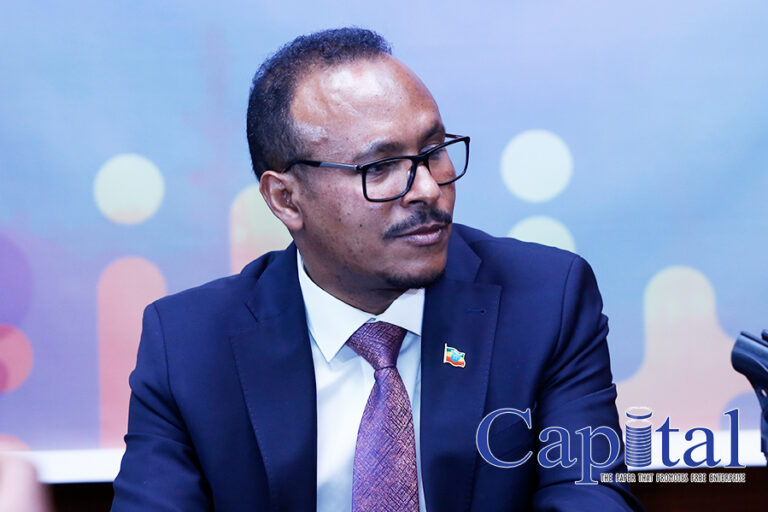
The Ethiopian Communications Authority (ECA) announces that the process of selecting the second telecom operator has been terminated.
It is to be recalled that the authority refloated the second tendering in September on the aim to get an additional telecom operator in Ethiopia besides the incumbent state giant Ethio Telecom and Safaricom Telecommunications Ethiopia Plc.
On the statement issued on Wednesday December 22, ECA stated that the bidding process has temporarily been relinquished as per the request of bidders.
It said that ECA issued a Request for Proposal (RFP) for the second new full service nationwide Telecommunications Service License on September 28th 2021 and the bidding process was ongoing, “however, ECA received concerns and requests from several prospective bidders to delay the process and to issue the RFP at a convenient time in the future, which the authority fully concurred.”
“Accordingly, ECA has suspended the RFP process for the new second license and will re-launch the process in the near future,” on its announcement the authority said.
Just a year ago the government had floated a bid for two additional telecom licenses and on the process an international consortium named the Global Partnership for Ethiopia, comprising Safaricom Plc, Vodacom Group, Vodafone Group, Sumitomo Corporation and CDC Group, was awarded a license to operate telecom services in Ethiopia in May. The consortium company called Safaricom Telecommunications Ethiopia is on the process to commence to operation early 2022.
Safaricom Telecommunications Ethiopia secured the operational license with USD 850 million fee, while the other company selected to join as operators, MTN of South Africa failed to pay at least the amount that the Safaricom consortium paid.
Due to that the authority refloated the bid for one more time in September. Sources said that some interested bidders have bought the bid document however the exact number of bid document buyers has not been revealed.
“The conflict that has been flamed by the terrorist group which has expanded its operation to the south is seen as the reason that has led interested bidder to insist the authority to revise its schedule,” experts on the sector who closely followed the case expressed their guess on the matter. Moreover, they explained that owing to the latest developments in the county which has seen the terrorist capacity dwindling and contracting, more bidders will be drawn in as the authority looks forward to reinstate the process.
Solution oriented ecommerce platform to launch early 2022
Amole payment platform comes up with MyAmole Marketplace- an online ecommerce solution connecting buyers and sellers, which will be launched early 2022.
“MyAmole Marketplace is a platform for numerous venders, promotes their products and services virtually on the MyAmole Marketplace platform. It is also an E- payment platform for both local and international customers,” said Biniyam Alemayehu, Channel Manager for Amole.
On the new ecommerce solution; supermarkets, mobile manufacturing companies, electronics manufacturing and importers companies, leather product manufacturing firms, traditional clothes producers, stationeries materials importers or manufacturing firms, beauty and personal care product producers or importers, hotels, resorts and guest house, airlines companies, bus and train transportation companies, delivery service companies, and online video game developer are said to be key partners (vendors).
“All venders have a portal for uploading pictures of products and managing it virtually. All venders get support from the MyAmole Marketplace platform for handling their virtual store, and customers can get products from various vendors from Ethiopia as well as Kenya and Dubai through web site and application (android and IOS) of MyAmole Marketplace,” said Biniyam.
Amole has partnered with PupaClic technologies based in Canada and India to develop MyAmole Marketplace. MyAmole Marketplace is working to integrate its system with different delivery companies which will be measured by Service Level Agreement (SLA) and level of service expected from them as well as penalties they agree regarding the services they should not provide for the customer.
DHL, Eshi Express Delivery, Zmall, Ethiopian Postal Service, UPS, Aramex and others are key logistics companies on the platform.
Consumers can get women’s fashion, girls’ fashion, men’s fashion, kids fashion, grocery & food, home & kitchen appliances, computers & accessory, electronics, art & crafts, beauty & personal care, books, sport tools & gears for outdoor recreation, music, CD & video and video game besides its tremendous product range.
Amole has made every possible attempt to customize the buyer experience by providing value added service for customers such as micro credit (buy now and pay later), micro insurance, booking flight, hotel, train and bus ticket services.
“MyAmole Marketplace minimizes problems merchants and consumers face during trading such as limited number of customers, high cost of promotion for the products and service, limitation of place and time,” explained Biniyam.
Addis Ababa city and surrounding areas is the primary target markets for Amole. Additionally neighboring African countries, Europe, North and South America, Middle East are the secondary target markets.
Amole is an Omni channel payment and commerce platform owned by Moneta Technologies and provided by Dashen Bank to which its customers use it to interact with the bank through various channels such as mobile, internet, USSD, all with the same username and password.
Currently, Amole has about 2.7 million customers, where about 20 percent of the users are expected to be customers to MyAmole Marketplace and about 1000 venders are expected to be members. More than 80 eco-system partners are integrated with the platform.
Additional to Amole, consumers can make payment through telebirr and MasterCard.
