

Mozambique, Sao Tome and Principe, Somalia and Sudan are in debt distress while 11 other African countries are at high risk of debt distress as the coronavirus pandemic continues to wreak havoc across the continent, says the Economic Commission African (ECA).
Bartholomew Armah, Officer in Charge of the Macroeconomics and Governance Division at the ECA, said this Friday at the 39th Meeting of Committee of Experts of the Conference of African Ministers of Finance, Planning and Economic Development.
Speaking under the sub-theme: ‘Implementation of the Istanbul Programme of Action for the Least Developed Countries’, Armah said seven of the 11 countries at high risk of debt distress have requested for debt relief through the Debt Service Suspension Initiative (DSSI) which the ECA is advocating be extended to 2022 to allow more nations to benefit.
He said additional resources were needed to ensure the smooth transition of these countries from Least Developed Countries (LDC) status to developing countries.
The COVID-19 pandemic posed a challenge for future graduation of least developed countries, 33 of them African, to developing countries.
Failing to graduate means loss of privileges like Official Development Assistance (ODA) and trade privileges, “therefore it is imperative to assist these countries to move from their LDC status.”
In addition to the gradual phasing out of international support measures, ODA, trade-related and other measures, countries that are in the process of graduating or have recently graduated from LDC status were faced with the additional challenge of financing their recovery from the pandemic, Armah said.
“Per the outcome document of the Africa Regional Review, held virtually on February 22-26 in Malawi, it is imperative to assist LDCs to access concessional financing to address their structural challenges, smooth their transition and strengthen their response to the crisis,” Armah said.
He said without additional concessionary financing, the pandemic will undermine prospects for LDC graduation of Sao Tome and Principe, in particular.
Armah shared with the experts some of the measures being pushed by the ECA to support African recovery from COVID-19. These include the extension of the DSSI to 2022 and the issuance of Special Drawing Rights (SDRs) 500 billion. This will provide SDR 8.1billion (US$12.5bn) to African LDCs based on the quota system, giving them fiscal space to adequately respond to the pandemic and kick-start recovery.
COVID-19 worsens plight of Africa’s least developed countries
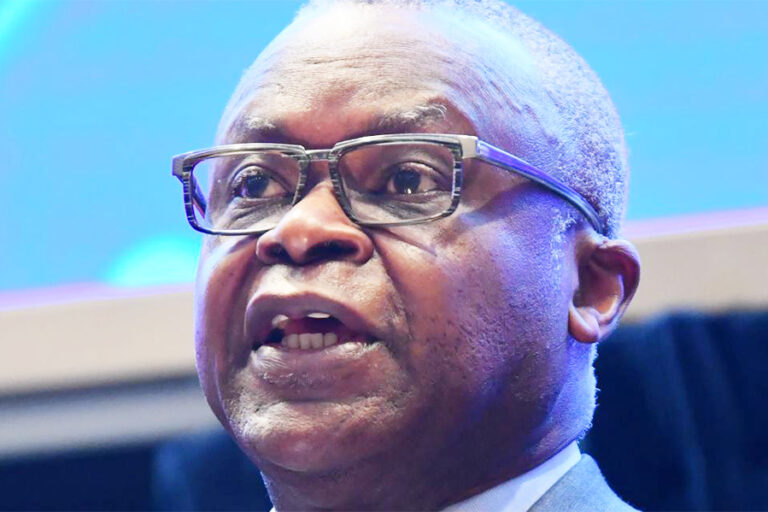
ECA head commends G7 Finance Ministers decision to back SDRs for developing and COVID vulnerable countries

The meeting of the committee of experts of the Conference of African Ministers ended Friday ahead of the African Finance Ministers Meeting next week and saw experts pledge to do more to accelerate the implementation of the AfCFTA, improve domestic resource mobilization, deepen digitalization and accelerate the implementation of the global Agenda 2030 and Africa’s Agenda 2063.
The Executive Secretary of the Economic Commission for Africa (ECA), Vera Songwe, welcomed the move by the G7 Finance Ministers to support issuance of new Special Drawing Rights which will help developing countries better respond to the COVID 19 crisis.
The Ministers agreed to support a new Special Drawing Rights (SDR) allocation to assist vulnerable countries respond adequately to the health and economic crisis triggered by the pandemic.
Speaking following the G7 Finance Ministers meeting, the United Kingdom’s Chancellor of the Exchequer, Rishi Sunak, said: “Today’s milestone agreement among the G7 paves the way for crucial and concerted action to support the world’s low-income countries, ensuring that no country is left behind in the global economic recovery from coronavirus.
The UK currently holds the Presidency of the G7.
“This is a very important and strategic step on the road to a new issuance of Special Drawing Rights by the G7 Finance Ministers today. The SDRs are our chance to do something transformational for a large number of frontier economies. We are grateful for the leadership shown by the G7 Ministers,” said Songwe, who has been at the forefront advocating for international financial institutions and others to provide more liquidity to allow African countries to build forward better post-COVID-19.
“Now we need to work on mechanisms for on-lending so we can stretch the SDRs for countries that need them most. Additional funding for the IMF PRGT from the SDRs of course is critical for low-income countries. We need to get vaccines to countries and also support the recovery with market access instruments that crowd in the private sector such as the Liquidity and Sustainability Facility.”
She added: “SDRs allow us to think out of the box and bigger. There is now real momentum for collective action at the IMF and World Bank spring meetings and also for the African Finance Ministers meeting next week organized by ECA.”
Enat bank selects its architectural landmark

Enat Bank has held an Architectural Design Award Ceremony of the bank’s future headquarters building at Sheraton Addis Hotel on March 13, 2021. The bank had floated an open bid for the architectural design of the bank’s future headquarters building and so, 13 designs participated. During the event, Meaza Ashenafi, President of the Federal Democratic Republic of Ethiopia Supreme Court and ex-board chairperson of the bank noted the architectural design selection is a momentous achievement for the bank even if it’s a late entrant in the banking industry. At the event, Ato Ermias Andarge, president of the bank mentioned the architectural design selection is a landmark move to build the bank’s future headquarters nearby the so-called financial street. He added that the selected design has 35 stories with 140 meters in height and it will be one of the city marks. He further remarked that the bank has secured a plot of land around the Senegatera area, in front of the main gate of the Addis Ababa University College of Commerce, from Addis Ababa City Administration.
MH Engineering is the one who submitted the winning architectural design. The winning design was selected out of the 13 designs by external juries, who have architectural and engineering backgrounds.
ESA ratifies 285 new standards
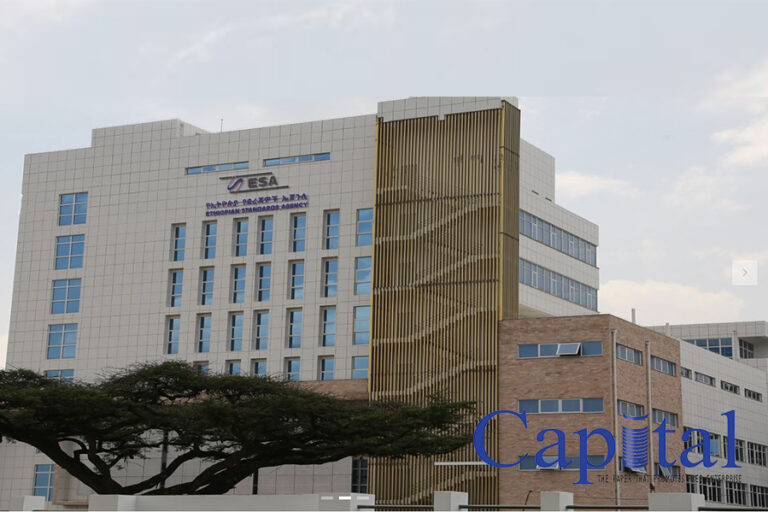
The Ethiopian Standards Agency has ratified 285 new standards. The Agency has been preparing standards to assure the exchange of quality merchandise within the dynamic market economy. It has also been giving training and technical support to professionals in related fields. The agency alongside a technical committee composed of concerned stakeholders has formulated new standards that were ratified by the National Standards Council on Tuesday January 5th, 2021. Initially 289 detailed standards were presented to the council but 285 of those were approved as national standards. 148 of the approved standards are brand new and 44 were revised.
The ratified national standards include: Agricultural and Food standards have 14 new added standards and 4 revised ones; Fundamental and General standard preparation sector has 23 new added standards and 1 revised and 4 left as they were; Chemicals and Chemical products sector has 17 new added standards, 13 revised; Construction and Civil Engineering sector has 19 new standards and 13 revised; Electromechanical standards preparation sector has 69 new standards; Environment and Health sectors have 6 new standards and 13 revised.
The new and revised standards are considered to be in line with the country’s developmental strategy and are expected to make significant contributions to the growth of the nation, strengthening the economy, and being the beacon of excellence for the manufacturing industry so that it could be competitive globally. The agency will also help with technological advancements and innovations. It has been protecting the society’s health and security, environmental wellbeing and defending the rights of consumers. All manufacturers and importers are expected to know standards and carry on their activities based on these qualifications for merchandise.
The Ethiopian Standards Agency (ESA) is the national standards body of Ethiopia. ESA was established following the restructuring of the Quality and Standards Authority of Ethiopia in 2010. It is a non-profit government body of the Ministry of Science and Technology. Its policy-making and governing body is the standards Council whose members are appointed by government from various organizations.
The mission of ESA is to enable manufacturing and service providing organizations to be competitive in internationally accepted management systems. The development of standards, training and technical support on implementation of standards contributes to the country’s economic and social development through technology transfer.
