Thursday, April 9, 2026
Home Blog Page 3136

WORK AFTER COVID-19

0

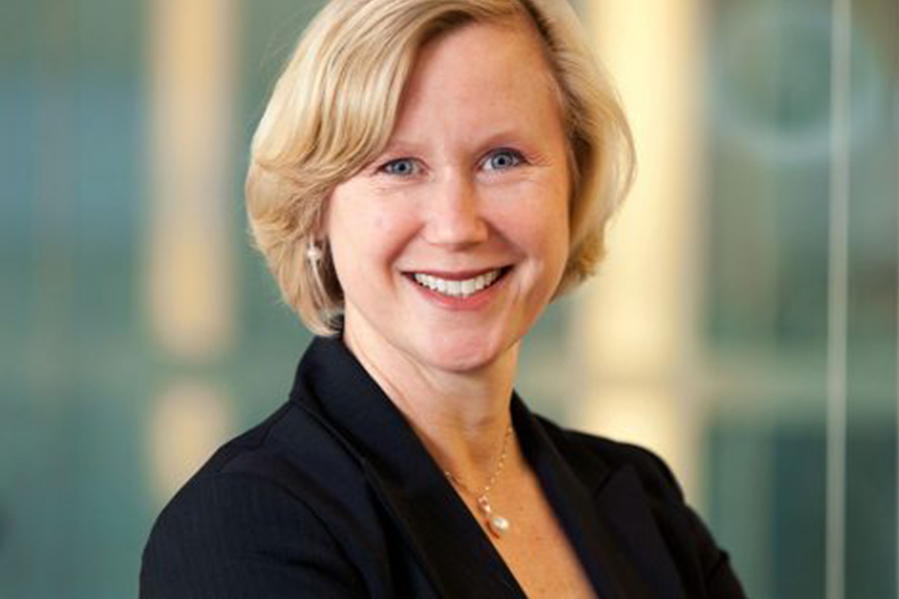
Susan Lund is a partner of McKinsey & Company and a leader of the McKinsey Global Institute. As a PhD economist, her research focuses on globalization and trade, and the impact of technology on work and workers. She is also a leader of McKinsey’s team modeling the impact of Covid-19 on economic growth. Her most recent research explores how global value chains and trade flow are evolving, and on how digital flows are transforming globalization and creating new winners and losers. Dr. Lund has an active travel schedule discussing research findings with CEOs and other executives at global Fortune 500 companies and she is a frequent speaker at global conferences. She has authored numerous articles in leading business publications, including Harvard Business Review, The Financial Times, The Wall Street Journal, The Washington Post, and Foreign Affairs.
Susan is on the Economic Advisory Board of the International Financial Corporation; a Board Director of the National Association of Business Economics; and a member of the Center for Global Development Study Group on Technology and Development Prospects.
Susan holds a Ph.D. in applied economics from Stanford University and a B.A. in economics from Northwestern University. She has lived and worked in Africa and Asia and currently resides in Washington, DC. Capital linked up with Susan Lund for an inside look into MGI’s recent report titled, ‘Future of work after COVID-19.’Excerpts;

Capital: Over the past four years, the McKinsey Global Institute (MGI) has published a series of reports exploring aspects of the future of work in a time of technological change, including an analysis of jobs that could be displaced by automation and AI. What were the challenges observed while reporting on a global pandemic, that is relatively new, sudden and unpredictable?
Susan Lund: COVID-19 had an immediate and jarring impact on work, but its long-term impact is likely to be significant. We identified how COVID-19 has changed the trajectory of trends that shape the future of work. We know from McKinsey survey of consumers in April, for instance, that three quarters of the respondents using digital channels for the first time during the pandemic plan to continue using them when life becomes more “normal.” Also, we know from our colleagues at McKinsey that many companies are already planning to reduce office space and deploy their employees differently going forward because of their successful experience with remote work. Many companies say they will accelerate their use of automation and AI technologies coming out of the pandemic as well. In general, some changes that the virus forced on consumer behavior and business models turned out to increase convenience and efficiency, making them more likely to endure.

Capital: This research uses as highlighted the “micro-to-macro” methodology. Can you expound why you chose this approach?
Susan Lund: The value in the research done by the McKinsey Global Institute is that we try to examine and analyse microeconomics on the ground, inside companies, inside sectors, and in particular places. That micro understanding of how the business operation and how consumers make decisions then allows us to have a point of view on business and economics at a macro level. This is one of the benefits of being part of McKinsey & Company – it gives us access to this micro perspective that provides insight and understanding on a larger, broader scale.

Capital: What are the standout trends in the “Future of work after COVID-19” report that are accelerated by the pandemic?
Susan Lund: COVID-19 has highlighted the importance of physical proximity in jobs. It catalysed three trends – e-commerce and other virtual transactions, remote work and digital interaction, and automation and AI – that are likely to change the trajectory of the future of work over the next decade. To better understand the role proximity plays in work, we analysed the activities and tasks required in more than 800 occupations and assigned each to one of ten work arenas.

Capital: Women, young, less-educated workers, ethnic minorities, and immigrants may need to make more occupation transitions after COVID-19 as per your report. Can you brief us on the analysis that went into arriving to this?
Susan Lund: COVID-19 had an immediate impact on women in the workplace that is well documented. Research by the McKinsey Global Institute found that women’s jobs were 1.8 times more vulnerable to COVID-19’s impact that men’s jobs. Women make up 39 percent of global employment but accounted for 54 percent of overall job losses early in the pandemic. One reason for this greater effect on women is that the virus significantly increased the burden of unpaid care, which typically falls primarily to women.
In looking at how COVID-19 is likely to change the future of work, our research found the COVID-19 is likely to have its greatest impact in “work arenas” that are home to jobs requiring close physical proximity and human interaction. These arenas – onsite customer service, leisure and travel, and computer-based office work – are home to many of the low-wage jobs that are more vulnerable to disruption due to the three trends accelerated by COVID-19. These jobs, in retail sales, food service, customer service, and office administration, are disproportionately held by women, young people, ethnic minorities, immigrants, and less-educated workers.
We find that across the United States, France, Germany, and Spain, women are 4.1 times more likely than men to need to change occupations because of shifts COVID-19 has caused in the three trends. The virus’s impact may fall even harder on 15-to-24 year-old workers, requiring them to find jobs in new occupations 4.2 times more than workers aged 24 to 55. Blacks and Latinos in the United States could face occupation transitions 1.3 times more than white workers, while in France, Germany, and Spain, workers not born in the EU face 1.7 times as many transitions compared to workers born in those countries.

Capital: In alignment with your report, workers will need to learn more social and emotional skills, as well as technological skills, in order to move into occupations in higher wage brackets. Can you expound further on this with the analytical data and plausible recommendations for this trend?
Susan Lund: The long-term impact of COVID-19 on work means that many low-wage jobs will not return, while demand for the skills needed for higher wage jobs in areas like healthcare and the STEM professions will increase. This means that to find a job, displaced low-wage workers whose previous jobs involving primarily physical and manual tasks. In advanced economies, workers in the lowest wage bracket on average spend half their time engaged in such tasks and much less time, 13 to 17 percent, using higher cognitive skills. In higher wage jobs, workers in advanced economies spend one-third of their time on the job using cognitive skills and only 3 to 5 percent of their time doing physical and manual tasks.
Before the pandemic, middle-wage jobs in manufacturing and production were declining, but those displaced workers did not necessarily need retraining or new skills because low-wage jobs continued to grow, offering them a landing pad. Because of COVID-19’s impact on trends affecting the future of work, however, we project that low-wage jobs are also, for the first time, likely to decline. Both low- and middle-wage workers, therefore, may need to look for jobs one or two wage quintiles higher than they previously held and requiring different skills.
Businesses and policymakers thus face an urgent need for programs that train and educate mid-career and vulnerable workers for better paying jobs. Last fall, for instance, the EU established the Pact for Skills, which offers businesses and other stakeholders’ incentives to devise programs aimed at overcoming the mismatch between skills and available jobs. Under the pact, automakers have pledged €7 billion to retrain each year 700,000 auto workers whose jobs are at risk.

Capital: Your research looks into 8 countries which account to 62% of the global GDP. Will similar trends be translated to the African continent? If trends might differ, what are your projected trends on Africa?
Susan Lund: We did not include African economies in this analysis, but in general we find that the long-term impact of Covid-19 on work in developing economies will be lower because the structural changes going on in their economies are the more important drivers of change. This includes the shift out of agriculture and into manufacturing and services, and the fact that with growing populations, demand for all types of jobs will rise in the coming decade. The challenge for these countries will be to create enough good jobs for all the young people entering the workforce.


Ethiopian Democrats: Time to Vote Republican?

0

By the Queen of Sheba

Ethiopians, like many immigrants in the United States, overwhelmingly vote democrat. Their votes are simply taken for granted without regard to their interest in the country and, less so, in their home nation. This must come to change and immediately.
It should be clear that this dramatic shift must be taken as much for rejecting the democrats as it is courting the republicans. Ethiopians must take a page from other established and successful immigrant communities in the US where votes of such groups are actively sought by both increasingly warring parties.
The last US election has exhibited the power of immigrant votes. With the slowly changing US demography, and Ethiopians sensing their collective bargaining power, it is time that they deployed it effectively and strategically. Because a power base in the United States is a power bank for Ethiopia.
Ethiopians and Ethiopian civic organizations must be active in exploring where their numbers and actions impact most in the elections. The East Coast and the West Coast as well some states in between where Ethiopians and Eritreans have the numbers should work with other immigrant communities to push their collective interest.
Mid-Term Elections
The US will be holding its mid-term elections in 2022 when all 435 seats in the House of Representatives and 34 of the 100 seats in the Senate will be contested. Thirty-nine state and territorial gubernatorial and numerous other state and local elections will also be contested.
Republicans are vying to take the house and the senate which the democrats currently retain a thin majority. To be sure, the Republicans have gained some seats during the 2020 elections when democrats were anticipating a landslide. It may be that the momentum is on their side.
Ethiopians live in a strong as well as precariously thin democratic strong holds with a leverage to sway this political dynamic. Ethiopians should thus work their senators, house of representatives, state councilors, mayors, and others to pursue pro-Ethiopia policy.
Ethiopians and Eritreans in the US and elsewhere need to stand together in their struggle against the blatant injustice committed against them in different times. Collectively, they are a force to reckon with as we witnessed it in the unprecedented public demonstrations in Washington, New York and globally.
It is important that their votes count for something; and if it means propping up an inept republican senator, legislator, counselor or even a president, who takes favorable stance towards the countries, so be it. It is time that the Ethio-Eritrea diaspora play the game in a systematic and organized manner. Organizations such as the Global Ethiopian Advocacy Nexus (GLEAN) and the Ethiopian American Civic Council could play a key role.
Blinken Must Blink
The US Secretary of State Antony Blinken confidently, if not dishonestly, reported “credible reports of ethnic cleansing” taking place in Tigray with no corroborating evidence. It is simply disingenuous that the Secretary who has been pressuring the country to give it full access, which she did, was yet to undertake a credible investigation. It is simply tragic that the US administration has already made up its mind about the alleged atrocities as committed by the government forces.
The Secretary deployed the phrase “credible reports” at the recent testimony at the US House of Representatives to the question posed to him by California Representative Karen Bass. It is sad that the US has become a nation of credible reports even without the investigation ever taking place. And yet in utter contradiction, he said he “discussed the importance of an independent, international and credible investigation into reported human rights abuses and violations in Tigray” with the UN Secretary General Antonio Guterres just yesterday (12 March 2021)!
It is shocking that Blinken totally ignores rebuking the perpetrators of the conflict in the first place when this was officially and promptly condemned by the former secretaries in the earlier administration. He has also contemptuously and blatantly refused to acknowledge the rocket attacks of the cabal on Asmara whose restrain was commended by the former administration. It appears that he fell under the spell of the enablers of the cabal which brutally reigned on Ethiopia for 27 years.
What is tragic is that neither Blinken nor any of the US government officials who are pressuring the Ethiopian government even mention the instigators of the war and the massacre in My-Kadra perpetrated by TPLF cabal which Amnesty International grudgingly admitted before it started spewing fabricated stories.
Biden Like Carter: Lest We forget
In mid-1970s, Ethiopia was teetering on the brink with multi-pronged attacks unleashed against it probably reminiscent to one today. The nation was besieged by both internal and external forces most notably the daring invasion of Somalia which took over most of the eastern part of the country.
At the time, the Ethiopian government purchased arms and paid for it in the United States. As it was importing the arms, the Carter administration prohibited its shipment.
The US abandoned Ethiopia in a worst possible time imaginable as the nation was scrambling to defend itself from invasion. Ethiopia had to turn to the Soviet Union, and eventually join the Eastern bloc with whom the US and its Western allies locked into a Cold War.
In a complete policy turnabout years later, the same United States would recognize the most extreme communist terrorist group, as described by the US itself, called the Tigrayan People Liberation Front, to walk into Addis Ababa subverting the London negotiation under the deceitful direction of former Ambassador Herman Cohen.
De javu! Duplicity, contradiction, and utter arrogance. These continue to be the hallmark of the US diplomacy on Ethiopia. We are witnessing the US attacking Ethiopia in multiple fronts. It has already forced two sessions on Ethiopia in the UN Security Council, capitalizing its position as chair, to squeeze an unfavorable resolution to help it meddle in the country’s affairs unhindered as it did in Somalia, Libya and others more.
The so-called international community particularly those who hide under its guise are facing the indomitable forces of two countries which they typically discount as “belligerent” a misnomer to “proud”.
To be sure, the cabal is gone forever. If the intention to breathe life on the dead horse, succeeds, by any remote chance, the My-Kadra massacre would be a child play if at all anyone, honestly, cares.
In Conclusion
One of the banners in the recent massive demonstration against the United States read “I regret my vote for Democrats, it only brought back Rice, #1 enemy of Ethiopia!” It was referring to the hysterical and manic laughter of Susan Rice in front of the world as she was unabashedly re-affirmed the 100 percent election victory of the TPLF!
With such epic honesty who needs liars.
All justice and democracy pursuing and seeking people of the world should have noticed, but may have already forgotten, this tragicomedy. We shall never.
It is time that the Ethiopian and Eritrean Diaspora show their strength not just in the streets but also in the ballot box.

The Queen of Sheba may be reached at QueenOfSheba2020@outlook.com | Twitter: @TheQueenofSheb5

AFRICANS RISE IN THE ARTS FOR THE PEOPLE

The Grammy Awards is best known as the largest international music event of the year, recognizing and celebrating various categories of recording and performing artists in a range of genres. Known also for their racial and gender bias in the selection process, Ethiopian- Canadian superstar, Abel Tesfaye aka The Weeknd, chose to boycott the award ceremony for “snubbing” him stating, “I will no longer allow my label to submit my music to the Grammys.” He added, that until the Recording Academy, responsible for the awards, eliminates the “secret committees” tasked with the decision making of the winners. The Ethiopian advocate for justice and transparency in an industry fraught with nepotism, racism, and many other isms, was compelled to respond to the mega stars stance telling the New York Times, “We’re all disappointed when anyone is upset. But I will say that we are constantly evolving. And this year, as in past years, we are going to take a hard look at how to improve our awards process, including the nomination review committees.” Good to see The Weeknd use his international success to make such a statement. He joins many Black artists have voiced concern over the years from Billy Ocean to Drake, more recently.
Burna Boy, born Damini Ebunoluwa Ogulu walked away a winner, for Best Global Music Album carrying his social justice message to the masses. “Twice As Tall,” the title of the album which won, is about “real life and the struggle for freedom” according to the artist known in Nigeria for being part of the young generation standing up for change in the #EndSARS campaign. The initiative against police brutality eventually went viral. Yes, even Beyoncé, Rihanna and Big Sean joined the clarion call to terminate the inhumane policy of violence perpetrated against civilians by the notorious Special Anti-Robbery Squad (SARS). Burna Boy, who loves Ethiopia, by the way, telling yours truly during his visit to Addis for a New Year concert some years ago, “… It is so peaceful here…I could come her and relax, write and just chill…the people are so beautiful.” Known for his Pan African styled performances channeling Afro-Beat phenomenon, Fela Kuti, Burna Boy brings the sounds and social issues of Nigeria and Africa in general to the world stage, winning his first Grammy, representing African music. Ethiopia Habtemariam, newly appointed Chair of Universal Music Group, may also prove to be a change agent in the industry with the power of her new post. Previously at the helm of Black music label Motown, known for the Jackson 5 and Dianna Ross and the Supremes amongst many major Black artists over the past 50 years she states, “It’s an incredible honor to represent and define what Motown is today. I’ve always understood the power of music and the responsibility I have, not only to continue to be an advocate for artists and creators, but to forge new paths for entrepreneurs and to lift up our next generation of executives around the world.”
The disparity and bias in the music and arts industry is nothing new and as Africa’s presence in fine art, fashion and music grow exponentially, rising African stars will not sit silent. Artists have soft power, in other words the ability to influence international affairs with even one Instagram post. With millions of followers hanging on their every word, they can shape opinions and promote awareness on a vast array of topics from AIDS to conflict zones. I reflect on the Africa Unite concert we coordinated here in 2005 with thousands of peaceful people from all walks of life. Ethiopians joined in harmony a call for unity and peace with four generations of Marleys from Bob Marley’s mom, Mother Booker, to then 8 year old Skip Marley, now a fast rising reggae artist in his own right. They were chanting, “One Love, One Heart, let’s get together and feel alright…” we need this vibe again. In addition to advocacy, we should turn to music and the arts to help the healing we all crave, literally from COVID and subsequent illnesses and from the greatest grievance of all, the lack of love, care and compassion. Bob put it best.

“Africa unite
Unite for the benefit of your people!
Unite for it’s later than you think!
Unite for the benefit of my children!
Unite for it’s later than you think!
Africa awaits its creators!
Africa awaiting its creator!
Africa, you’re my forefather cornerstone!
Unite for the Africans abroad!
Unite for the Africans a yard!”

Dr. Desta Meghoo is a Jamaican born
Creative Consultant, Curator and cultural promoter based in Ethiopia since 2005. She also serves as Liaison to the AU for the Ghana based, Diaspora African Forum.

Abyssinia Aknaw

Name: Abyssinia Aknaw

Education: LLB, MBA

Company name: ToADORE

Title: Founder/ Creative Director

Founded in: May 2020

What it does: Lingerie, night wear, traditional cloths and hair accessories manufacture and retailer

HQ: Addis Ababa

Number of employees: 4

Startup Capital: 1,000 birr

Current capital: 100,000 birr

Reasons for starting the business: We want to be the 1st retail brand sourcing most of our products locally

Biggest perk of ownership: Being your own boss

Biggest strength: I never give up

Biggest challenging: Finding quality materials in the local market

Plan: To open a store within the next 6 months in Bole and another within a year and half

First career: Fashion

Most interested in meeting: World fashion icons

Most admired person: My Grandmother

Stress reducer: Yoga

Favorite past time: Time with family

Favorite book: The Secret

Favorite destination: Wenchi Crater Lake

Favorite automobile: Ford
