

The National Disaster Risk Management Commission (NDRMC) is preparing to receive 600,000 metric tons of wheat to meet its demand for humanitarian assistance.
As Aydruse Hassen, Deputy Commissioner and Logistics head of NDRMC said, from the 600,000 metric tons, about 400,000 metric ton of the wheat is on its way to Ethiopia, which has reached to the Djibouti port, and as he further explained, the remaining 200,000 metric ton will be shipped within a short time.
The procurement was made through the Public Procurement and Property Disposal Service (PPPDS) as Aydruse revealed, most of the procurement has been made from the black see countries as it is more close to the country.
Even if the plan is to procure 1million metric tons of wheat the deputy commissioner said the number could increase or decrease based on the situation.
The commissioner noted that the wheat will go a long way in assisting the currently, 1.2 million internal displaced persons in Amhara region, 186,000 in Afar region and 400,000 in Benishangul-Gumuz region. The World Food Program (WFP) which is supporting the IDPs in the Tigray region will also roll out its support for the three mentioned regions.
The commission has also launched emergency coordination at Dessie, Bahir Dar and Semera to accelerate its support.
Previously, the head commissioner of NDRMC, Mitiku Kassa said, the commission had planned to commence the two phases through direct procurement as ‘urgent procurement’ due to the current situation in the country while the remaining phase will be procured through the Public Procurement and Property Disposal Service (PPPDS). “The procurement process will be based on the international wheat market and by our 2021 need,” the commissioner said adding, “Since the global market is changing we made the procurement through three phases.”
To meet its demand for 2021 need the commission was planning to purchase one million metric tons of wheat through three phases.
After the military confrontation with TPLF on November 4, 2020, tens of thousands of people were reported to be in need of humanitarian assistance in Tigray, Amhara and Afar regions as well.
Following this, several non-governmental agencies began providing humanitarian assistance, including agriculture and livestock, water and sanitation, health, education and nutrition, non-food items, logistics and different sanitary products for women and children.
Regarding the Afar region, the head commissioner said that all areas have been liberated from the invading forces and more than 76,500 IDPs are currently receiving assistance and a state-agreement has been reached with the World Food Program to carry out the work in accordance with international law.
Commission to receive 600,000 metric tons of wheat to meet aid demand

LADA car assembly to set up shop in Ethiopia

Local motor manufacturing company, Bazra motors has agreed with Russian AVTOVAZ, the manufacturer of LADA vehicles to set up a LADA car assembly plant in Ethiopia.
Both Bazra and AVTOVAZ have signed the agreement on 31 August 2021 to establish a LADA assembly line in which Bazra motors will assemble a wide range of LADA vehicles in the city of Kombolcha.
The agreement stipulates the organization of assembly of cars through a large knot approach of all models of LADA cars such as GRANTA, VESTA, XRAY, LARGUS, NIVA TRAVEL and NIVA LEGEND. The assembly line will start to assemble 5000 vehicles annually with a plan of reaching 10,000 units in five years,
Bazra motors previously also agreed with other Russian Ulyanovsk Automotive plant UAZ to set up UAZ car assembly plant. Bazra motors are also working on agreements to assemble GAZ minibuses and KAMAZ buses and trucks in the near future.
How Ethiopia can transform health, lift GDP with policy to fortify foods

A recent report published by the Global Alliance for Improved Nutrition (GAIN) details the costs and benefits of introducing mandatory food fortification in Ethiopia.
According to the findings, a government that spends over $3.8 million over the next 10 years could save tens of thousands of lives, reduce healthcare costs, and raise the country’s productivity. It could also reduce funding of up to $520 million allocated to fight vitamin deficiencies.
Decades of records with the United Nations’ Food and Agricultural Organization show that carbohydrates make up more than 70 percent of Ethiopia’s national diet, delivering energy, but very few of the vitamins and minerals that humans need to be healthy. More than 80 countries that face these challenges have added nutrients to staple foods in order to reach a wide population without significantly changing national eating habits.
The analysis found that for every $1 spent by a government to fortify flour with critical nutrients results in $13 of economic benefits to Ethiopia. Improved healthcare costs, lives saved from illness and improved productivity were also some other benefits listed.
Ethiopia is currently seeking a resolution for its problems of severe deficiency of Folic acid and Vitamin A. Ethiopians’ average consumption of folic acid, which plays a critical role in ensuring the health of a fetus during pregnancy, runs at less than 200 micrograms per day. It is a stark contrast to the 400 micrograms needed to sustain one’s health per day. As a result, 84 percent of Ethiopian women aged 15 upto 49 years old are at risk of giving birth to babies with Neural Tube Defects (NTD). A baby born in Ethiopia is therefore 11 times more likely to be born with an NTD than in any other African country.
To counter such challenges, countries such as Kenya, Nigeria, Rwanda, Tanzania, Uganda, and Zimbabwe have fortified common staple foods like flour with folic acid, reducing the number of NTD pregnancies by an average 41 per cent.
Ideally, it is expected to follow the country’s success in tackling malnutrition, reducing the prevalence from 58 percent in 2000 to 37 percent in 2019.
The report also highlights the ongoing costs of the country’s challenges as a result of Vitamin A deficiencies, which cause night blindness and a loss of immunity to infections. Recent studies found around 80 per cent of all Ethiopian children – from 92 per cent in Amhara to 55 per cent in Gambella – do not get enough intake of Vitamin A. Ethiopian women at the reproductive age are at 82 percent.
“Extremely deficient diets are continuing to deliver ill health to almost every Ethiopian and need urgently addressing,” said Ton Thomas Haverkort, GAIN’s Ethiopia Country Director. “Food fortification is simply a universal solution, which for less than half-a-million dollars a year of government spending can transform Ethiopia’s public health and productivity.”
Ethiopia has taken significant steps towards scaling up fortification programmes, such as preparing standards for fortification. Yet, it has not yet mandated the fortification of flour and edible oil.
Report finds stark disparities in COVID-19 impacts
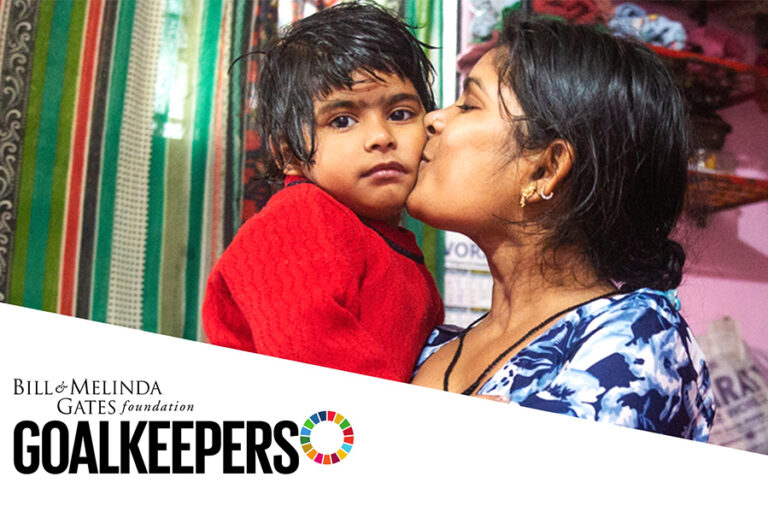
A research done by Bill and Melinda Gates foundation reveals how the world stepped up to prevent worst-case scenarios from happening and the need for long-term investments to ensure an equitable recovery and continued progress toward the Global Goals.
The findings of the research were announced at the fifth annual Goalkeepers Report organized by the company. It features an updated global dataset illustrating the pandemic’s adverse impact on progress toward the United Nations Sustainable Development Goals (Global Goals).
According to the findings, those who have been hit the hardest due to the pandemic will likely be the slowest to recover from it. Because of COVID-19, an additional 31 million people were pushed into extreme poverty in 2020 compared to 2019. And while 90% of advanced economies will regain pre-pandemic per capita income levels by next year, only a third of low- and middle-income economies are expected to do so.
Fortunately, the world stepped up to avert some of the worst-case scenarios. This is a contrast to last year’s predicted drop of 14 percentage points in global vaccine coverage effectively erasing 25 years of progress in 25 weeks. New analysis from IHME demonstrates that the decline, while still unacceptable, was only half of what was anticipated.
Co-chairs of the research have highlighted the “breathtaking innovation” that was only possible due to global collaboration, commitment, and investments over decades. They acknowledge that averting the worst-case scenarios is commendable, yet they note it’s not enough.
Another issue brought to light was the economic impact that the pandemic has had on women globally. In both high and low income countries, women were affected more than men.
“Women face structural barriers in every corner of the world, leaving them more vulnerable to the impacts of the pandemic,” said co-chair Melinda Gates. She also emphasized the need to invest in women now to address inequities as well as their responsibilities governments have to spur a more equitable recovery while strengthening their economies against future crises.
As vaccines continue to be administered to millions around the globe, the report illustrates how decades of investment, policies, and partnerships enabled the speed of vaccines to begin being rollouts. However, the systems that allowed for the unprecedented development and deployment of the COVID-19 vaccine exist primarily in wealthy countries, and as a result, has not benefited all countries equally.
“The lack of equitable access to COVID-19 vaccines is a public health tragedy,” said Bill Gates. He added that the world will face very real risks in the future if wealthy countries and communities begin to treat the pandemic as another disease of poverty. “We can’t put the pandemic behind us until everyone, regardless of where they live, has access to vaccines.”
More than 80% of all COVID-19 vaccines have been administered in high- and upper-middle-income countries to date, with some securing two to three times the number needed so they can cover boosters. In low-income countries however, that number drops to less than 1%. Africa, although is home to 17% of the world’s population, has less than 1% of the world’s vaccine manufacturing capabilities.
“We must invest in local partners to strengthen the capacity of researchers and manufacturers in lower income countries to create the vaccines and medicines they need,” said Gates Foundation CEO Mark Suzman. “The only way we will solve our greatest health challenges is by drawing on the innovation and talent of people all over the world.”
