

The National Electoral Board of Ethiopia (NEBE) is vying to extend the election in areas where the first round of the 6th national elections was not held.
Due to ballot paper defects, security concerns, voter registration, and disputes, a total of 64 constituencies were expected to hold elections on September 6. However, according to sources Capital has learnt that the board is planning to hold the polls on September 27, 2021, citing continued security issues, lack of time for preparation and other existing situations of the country as hurdles that have caused the delay.
The board had extended the election in areas of Amhara, Oromia and Benishangul-Gumuz where there were no conditions conducive to hold elections due to security concerns. Similar postponements were faced in Harari, Dire Dawa and SNNPR where the elections were unlikely to take place. Likewise, it is to be recalled that polling did not taken place as scheduled in all constituencies in the Somali region as well as in the South West Referendum, and these areas are set to cast the ballot before a new parliamentary session begins in early October. The case of Tigray however is totally dependent on the improvement of the security situation.
The 6th general election polls were originally scheduled for August 2020 but were delayed because of the coronavirus pandemic and were slated for June 5, 2020. The NEBE later announced that due to administrative and logistical problems it postponed it to June 21.
During the period of the slated election, the board revealed that 15 percent of the constituencies were unable to participate in the election but overall the 6th general election was held at all of the constituencies in Addis Ababa, Dire Dawa, Gambela and Sidama region with the board now having already announced election results for both regional councils and federal house of people representatives.
The September 6 election was decided in early June primarily, owing to security concerns, voter registration, irregularities in ballot papers, and disputes with the Board over the election.
For instance, parts of western and southern Oromia were not safe, and were racked by armed insurgency. Fierce fighting in these places, as well as in the neighboring region of Benishangul-Gumuz, and Amhara Region had stopped the voting process scheduled. The delays were faced in the Somali and Harari regions, which had been beset by legal disputes as well as mishaps such as misprinted ballot papers. The referendum in Southwest Ethiopia was also scheduled to take place on June 21 with the general election, but due to security concerns, some constituencies were not able to cast their ballots so the election were transformed to be held on September 6, 2021.
NEBE extends election-day

Gov’t prepares protocol to harmonize border trade
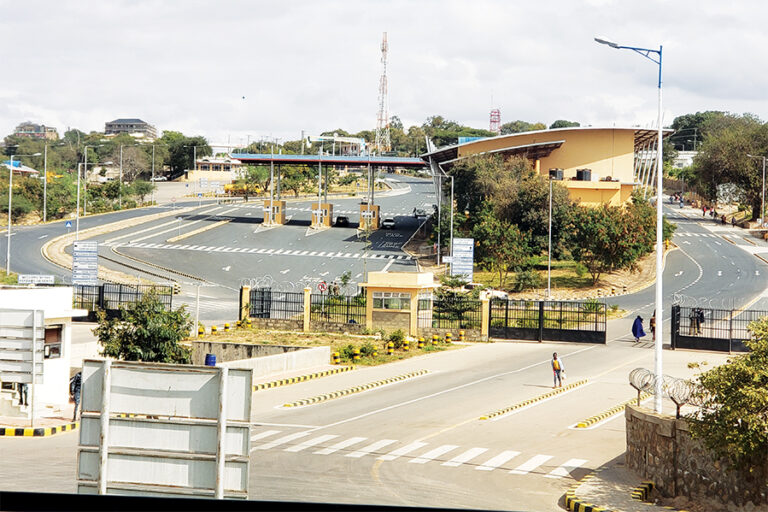
The small scale business community in Moyale, Ethio-Kenya border urges the government to come up with an initiative to back their activity from both sides.
The Ethiopian side said that it is in the final stages to introduce a protocol that will allow the community in the two border countries’ area to trade and move goods easily.
Ethiopian Customs Commission disclosed that it is getting a lesson from Nairobi, which has more experience on One-Stop Border Post (OSBP) with its East African Community peers like Tanzania and Uganda, in order to make effective the Moyale OSBP.
On the discussion held between small scale traders at the two Moyales and the customs officers of Kenya and Ethiopia, traders appreciated the improvement of activities at the boarder since Moyale OSBP became operational starting from the first week of June.
While on the discussion held at the Ethiopian side of OSBP, traders expressed their desire to see improvements on the border trade particularly on the Ethiopian side to ease the transportation of commodities to the Kenyan Moyale border.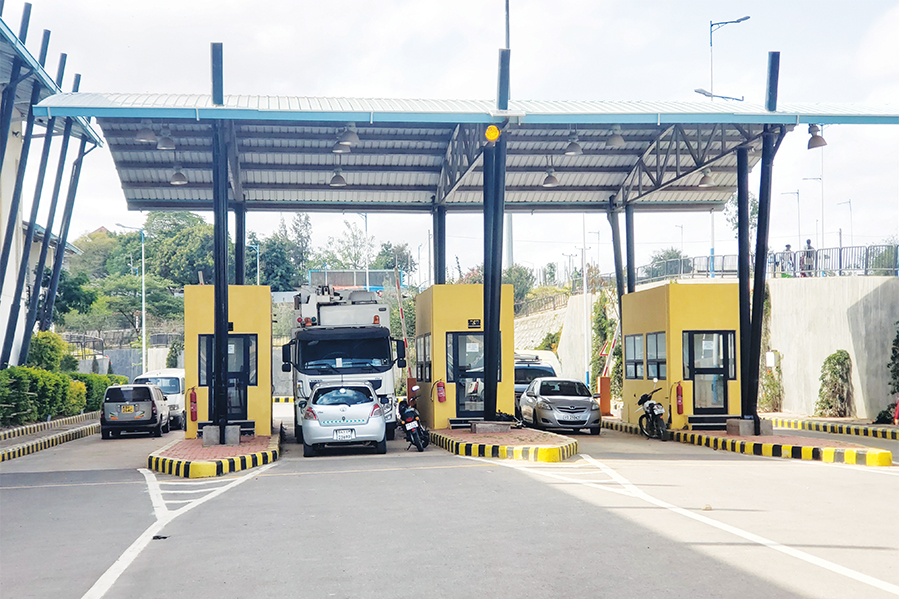
One of the traders said that the situation from the Kenyan side is good and requested the Ethiopian side to smoothen the border trade similar to Kenya.
Abebe Ersumo, Deputy Head for Operation at Moyale Customs Branch of Ethiopian Customs Commission (ECC), said that the OSBP, which was inaugurated on December 9, 2020 by the head of governments of the two countries had become operational as of June 9, and has since then been successfully changing the previous very lengthy processes of clearing.
He said that the OSBP would create conducive environment in different aspects including boosting the small scale border trade and even smashing contraband from both sides.
“The major objective of the meeting with traders in the area is mainly targeting to create awareness about OSBP and its benefit for the community,” Abebe told Capital.
“We are working in different preparations to expand the operation of OSBP for the benefit of the two countries and the community in the area. Similarly, we are looking into small scale traders demand which is supposed to be responded by the higher and required body, which is now being worked on,” he added.
Abraham Gudeta, Process Coordinator for International Cooperation at ECC, said that continued community sensitization is made in collaboration with Trade Mark East Africa (TMEA), which provided technical support on the realization of OSBP from inception.
Abraham said that in terms of preparing border trade protocol for small scale traders, the Ethiopian government is developing the legal framework. “The framework is in consultation with the Kenyan Ministry of Trade in July and the action plan is being prepared to conclude the bilateral agreement between the two countries,” he said.
“The Ministry of Trade and Industry is working on it and it will come with a better solution and legal framework to amplify the small scale trade,” Abraham added.
The document that TMEA issued indicated that OSBP contributes to enhancing greater inclusion of women in trade, especially for the small-scale cross border traders, majority of who are women.
“In the past the customs clearing was conducted by both posts, while since OSBP become operational the clearing is taken jointly and at once, which reduced the process time significantly,” Abebe explained.
Abraham said that the public is now beginning to enjoy the OSBP and that it shall brew fruit with time when the community fully becomes aware of it.
Joel Ndege, Kenya Revenue Authority Station Manager Moyale OSBP and the Chairman of the Border Management Committee expressed that the acceptance of the community around is very high although there is need for continued community engagement of get a full coverage in the community.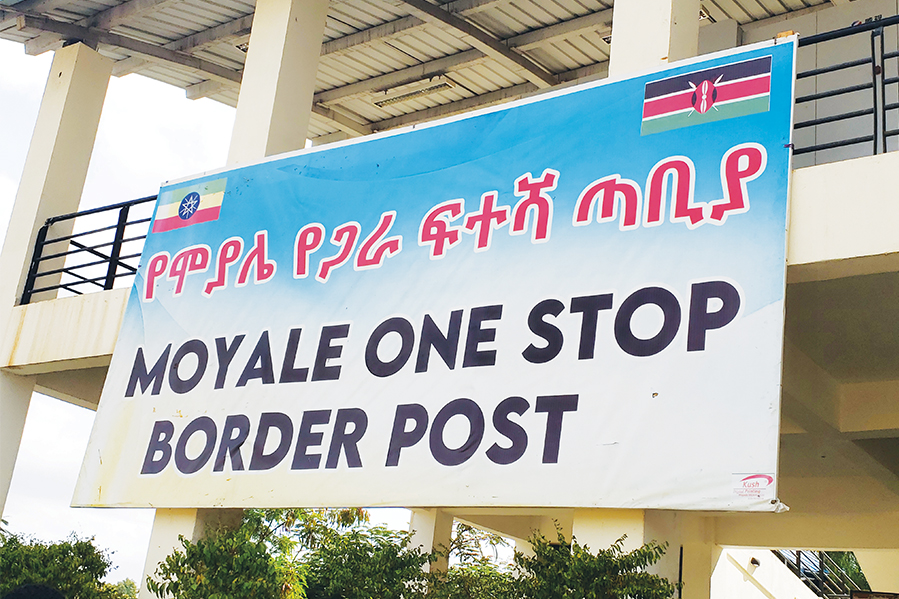
The scheme customs and other relevant government bodies are working on both sides of the post. When the cargo fleet is on transit to Kenya it is only cleared by the post at the Kenyan side and similar for the import of Ethiopia.
Ethiopia imports chemicals, shoe creams, stationary, textile and garment, and seasonally carrot; and Ethiopia exports agricultural products like Khat, tomato, onion, livestock, and industrial product including bottle and leather and leather products.
Abebe said that the OSBP is the first for Ethiopia, while Kenya has five before, due to that they are well experienced than the Ethiopian side, “we may take lesson from them to improve our service and we are doing that at the moment.”
OSBP aims to see seamless flow of cargo traffic through the OSBP in both directions, without any hindrance, where it had taken days for clearing in the past.
Traders do not have to undergo the same procedures multiple times with different border agencies, by making border crossing clearance processes easier and faster.
Industrial parks face hindrance from right of way and cooperation

Industrial Parks Development Corporation said a right of way is challenging industrial parks and their operation. As the corporation said mostly city administrations are not available to fulfill their responsibilities in protecting boundary of industrial parks.
Behaylu Kebede, Marketing and Communication head of the corporation told Capital that even if the corporation is trying to have different dialogues with city administrations to solve the problems there is no concrete result on the issue, and some of the cases have been taken to the court. ICT, Bole lemi, Dire Dawa, and Adama industrial parks are some which are suffering by the cases.
As Behaylu said the case of right of way is limiting investors from building internationally qualified industries, and in some cases there has been also interruptions of operations in the industrial parks due to security issues as a result of right of way cases. The corporation is also closely working with the society to solve the problem and also in creating awareness as the parks is important for the society.
Beside right of way, Behaylu said the city administrations are not cooperating with the corporation in building basic infrastructure around industrial parks, which is making it harder in the operation of the parks.
Furthermore, the corporation has said in its program that in order to build housing for employees based in industrial parks is not receiving full support from the city administrations as it was planned. “The corporation wants the city administrations to consider industrial park employees in their housing scheme programs, whereas most of the administrations are not willing to do so,” it expressed.
The corporation said that in order to solve the housing problem that employees are facing and to increase efficiency of their production there are three options, that is: by facilitating bank loan for those who have land around industrial parks and build houses that can be affordable for employees, secondly, by giving land for the investors to build dorm kind of houses for their workers and lastly by working with private developers.
Recently, the Corporation had inked an agreement with Corner-Stone Housing Development Group to build housing for its employees based in Hawassa Industrial Park.
Housing shortage is regularly cited as one of the main constraints of work force recruitment and retention in the IPs. The Industrial Parks Development Corporation (IPDC) and Ethiopian Investment Commission (EIC) have initiated various initiatives to tackle this affordable housing shortage for IP workers.
Currently, there are more than 83,700 employees working at 13 industrial parks, and in 2020/21 budget year the industrial parks have created job for 56,236 employees.
In the 2020/21 completed budget year, the corporation had raised 247.9 million dollar revenue from the planned 400 million dollar, and as the corporation said, slowdown in export as result of Covid-19, and the complete closure of Mekelle industrial park during the law enforcement had raised as some difficulties in the budget year.
The public enterprise, manages 13 industrial parks including: Mekelle, Semera, Bahir-Dar, Kombolcha, Debre Birhan, Dire Dawa, Kilinto, Bole lemi, Adama, Jimma, and Hawassa industrial parks
In the coming 20 years the corporation is planning to increase the number of industrial parks to 100, however, the corporation has no plans to build new parks for the 2021/22 budget year.
UNCTAD, IATA extend partnership to facilitate global trade
The International Air Transport Association (IATA) and UNCTAD announced that they have extended their partnership. The move comes in an effort to facilitate international trade, particularly e-commerce.
Both parties aim to enrich their history of collaboration with each other to accomplish various shared goals. This includes the successful integration of air cargo messaging standards (Cargo-XML) into UNCTAD’s automated customs management system, ASYCUDAWorld. The integration is expected to enable a more efficient processing of air cargo shipments for the 100 countries choosing to deploy the latest version of ASYCUDAWorld.
“Through this extended partnership, we look forward to leveraging the leadership of UNCTAD and IATA in their respective fields to boost e-commerce in developing countries through improved exchanges of trade data,” said Shamika N. Sirimanne UNCTAD’s Technology and Logistics Director.
The next stage of the collaboration is expected to include adding a risk assessment for mail shipments and facilitating access to the IATA enhanced partner identification and connectivity. This will enable ASYCUDAWorld to manage e-commerce shipments more efficiently.
Once completed, ASYCUDAWorld will allow customs authorities to communicate advanced cargo/mail information requirements across the digitized supply chain including airlines, freight forwarders, ground handlers and third-party messaging service providers.
“Global standards enable accurate information and effective risk-assessments. This in turn promotes stronger compliance and will contribute to a safe supply chain, which should give the authorities the confidence to modernize processes,” said Nick Careen, IATA’s Senior Vice President for Operations, Safety and Security.
The collaboration will also include the potential exchange of additional operational electronic information such as air cargo rules, flight schedules and others that can assist customs officials in their risk assessments.
