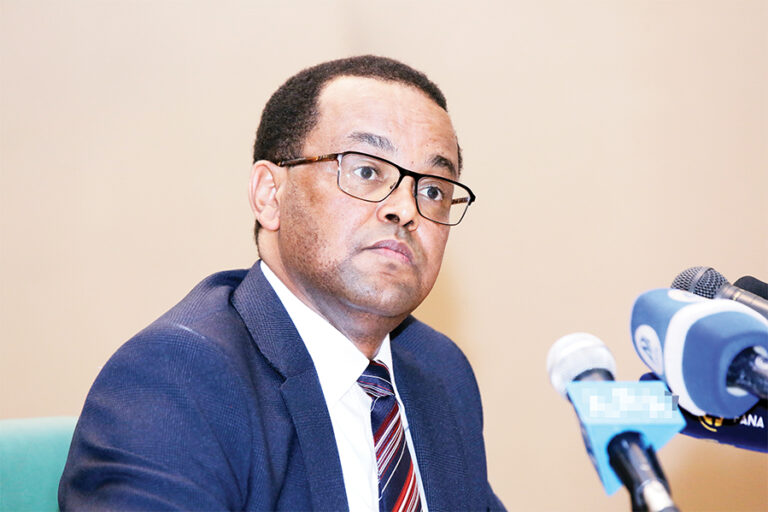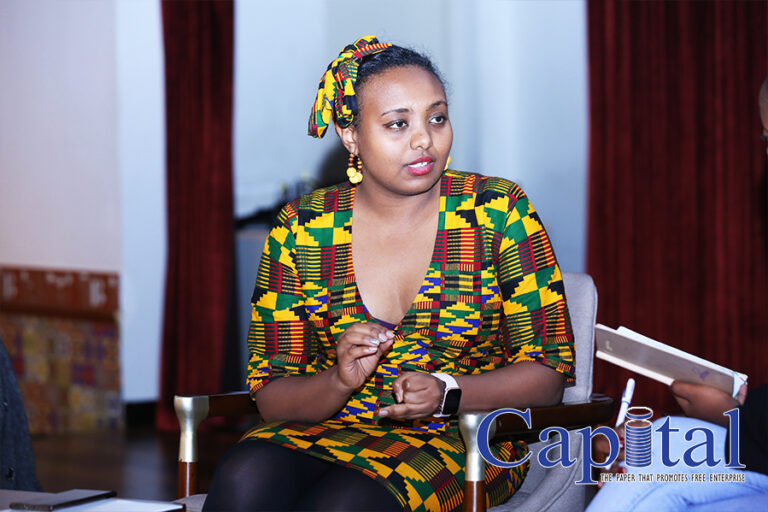
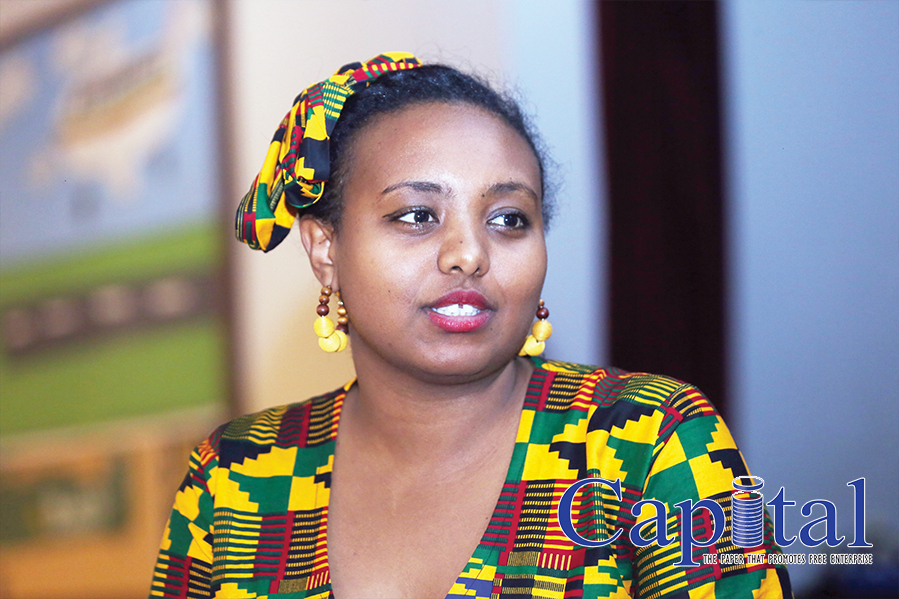
For the growth and development of any country, investment promotion is vital. In Ethiopia, the Ethiopian Investment Commission (EIC) which is an autonomous government institution was set up with its main role being to encourage foreign and domestic investors to consider the country’s investment prospects. Capital sat down with EIC Commissioner Lelise Neme for an inside look at the investment scene in Ethiopia throughout the years. Excerpts;
Capital: What is your view on the overall investment activities during the last three years?
Lelise Neme: When we see the overall performance of the investment in Ethiopia during the last three years it was time that wide reforms followed, including re-amending the investment law. Furthermore, we have made new regulations and proclamations and also we have been working to change the overall working directives.
We have done all these things not only based on our assumptions but also we have been taking consultations and series of talks with the investors and different stakeholders to solve problems on the investment sector.
As a result of reforms and law improvement there have been certain progresses. Before 2011 EC, Foreign Direct Investment /FDI/ flow was slow, however following the reforms through the last three years as figures show there is about 20 percent increment on FDI. However, we still don’t believe that this is enough so we are working aggressively on investment promotions and strengthening our customer service.
Generally, as an investment commission, the last three years has been a time that we have worked to reform and change the overall activities with reforms of huge law frames.
Capital: Could you please tell us success stories during the last one year, of your time in leadership?
Lelise Neme: It has been about 1 year since I came to this position, but I had been working with the previous commissioners closely.
For the past year, we have been working to make progress in as much ways as we can. Following the changes on directives and the investment law in the currently completed year, we have made certain good dialogues and built strong relationship with investors. Throughout the year, our relation with investors and investors association has been changed and we have been using it to promote our investment options in corporation with our investors.
Additional to this, we have been widely working to solve problems mainly coming from the society, and thus we have been widely working on corporate social responsibility.
Beyond this, on January 2021, we have launched a strategy called ‘After Care Strategy’ which lays strong ground on the investment sector. Previously, the investment commission used to focus on promoting investment options without any follow ups hence after launching the ‘After Care Strategy’ – it has made us to start follow ups of the implementations and has created improved and suitable environments to solve investors problem.
Additional to the strategy we have also established a technical committee combined with different government stakeholders chaired by the investment commission and co-chaired by the ministry of foreign affairs. This team tries to identify and solve challenges which are hindering investment and investors from getting in to implementation on time. This also helps the investors to solve their problems by cooperating with us and lots of investments which were delayed have got in to implementation.
This year we have been working with three principles, the first one is retaining the existed investors, and making them to work with their full capacity, the second one is making them to re-investment on different sectors basically those which are prioritized by the government, mainly in the agriculture, energy and mining, and manufacturing, and the third one is expansion, that is by evaluating what they have worked on in their existed land and strictly following their expansion.
The other issues which rises in investment is related with effectiveness of incentives, each investment areas has their own incentive based on their different factors, this incentive is the nation’s wealth which the country contributes for the development of investment. We have established a team which can follow up on the effectiveness of the directives within my year of leadership.
Capital: What kind of strategy is After Care Strategy?
Lelise Neme: After Care strategies are post investment follow up and support. The investment commission is not only dedicated on promotion rather after the investors come to Ethiopia we have to follow their every activity: that is, how the investment works, how much job it creates, does it use its potential, and we also look at how it can increase its capacity.
After care strategy is giving an end to end support for the investor and which starts by building relations with the investor, cutting communication gaps, quickly solving their problems and helping them to be effective. For us as an investment commission, it helps us to improve our relation with local investors as well.
Capital: How has the COVID 19 pandemic affected investment flows?
Lelise Neme: Covid-19 is a global challenge, but for us it was also an opportunity. Our fear was to the manufacturing sector as they could be highly affected due to lock down and restrictions since their targets are the European and American markets.
We have been doing certain things to change the challenge to an opportunity; one of the methods we use to cope with the challenge was by starting to produce Face Masks locally. Before the outbreak of the pandemic, our manufactures had never been engaged in the production of face masks. Both the commission and the government itself have been supporting investors to start producing masks for both local markets and export. To this end, lots of manufacturers both in and outside of the industrial parks have started to produce different kinds face masks. This has helped our employees to stay at work and minimize unemployment which was caused by the pandemic which is one success stories.
We have also been able to produce Covid-19 Testing kits at industrial parks. At the first few months of the outbreak of the pandemic there was no such capacity to test the virus which we used to send samples to South Africa to test.
Likewise, we have been facing lots of challenges; especially our export earning was slowing down as result of lock downs, however in the last two months figures are showing improvement. It’s worth noting that one of our focus for the next year is increasing our export earnings from industrial parks both developed by the government as well as private.
Capital: How are you preparing for the post Covid-19 competition?
Lelise Neme: I believe that the post Covid-19 period will bring huge competition since each country wants to recover its economy from the damage the pandemic has caused. Here investment takes the lion share in economic recovery.
Still as the result of travel restrictions it is difficult to promote investment options for international investors by traveling to different parts of the world. However, we are aggressively working on promoting our investment options, opportunities and capacity for the existing investors and recognizing them as an ambassador to promote our country using their connections.
Beside promotions, we are preparing our self by advancing our services, customer service, and by developing different strategies. We are renovating our office where we plan to start a one stop service platform at the head quarter level which is already operational at industrial parks.
One of the lessons the pandemic has taught us is digitalization. For the period of the pandemic by promoting investment using certain online platforms we have got lots of investment and investors so we will continue using such options to accelerate the investment flow in the country.
Even if there is huge competition we believe that we have the capacity to penetrate it.
Capital: Instability in different parts of the country is one of the challenges which are hindering the investment sector, how are you working to handle the challenge?
Lelise Neme: One of the issue related with instability is the law enforcement in the Northern part of the country, as result of efforts the government has taken some activities were started, even industrial parks in the region were starting their operation and getting ready for export, it is obvious that instability affects the economy, especially by creating fear in international investors.
We are highly working on giving information and advising investors about different conditions in the country, mainly to minimize misinformation which is one difficult challenge, thus giving proper information helps the investor to stay calm.
One of the fears in the currently completed year was the Election which most investors had been frustrated about. To this end, by combining with the ministry of peace and foreign affairs we have been contacting and maintain talks before the election took place. Thus by creating a communication chain we have able to create confidence especially after the peaceful elections.
This buildup of confidence and trust with us has further made them to think about expansions and also re investments.
However, stability and peace within the country is crucial for investment and we believe that it will be solved soon.
Capital: How does the law enforcement in the northern part affect the overall investment activity in the region, what is the fate of investments in the region?
Lelise Neme: Currently, the Ministry of Foreign Affairs is leading the overall situation in the issues. We can’t comment further on this but as stated we hope the issue will be resolved soon.
Capital: The other challenge investing in Ethiopia is infrastructure and also foreign currency shortage, how are you working to solve this?
Lelise Neme: To solve the problem in terms of infrastructure, the Ethiopian Electric Power is working highly with some industries with dedicated or temporary power supply. Moreover to solve these challenges we have set three options: the first that we are working with the ministry of water irrigation and energy and also the Ethiopian Electric Power to engage the private sector in to the power sector, that is, solar, wind and hydropower. We believe that this can also contribute to the solution.
The other is enabling the investors to produce their own energy using solar power, whilst the third one is enabling the private sector to engage in producing solar energy, to which there are certain investors which have shown their interest in this capacity.
Also the GERD will start producing electricity soon. Solving infrastructural problems in combined measures is one of our targets stated on our ten years plan.
Related with the foreign currency we have to see the sources of the problem, the first one is low export and the increase of import substitutions. To solve this, the first option is increasing export investors with high export capacity, and also minimizing our import items and increasing local production, mainly food items. Ministry of Agriculture is highly working to be food independent, and we are also working to increase integrated agro industrial parks to produce processed food which helps to increase export and solve the problem of foreign currency.
As the assessment by the exports stream committee shows, the number of export is increasing meanwhile imported items are also increasing so we have to balance it by replacing by local substitutes, one of our focuses on the ten year plan is import substitution and similarly we have to increase strong investments and anchor exporters.
Capital: How is EIC working with the other stakeholders on privatization?
Lelise Neme: Privatization is led by the Ministry of Finance, but we have been doing the promotion recently for telecom’s first private telecom service provider which has been licensed. Similarly, the sugar corporation is doing financial assessment for the privatization of sugar factories which will be floated as done as it is completed.
Even if it is completed by the Ministry of Finance, as an investment commission we are working to facilitate the process. Beyond this, one of our targets in the ten year plan is technology transformation and digitalization. We need huge investors in the ICT parks which can help occupying our graduates from universities.
Currently, we are focusing on agriculture, manufacturing and ICT, and power which are our priorities.
Capital: In terms of job creation, how are you working to give priority for local employees?
Lelise Neme: Job creation is one big issue in the investment sector which is equal to export. Investments should create jobs and employment as well as technology transformation.
One of the directives the commission has made is working on the permit issue directive which sets how investments should be in terms of job creation and technology transformation based on specific time. This is one of our achievements.
Some big investors don’t want to employ foreigners since they pay them with foreign currency; still there are some industries who want to employee their own people. So to minimize this we are giving sector wise decisions.
There are some sectors which need expertise thus we allow them with a set of ratio on how many local citizens versus expats are needed. And this expertise is allowed to stay for maximum for three years to which their permit will be renewed each year. Thus on this front, we are expecting huge change.
At the same time we work with the Ministry of Education equip our students and local employees with technology and industries level skills required.
Capital: Tell us about your ten year plan?
Lelise Neme: As an investment commission our ten year plan focused on three main areas.
The first is increasing green investments in our country; the second is increasing re-investment whilst the third is expansion. Making Ethiopia an investment hub in the continent is our target, and by improving ease of doing business we hope to achieve this. For this we need a strong institute, customer service, and stakeholder engagement.