

“The collapse of the Libyan state has had region-wide repercussions, with flows of people and weapons destabilizing other countries throughout North Africa.” This statement came from the Soufan Group’s 24 January 2020 Intelligence brief, entitled “Fighting Over Access to Libya’s Energy Supplies”.
Lawrence Wilkerson, retired United States Marine Colonel said that on 10 September 2015, President Barak Obama told him and several others assembled in the White House’s Roosevelt Room that “There’s a bias in Washington, DC toward war,” almost seven years into his presidency. At the time, Colonel Lawrence Wilkerson and others thought President Obama was thinking particularly of the tragic mistake he made by joining the intervention in Libya in 2011, ostensibly implementing United Nations Security Council Resolution 1973. President Obama’s Secretary of State, John Kerry, had been rather outspoken at the time about heavier United States participation in yet another endless war then, and still, transpiring in Syria. President Obama however, was apparently having none of that.
The reason is that the Libya intervention not only lead to the grisly death of Libya’s leader, Muammar Qaddafi, and set in motion a brutal and continuing military conquest for the title of “who rules Libya,” invite outside powers from all over the Mediterranean to join the fray, and unleash a destabilising refugee flow across that inner sea, it also put the weaponry from one of the world’s largest arms caches into the hands of such groups as ISIS, al-Qaida, and others. Additionally, many of those formerly Libyan weapons were being used in Syria at that very moment.
Here, it is indeed imperative to to pose one crucial question: Why do presidents make such disastrous decisions like Iraq, Libya, Somalia, Afghanistan and, tomorrow perhaps, Iran? President Dwight Eisenhower answered this question, in large part, in 1961 by saying: “We must never let the weight of this combination – the military-industrial complex – endanger our liberties or democratic processes. … Only an alert and knowledgeable citizenry can compel the proper meshing of the huge industrial and military machinery of defense with our peaceful methods and goals.”
Lawrence Wilkerson simply stated, today America is not composed of an alert and knowledgeable citizenry, and the Complex that Eisenhower so precisely described is in fact, and in ways not even Eisenhower could have imagined, endangering the liberties and democratic processes of the United States. Lawrence Wilkerson noted that the Complex creates the “bias” that President Obama described. Moreover, today the United States Congress fuels the Complex with 738 billion dollar this year plus an unprecedented slush fund of almost 72 billion dollar more to the extent that the Complex’s writ on war has become inexhaustible, ever-lasting, and, as Eisenhower also said, “is felt in every city, every state house, every office of the Federal government.”
Stewart Dalton, a noted military analyst argued that with respect to the “alert and knowledgeable citizenry,” an outcome not only in the long-term attributable to proper education but in the short-to-medium term principally inculcated by a responsible and capable “Fourth Estate,” there is an abysmal failure as well. The Complex for most of its nefarious purposes owns the media that matters, from the nation’s newspaper of record, The New York Times, to its capital city’s modern organ, The Washington Post, to the financial community’s banner paper, The Wall Street Journal. All of these papers for the most part never met a decision for war they didn’t like. Only when the wars become “endless” do some of them find their other voices, and then it’s too late.
Stewart Dalton noted that not to be outdone by print journalism, the mainstream TV cable media features talking heads, some of them paid by members of the Complex or having spent their professional lives inside it, or both, to pontificate on the various wars. Again, they only find their critical voices when the wars become endless, are obviously being lost or stalemated, and are costing too much blood and treasure, and better ratings lie on the side of opposition to them.
United States Marine General Smedley Butler, once confessed to having been “a criminal for capitalism.” An apt description for General Butler’s times in the early days of the 20th century. Today, however, any military professional worth his salt as a citizen as well, like President Eisenhower, would have to admit that they too are criminals for the Complex, a card-carrying member of the capitalist state, to be sure, but one whose sole purpose, outside of maximizing shareholder profits, is facilitating the death of others at the hands of the state.
Here is another question: How else to describe accurately men, and now women, wearing multiple stars ceaselessly going before the people’s representatives in the Congress and asking for more and more taxpayer dollars? And the pure charade of the slush fund, known officially as the Overseas Contingency Operations (OCO) fund and supposed to be strictly for operations in “Theaters of war”, makes a farce of the military budgeting process. According to General Smedley Butler, most members of Congress should hang their heads in shame at what they have allowed to happen annually with this slush fund.
And Secretary of Defense Mark Esper’s words at the Center for Strategic and International Studies very recently, ostensibly spoken to illustrate “new thinking” at the Pentagon with regard to budgeting, suggest no indication of real change in the military’s budget, just a new focus, one that promises not to diminish cash outlays but to increase them. But rightfully so, Mark Esper does indicate where some of the blame lies as he glibly accuses the Congress of adding to already bloated budget requests from the Pentagon: “I’ve been telling the Pentagon now for two and a half years that our budgets aren’t gonna get any better – they are where they are – and so we have to be much better stewards of the taxpayer’s dollar. … And, you know, Congress is fully behind that. But then there’s that moment in time when it hits their backyard, and you have to work your way through that.”
But Defense Secretary Mark Esper continued in a far more telling manner: “We’re at this moment in time. We have a new strategy. …We have a lot of support from Congress. … We have to bridge this gap now between what was Cold War-era systems and the counter-insurgency, low-intensity fight of the last ten years, and make this leap into great power competition with Russia and China – China principally. If the old Cold War brought sometimes record military budgets, we can expect the new cold war with China to outstrip those amounts by orders of magnitude. And who is it that decided that we needed a new cold war anyway?”
To understand this explicitly, we need only examine the futile attempts in the past few years to wrest back the power to make war from the executive branch, the branch that when equipped with the power to make war, as James Madison warned, is most likely to bring tyranny. Madison, the real “pen” in the process of writing the United States Constitution, made certain that it put the war power in the hands of the Congress. Nonetheless, from President Truman to President Trump, almost every United States president has usurped it in one way or another.
The recent attempts by certain members of Congress to use this constitutional power simply to remove America from the brutal war in Yemen, have fallen to the Complex’s awesome power. It matters not that the bombs and missiles of the Complex fall on school buses, hospitals, funeral processions, and other harmless civilian activities in that war-torn country. The dollars pour in to the coffers of the Complex. That is what matters. That is all that matters. There will come a day of reckoning; there always is in the relations of nations. The names of the world’s imperial hegemons are indelibly engraved in the history books. From Rome to Britain, they are recorded there. Nowhere, however, is it recorded that any of them are still with us today. They are all gone into the dustbin of history.
Revisiting the issue of war and profit

Digitizing Banking
According to research by McKinsey, 46% of bank customers expect to increase their use of digital or mobile services in the post-pandemic world. As adoption and access to smartphones continues to grow across Africa, a seamless experience must become the norm for new and existing customers. To facilitate this, Layer is assisting the United Bank for Africa (UBA) to provide an enhanced digital offering, revolutionizing consumers’ relationship with their money and changing the nature of retail banking across Africa.
Layer is a leading innovator in financial technology that helps banks digitalize their offering, retaining core systems while delivering an enhanced experience for customers and employees alike, and was founded by a serial entrepreneur in Roy Zakka who serves the firm as CEO.
Roy is a serial entrepreneur with many successful ventures, including double-digit valuation exits. He worked for SLAC and SRI in Silicon Valley. Furthermore, Roy has spent 25 years in the wireless and mobile sectors, and the last 10 years in financial services. Capital linked up with Roy to better understand the evolution of banking from his perspective and on his firm’s partnership with the United Bank for Africa to evolve traditional banking and introduce modernized financial services across the continent. Excerpts;
Capital: What is your take on the evolution of mobile banking in recent years?
Roy Zakka: I think we have seen, particularly in Africa, that you don’t need 100 years of banking infrastructure to deliver financial products and services. A basic mobile phone and some sort of network connection are all you need. The current generation of mobile smartphones has set the stage to become the universal computing platform for the world. In the hands of billions of people and accessible anywhere and anytime, mobile phones has become an appendage of human beings and an essential tool for modern life. This is as true for financial services as it is for distributed information and communication. And it is only going to get more ingrained in the lives of Africans. Access to financial services, at the touch of a button. This will accelerate economic growth in Africa as we have never seen before.
Capital: How do you think the new era of digital money further highlights the urgency of diversifying Africa’s banking systems?
Roy Zakka: Well, to have 100% digital money, you need the infrastructure to allow it to work. So if we are to remove cash entirely, everyone needs to have a mobile device to be able to participate. Unfortunately, this may make it even more difficult for the unbanked to access financial services. So a massive push is needed to ensure anyone who wants a bank account, can have one.
Currently, Africa has more than 300 types of digital payment methods that don’t speak to each other, making it difficult to pay nationally and cross borders. This is another huge challenge to overcome. How can we standardise all these payment protocols to make it easy for someone in Ethiopia to send money to someone in Nigeria with a swipe of a phone. It will take time, but all participants will work together to be able to make it work. That might not be so easy when you now have telcos competing with banks at an unprecedented rate.
Capital: How do you think fintech partnerships will allow for easier management of payment problems through innovative solutions and lower back-office costs?
Roy Zakka: Fintechs partnerships allow each business to expand its digital reach without building expensive new in-house technology to ultimately generate more business for all.
The Layer Marketplace does exactly that. We have already teamed up with a wide range of fintechs that offer services that we don’t. And that is the key. You can’t build everything. There is nearly an unlimited variety of companies offering great products and services that we can simply plugin into our platform and offer them to our clients seamlessly.
We are also about to announce a huge partnership with one of the biggest payments companies in the world later this month. We’ll be working with them on a few different projects over the next few months.
So, there is room for everyone to deliver exceptional banking service to the end customer. With platforms like ours, integrations via API are very simple and this allows us to really deliver next-generation banking and non-banking services to all our clients.
We have moved away from the traditional banks versus fintechs narrative. We are now firmly in the partnership phase. And this is great because fintechs can bring innovation. The banks can bring the regulatory expertise as well as the large customer base.
Capital: Can you share with us the details of the partnership with United Bank of Africa?
Roy Zakka: We partnered with United Bank for Africa (UBA) to fuel its digital transformation aimed at providing greater access to a wide range of financial services for all of its African customers.
We provided UBA with a market-ready, future-proofed, scalable digital banking platform that successfully launched in over 20 markets, in 4 languages, in 6 months.
UBA has implemented all of the capabilities available on the Layer platform to provide end-to-end digitalisation of their banking services, delivered through a new mobile app and website to 20 million users.
One of the main areas in which UBA wanted to focus, was in Lifestyle Banking. What could they deliver that goes above and beyond traditional banking services. This is one of the main reasons why they choose us over a lot of our competitors.
Banking has become ubiquitous across every aspect of our lives. So they needed a platform that could really make them stand out from their competitors. Two examples of lifestyle banking that UBA have already launched are (i) ordering food from inside the banking app and (ii) arranging an appointment with your doctor.
These are some of the really cool things you can do with an innovative digital platform.
So, after using 20+ different systems and databases, UBA now offers best-in-class banking products and services across the African continent, all from one innovative platform.
Capital: What can be made to deepen financial services in Africa and expand on those to build the fintech sector there?
Roy Zakka: When people can participate in financial systems, they are better able to start and expand businesses, invest in their children’s education, and absorb financial shocks etc. However, the banking sector still leaves out lots of people, and this means missed opportunities for development.
Financial services firms like Layer are uniquely positioned to use their existing infrastructure and leverage to create access and usage of digital financial services. Growing evidence suggests that there is a trend that the journey of using innovative technology and financial inclusion in Africa is picking up and even showing a rather promising outlook for the future. It just needs the governments in each country to promote and motivate new businesses to simply start. Don’t slow everything down with red tape and regulations. Let the entrepreneurs build. Help them. Fund them. Mentor them. A buzzing fintech scene can really be a catalyst for unprecedented future growth. We’ve seen this work in Ireland, the UK, and The Netherlands. This would help kick-start the fintech boom in Africa.
Capital: How do you assess the mobile money business in Africa and particularly in Ethiopia or East Africa?
Roy Zakka: Africa is making giant strides with mobile money account penetration. Today the digital disruptions in the financial, telecommunication, and economic arena are having their impacts. Many African countries have an adult population with more mobile accounts than they have from a formal traditional financial institution. This means that an ordinary person on the street is more likely to have, use, trust, and save in a mobile money account or wallet than saving with a traditional formal bank account. This comes with enormous opportunities and breakthroughs. The Layer platform has a specific solution for this and we are currently talking to many banks across Africa to launch our Mobile Wallet solution which makes digital payments easier, faster, and less expensive than physical cash payments.
As we have seen just recently, over 1 million cellphone subscribers in Ethiopia registered for a new mobile money service called Telebirr less than a week after its launch by state-controlled Ethio Telecom. This shows that the appetite for mobile is very strong in Ethiopia. We are actively looking to enter the Ethiopian market to offer a wider range of digital financial services, such as deposit accounts, savings accounts, loans, loyalty etc. This will open up opportunities for partnership with banks and other financial services companies also. As we’ve mentioned before, partnering with local businesses in each country is a necessary first step for us. Without local knowledge and expertise, entering new markets becomes very difficult. Ethiopia is one of our main target markets and we see a lot of potential in working here. We’ll keep you posted.
DANGERS OF PAID MEDIA
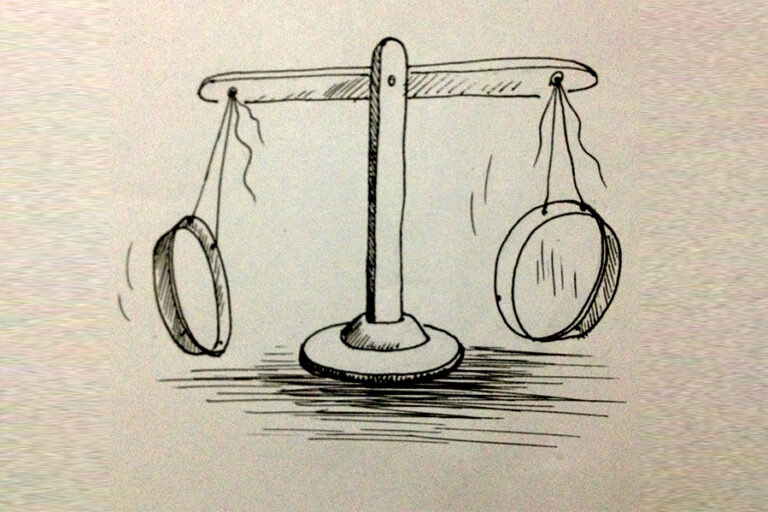
A while back this column decided to label media outlets that substantively depend on either the state or the private sector as ‘paid media’. The reasoning: All private media (considering them as regular businesses) depend on advertisers/sponsors to remain viable. No adverts, no business! Here we are not talking about media outlets that are mere subsidiaries of monopoly capital under the auspices of various corporations. For example, the ‘Washington Post’ falls into this category; it is no more a freestanding media enterprise operating on its own principles, rather it is a mere media/propaganda arm of Amazon. The notion of ‘fake news’ is essentially derived from such unhealthy tie-ups (or complete subordination) between media companies and giant multinational corporations. Many of the state-run media, even though they are publicly funded (to a large extent), also depend on revenues generated from commercial interests/advertisements; hence the collective name, ‘paid media’!
The state media’s objectives include, amongst other things, the conveyance of positive propaganda about the state and its on going operations. To this end, the state media is systemically leveraged to push ideologies/beliefs favored by the current incumbents of the power that be, thus influencing the sheeple (human mass) in ways that are not warranted by the prevailing democratic dispensations on the ground! We need not go in depth about this aspect of state media, as we already have plenty of experience here in Africa. The important thing to note is: even the most powerful countries of the world system seriously leverage their state media platforms for propaganda purposes. VOA, DW (Deutsche Welle), BBC, etc., serve, first and foremost, as outlets to their respective states. Admittedly, the poorer countries of the world do not have much of a say in world affairs. They are usually instructed to endorse the positions/views of global dominant interests, even in their own local media, particularly in regards to economic policies. This is a clear case of the workings of polarizing globalization in the weak and compromised states of the periphery. As a friend says; ‘poverty is a socio-economic disease generated by the inequality that rich nations celebrate and poor nations imitate.’ How many of us know about the genocide that is taking place right now in Yemen? Why is the world’s sheeple not allowed to be aware of such aggressions? To expect impartiality on the part of the state media, in regards to such important issues is really naïve, to say the least!
Theoretically, the pronounced objective of the various media outlets of the world system is to convey information and analysis to the general public, based on facts and the whole truths. But this is easily said than done! By and large, what is conveyed by the global media (small or big), is not necessarily facts and truth, but rather tinted or even distorted information that directly/indirectly pushes the interests/views of payers/sponsors! For instance, if a particular incident/topic is deemed to undermine the interest of monopoly capital and its multifarious tentacles, which prevail all over the globe, the news will either be slighted or completely dropped off from significant coverage. It is this unhealthy dependence on advertisers that make the whole global media, at best, suspect. The old saying applies; ‘whoever pays the fiddler gets to choose the tune’! Unless there is a clear disconnect between the payers and their interests on one hand, and the conveyors of news, information, analysis, views, etc.; society will remain perennial victim of gross misinformation. ‘If you don’t read the newspapers, you are uninformed. If you read the newspaper, you are misinformed.’ (Mark Twain) Take your pick!
The main motive behind private media is to make money as well as become influential in the affairs of countries, a clear case of power craving! As making money from traditional media businesses become difficult, mostly due to modern informatics (Internet, etc.), the objectives of private media as well as that of the states’ are bound to coincide. Herein lies a grave danger! What are the alternatives? We propose the following. If countries like ours are to have an independent media, at the service of their people, they need to change the way people think about the whole idea of the media itself. Media has not, is not, and probably will not be an independent entity, rhetoric aside. It either supports/airs the views of the state, capital or the sheeple (or some combination thereof). One has to choose whom to serve amongst the above. Our version of a desired media is an independent/community owned media. It has to be a non-state, non-profit entity fully funded by fees levied on all forms of advertisement (billboards, radio, print, TV, etc.) After all, it is the sheeple that is always condemned to suffer from all the non-sense spewed out by the bamboozling commercial propaganda of stupefying modernity!
The governance of independent media (an important aspect of the whole scheme) should be by kosher members of civil society. Moreover, democratic processes must form the pillars of its operations, because “Conscience is that still, small voice that is sometimes too loud for comfort.” Bert Murray. Good Day!
MoF revises tariff book
Ministry of Finance (MoF) revises the tariff book that shows massive rate changes on industrial inputs and some basic commodities.
The tariff book that issued on Friday has 371 pages and includes over 8, 000 items.
On its twits, the ministry said that in order to encourage the growth of the manufacturing sector in Ethiopia, the tariff book with over 8,000 line items for raw material, intermediate goods, and capital goods has been revised.
Capital reviewed the book in which most of the industrial materials rest either on zero tariffs or mostly on the least tariff of five percent.
Mineral fuels, mineral oils and products of their distillation; bituminous substances; mineral waxes, ores, slag and ash, inorganic chemicals organic chemicals are some of the industrial inputs that rested on free from tariff except some of the items which are mainly included under five percent.
On its statement MoF said that the tariff change has focused on agriculture and the manufacturing sectors in order to support them on local production and import substitutions.
The tariff revision has been conducted under a committee that comprised members from different ministries including MoF, Ministry of Trade and Industry, and Ministry of Revenue.
The revision has also considered easing finished goods but basic necessities.
The statement of MoF said that the book has also considered encouragement of local production against similar import items.
“It states that products that are produced locally with competitive capacity and quality with imported items have got preferential treatment whilst imported items have been imposed with high tariff,” it added.
The book is expected to be aligned with the ten year economic plan of the country.
