

Ministry of Agriculture /MoA/ drafts a document to request the ministry of finance to remove tax imposed on all kinds of animal feeds as it is one driving factor for the price hike of livestock market in the country.
Livestock production contributes up to 80 percent of farmers’ income in Ethiopia and about 20 percent of agricultural GDP. Ethiopia has the largest livestock population of any country in Africa and nutritional factors are the binding constraint to sustaining livestock production in the country. Commercial feed sub sector and livestock has been suffering from unfair taxation for long, for example, in ruminant feeds 15 percent of value added tax is charged on feed ingredients.
“We have prepared the document which indicates the overall problem and feasibility assessment,” said Fikru Regassa /PhD/, state ministry of Agriculture to capital, adding that the ministry has completed the preparation of the document which soon will be submitted to the ministry of finance and other government stakeholders.
The increase in the price of feed triggered by the VAT policy led to a 50% drop in sales of manufacturers relying on imported raw materials and 20% for companies that procured their inputs locally. Price trends of feed ingredients taking base year of 2019/20 and 2021 in average has increased with more than 70 percent as the people on the sector express, while price change of compound feeds shows average increase of more than 65 percent
“Animal feed is a by-product of grains and crops, including corn, soybeans, sorghum, and barley which are raw materials free from tax,” said Fikru, “yet animal feeds which are by products of this products are taxed which is not fair.”
As he said the whole purpose for the preparation of the document is to fully remove Tax and duties imposed on animal feed, and it is widely believed that removing the tax could make the market more accessible.
Currently, the feed industries are operating less than their capacity mainly due to limited demand for processed compound feeds, which could be due to increased price of factory mixed compound feeds because of value added tax charges. “If we see the economic impact of removing the Tax, the profit we get from production is better than taxes, as it will encourage manufacturers,” explained Fikru.
If the document is approved by the ministry of finance, it is expected to: increase animal feed manufacturers, curb the high prices, and promote growth in agriculture, by ending an increase in the price of feed in that country. “Furthermore, it is expected to lead to a decrease in the selling price of the feeds, making them affordable to the farmers, hence contributing positively to the growth of the agricultural sector,” elaborated the state minister.
Despite its contribution to the economy and small holders’ livelihood, the production system is not adequately market-oriented and livestock productivity remains very low due to various constraints that include poor nutrition and disease prevalence, besides unfair taxation. These problems are compounded by inefficiencies in the input and output marketing. Among these constraints issues related to feed are the most remarkable ones.
Ethiopia has a large livestock population and diverse agro-ecological zones suitable for livestock production and for growing diverse types of food and fodder crops. However, livestock production has mostly been subsistence oriented and characterized by very low reproductive and production performance.
In 2019 The Ministry of Finance (MoF) approved the imports of agricultural mechanization, irrigation and animal feed technologies, and equipment to be tax-free. This tax reform is aimed at enhancing the agriculture sector by removing duty and taxes on imports of farming machinery, irrigation and drainage equipment as well as animal feed ingredients and technologies; providing incentives to invest in the importation and local production of these technologies.
In order to facilitate farmers’ access to agricultural technologies which will ensure food security at the household level and national nutrition development, the MoA is expected to submit the tax removing request soon.
MoA to plea for tax removal on animal feeds

Slow bond purchase dips fresh loan disbursement
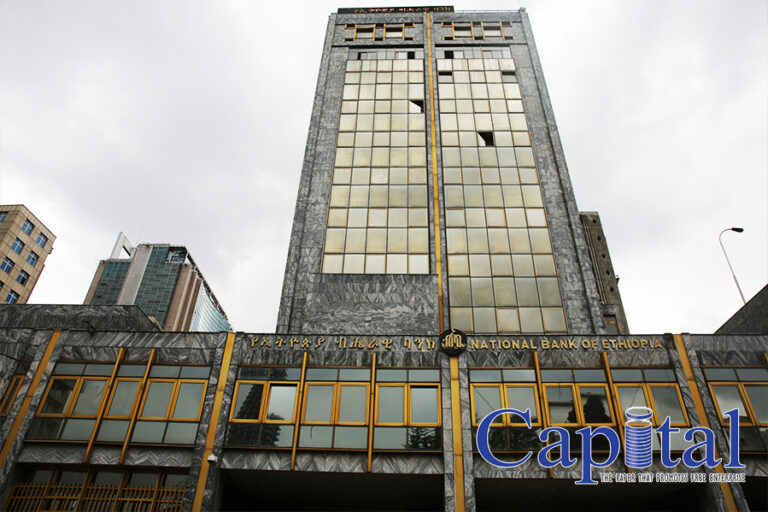
The slowdown in new bonds purchase contributes for the drop of total fresh loan disbursement in the third quarter of the 2020/21 fiscal year. The currency out side bank has continued on its growth after its significant retraction in the first quarter of the fiscal year, while the private banks capital has expanded further.
The National Bank of Ethiopia (NBE) quarterly bulletin that reviews the economic activity of the third quarter of the past fiscal year indicated that the banking sector disbursed about 68.2 billion birr in fresh loans (including CBE bonds), signifying a 31.2 percent annual decrease because of lower new bonds purchase during the review quarter.
Mostly the CBE bonds is purchased by public enterprises that are in reforms due to high indebting because of heavy loan in the past but in real operation in poor performance. Due to that the government through Ministry of Finance designed a strategy to revamp their activity in different forms including sacking some of their debts. It has also preferred to focus on finalizing the commenced projects rather than demanding some more funds.
According to NBE quarter bulletin, of the total new loans disbursed, the share of state owned banks was 32.1 percent and that of private banks stood at 67.9 percent, which was similar in the first quarter but reduced to 59 percent on the second quarter of the same fiscal year.
International trade was the largest beneficiary accounting for 21.9 percent from the total fresh loans, and followed by domestic trade (15 percent), agriculture (13.2 percent), industry (11.6 percent), housing and construction that was unusually at a top in the second quarter (9.4 percent), transport and communication (6.1 percent) and mines, power and water resource (4.4 percent).
In the same period, the banking system collected loans (including corporate bonds) close to 43.8 billion birr, depicting an 8.2 percent fall compared with last year, “of the total loan collection, 70.4 percent was by private banks and 29.6 percent by state owned banks.”
Meanwhile, total outstanding credit of the banking system (including corporate bond) rose by about 21.4 percent to reach 1.2 trillion birr.
About 99.7 percent of the private banks and 20 percent of state banks’ loans went to finance the private sector.
At the end of third quarter of 2020/21, broad money supply (M2) stood at 1.3 trillion birr, showing a 27.7 percent annual growth attributing to 92.5 percent surge in domestic credit which offset 5.9 percent contraction in external asset (net). The increase in domestic credit was ascribed solely to 25.4 percent rise in credit to central government and 17.3 percent in credit to non-central government.
The M2 was 1.2 trillion birr in the second quarter of the fiscal year.
NBE indicated that component wise, quasi-money supply showed an annual and quarterly expansion of 33.2 percent and 6.7 percent, respectively. Narrow money supply grew 17.7 percent on annual basis and contributed 23.3 percent to broad money expansion while that of quasi money was 76.7 percent
The surge in quasi-money was attributed to bank branch network expansion and improvement in access to finance demonetization and cash withdrawal limit have also helped banks to mobilize more deposits.
On the stated period the currency outside banks has stood at 127.5 billion birr that increased by 17.7 percent compared with the preceding quarter and 16.6 percent from similar period of last year.
In the first quarter of the 2020/21 fiscal year that was the period for demonization and that the central banks introduce different directive to impose on cash on hand and maximum limit on cash withdrawal the currency outside of banks was 64.6 billion birr. It has now become taking its former position and even registered significant growth.
Reserve money amounted to 266.5 billion birr in the third quarter of 2020/21, exhibiting 19.6 percent year-onyear and 3.0 percent quarterly expansion. Similarly, excess reserve of commercial banks showed 21.1 percent annual growth while it contracted 22.1 percent on quarterly basis.
The total capital of the banking system amounted to 125.1 billion birr, of which state owned banks accounted for 46.4 percent and private banks 53.6 percent.
The share of Commercial Bank of Ethiopia (CBE), the biggest state owned bank, in total capital of the banking system was 41.7 percent.
The private banks total share in terms of capital has for the first time stood at a higher position as of the last quarter and expanded more in the third quarter. The NBE report indicated that the share of private banks has reached at 53.6 percent and the balance for stated owned banks. The share of the private financial sector capital is expected to expand more since there are many more on the pipeline to commence operation.
In the second quarter the banking sector capital was 120.8 billion birr and the share of state owned banks accounted for 48.1 percent while private banks took 51.9 percent share.
Total outstanding T-bills at the end of the quarter reached 68.9 billion birr, and total sold in the quarter only amounted 48.6 billion birr.
The deficit in the overall balance of payments narrowed to USD 285.9 million during the third quarter of 2020/21 compared to USD 426.4 million deficits a year ago. This was mainly attributed to narrowing of the merchandise trade deficit coupled with shift from a deficit to a surplus of net services from and an increase in surplus of net private transfers.
During the third quarter merchandise trade deficit narrowed to USD 2.7 billion from USD 2.9 billion last year due to lower import payments and higher merchandise export receipts.
Premium financing for insurance bonanza on the horizon

Gasha Commission Agent PLC, financial focused company, is in discussion with banks to create dynamism in the insurance industry and to boost the access to finance for the needy.
The company that was formed on the target to include the excluded motor sector on the insurance with new scheme has disclosed that it has already got massive acceptances from financial industries that will back the new scheme.
Abel Hailemariam, owner and CEO of Gasha, said that his company has been engaged in detail study on how the cars, mainly public services provides to be included on the insurance coverage that is ill on the sector compared with other insurance businesses.
He said insurers are not interested to play with motor insurance particularly on vehicles with high mobility like minibus and small taxes due to they are highly vulnerable to accidents which directly affects the income of insurance companies, “due to that, they impose huge amounts of rate as a premium for such vehicles that is unaffordable and discouraging for car owners.”
“Besides that as per the business experience in the country to be insured clients have to pay yearly insurance coverage and besides that according to the National Bank of Ethiopia, the regulatory body, directive advance payment of premium is a must, which narrows the loophole to come up with credit alternatives on the sector,” the CEO explained.
On the new scheme Gasha is coming with the idea that it will settle the premium on behalf of vehicles in advance and vehicle owners shall re pay on daily basis.
“Most of the stated type of vehicles is excluded from insurance coverage except the mandatory third party insurance, while most of such kinds of cars are major source of income for drivers, owners or their family,” Abel says, adding, “but these assets that may be bought after long saving or by families for their children to support their life and that the same time economic pillars and job for many Ethiopians are endanger.”
“If any accident and damage occurred on a single car the effect is very massive for those, whose life is depended on it due to that insurance coverage is a must,” he elaborate the reason why the new scheme introduced on car owners side.
On the other hand the source of finance for the insurance coverage that will be hundreds of millions of birr shall be supported by financial firms, who are willing to be part of the idea.
“The scheme is coming with the idea of premium finance that is common in other countries. And on this banks will be players to provide the finance for the premium,” Abel explained.
“As a company at the initial stage we may have some contribution but most of the premium is supposed to come from banks that will make them highly beneficiary in different economic of scales,” he added.
According to the plan, a bank shall cover a premium of many cars for insurer, while beneficiaries would resettle their payment on daily bases through the bank account that they opened on the bank, which paid for their premium in advance.
The study indicated that to cover the annual premium the maximum daily payment amount for a vehicle, which is mainly engaged on daily income, is 45 birr.
On this scheme banks shall easily expand their customers base, saving, other banking services. “Beyond interest earning banks customer base will be massive because of the scheme,” the study indicates.
“For insurers it shall be expressed by a single word; it is a bonanza. As per our study for instance if an insurer covers 10,000 vehicles under this scheme the premium would be 125 million birr or if the number of cars shall be 25, 000 the amount of premium is over 312 million birr,” the CEO explained.
“Insurers shall manage this with a single poll and since the poll includes huge customers their benefit also is very significant,” he added.
Gasha will benefit on service charge as a facilitators.
For vehicle owners they will be safe from any risk, and shall settle their premium in long term arrangement, “while the major benefit of car owners would be that they enable to use their assets to access finance.”
“Insurance coverage is a must to access finance from may be banks or micro finances, meanwhile at the current stage such kind of vehicle owners have neglected to make their cars as collateral because of the insurance issue,” Abel shows the condition and stated the new scheme will empower them to access finance.
Abel said that most of the banks have understood the concept and assures its feasibility, “while so far two long established banks and one on the pipeline are closely negotiating with our company on final terms to introduce the initiative that will be very soon.”
The company has identified the number of cars that badly need the insurance coverage. As per the estimation 10,000 minibus and other conventional taxies, about 40, 000 meter taxies and 10,000 minibus that providing taxi services as support needs insurance coverage.
“We expect that at least 35,000 vehicles will be included under the new scheme in a month time when the initiative begins,” Abel confidently said.
The CEO said that the scheme will bring huge amount of money to bank and improve saving and accelerate the economy in general.
Abel is also a founder of New Life for Civil Servants that is expected to be biggest share company with 40 billion birr investment and 5 million share holders.
New Life for Civil Servants is forming on the concept to stabilize the market and benefit the wider public on consumer products. It has planned to involve the massive consumers in the scheme.
Geda bank holds first founding meeting
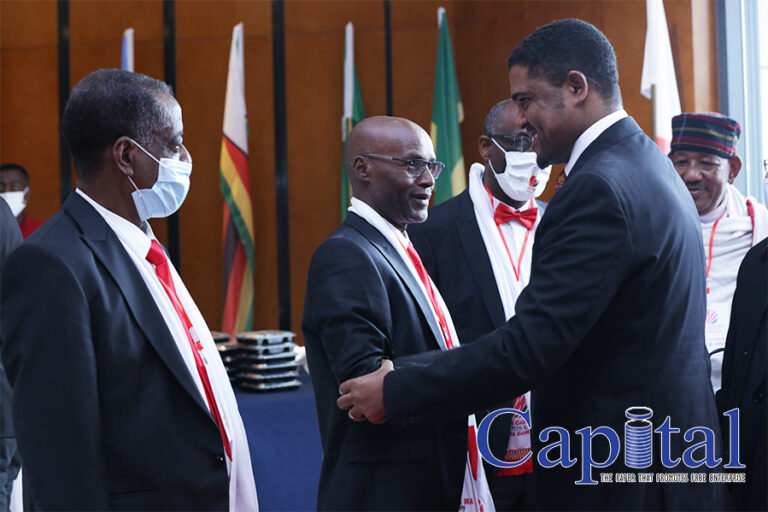
Geda Bank, a financial system established targeting the agriculture sector will start its operation in 2014 E.C which translates to late 2021 or early 2022 financial year. On Thursday August 5, 2021, the bank held its first founding meeting at the skylight Hotel.
The bank was incepted in 2018 to meet the needs of displaced farmers, as well as to empower farmers to use their resources to acquire capital for more business. Through the period, the bank has registered 1.3 billion in subscribed capital and 550 million in paid up capital.
Consultants from the financial sector, university lecturers, Abba Gadaas and farmers initiated the bank’s establishment. As the organizing committee said the bank has more than 27,000 shareholders who are engaged in the finance sector.
The bank will be expected to start its operation in the coming budget year with over 2,000 job opportunities when it begins opening the proposed 15 branches for the first phase of its operation.
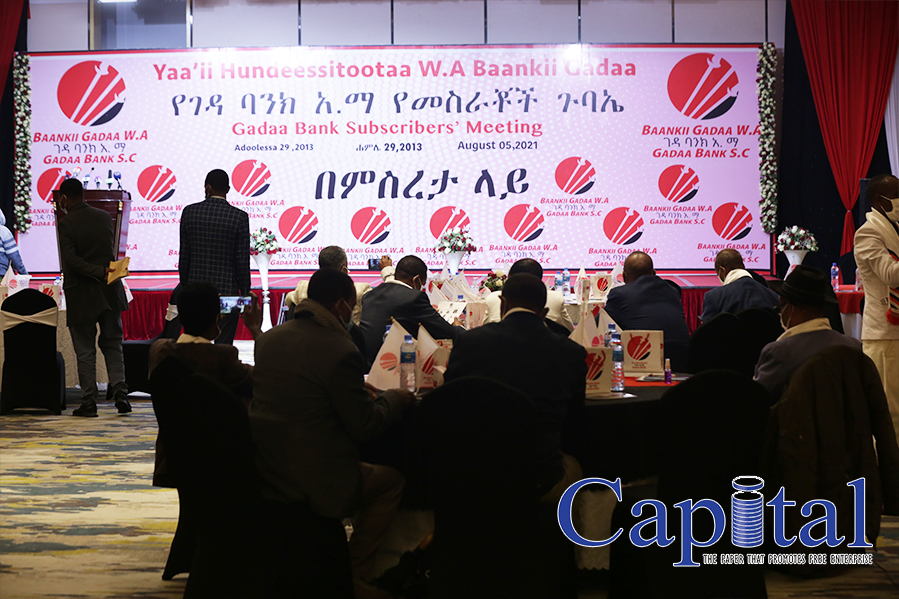
“The coming up of new banks to the banking industry will not be seen as a threat for there is a huge gap in terms of quality, accessibility in the Ethiopian Banking sector,” the project manager of the bank stated.
Currently, the organizing committees of the bank are conducting the legal works to get license from the national
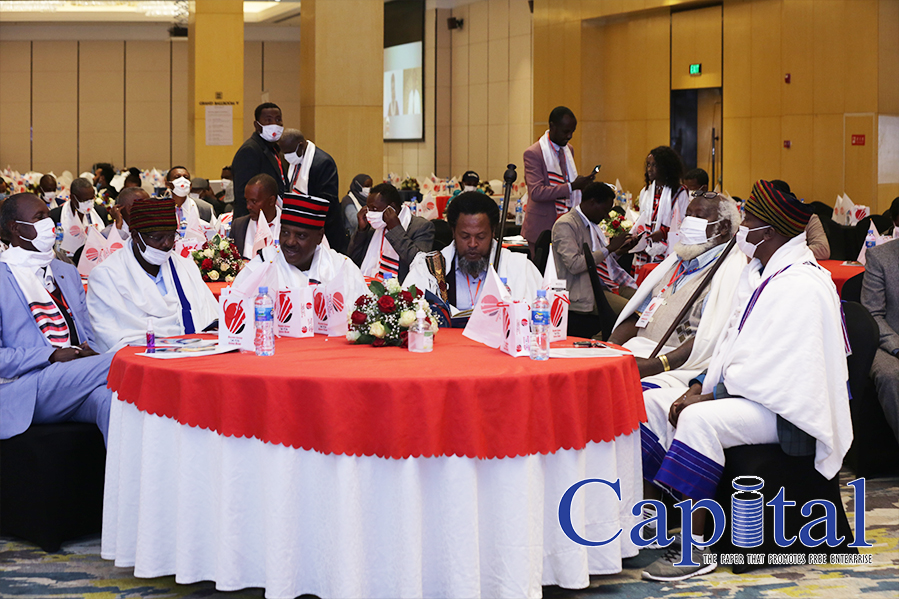
bank of Ethiopia.
