

Ministry of agriculture has completed its preparation to float an international bid for the procurement of different kinds of fertilizer for the coming year’s harvest.
Oumer Hussein, Minister of Agriculture, told Capital that the ministry has completed preparing its document to float the bid for the procurement of 20 million quintals of fertilizers for next year to ensure farmers get it on time. As he said the bid is expected to be floated in the coming one month.
As Oumer stated, the ministry is working to create more effective supply chains for the farmer, where farmers’ productivity has been going down because fertilizer and other agricultural inputs are not being distributed on time. In some places even after the “Belg” seasons begins without farmers having what they need to plant.
Ethiopia mainly used dap and urea fertilizers which solely gives nitrogen and phosphorus nutrients.
According to the World Bank, over 70 percent of the households reported that fertilizer is often supplied late and around 40 percent of the households reported that supplies were inadequate. High prices and tight credit repayment schedules constrain fertilizer use.
Transportation cost is another major contributor to the high cost of fertilizers, there is seasonal variation of demand and there is lack of information and communication among stakeholders in the fertilizer supply chain.
According to Food and Agriculture Organizations /FAO/, fertilizer consumption of Ethiopia increased from 0.4 kilograms per hectare in 1969 to 36.2 kilograms per hectare in 2018 growing at an average annual rate of 16.25%. As Oumer said Last year the ministry had purchased 18 million quintals of fertilizer, and as he indicates the number is showing a 20-25 percent increase from year to year which is ‘great development’.
In the current farming season, shortage of urea fertilizer and improved seeds has been a challenge in some areas. As Oumer said, efforts made by the ministry have minimized the effects.
Talking about the current harvest season, Oumer indicated the farming is well on-going as in most parts of the country farming is in smooth flow, which is about 91 percent of the target land.
Beside instability in some parts, and late rainy season were some additional challenges to the farming.
In deploying parts of the country which didn’t start their farming, the ministry has prepared certain coping mechanisms including the use of the coming ‘Belg’ season.
It is to be recalled that few months ago the ministry had procured two ships of 50,000 tones fertilizers which has arrived at the port of Djibouti which was transported to Ethiopia for distribution.
According to the WFP and FAO, Ethiopia Agriculture Cluster report, the current response to support the vulnerable farming communities with adequate agricultural inputs remained below the expected target for most regions due to low funding, delayed procurement and logistical challenges during this period. In total 12.9 million people (24% of the analysed population of about 54 million) are expected to face high levels of acute food insecurity.
MoA preps to float international fertilizer bid
BGI funds electrification of 300 households
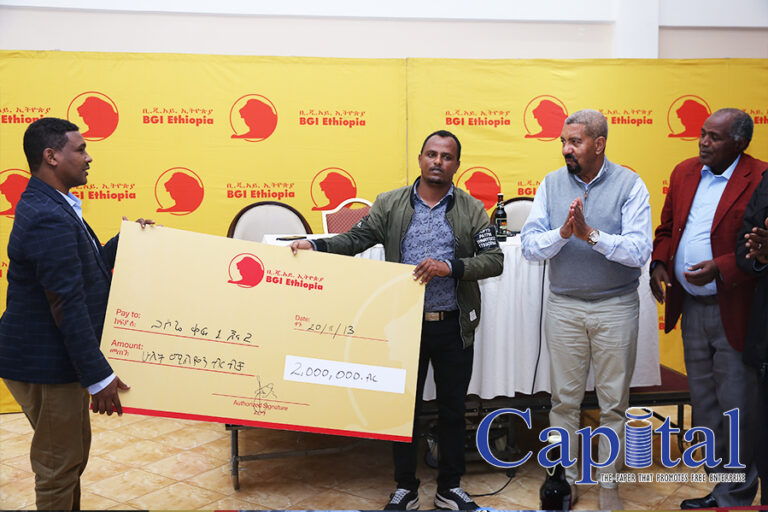
As part of its corporate social responsibility, B.G.I Ethiopia has delivered 2 million birr to Ethiopian electric power to provide electricity to benefit more than 300 households living in Gubre, which is located within Welkite city.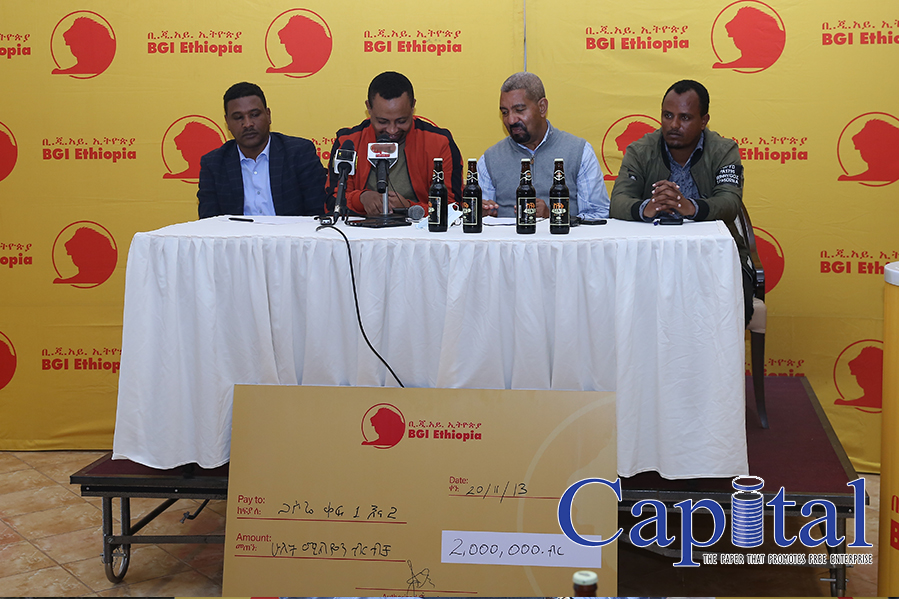
The area which is 50 km far from Welkite city and close to Zebidar beer factory still has no electricity. Thus to support the efforts of the authority to provide electricity in the area, BGI provided its support for the purchase of transformers based on the financial assessment of the EEP.
In 2019, BGI completely took over Zebidar Brewery at a total cost of 1.825 billion birr. BGI Ethiopia is currently one of the biggest tax payers in Ethiopia, paying about 2.7 billion birr annually.
Backing digital development and innovation
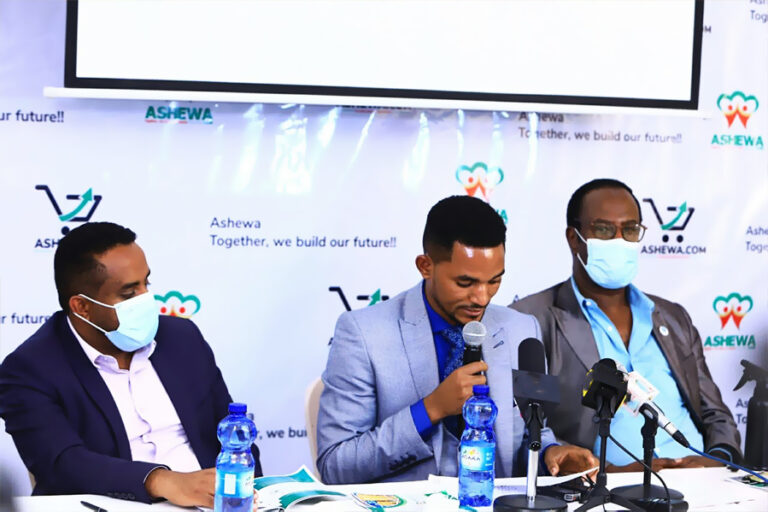
Ashewa Technology Solution SC, the upcoming ecommerce and learning firm, announces it will allocate ten percent of its capital for digital development and innovation. Ethio Telecom complements by saying it has come with a platform ready to boost digital business.
The Addis Ababa Science and Technology Agency has promised that it will closely align with technology companies on the aim to attain the government strong policy on digital economy and to tap an opportunity for job creation.
Since the government disclosed that it has given supportive attention for digital economy development and technology improvement several companies and individuals are joining the sector to contribute their share on the sector, which is never properly exploited in Ethiopia.
One of the companies’ targets to boost the development is Ashewa that secured a license to be involved in 11 digital development industries.
On the press conference held in Getfam Hotel on Tuesday July 27, the company officials disclosed that at the initial stage the ecommerce platform will officially start its operation by Tuesday August 10 and the e-learning will follow its own path on the second stage.
Daniel Bekele, CEO of Ashewa, said that the company commenced its activity ambitiously to do business on internet besides political activism and entertainment purpose that is currently observed in Ethiopia.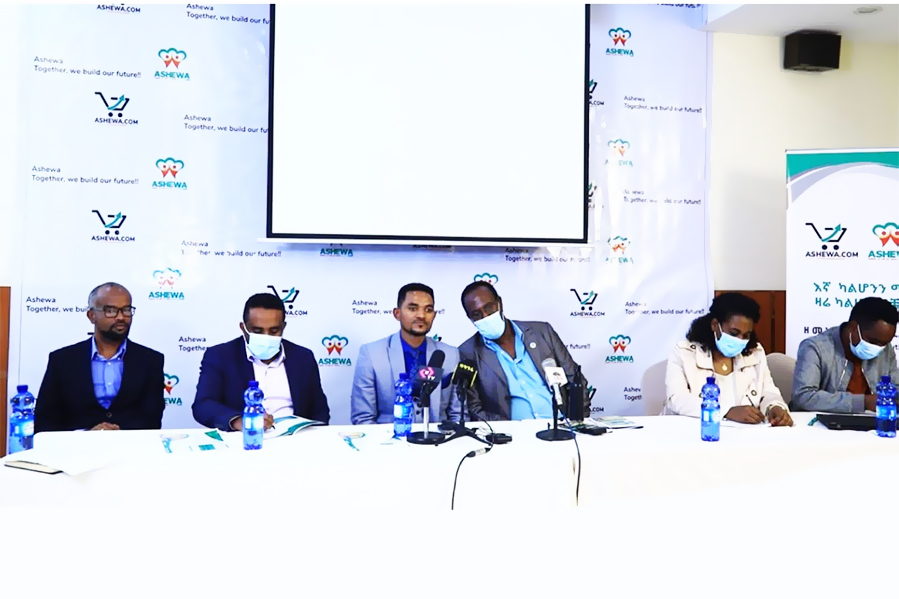
“There are about 25 million citizens, mainly, the youth have access to internet in Ethiopia, while we are yet to make it a source of income like other countries including those who are similar with Ethiopian standard,” he says, adding that, “that should be changed and we have to do business and create jobs for millions by only using internet for development and economic purpose.”
The company that sold shares for interested shareholders for the past six months to generate of the target 25 million birr has fully attained it and now it has revised its mission to obtain 200 million birr within a short period.
Daniel told Capital that of the 200 million birr, the 20 million birr will be allocated for innovation, technology development and related operation to come up with compatible platforms for Ethiopian market. The company has also a plan not only in using the innovated technologies for itself but make it a source of income by providing for others.
On Tuesday’s ceremony, representative from Ethio Telecom, Job Creation Commission (JCC) and other relevant offices had attended the event.
Mekbib Woldehana, Deputy Head of Addis Ababa Science and Technology Agency, said that as per the government’s strong policy direction, the agency will closely collaborate with companies like Ashewa on technology development.
At the press conference Mohamed Ahmed, who represents Ethio Telecom, said that such kind of businesses were not unable to mushroom in Ethiopia because of weak digital payment schemes, while there was interest in the country. He said that Ethio Telecom has created conducive environment for this now.
“Now we have solved this gap and introduce modern payment scheme, ‘telebirr’ that enabled to includes 7 million subscribers in just two months.”
Mohamed said that Ethio Telecom has fully prepared to work with companies like Ashewa to achieve their business without any obstacle on the digital payment.
Alemtsehay Dersolegn, Deputy Commissioner of JCC, said that reaching to this stage is a big success by itself, and expressed her desire to see the required success of the company. The company has aimed to create millions of jobs in connection with the digital system.
Ashewa has already hired engineers on the sector and it will expand to maximize the technology development and innovation.
According to the plan, the company targets to invest the 160 million birr for the e-commerce platform that will mainly targets to encourage businesses like producers, wholesalers and small and medium enterprises.
“We encourage source of traders like producers on the aim to create direct linkage with consumers that is also contributed to easy the price and the public to enjoy from affordable rate,” Daniel explained.
While companies and traders shall come up with genuine products and images with standard quality, they shall also use the platform to promote their business online and trade at the same time.
Similar to Ashewa other companies from abroad and local are also coming on the ecommerce and other online platforms to do business on the innovation sector that is now dominating the globe.
Protecting Benishangul-Gumuz’s investment areas
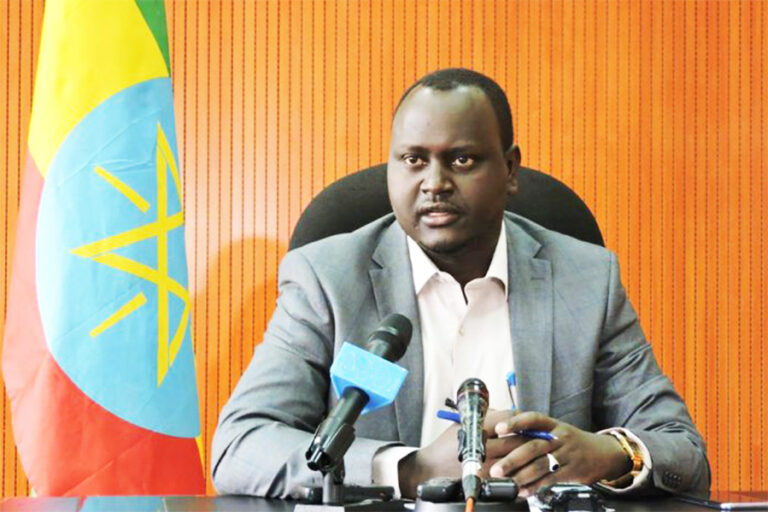
Benishangul-Gumuz regional state government said, by collaborating with the ministry of peace and the ministry of mines and petroleum, it will deploy security forces to protect mineral investments in the region.
The region is located in the North-West part of the country and borders the regional state of Amhara in the North, Gambella in the West and Sudan in the west, and owns suitable agronomic land as well as livestock possessions.
It is known for its massive natural resources that can be utilized for the development of the region’s growth, its high potential for irrigation growth, water potential, and a large number of livestock in the region. More to the point, the region is known for its agricultural products such as oilseeds, cotton, fruits, coffee, sugarcane, pepper and whatnot found has been stressed by continues instability.
“Our region is inundated with quite a lot of natural resources, The length and breadth of the region takes account of a wide spectrum of considerable and wide-ranging untapped resources that can take the country to the next chapter of achievement with no trouble if harnessed as they should be,” said Ashadli Hassen, president of the region adding that, “producing Gold, Marble and coal are amongst the investment areas.”
However, the region is known for its instability, affecting the investors.
“Most of the investment places are far from urban areas, which have lots of infrastructure problems and impose them to terrors which make it difficult to continue their production, ” said Ashadli, indicating that there were lots of investors who have stopped their production as result of the ongoing instability in the region. As he stated specially in Kamashi and Assosa which has relatively stable investors has started their work.
In collaboration with the two ministry offices, the region is working to deploy security forces to protect investment areas to support them to continue their operation; additionally the region is also working to educate the society about the benefits of the investment in the area stated the president.
“Unemployment, poverty in the region is also some driving forces for the certain instabilities and security problems,” explained the region’s president as he elaborated that the regional government is working on job creation. “We are giving working place for youths, as well as providing them seed money,” he explained the regional governments tackle on unemployment and poverty.
Additional to the instability, the region has faced major challenges in: economic development, lack of transportation and communications infrastructure. To solve this as the president said the regional government is aggressively working with other stakeholder to alleviate these issues.
Several mining companies have been active in the area in recent years. Currently, according to the data from the regional investment office there are 22 huge investments on the mineral sector.
