

The International Air Transport Association (IATA) released data for June’s global air cargo markets, reporting the strongest first half-year growth since 2017.
Compared to its pre-COVID-19 performance, marked as June 2019, global demand for air cargo services were up 9.9%, bumping first half-year growth to 8%.
“Air cargo is doing brisk business as the global economy continues its recovery from COVID-19 crisis,” said Willie Walsh, IATA Director General. “Air cargo is a revenue lifeline for many airlines as they struggle with border closures that continue to devastate the international passenger business. Importantly, the strong first-half performance looks set to continue.”
Despite improvements, overall capacity suffered, down 10.8% compared to pre-COVID-19 levels. Belly capacity also decreased by 38.9%, impacted partially by a 29.7% increase in dedicated freighter capacity.
Economic conditions are supply chain dynamics remain favorable for the air cargo industry. Low inventory to sales ratios in the United States means businesses rely on air cargo to quickly refill their stocks. Cost-competitiveness and reliability of air cargo has also improved, and prices relative to shipping have decreased significantly.
Regional variations in performance are significant. African airlines had the strongest performance of all regions, with a demand increase of 33.5%, but on small volumes, carrying only 2% of global cargo. North American carriers reported a 23.4% increase in international demand, and European carriers reported 6.6%. Middle Eastern airlines posted a 17.1% rise in international cargo volumes in June 2021 compared to June 2019, while Latin American carriers had a decline of 22.9%.
Global air cargo market soars in revenue

The financial highs and lows amid the pandemic

More than 5.2 million people became millionaires during the pandemic, while almost 88 million are expected to fall into poverty.
While COVID-19 has had devastating economic effects for the lower- and middle-class, the upper-class experienced massive benefit and expansion, according to Block Arabia. Global household wealth grew by 7.4%, hitting USD 418.3trn in 2020.
One-third of the new millionaires produced by COVID-19 are from the United States, the country which saw the biggest gains for its upper class. Wealthy U.S. residents saw their collective fortune skyrocket by USD 1.2trn since the start of the pandemic.
Second to the U.S. is Germany, with an increase of 633,000 millionaires. Third was Australia with 392,000 new millionaires, and then Japan with 390k. France follows with 309,000, then the United Kingdom with 258,000.
Despite gains for some countries, India and Brazil registered falls of 66,000 and 108,000, respectively, largely due to currency depreciation.
Nearly half of the world’s leaders are from the United States or China. The United States has 22 million millionaires, 39% of the global total. China is in second place, with only a fourth of the United States’ total, 5.3 million or 9.4% of global millionaires.
Third-place is Japan, with its share of global millionaires steadily decreasing over the years, reaching 6.6% in 2020. Germany follows close behind with 5.3% of the global total.
The United Kingdom and France have a 4.4% share. Spain, Korea, the Netherlands, and Switzerland each have around 2%. India, Taiwan, and Sweden follow with 1% each.
13 SMEs featuring Africa win big
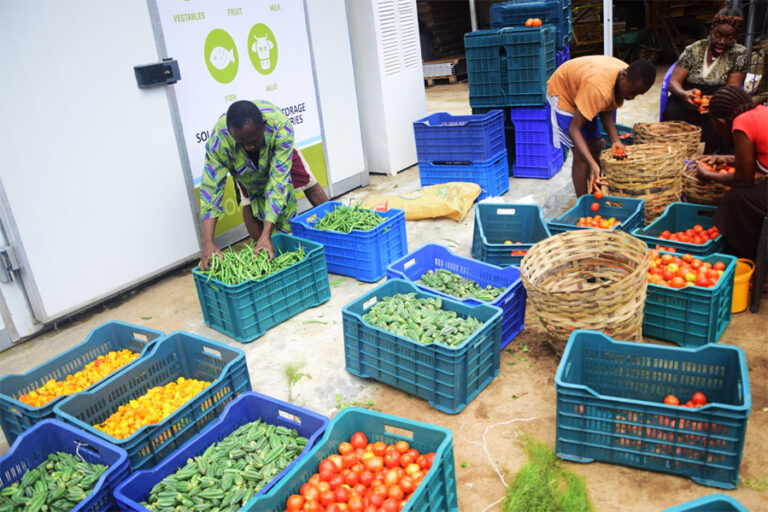
Thirteen small- and medium-sized businesses in Africa and the Middle East won the “Good Food for All” competition, held with the UN Food Systems Summit (FSS).
Winners were selected based on how their business contributes to healthier, sustainable and equitable food access in their respective regions, their vision for the future, and their ability to communicate the current and future impacts of their business. Almost 2,000 applications from 135 countries were evaluated as part of the competition. Winners will receive USD$100,000 in cash prizes.
“Small businesses are the hidden heroes of our food systems,” said Special Envoy of the UN Secretary-General for the 2021 FSS Dr. Agnes Kalibata. “We must understand the challenges they face and work together to ensure they remain at the heart of efforts to improve the future of food.”
The thirteen winners located in Africa and the Middle East are part of a 50-company set of global winners. Half of the 50 global winners are youth-led and another half are women-led.
Among the winners was TruLuv, a women-led, women-managed, majority women-employee granola company based in Ethiopia.
“Through our work, we seek to create a sustainable food system that supports health and environmental protection,” said TruLuv CEO Blayne Tesfaye.
The results of the competition were released with a new report by the UN outlining three critical steps to support small businesses; creating more conducive business environments, offering more positive incentives, and empowering small business leaders to have greater influence in sector planning.
Industrialists request for full implementation of the law, as illegal competition takes a toll

Businesses are requesting the 2013 Trade Competition and Consumers Protection Proclamation to be fully applied to boost the private sector activity, job creation and for the good turn on the general consumer.
Businesses that expressed their concern on the limitation of the implementation of the proclamation claimed that their business is affected by illegal competition acts against the law of the country.
Some of them told Capital that the anti competition practices is seen by those who are believed to be well aware about the law and experience in other countries.
One of the industrialists who demand to be anonymous said that his business is highly aligned on the service sector and directly connected with retailers, while supplying products to retailers sometimes have a challenge.
“We produce daily consumer goods and there are many similar producers but when it comes on the marketing some of the companies are lobbying retailers by different methods to not receive our goods and only sold their products,” he lamented, adding, “it is a challenge in the market.”
He expressed that fair competition on the demand of the market and consumers supposed to be a priority like any other countries trend.
“If we have fair competition all of us may have a chance to expand our business, increase jobs, and benefit consumers but the current trend may create monopoly or oligopoly in some consumers’ goods and narrow the opportunity for customers to choice,” Daniel Getenet, legal expert and consultant for FID’s in Ethiopia stated.
The legal expert explained, said that he observers that unfair competition against the 2013 proclamation is seen in different markets including the service sector that are directly related with the entertainment industry and even on some basic commodities.
The government is stated that the tourism sector supposed to be one of the top GDP contributor and major sources of foreign currency. Unlike the previous period tangible changes have seen and even the government and its leaders understanding for the untapped sector is now growing but it supposed to be inclusive.
“The tourism sector is not only aligned with tourism destinations like historical locations, cultural heritages and wildlife but it is also very wide,” he explained. There are different touristic locations in all areas, like old or new cities or towns, recreations centers, traditional cuisines centers, traditional or modern night clubs and many others in towns, that tourists shall visits and that he or she shall spend times and money. This are some of the major factors for tourists to stay for several days on his visit to the country; and tourist’s long stay climbs the revenue that the country shall get,” experts added.
Experts from various fields said that the unfair competition and oligopoly in different sectors including basic needs and service sector are one of the major issues for the inflation spike and problems in several socio economic aspects.
Daniel said that in related business dispute he mainly saw in the area of trade mark and trade name, while arguments on the unfair competition practice is not widely seen meanwhile there were some.
He believes that it may be connected with lack of awareness on the public and business community in relation with low claims on unfair practices “but practically we have seen the unfair competitions in the market.”
Ashenafi Merid, General Manager at Ethiopian Bottled Water, Soft drink, Fruits and Vegetable Manufacturing Industries Association, on his part said that there were unfair competition between the bottlers, while since the formation of the association it is fighting to curb the trend in partner with relevant government bodies like Trade Competition and Consumer Protection Authority.
He said that the number of water bottlers has now reached almost 100 and one of the challenges was the price war between factories, “now we have a code of conduct that binds members to not fight on price, which is unfair competition.”
Zelalem Bezabih, economist and marketing expert, said that getting in to the free market economy is a must; meanwhile the country is a late entrant, “competition as a free market now it is flowing on its natural path.”
He said that as a matter of fact there is no free market economy globally rather there is free market idea, “any market in the world; one way or the other it is regulated by the government. We can remember that was what happened in 1929, 1987 in Argentina or 2008 when the market regulation was eased by governments.”
“If we fully allow leading by demand and supply as a concept of the free market idea it would create very few very rich individuals and damage the majority consumers,” he explained, “but the free market is helping the empowerment of private enterprises and expand their productivity, while the government is facilitating the path apt and create effective regulation role, then it is practicable.”
The government would have a referee role on the free market like the symbol of a soccer game, “two teams on the football field should have equitable playing platform, information about the playing rules, similar league or capacity to compete. These are supposed to be considered on the free market.”
He said that free market assumptions should be applied but currently there is a tendency of only issuing law and demanding to apply regulation in Ethiopia.
There should be a capacity to undertake rational assumption, applying the enforcement law and others. “I have doubt that such kind of issues are implemented at the current level and the Trade Competition and Consumers Protection Proclamation is fully in effect,” Zelalem says, adding, “the proclamation has some marvelous articles but it may raise concerns of to whom it would be applicable.”
He stated that idea of merger that the proclamation stated is crucial but when it comes at the implementation there are questions. “While he said that the market is looking for significant mergers like in the beverage industry. Some companies have finalized their merger at the back door.”
Experts on the sector said that entry barrier is still existing and it is expanded on the merger for instance on some consumer industries.
“When industries are realizing the entry barrier has become effective they would commence the price hike to be started,” Zelalem explained.
“If we come on consumer goods despite there is a law but practically it is not working. It has also contributed for the inflation,” he added.
Daniel said that unfair competition practice is not an easy issue, “it is illegal and crime that supposed to be closely follow by the government and cut the harm.”
He said that the main one would be the enforcement of the government, “the relevant government body should have ample capacity to regulate and make the market competitive.”
“Unless very few individuals become more rich and other business actors would be diminished. The problem will not only stop between two traders but extended to the general consumer, local productivity, job issue and in general the economic growth of the country since the number of producers or manufacturers contracted because of unfair competition,” the lawyer who mainly consults FDI explained.
“In the previous political sphere only few suppliers were align on the import and export of consumer goods, which is purposely done to benefit few groups. Now they have built huge capacity. In Ethiopia the market shall be stated as oligopoly or cartel. For instance the edible oil business was controlled by very few individuals that shall increase price overnight with out any economic reasons,” Zelalem explained.
“In general, competition is the cornerstone for greater efficiency and productivity that leads to economic development in a nation. If a business or manufacturer is left unchecked by the government, it will lead to a situation where entry into an industry will become difficult and oligopoly markets will be created. It will also lead to higher inefficiencies in productivity and business operation which leads to unnecessary higher costs impacting the ultimate consumer,” the anti competition proclamation explained.
Experts on the sector said that to correct it the government shall work from grass root level and approach such kind of cartels convince them to serve the public than focus on extravagance profit making.
“We can not continue like the current situation that very few individuals live on high standard level and the majority become poorer from time to time,” the marketing expert said.
“The government should realize that the public would not be harmed; to do that the government should focus to expand the number of supply by using different suppliers not only local but foreigners,” he added.
Experts recommended for a strengthened controlling mechanism and penalization of illegal actors as vital from the government side.
Forced informal and backward actors who are engage on the shadow economy to come on the system or legalize them is also stated by experts as one of the top area that the government should work on since they are part of the society who paid what ever they are requested that contributes for uncontrolled price hike.
Zelalem’s view regarding the beverage’s industry unfair competition is that it may not equal with basic commodities, but agreed that it is observed in the market as a ‘franchise business’, “despite service givers getting their license to sell all kind of commodities there is reservation that it may affect the consumers like other basic needs.”
On the other side, Daniel argued that it is not only aligned with consumers’ side only, but from production and productivity, economic scale and job creation. For instance when we see the job on the beverage industry it has a long chain from farmers to industry, small venders and alike.
“The fundamental right of the consumer is to be able to choose among a variety of products and services for purchase and consumption. This very act of exclusivity through the retail channels/outlets will effectively deny the consumer this basic right. On top of this, higher and unfair prices because of inefficiency in productivity and other operations will be borne by the consumer,” the proclamation cited.
The legal expert said the local production shall only expand when there is strong regulation on competition, “when the number of industries and service providers expanded the consumer shall benefit besides the expansion of jobs.”
He added that the government should be alert to closely follow the unfair market practices especially when the number of players is growing.
He stated that the experience of the beverage industry that is growing and similarly unfair competition is observed by providing different and informal bargaining approach at the venders.
The 2013 proclamation stated that an agreement between businesspersons in a vertical relationship shall be prohibited and if there is violation it has a fine of 10 percent of his/her annual turnover.
It said that If a specific consumer goods manufacturer is denying access to other similar goods manufacturers by implementing contracts with retailers to only sell its products, the crucial advantages of competition: better quality products, innovation and lower prices (for consumers)will never be realized.
“Despite there being a code of conduct some challenges happen in relation with distribution and value chain in the industry. When new bottlers are getting to the market they have different privileges like they are reluctant to be member of the association and have also tax holiday that helps them to bargain the market on lower price than the long established industries, but we are closely following the situation with Ministry of Trade and Industry and the authority,” Ashenafi shared his experience.
Capital’s effort to get comments from Meselech Wodajo, Deputy Head of Trade Competition and Consumer Protection Authority, was unfruitful.
