

Yonsei Global Health Center (YGHC), with funding and support from the Korea International Cooperation Agency (KOICA), will run a project called the Small, Happy and Prosperous Family in Ethiopia (SHaPE) project until December 2023.
The SHaPE project, also called the National Campaign for Promoting Knowledge, Attitude, and Behavioral Changes in Population and Reproductive Health in Ethiopia, aims to improve awareness of sexual reproductive health and gender equality in Ethiopia and contribute to decreasing the fertility and maternal mortality rate.
The project has funding of USD 1.7 million, and will run in Addis, Amhara, Dire Dawa, Oromia, Sidama, Somali, Tigray and Southern Nations, Nationalities, and Peoples’ Region (SNNPR).
According to Worldometers, the Ethiopian population has already surpassed 117 million people. More than 34.6 million people, or 29.6% of the population, are living below the poverty line and earning less than USD 1.25 per day.
Ethiopia also has some of the lowest gender equality performance indicators in sub-Saharan Africa. Women and girls are disadvantaged in literacy, health, livelihoods, and basic human rights, among other areas. They suffer low status in society and lack social support networks.
Women’s health is also poor, affected by poverty, poor nutrition, and restricted access to health care services due to financial constraints and cultural beliefs, according to the 2011 and 2016 Ethiopian Demographic and Health Survey (EDHS). That same survey found that more than 95% of respondents did not know where to go for contraceptive services and/or they had poor knowledge of or exposure to modern contraceptive methods.
Maternity can also be dangerous for both mother and child in Ethiopia, which was exacerbated by the pandemic. COVID-19 reduced the amount of clients presenting for family planning by 27%. Skilled deliveries decreased by 27.6% and postpartum family planning by 66.7%.
Shaping a flourishing Ethiopian household

Debub Global Bank bank reels big results

By June 30, 2021, the paid up capital of Debub Global bank has jumped to 1.39 billion birr showing an increasing of 41 percent from the previous year/ June 2020/ with the total paid up capital stated at 986 million birr.
The bank has rocked its wealth to 11.67 billion birr, and when compared to the last year same period the number has shown 49 percent increment.
In terms of expanding access, in the just completed year, the bank has opened 29 branches to provide satisfactory service to its customers with the total number of Debub Global branches now reaching 112 across the regions alongside Addis Ababa.
During the year, Debub Global bank has mobilized a total of saving of over 8.5 billion birr showing 69 percent increase from last year same period. “Based on the trust they have in our bank and the hard work of our staff over the same period last year, this growth has been recorded,” acknowledged the bank in a statement.
In the completed fiscal year, the bank has secured 388 million birr before tax showing little increase from last year same period which was 376 million birr.
Commencing its operation on August 2012, Debub Global bank share company is one of the 17 private owned banks in Ethiopia established with a subscribed capital of 266.9 million birr and with paid up capital of birr 138.9 million birr.
Compared to the previous year investment and loan on profitable lending sectors of the bank, it has also grown by an 87% increase over the current fiscal year to 8.35 billion.
In the first few years of its existence, Debub Global Bank has achieved remarkable results in the banking sector with a measure of progress over the past year. Because the bank has managed to deliver customer focused services, it has got trust and acceptance which has resulted in outstanding performance in mobilization of saving, increasing its capital and so on. The Bank is one of the largest performing banks in the last five years to which the total asset of the bank has increased by 58.5 percent while the deposit of the bank increased by showing 42 percent of increase on its paid-up capital. Moreover, 82 percent growth on loans and advances and 97 percent growth in its average profit, has been attained.
Tackling Africa’s vaccine access through research

The Coalition for Epidemic Preparedness Innovations (CEPI) and the International Vaccine Institute (IVI) announced a new clinical research program seeking to expand COVID-19 vaccine access in Africa Tuesday, July 20.
Led by IVI, the Expanding Access and Delivery of COVID-19 Vaccines in Africa (ECOVA) consortium will conduct clinical trials of Sinopham’s BBIBP-CorV vaccine in hopes to expand its use in Africa. CEPI will provide up to USD$12.7 million in funding to ECOVA as funding for these trials.
“To end the pandemic as quickly as possible, it is vital to evaluate vaccines in a variety of populations and contexts, and to ensure safe and effective vaccines are available to countries everywhere,” said Dr. Florian Marks, Deputy Director General of Epidemiology, Public Health and Impact at IVI.
ECOVA will hold two clinical trials in Beira and Maputo, Mozambique, led by Mozambique’s Instituto Nacional de Saúde (INS) and IVI. The first interim results from the trials are expected by the end of 2021.
The trials will evaluate the effect of BBIBP-CorV against new strains of the virus, including the Beta and Delta variants, vaccination strategies using two doses, and the use of COVID-19 vaccines on HIV-positive individuals.
“The ECOVA project will be of great importance to Mozambique, further developing the country’s clinical trial capacity that has been established in the past decade,” said Dr. Sónia Enosse, Director of Research on Health and Wellbeing at INS.
African countries have experienced a severe shortage of COVID-19 vaccines, with people living in Africa being only 1.6% of the vaccinated population worldwide. The African nation with the greatest percentage of vaccinated citizens, Morocco, has 30% of the total population receiving at least one dose according to Our World in Data. The majority of African nations are not close to this number, with the second highest percentage at 7% for a number of countries and a majority between 6% and below 1%.
ECOVA is led by IVI, INS, the International Centre for Diarrhoel Disease Research in Bangladesh, the University of Heidelberg in Germany, Harvard University in the U.S., and the University of Antananarivo in Madagascar.
Joint Efforts for World Peace, Full-hearted Support for Peace and Security in Africa
In Celebration of the 94th Anniversary of the Chinese People’s Liberation Army
On the heels of the centenary of the Communist Party of China (CPC), the 94th anniversary of the Chinese People’s Liberation Army (PLA) is approaching. The PLA is the people’s armed forces created and led by the CPC. It has always marched in lockstep with the Party and the country over the ninety-four years. With its growth and development built upon arduous battles, fine traditions and constant improvements, the PLA has made historic contributions to China’s national liberation, its socialist reform and development drives, and to defending China’s sovereignty, security and development interests. It offers strong underpinnings on which regional stability and world peace can be upheld.
The world needs peace, and even more forces to keep peace. China has all along been a builder of world peace, a cause that its military forces firmly safeguard. Entering a new era, guided by Xi Jinping Thought on Socialism with Chinese Characteristics for a New Era and Xi Jinping Thought on Strengthening the Military, the PLA adapts to new trends and developments in the world’s revolution in military affairs. It has carried out a series of groundbreaking reforms, and is constantly improving on its ability to fulfill international responsibilities and obligations commensurate with China’s international standing. Its commitment to UN peacekeeping operations, escort missions in the Gulf of Aden, humanitarian responses and an array of other operations speaks for the true meaning of the PLA —- standing fast as a disciplined force for peace and justice.
China follows an independent foreign policy of peace and a path of peaceful development. Working with all peace-loving countries and peoples, China advocates peace, development, equity, justice, democracy and freedom, which are common values of humanity. It is China’s pursuit to champion cooperation over confrontation and replace zero-sum games with win-win results. What China championupholds is multilateralism and democracy in international relations, not the Cold War mentality. China supports the UN-centered international system, and stands for international fairness and justice. As the second largest contributor to the UN’s regular budget and peacekeeping assessment and the largest troop-contributing country among the permanent members of the UN Security Council, China has been supporting the UN’s peacekeeping operations with concrete actions. Resolutely delivering on the purposes and principles of the UN Charter, the PLA has dispatched over 40,000 peacekeepers serving in 25 operations.
China sets great store by and engages itself constructively in peace and security affairs in Africa. More than 80 percent of China’s military peacekeepers, or nearly 2,000 servicemen and women, and 75 percent of its contributions to the peacekeeping assessment are deployed in Africa. China’s naval fleet has escorted nearly 7,000 Chinese and foreign vessels through the troubled waters off Somalia in a total of nearly 2,000 escort missions. Meeting the needs of the African side, China is actively involved in mediating hotspot issues in the region and supports the maxim of African Solutions to African Problems. China is committed to shoring up Africa’s peace and security affairs under the framework of the Forum on China-Africa Cooperation (FOCAC), and is following through on its pledges of US$100 million worth of military aid gratis and an additional US$80 million to the AU. These funds are earmarked for the building of the African Standby Force and its crisis response and rapid deployment capability, and for counter-terrorism operations in the Sahel and the building of the G5 Sahel Joint Force. Acting on the new vision of common, comprehensive, cooperative and sustainable security, the Chinese government seeks to tackle Africa’s peace and security issues from the roots by promoting development. Heightened economic cooperation between China and Africa creates a considerable amount of jobs and is conducive to coordinated economic and social development in African countries. China advocates that gGreater national cohesion and reduced poverty and underdevelopment help remove disruptive and destabilizing factors in societies. All these efforts lay a solid foundation for Silencing the Guns , and for long-term peace, security and stability across the African continent.
Enhancing unity and cooperation with Africa has always been high on China’s diplomatic agenda. Faced with the COVID-19 challenge and an evolving international landscape, China and Africa are tiding over the rough times together through mutual assistance. African countries and the AU gave China firm support at a tough time during its fight against the virus —- a support China will never forget. The Extraordinary China- Africa Summit on Solidarity Against COVID-19 is a true testament to the special bond between China and Africa who reach out to each other during trying times. Despite the pandemic, over 85 percent of the eight major initiatives announced at the 2018 Beijing Summit have been implemented and 70 percent of the US$60 billion supporting funds have been disbursed or earmarked, providing a strong buttress for Africa’s economic recovery. On the international stage, both China and Africa have stayed true to multilateralism, and opposed politicizing COVID-19, acts of racism and outside interference. The Initiative on Partnership for Africa’s Development fully demonstrates the importance of boosting China-Africa coordination under new conditions to uphold equity and justice. China stands ready to work in tandem with Africa to make new and greater contributions to advancing global cooperation and multilateralism, and to fostering a closer China-Africa community with a shared future and a community with a shared future for mankind!
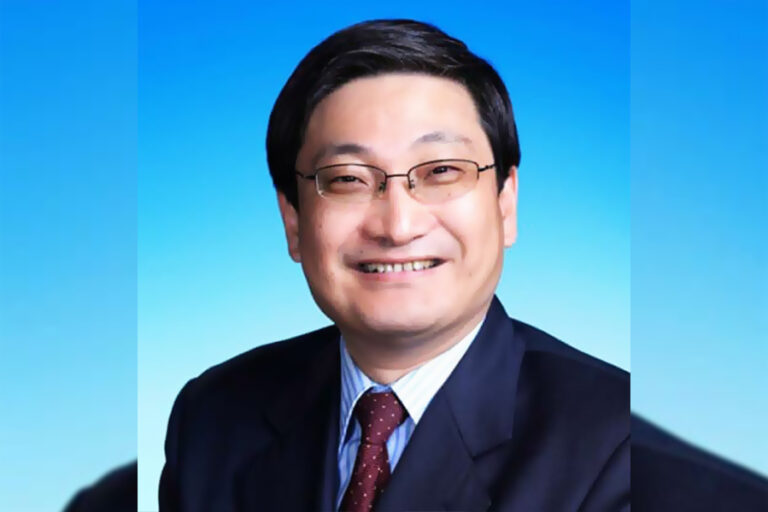
Ambassador Liu Yuxi is Chinese Ambassador to the African Union
