Wednesday, October 7, 2026
Home Blog Page 3256

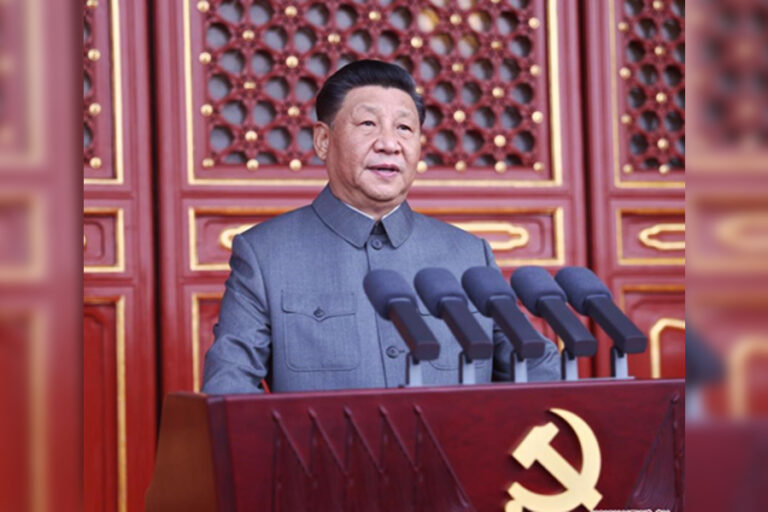
Chinese President Xi Jinping’s address to the Grand Gathering at the Centenary of the Communist Party of China

0

Chinese President Xi Jinping, also general secretary of the Communist Party of China (CPC) Central Committee and chairman of the Central Military Commission, delivered an important speech in Beijing on July 1st at the grand ceremony celebrating the centenary of the CPC. The highlights are as follows:

President Xi said, “Since the very day of its founding, the Party has made seeking happiness for the Chinese people and rejuvenation for the Chinese nation its aspiration and mission. All the struggle, sacrifice, and creation through which the Party has united and led the Chinese people over the past hundred years has been tied together by one ultimate theme—bringing about the great rejuvenation of the Chinese nation.” And “It is certain that with the firm leadership of the Party and the great unity of the Chinese people of all ethnic groups, we will achieve the goal of building a great modern socialist country in all respects and fulfill the Chinese Dream of great national rejuvenation.”

China has accomplished the building of moderately prosperous society in all respects

“This means that we have brought about a historic resolution to the problem of absolute poverty in China, and we are now marching in confident strides towards the second centenary goal of building China into a great modern socialist country in all respects,” President Xi said.

CPC’s four great successes

During the speech, Xi summed up four great successes achieved by the CPC in the past century.

The Party united and led the Chinese people in fighting bloody battles with unyielding determination, achieving great success in the new-democratic revolution; united and led the Chinese people in endeavoring to build a stronger China with the spirit of self-reliance, achieving great success in socialist revolution and construction; united and led the Chinese people in freeing the mind and forging ahead, achieving great success in reform, opening-up, and socialist modernization; united and led the Chinese people in pursuing a great struggle, a great project, a great cause, and a great dream through the spirit of self-confidence, self-reliance and innovation, achieving great success for socialism with Chinese characteristics in the new era.

CPC’s founding spirit as a source of strength

President Xi said, the founding spirit, developed by the pioneers of communism in China, consists of the following principles: upholding truth and ideals, staying true to the original aspiration and founding mission, fighting bravely without fear of sacrifice, and remaining loyal to the Party and faithful to the people.

Chinese people will never allow foreign bullying, oppression or subjugation

The Chinese people will never allow any foreign force to bully, oppress or subjugate them. “Anyone who would attempt to do so will find themselves on a collision course with a great wall of steel forged by over 1.4 billion Chinese people,” President Xi stressed unequivocally, “We have never bullied, oppressed or subjugated the people of any other country, and we never will.”

“On the journey ahead, we will remain committed to promoting peace, development, cooperation, and mutual benefit, to an independent foreign policy of peace, and to the path of peaceful development. We will work to build a new type of international relations and a human community with a shared future, promote high-quality development of the Belt and Road Initiative through joint efforts, and use China’s new achievements in development to provide the world with new opportunities. The Party will continue to work with all peace-loving countries and peoples to promote the shared human values of peace, development, fairness, justice, democracy, and freedom.”

 

Which Colour is Right for your Brand?

0

I have been writing branding related articles on the weekly capital newspaper. Misconception about branding, Basics to successful branding, why do brands matter, can anything be branded, How to organize your brands, which type of logo fits your business, Why to Consider Rebranding and Co-branding as a tool to boost brand image are among others. In this, Which Colour is Right for your Brand, article the influence of colours in branding will be discussing in brief.
As I have also mentioned in my previous articles, brand colours are among the main elements of a brand that differentiate our brand from others. Once a company has identified its brand’s identity and characteristics, it needs to decide on elements of the brand including brand colour that will fit and describe the company best.
Whichever colour the company chooses, the company should make sure that all branding elements particularly “the face of a company” (logo and colour) must have an emotional appeal with the customers and the public at large. Colour is one of the biggest factors that companies should take into account when creating their brand and the accompanied brand elements.
Studies conducted on branding shows that more than half of a person’s assessment of a brand is based on colour. The goal of colour choice should be strictly on attracting customers, not only on personal preferences of a company. Companies should also know that perception of colour can change based on a person’s age, gender, personality, income and other factors, which means companies must understand who their target market are and how they wish the brand to be perceived.
The same company may have more than one colours to use as a corporate colour. Branding scholars advise companies to use one dominant colour, which is known as primary colour, that may express the company best. One or two additional colours can be used as supplementary to the primary colour.
Primary brand colour is the main, consistent colour used in all graphics, publications, signage, promotional items etc. It is central to the brand’s visual identity. The primary brand colour is also tightly associated with the logo. A good example of primary colour is blue to Dashen Bank and red to Coca-Cola company. The applicability of the colours that is how and when to use the colours should clearly be indicated in the branding guideline of the company.
Colour impacts the way customers and the general public perceive brands. Colours also have a powerful effect on our emotions. And these emotions play a major role in how we behave as customers. To this effect, companies should give utmost attention and select best fit corporate colours in general and Primary brand colour in particulars.
Most branding scholars acclaim that to make the right decision on selection of corporate colors for new or re-braded brands, particularly for the primary color, the below points should be considered: –
Context-Considering when and where the brand is displayed. Branding scholar advising that to avoid a brand’s colors being a liability, a company should consider the context, or the where and how, of where the brand colors will be used and displayed. Considering the context of a brand’s colors will allow the brand to both fits in and stand out from the crowed appropriately. Brands can be presented in any environment; however, there will be few key environments such as outdoor ads, interior and exterior design of offices and buildings, promotional items, dressings of staffs etc. where the brand will need to shine and visible.
Competition-Signaling that you are different from your competition through your color choice. A brands colors relative to its competition says to potential customers either “more of the same” or “I am not like the other companies.” Therefore, the colors of the competitors must be considered when choosing colors for a new brand or a rebrand. For instance, blue and yellow/orange are the dominating and the widely used brand colors in the Ethiopian Banking industry.
As per the study conducted by a company called Logofactory, Blue color is also the most widely chosen and used color among the top and renowned world brands. Analyzing the logos of companies on Forbes’ list of the world’s most valuable brands, LogoFactory reports that thirty-five percent of them found to use blue whereas thirty percent of them are using red as their primary color.
Culture-companies should have a strong sense of their culture’s associations with colors and choose colors that maximize cultural associations to the brand’s advantage. Failing to consider culture may place the brand in conflict with the culture they want to be a part of.
The reason color choice is so important is that colors can cause common and strong associations, emotions, memories, and meanings. People associate feelings with colors based on their past experiences. For example, green is heavily associated with the culture of environmentalism. It is natural to use a green leaf or some other symbol of nature to represent an environmental organization. Given the widely use of green by environmental organizations even in Ethiopia, most people associate green with environmentalism. It becomes universal that if a company chooses green for its brand color, we assume the company something to do with environmentalism.
Contrast- one has to make sure that the corporate colors of the company are working with each other. A company needs to choose multiple colors for its brand, and those colors need to have appropriate contrast so that they work together. Otherwise, the chosen colors that blend into each other or fight each other. Properly contrasting colors make each color appear better to the eye. A company may need more than one colors for a brand. A brand’s logo may be only one color, but a company still need to choose colors for backgrounds, header backgrounds, websites and links, for its various communications etc.
Company – A company must choose a brand color that is going to represent the personality and identity of the organization the company should build or brand. If the company fails to do so, then the people of the organizations will not push the brand with much passion, and they may rebrand quickly.
Most branding scholars acclaim that the best place to start with brands are the people or the public they serve, but if you fail to consider the people of the organization, then the brand will come off as untruthful. Certain colors can bring out an organization or an individual’s personality.
Give emphasis to the personal preferences of the management and owners of a company over what would best serve them would be a mistake. But it would also be a mistake to leave a company with a color scheme that they didn’t like. It is a balancing act and is why it is crucial for the designer who is molding the brand to have as good understanding of the organizational culture as possible.
In addition to the aforementioned points, branding scholars advise companies to explore colour psychologies and meanings so that they can select the appropriate primary, secondary as well as supporting brand colours.
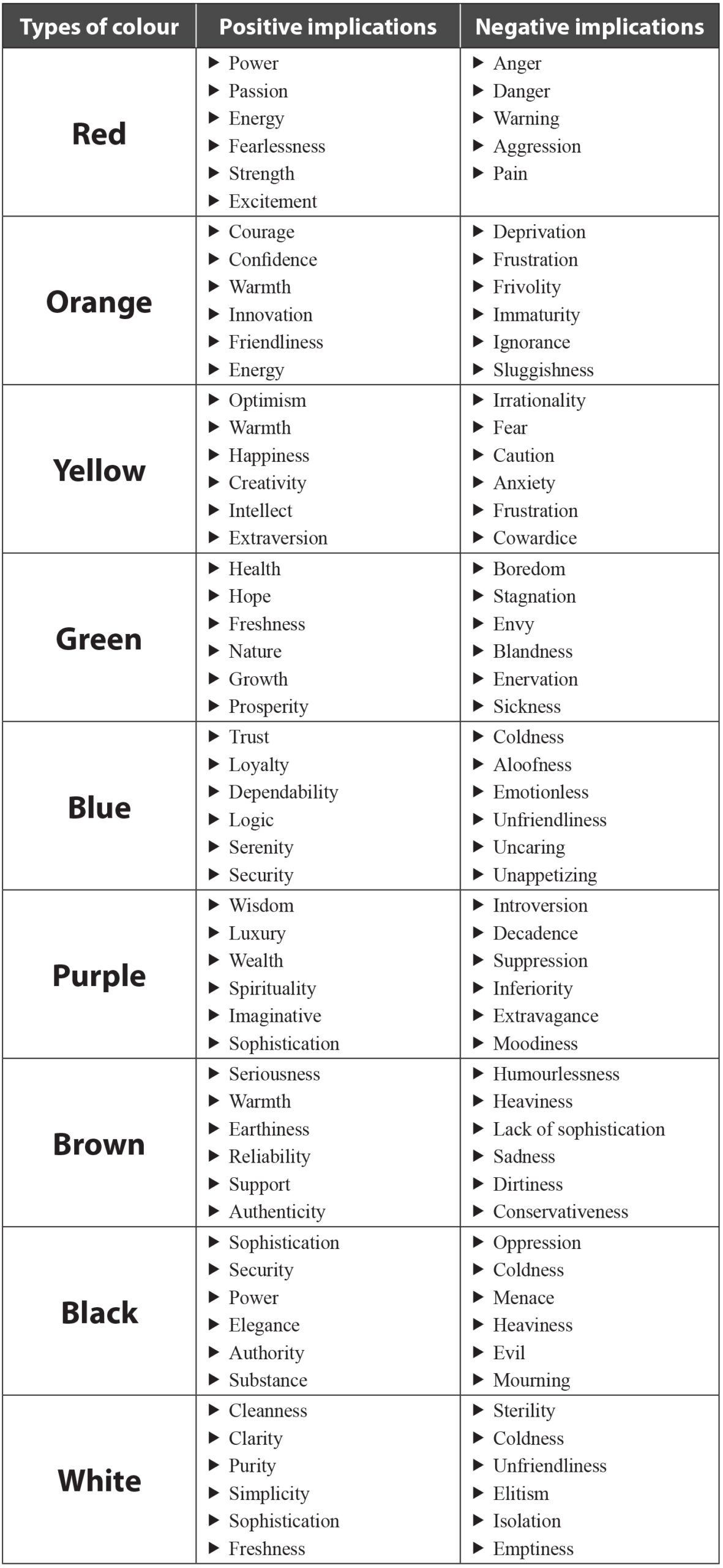
To make the right colour chose for their brand, companies must also learn and understand more about the psychology of colour in branding and marketing. To this end, the research findings of psychology and meaning of colour as studied by various colour psychologists and branding scholars are summarized and presented in the below table.

In conclusion, brand identity defines how the world perceives the brand. Colour is an integral and main component to that perception. Choosing the type of colours that best embodies the brand personality is critical to building a truly authentic and reliable brand. Most branding scholars argue that it isn’t a decision that should be left to urge; by understanding the psychology and meaning of colour, a company can make a selection of best fit brand colour based on insight and gathered from numerous surveys. So, which colour is right for your brand?

Aschalew Tamiru is currently working with Dashen Bank, as Marketing and Customer Experience Director. He was a full time lecturer at various universities,
Aschalew holds MA in Marketing Management from Addis Ababa University and certified Management Consultant. He is a writer of Make a Difference with Customer Service book. He can be reached by aschalewt21@gmail.com.

The second round of the filling of the Grand Ethiopian Renaissance Dam is completed at noon, Monday July 19

0

The second round of the filling of the Grand Ethiopian Renaissance Dam is completed at noon, Monday July 19.