Thursday, April 2, 2026
Home Blog Page 3261

CAN ANYTHING BE BRANDED?

0

By Aschalew Tamiru

On the same newspaper I wrote about “Misconception about Branding, Basics to Successful Branding and Why do Brands Matter.”

In my article titled “Why do brands matter” I was trying to discuss and show how brands provide important benefits to customers and companies/firms. Now, it’s worthy and relevant to deliberate and give response to a question “Can anything be branded” so that, customers and firms get the best out of branded products and services. Most branding scholars acclaim that although firms provide the impetus for the brand creation through their marketing activities, ultimately a brand, ultimately a brand is something that resides in the minds of customers. A brand is a perceptual entity that is rooted in reality, but it is also more than that, reflecting the perceptions and perhaps even the peculiarities and idiosyncrasies of customers.

To brand a product it is necessary to let the customers know “who” the product is-by giving it a name and using other elements, which were also described in my article entitled “basics to successful branding”, to help identify it-as well as what the product or service does and why customers should care. In other words, to brand a product or service, it is necessary to give customers a label for the product (that is “here is how you can identify the product”) and to provide meaning for the brand to customers (that is here is what this particular product can do for you and why it is special and different from other brand and name and products”). Branding involves creating mental structures and helping customers organize their knowledge about products and services in a way that clarifies their decision making and, in the process, provides value to forms. One has to understand that the key to branding is that customers perceive differences among brands in a product category. Brand differences often are associated to attributes or benefits of the product itself. In other cases, however, brand differences may be related to more intangible image considerations.

Whenever and wherever customers are deciding among alternatives, brands can play an important decision making role. Accordingly, firms can benefit from branding whenever customers are in a choice situation. Given the countless of choices customers make each and every day, it is no surprise how pervasive branding has become. For instance, consider how firms have been able to brand once a commodity or a product which were basically similar and it cannot be physically differentiated in the mind of customers. Over the years, a number of products that at one time were seen as essentially similar products (commodities) have become highly differentiated as strong brands have emerged in the category. The value adding effect of branding can be best explained in commodities such as coffee, bath soap, flour, salt, oatmeal and water industries or categories. As branding literatures witnessed, these commodity products have become branded in various ways. The key success factor in each categories, however was that customers become convinced that all the product offerings in the category were not the same and that meaningful differences existed. In these cases the brand was seen as assuring uniformly high quality in the product category on which customers could depend. If product differences were virtually nonexistent, brand have been created by image or other non-product-related considerations.

The universality and application of branding can be recognized and applied by physical goods, services, retail stores, online businesses, people, organizations, places or ideas.

Branding for Physical Goods: physical goods are usually associated with brands and include many of the best known and highly regarded consumer products such as Coca-Cola, Mercedes-Benz, and Nescafe. As more and more different kinds of products are being sold or at least promoted directly to consumers, the adoption of modern marketing practices and branding has spread further. Besides, companies selling industrial or long serving products to other companies are recognizing the benefits of developing strong brands. Now a days, an increasing number of firms are recognizing the value of having a strong corporate brand in their business dealing with other firms. In a Business-to-business deal, branding involves creating a positive image and reputation for the company as whole. Creating such goodwill with business customers is thought to lead to greater selling opportunities and more profitable relationships. A strong brand can provide valuable reassurance to business customers who may be putting their company’s fate- and perhaps their own career-on the line. A strong brand can thus provide a strong competitive advantage. Another showcase for the increasing realization of the important role that brands play in the marketing comparison is with technologically intensive or high-tech products or computer related products. Many technology companies have struggled with branding. The rapid nature of the technology product life cycle causes unique branding challenges. Trust s critical and customers often buy into companies as much as products. Branding scholars acclaim that CEOs and owners of technology companies often become a dominant component of the brand as Apples’ Steve Jobs and Microsoft’s Bill Gates.

Branding for Services: there have been strong service brands for years such as Ethiopian Airlines, Sheraton and Hilton Hotels. Studies tells us that the preservative and level of sophistication in branding services has accelerated in past decades. And in the last 30 years, some of the greatest branding success have come in the area of services. This looks true in our country too, unlike other industries, the service industries such as Hotels and banks have been given more attention to branding of their firms and products and services. One of the challenges in marketing of services is that relative to physical goods, they are more intangible and more likely to vary in quality depending on the particular person or people involved in providing the service.

Consequently, branding can be particularly important to service firms to address potential intangibility and variability problems. Brand symbols may also be essentially important because they help to make the abstract nature of services more concrete. Brands can help to identify and provide meaning to the different services provided by a firm. For instance, branding has become especially important in financial services to help organize and label products and offerings in a manner that customers can understand.

Branding a service can also be an effective way to signals to customers that the firm has designed a particular service offering that is special and deserving of its own name. For example the Ethiopian Airlines not only branded its corporate brand, Ethiopian Air lines, but also give a brand name, “Sheba Miles”, to benefit regular passengers of the Airlines. Branding has clearly become a competitive weapon for services.

Branding for Retailers and Distributors: to retailers or other product distributing firms (channel members), brand provide a number of important functions. Brands can generate consumer interest, support and loyalty in a store, and consumers learn to expect certain brands and products from a store or supermarket. As branding scholars acclaim, to the extent that “you are what you sell” brands help to create an image and establish a good positioning for the store. Retailers can also create their own brand image by attracting unique associations to the quality of their services, product variety and merchandising, and their pricing and credit policy. The appeal and attraction of brands can permit higher price margins, increased sales volumes and greater profits. These brand name products may come from manufacturers or other external sources or from the store itself.

Retailers can introduce their own brands by using their store name, creating new names or some combination of the two. Thus, many retailers, especially supermarkets in Addis Ababa, actually introduced their own brands, which they sell in addition to manufacturers’ brand. Safe Way and All Mart super markets for instance, sell various assortment of products of these kind, fast foods such as pizza, salad and vegetables are among others. These products, referred to as store brands or private label brands, offer another way for retailers to increase customer loyalty and generate higher margins and profits.

Branding for People: Brand extend beyond products and services. People also can be viewed as brands. The naming aspect of the brand is generally straightforward in this case, and people also often have well-defined images understood and liked or disliked by others. The fact becomes particularly true when considering public figures such as politician, entertainers, and professional athletes. All of these different public figures complete in some sense for public approval and acceptance and benefits from conveying a strong and desirable image.

As most branding scholars acclaim, this is not to say that you only have to be well known or famous to be thought of as a brand. Anyone trying to build a career can be thought of as trying to create his or her own brand. Certainly one key for a successful career is that certain people (e.g. coworkers, supervisors, or even important people outside the company) know who you are and what kind of person you are in terms of your skills, talents, attitude, and so forth. By building up a name and reputation in a business context, a person is essentially creating his or her own brand. The right awareness and image can be invaluable to the manner in which people treat you and interpret your words, actions and deeds.

Branding for Geographic Locations: geographic locations like products and people also can be branded. In this case, the brand name is relatively fixed by the actual name of the location. For example, tourist sites of Ethiopia such as Entoto, Lalibela, Axum, Gondor, Ertale, Bale and so forth. The power of branding is in making people aware of the location and then linking desirable associations. Increased mobility of both people and businesses and growth in the tourism industry have contributed to the rise of place marketing. Various cities, regions, and countries are actively promoted through various promotion tools. The goal of the promotion or campaign is to create awareness and favorable image of a location that will induce visits.

Branding for Ideas and Causes: many ideas and causes have become branded, especially by nonprofit organizations. These ideas and causes may be captured in phrases or slogans/ taglines even be represented by a symbol or logo example AIDS ribbon. By making the ideas and causes more visible and concrete, branding can provide much value.

Various articles and books written on branding are used as a references.

Aschalew Tamiru was a full time lecturer at various universities, currently he is a Marketing and Customer Experience Director at Dashen Bank, holds MA in Marketing Management from Addis Ababa University.

Aschalew has published a practical book called “Make a Difference with Customer Service” Couple of months before and the book is available at various book stores. He can be reached by aschalewt21@gmail.com
Ericsson digital and mobile money solutions to power better customer experiences for TMCEL subscribers

0
  • Five-year Business Support Systems (BSS) and Ericsson Dynamic Activation (EDA) deal provides TMCEL with latest software innovations, features and services
  • TMCEL subscribers to enjoy improved customer experiences through agility and operational efficiency
  • Mobile Money to provide access to safe and secure financial services

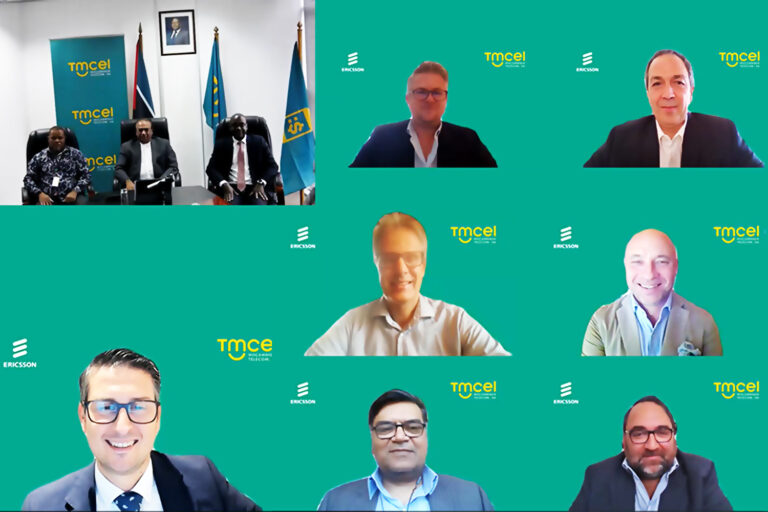
TMCEL Mozambique and Ericsson (NASDAQ: ERIC) have signed a five-year-deal to expand and modernize its network and digital services ecosystem through the latest Ericsson Business Support Systems (BSS) and Mobile Money software innovations, features and services. As a result of the agreement, TMCEL can deliver an improved customer experience to its mobile subscribers.

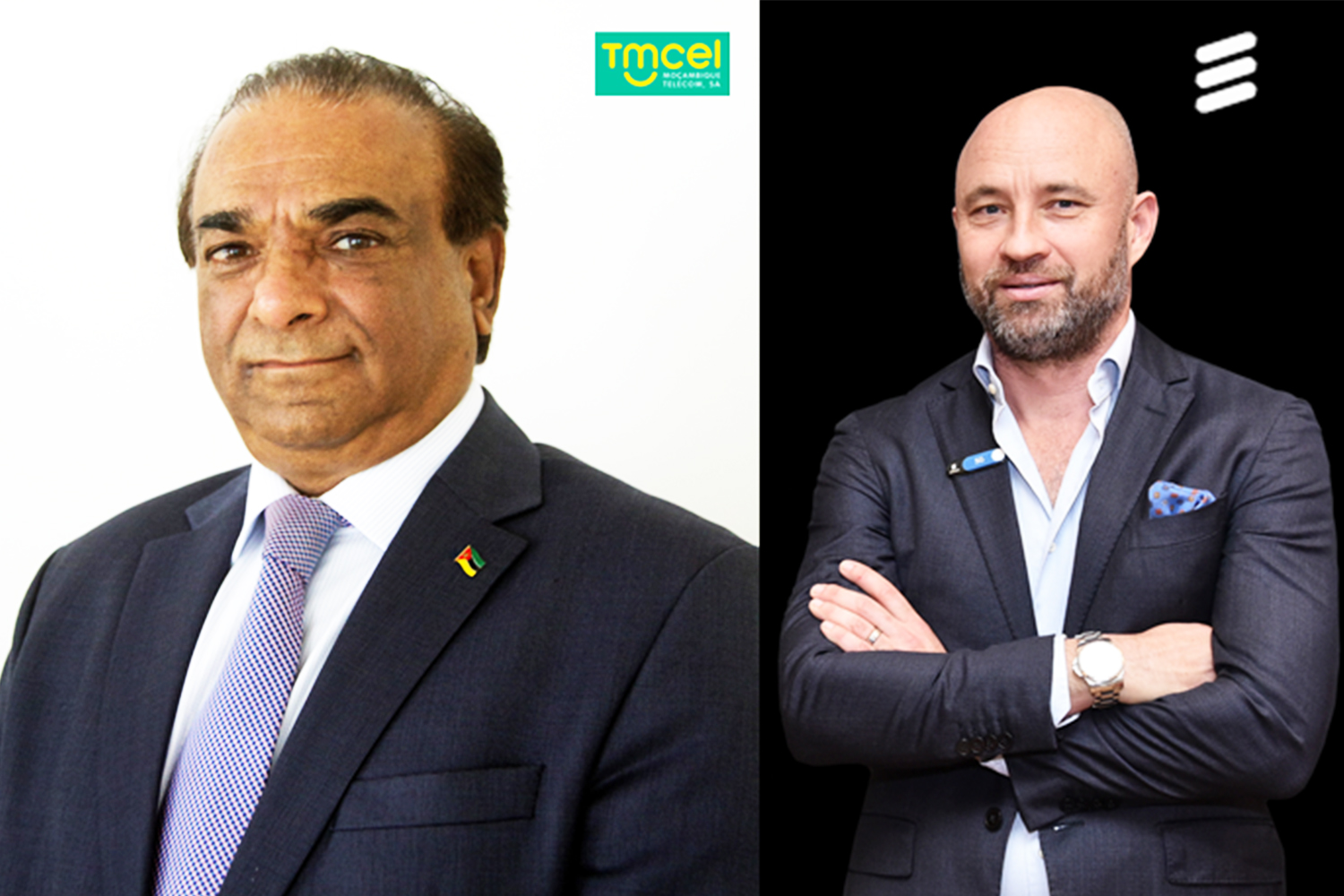
Tmcel: “Mahomed Rafique Jusob Mahomed, Chairman of the Board at TMCEL (left) and Todd Ashton, Vice President and Head of Ericsson South and East Africa (right)”

The Ericsson Business Support System (BSS) solution will facilitate TMCEL’s shift to customer-centric business operations and digital engagement.  Additionally, Ericsson’s Dynamic Activation (EDA) will address all of TMCEL’s service activation needs with a single, flexible platform. The deal also includes the deployment of Ericsson’s Mobile Money solution.

The operator’s aim is to encourage the everyday usage of mobile money by unlocking access to a diverse payments ecosystem. Ericsson’s Wallet solution will power the project, being tailored to provide a new channel enabling financial inclusion, offering easy-to-use and secure next-generation mobile financial services, and including those who do not have access to traditional banking services.

Mahomed Rafique Jusob Mahomed, Chairman of the Board at TMCEL says: “Through this partnership we look forward to working with Ericsson to further enhance our value proposition and expand our ecosystem.  Ericsson’s global experience and innovative solutions will allow us to meet the personalized and rapidly changing requirements of the digital marketplace in Mozambique.”

TMCEL stands to benefit from improved business agility, and an effective step-by-step evolution to the dynamic digital world that is being built with 5G and Internet of Things (IoT). It will gain access to ongoing Ericsson product releases and performance enhancements and, future-proofing investments that are in line with market and technology transformation trends. The deal includes a range of Ericsson BSS products to underpin the monetization of services, including Ericsson Charging System, Ericsson Dynamic Activation, Complete Virtual platform & Geo-redundancy, and Multi Mediation.

Todd Ashton, Vice President and Head of Ericsson South and East Africa, says: “TMCEL’s ongoing commitment to innovation and enhanced customer experiences is proof of TMCEL’s efforts to offer benefits to Mozambique especially in the area of digital wallets. We will continue to be TMCEL’s trusted day-to-day business partner and reinforce its mission to remain at the forefront of ICT in Mozambique with our proven capabilities in BSS and Mobile Money software and systems integration. This project is a key aspect to the economic development of the nation and will also be a key enabler for connecting and supporting new emerging industries in the country.”

Services provided by Ericsson under the agreement include solution design, project management, technology consultancy, service enablement, business configuration, development and customization, solution integration and verification, and load testing and acceptance.

On the other hand, mobile money services have become an essential, life-changing tool across Africa, providing access to safe and secure financial services but also to energy, health, education and employment opportunities.

1 December is the Day of the First President of Kazakhstan

0

On 1 December, Kazakhstan is celebrating the Day of the First President. It was on this day in 1991 when Nursultan Nazarbayev was elected President at the first nation-wide elections. The Day of the First President was instituted by the Kazakh Parliament in 2011 and has been celebrated ever since.

The leader of the state attached a special role to the establishment of a national security system and pursued a balanced multi-vector policy, the essence of which was to establish and develop mutually beneficial cooperation with other countries. The consistent multi-vector foreign policy of Kazakhstan is recognized worldwide. Kazakhstan is championing for a world free of nuclear weapons and nuclear non-proliferation regime. Kazakhstan closed the Semipalatinsk test site and voluntarily abandoned the huge nuclear potential inherited from the Soviet Union, which was the world fourth largest. In the last decade, Kazakhstan has chaired, among others, the Organization for Security and Co-operation in Europe, Organization of Islamic Cooperation, and Shanghai Cooperation Organization. As the first ever Central Asian country Kazakhstan  was elected a non-permanent member of the UN Security Council for 2017-2018.

In a short period of time Kazakhstan transformed into a modern, advanced state, part of the group of the 50 most competitive countries in the world. The country has managed to accumulate large financial resources in its National Fund, which makes it possible to solve important socio-economic tasks in crisis situations. Kazakhstan is leading, in terms of foreign direct investment per capita and has attracted more than $350 billion in foreign direct investments.  Kazakhstan now ranks 25th among 190 countries in the World Bank Doing Business index and 58th in the human development index. The literacy rate reached 99.8 percent.

First President N. Nazarbayev is the chief architect of integration processes in the Eurasian space. Evidence of this is the realization of his initiative on the creation of the Eurasian Economic Union (EAEU) in 2015.

A special place in the policy of the First President of Kazakhstan was the issue of interethnic relations. Kazakhstan is a multi-ethnic country where representatives of 130 ethnic groups live. The President was able to turn the multinational factor into the true heritage of the republic. Thanks to the wise, balanced and flexible policy of the Leader of the nation, our republic has overcome the difficulties of the transitional period and managed to avoid conflicts on ethnic grounds. The President of the country created a unique institution – the Assembly of the People of Kazakhstan, an advisory body under the Head of State, the main purpose of which is to ensure equality of rights and freedoms of citizens, regardless of their nationality, language, religion, membership of social groups.

Yet another significant contribution to peace is the initiative of N. Nazarbayev to hold the Congresses of Leaders of World and Traditional religions, which are conducted in Kazakhstan at triennial bases.

Our First President significantly contributed towards the construction and development of our new capital. Its establishing is a historic feat of the Head of State. Our capital has become a true image of an independent country, the pride of our people. The capital is a sacred representation of the concept and ideology of the new state. On the initiative and decision of the parliament, supported by the population, the capital was named in honor of its creator – Nur -Sultan.

In spring last year N. Nazarbayev voluntarily relinquished his powers after serving 30 years as the President of Kazakhstan. He stated that he sees his future task in ensuring the coming to power of a new generation of leaders who will continue the transformation process in the country. This important decision of the Head of State showed his greatness as a politician, it was motivated by considerations of the highest order, true concern for the future of Kazakhstan.

  1. Nazarbayev remains the only and lifelong Leader of the Nation (Elbasy). He is also Chairman of the Security Council, Chairman of the Nur-Otan party, Chairman of the Assembly of the People of Kazakhstan, and a Member of the Constitutional Council. Having voluntarily relinquished duties as President, N. Nazarbayev again showed the entire world his wisdom and leadership as a great politician, committed to democratic values.

On June 9, 2019, early elections of the President of the Republic of Kazakhstan were held. Kassym-Jomart Tokayev was elected as the new President of Kazakhstan. Thus, a peaceful transition of power in Kazakhstan took place, political succession was announced and all priorities and goals of foreign policy of Kazakhstan will remain unchanged.

Kazakhstan is interested in expanding ties with Ethiopia, given its growing role in world affairs and the global division of labor. Kazakhstan sees Ethiopia as a friendly country and a major partner in Africa. Kazakhstan people have deep respect for the Ethiopian people, their rich culture, art, traditions and kindness of a national character.

We are witnessing radical reforms underway in Ethiopia that are aimed at the full-scale transformation of the country’s economy in order to improve the standard of living of citizens, as well as strengthening national unity and regional integration both in the Horn of Africa and on a continental scale.

Kazakhstan welcomes these transformations and wishes success in achieving  their goals.

Author of article is H.E. Mr. Barlybay Sadykov, Ambassador of Kazakhstan to the Federal Democratic Republic of Ethiopia.

Ericsson estimates USD 31 trillion 5G consumer market by 2030

0
  • 5G could drive up to USD 31 trillion in cumulative consumer revenue in the ICT industry by 2030
  • Communications service providers (CSPs) could earn up to USD 3.7 trillion in cumulative 5G-enabled consumer revenues by 2030
  • Augmented Reality (AR) could drive more than half of all consumer spending on immersive media by 2030

he 5G consumer market could be worth USD 31 trillion by 2030 globally, according to the new Harnessing the 5G Consumer Potential report from Ericsson (NASDAQ: ERIC) ConsumerLab. The report estimates that communications service providers (CSPs) could earn USD 3.7 trillion of that total – a figure that could increase further as new adjacent digital services opportunities arise.

The report also estimates that CSPs could generate up to USD 131 billion by 2030 from digital service revenues alone, by proactively bundling and marketing 5G use cases. About 40 percent of these revenue projections are attributed to consumer spending on enhanced video, augmented reality (AR), virtual reality (VR) and cloud gaming over 5G networks. The report projects that AR is likely to drive more than half of all consumer spending on immersive media by 2030 – starting with gaming and extending to other areas like shopping, education and remote collaboration.

Key findings also highlight how the impact of the COVID-19 pandemic on personal finances and financial priorities may have affected consumers’ willingness to pay a premium for 5G subscriptions. In early 2019, the average consumer was willing to pay a 20 percent premium for 5G. As 2020 draws to an end, that figure has dropped to 10 percent. However, one in three early adopters globally are still willing to pay a 20 percent premium. Such high levels of early adopter take-up could help drive economic recovery, according to the report.

The report also projects that by proactively driving 5G consumer adoption, CSPs could gain 34 percent higher 5G average revenue per user (ARPU) by 2030. This could boost consumer revenues at a compound annual growth rate (CAGR) of 2.7 percent compared to flat revenue growth of 0.03 percent by taking a passive approach across the decade.

Jasmeet Singh Sethi, Head of ConsumerLab, Ericsson Research, says: “This is the first time that Ericsson has presented a revenue forecast for the 5G consumer market, which remains the core business of communications service providers. Through our research, we have highlighted the role of use case development, tariff innovation, quality 5G coverage and ecosystem partnerships to unlock the true potential of this market. It is clear that 5G will drive enormous opportunities for CSPs in consumer business over the decade. As this journey is already underway, those CSPs that quickly and proactively evolve their consumer propositions are likely to be bigger winners.”

The report also highlights the enabling role technologies such as edge computing and network slicing will play in helping service providers to secure 5G-enabled consumer revenue. This could come from core digital services like cloud gaming and augmented reality applications, or adjacent digital services, such as in-car connectivity and associated safety features.