

What are zombie companies? One can find a number of criterions by which one can define zombie companies. The straightforward and easy answer is; zombie companies are those that have become unviable in the market place. What is meant by ‘unviable’? Here, one has to resort to traditional parameters to assess the health of companies in a given capitalist economy. Again, what are these parameters? Traditionally, a company’s health is/was ascertained from its books, i.e., its audited financial reports. This served as the main ‘certificate of health’ for companies, big or small. Up until recently, GAAP-Generally Accepted Accounting Principle; was the most used standard in the audit business. This standard served to streamline valuations and evaluations of companies in the various jurisdictions of the world system. In the past few decades, however, this standard/GAAP was increasingly demoted, so to speak. In its place, different parochial systems were instituted, to help accommodate the unviable zombie companies of the world!
ENRON was a company that started out in 1985 and folded in 2001. Fortune, the business magazine, named Enron ‘America’s Most Innovative Company for six consecutive years! Sure enough, it was amongst the first few companies that pioneered ‘creative accounting’. When its assets appreciated, it borrowed abundantly, when it assets go south, it magically concocted new figures to compensate for its deceased asset prices, with a view to borrow even more. The once prestigious accounting firm, ‘Arthur Andersen’ was the auditor of ENRON. It also went kaput along with its generous client. WORLDCOM was another of these ‘unicorn’ companies that used creative accounting to mislead/fool, not only shareholders, but also governments and the public at large. WORLDCOM, more like WORLDCON, started out in 1983 and soon became one of the largest telecommunication companies in the US. It acquired many corporations by cooking its books and pushing the massive losses on the gullible investors. Like Enron, it ungraciously collapsed in 2002. ENRON and WORLDCOM outshined old-fashioned corporations that had to rely on traditional parameters such as earnings/profits, etc., via GAAP to secure their places in the hierarchy of corporate-dom. Zombies can’t stand such hassles!
Here is another way of defining a zombie company. It is an entity that cannot pay the interest on its debts from operating income. By and large, this phenomenon is pronounced in countries where companies have to rely on bank credits rather than the stock market, to finance their operations and expansions. In other words, zombie companies are like sovereign states. States do not pay their debts, (sovereign bonds) they just roll them over, so to speak. They pay their outstanding debts by issuing more new debts; new bonds replace old bonds! Zombie companies are the equivalent of states, in the domain of the market. Just like the states, zombie companies need to borrow more new money in order to pay the interests on the old borrowed money. In short, these entities are bottomless money pits! Today these companies are a dime a dozen and dominate plenty of economies across the planet, ranging from the small to the large. Most importantly, they tend to be ‘too big to fail’ within the economies they operate. Zombie companies are almost always protected by their respective states and are not forced to face the vagaries of the market place, like the others. When zombie companies proliferate in a given country, it is a sure sign that economic collapse cannot be far behind! See the article b next column.
Companies like Tesla, Amazon, etc., are hardly profitable, but that is not the main criterion they have to adhere to. There are plenty of entities like them that are fully supported by the States, with a mission to change the whole business environment of a given economic sector. To this end, financial institutions and equity markets are given the green light to support them, come what may! The long-term objectives of these companies seem to be the weeding out of healthy competitors, who have become unwieldy to the desires of the ‘permanent government’ (Charles Hugh Smith) or the DS (Deep States). Besides the hidden agenda of the DS, there are visible problems confronting late modernity. One major problem is the issue of unfunded liabilities. For example, pension funds, insurance companies, etc., are major players both in the global equity as well as debt market. Pension funds expect an average of 7% return per annum from their diverse investments. Their actuarial policies are based on this magic number. However, today’s global bond market only delivers zero or negative interest. In addition, dividends from equity investments are negligible. Therefore, to assume such a consolidated return of 7% is at best preposterous. Therein lies one of the major problems contemporary capitalism!
Since many of the world’s major pension funds are players in the equity and bond markets, all kinds of maneuvering and manipulations are used to give the impression that adequate returns are there to sustain pension payments, even though the facts on the ground do not support this ridiculous supposition. This is one of the reasons why zombie companies are allowed to flourish in the market place. For instance, almost all of the zombie corporations in the world have insignificant tangible assets. To compensate for this shortcoming, their balance sheets are beefed up astronomically, by assigning crazy numbers to their intangible assets! This holds true even in the case of ‘blue chip’ companies like Microsoft, etc. “This is the way the world ends; not with a bang or a whimper, but with zombies breaking down the back door.” Amanda Hocking, Hollowland.
Good Day!
ZOMBIE COMPANIES

Ethiopia on edge as conflict breaks out in Tigray
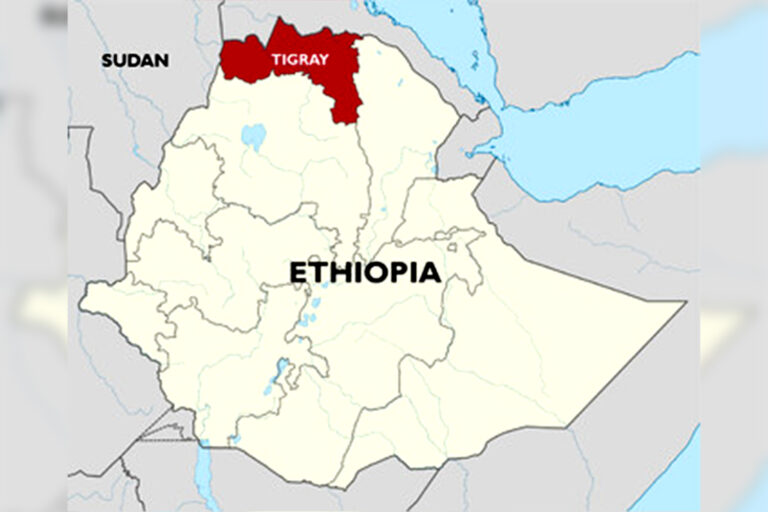
Prime Minister Abiy Ahmed on Tuesday night announced that the Tigray regional government TPLF had attacked the Ethiopian National Defense Forces base, in Tigray. Prime Minister Abiy in response ordered military offence following the attack. The Ethiopian National Defense Forces, under the direction of a Command Post, have since been ordered to carry out the mission.
Ambassador Redwan Hussen, spokesperson of the newly established state of emergency task force informed Capital that, although the situation was an unwarranted attack on the National Defense it is not war declared in the country rather it is an undergoing of a short period operation, in attempts to protect rule of law and the constitution from the criminal group.
Similarly, neighboring countries have shown positive support to the federal government in support of its operation against TPLF.
Redwan stated that the neighboring countries including Eritrea, Sudan and Djibouti have shown their positive stand with the federal government to fight the criminal group.
“Sudan has closed its boarder to specially to control illegal arm transaction from Sudan to Ethiopia,” he explained.
Djibouti on its end as a bordering country, has promised to deliver any TPLF officers who comes in seeking political asylum. Redwan in compliment said that the government of Djibouti has taken an assignment to protect trade flow at the boarder especially on imported capital commodities.
A couple of days ago, the local Djibouti newspaper called ‘Les Nouvelless de Djibouti’ reported that 16 Tigrayan officers of the Ethiopian Federal Army came to Djibouti via Galileo on November 3, 2020 to seek political asylum in which the presidential guard recovered them and they are now under investigation at the documentation and security service. The report cited that these officers will be delivered to Ethiopia by the Djiboutian air force plane.
With regards to Eritrea, Redwan explained that even though the borders had been closed for years, the Eritrean government has volunteered to protect civilians getting in across the borders.
Since the present Government came to office by peaceful means in April 2018, members of the TPLF group, who ruled the country for the past 27 years have been fugitives from justice hiding in the city of Mekelle.
“Over the past two years, the Federal Government has adopted an attitude of patience to contain transgressions by the TPLF and the illegal elements it has been funding and mobilizing to destabilize the nation,” reports state from the prime minister’s office on November 6, 2020.
“The government has been trying to adopt all the peaceful means by giving space for dialog, negotiation and reconciliation both officially and unofficially,” said Redwan, “However currently things have gone beyond and this has to be corrected unless it grows to become a national challenge,” he added.
General Berhanu Jula, on his statement said the conflict will end in Tigray. He ensured the public that the military forces are working to ensure that the conflict does not trickle down to the central part of the country.
The UN Secretary General Antonio Guterres also expressed his alarm over the reported armed clashes in the Tigray region of Ethiopia. He called for immediate measures to de-escalate tension and for a further peaceful resolution to the dispute. He underlined also underlined that the stability in Ethiopia is important for the Horn of Africa region.
Similarly, the US embassy in a statement urged for urgent measures to be taken on de-escalating the situation. “We strongly encourage all parties to prioritize civilian security and safety,” the statement read.
Redwan argues that even if the International organizations and inter-regional organizations are calling the two parties to come to mutual agreement and stop the war, the TPLF group has surely crossed the line.
“This is conflict between federal government and an illegal armed group which has been part of the government, once ruler and financed by the government,” he states.
“This situation has reached a level where it cannot be prevented and controlled through such mechanisms until the government clears all the arms they had and made things as they previously were by protecting the rule of law and the nation. This will not be a long war rather a short period of operation. We cannot converse with such kind of nation betrayers,” Redwan expressed.
The federal government accuses the regional government and its authorities for; endangering the constitution and the constitutional order, threatening the country’s sovereignty, seriously impending and discharging its constitutional responsibility in the Region, and violating decisions of the House of Federation.
The Federal Council of Ministers further declared a State of Emergency in Tigray Region in its 21st Extraordinary Session held, on the 4th of November 2020.
In accordance with article 93 of the Constitution of the Federal Democratic Republic of Ethiopia, the state of emergency has power on the country’s peace, safety and security of its citizens and to prevent acts that may lead the country to further unrest and instability.
The State of Emergency is decreed for a period of six months and a State of Emergency Task Force to be led by the Chief of Staff of the Armed Forces, composed of representatives from pertinent institutions and accountable to the Prime Minister has been established through the State of Emergency decree.
The State of Emergency Taskforce could through directives expand or restrict the geographic scope of application of the decree. Detailed information regarding the State of Emergency on a regular basis will be provided in due course.
“Given the challenge posed by the flagrant and repeated unlawful acts in the Tigray Regional State to national security as well as law and order, the Federal Government has deemed it necessary to undertake its law enforcement operation within the framework of a State of Emergency,” states, the Prime Minister office’s statement on November 6, 2020.
The regional governments of Oromia and Amhara regions, as well as members from the federal parliament, also claim that the TPLF played a big role in the massacre over the weekend of 54 people in the western part of Ethiopia by giving arms supplies to members of the Oromo Liberation Army (OLA).
TPLF, one of the four coalitions of Ethiopia People Revolutionary Democratic Front (EPRDF), has been dominating Ethiopia’s politics for almost 27 years. Its dominance ended after Prime Minister Abiy assumed power two and half years ago following public unrest that led to the resignation of his predecessor, Hailemariam Desalegn.
“TPLF has been arming the Oromo Liberation Front-Shene group and supporting its act of violence against civilians,” says Shemelis Abdisa, President of Oromia, the largest among the ten autonomous regions of Ethiopia. The deadly violence included the execution-style death of dozens of people belonging to the Amhara group in the Oromia region.
Arbitration draft complementing international conventions tabled

The draft arbitration proclamation that considered the implementation of international conventions that Ethiopia signed has been tabled to parliament.
The draft, ‘Arbitration and conciliation working procedure proclamation’ on its preamble said that the establishment of alternative dispute resolution and reconciliation helps to complement the right to justice and, in particular contribute to the resolution of investment and commercial related disputes and to the development of the sector.
It added that arbitration and conciliation help in rendering efficient decision by reducing the cost of the contradicting parties, protecting confidentiality, allowing the participation of experts and the use of simple procedure which provides freedom to contracting parties.
“It is necessary to provide for a general framework for the identification of arbitral cases, management of arbitration proceedings and execution of decision taking into account the objective condition prevailing in the country,” it said.
And added that the proclamation helps in implementing international treaties acceded and ratified by Ethiopia and it has become necessary to amend the laws in force by taking into account the international practices and principles related to arbitration and conciliation.
Recently the country signed the New York Convention which was ratified by parliament.
Experts in the sector recently told Capital that the acceptance of the international convention will boost the trust of big and international investors to work with Ethiopians and invest in the country. These experts underlined that the government and the private sector should be cautious on getting agreements.
The proclamation indicated that the cases that are non-arbitral are tax cases, judgment of bankruptcy, decision on dissolution of business organizations, all land cases including lease, administrative contract that are excluded where it is permitted by law, trade competition and consumer protection, administrative disputes falling under the powers given to relevant administrative organs by law and others.
Regarding arbitrator article 12, sub article 5, indicated that a person who has previously participated as an attorney, advisor, conciliator or judge of a court shall not serve as an arbitrator in the same case.
Sub article 6 of the same article added that an arbitrator shall not, unless it is found appropriate in the arbitration proceedings, meet with a contradictory party separately or accept any kind of gift from the parties.
According to the proclamation, an arbitration center will be established with the government or private ownership to provide arbitration service.
Article 17, sub article 2, of the proclamation has given a power for Federal Attorney General to supervise the centers, issue and renew license and provided for criteria for the establishment of the same.
The same article sub article 3 stated that the proclamation shall not prohibit existing arbitration centers form being operational. Currently some arbitration is operating in the country. The Addis Ababa Chamber of Commerce and Sectoral Association is the most known.
The decade long CBHI Scheme to finally receive ratification
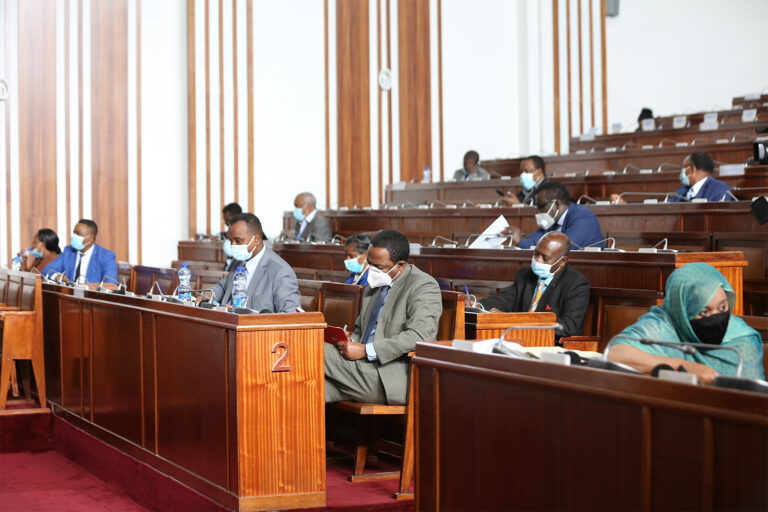
The Community-Based Health Insurance (CBHI) draft proclamation has been tabled to parliament in order to make the ten years old pilot operation formal.
The proclamation that was expected to be tabled to parliament years back had received delay for several periods due to the prioritization of massive engagement with the society for awareness creation.
On the session held on Tuesday November 3, the draft proclamation that was reviewed and approved by the House of Federation, which is responsible in assessing the proclamation mismatch with constitution and the right of regions or not, has tabled it for further evaluation by the standing committee and awaits ratification as a proclamation.
On its evaluation attached with the draft proclamation, the House of Federation stated that it follows the right of regions and that it collaborates with the constitution.
The House of Federation also added that the proclamation may allow correlating with the health sector technology system and improving technological based service.
“The law shall also enable the attainment of universal health coverage and allow achievements on the creation of one economic community,” it explained.
According to the health account study conducted in 2017, the country per capita health service expense is about USD 32 whereas the average for Sub Saharan countries is at USD 86.
The explanation that justified the proclamation argued that the insurance payment that is given for health facilities shall improve their quality of service and infrastructure.
It added that from the total expense for health service patents share is 31 percent, which is described as very huge amount that mainly affects low income parts of the society thus making poor households poorer.
CBHI was first piloted to part of the communities, which are involved in the informal economy sector, in 13 weredas of the Tigray, Amhara, Oromia, and Southern regions in 2011 that is now implemented in 771 weredas of all regions and two city administrations that are under federal government.
To come up with the proclamation different countries experience have been evaluated.
The CBHI scheme will allow the mobilization of finance to cover health expenses of the society and insure the community from unnecessary expense.
