

Following the strict monitoring and control over the transfer, distribution and marketing of petroleum products government has outlined a time limit for trading petroleum products.
Due to the current situation in our country, man-made damages may occur, and to that effect the Ministry of Trade and Industry has set the given time limits in order to curb the situation. This will allow the Ministry to control existing and improper inflation and to avoid shortages by creating undue stockpiles.
“We are working harder than ever to prevent any damages,” read the Ministry of Trade and Industry statement.
To closely monitor and control the transfer, distribution and marketing of petroleum products all gas stations in Addis Ababa starting from November 6, 2020 will be operational from 6AM- 8PM and for other regions the operational time limit will be 6AM- 7PM.
In addition, the monthly quota for sugar supply and distribution of basic commodities stood at 426,000 quintal, which on this month’s performance accounts for 87 percent. The monthly oil quota stood at 40,000,000 and its monthly performance is said to account for 30 percent. According to the Ministry it currently has 74 million liters in stock.
Ministry sets operational time limits in Gas Stations

Government assures use of the BRP report in its policy development

The government assured that it will use the Blue Ribbon Panel (BRP) report that shows what the country should consider in its socio economic development in the coming 30 years.
On the official report launching ceremony that was held on Saturday October 31, Eyob Tekalegn, State Minister of Finance appreciated the document that was developed by a group of experts comprised from different fields and from local and international expertise.
He said that the government will consider the document on its policy development to for the country economic and social sectors that will be attained in the coming years.
Debrework Zewdie, distinguished Scholar and Visiting Professor at the City University of New York and Chair of the Blue Ribbon Panel, who also led the report launching and press conference, said that the panel had sent its document initially for the government to consider it on its ten year economic development plan that it recently introduced.
The report is the output of the discussion and presentation that was presented on the two days event held in December last year. 
The document includes a report outlining strategies to transform the Ethiopian economy by the year 2050.
On the development of the strategies, an independent panel of Ethiopian and Ethiopian-origin experts that have diverse professional backgrounds and deep expertise across fields as varied as economics, public health, statistics, education, population dynamics, technology, and urban planning had been involved.
The BRP, established in December 2019 during the Ethiopia2050 Grand Challenges and Opportunities Conference held in Addis Ababa, aims to capitalize on opportunities provided by the unprecedented demographic transformation population dynamics to deliver economic prosperity, food security, transportation infrastructure, and gender equity to the Ethiopian people. The Ethiopia2050 International Steering Committee launched the BRP to write a report summarizing the conference findings.
Focusing on the projected exponential population growth over the next 30 years, the 11 Ethiopian and Ethiopian-origin BRP members and 45 other experts in their own fields outline what Ethiopia must do to proactively address 10 major challenges and opportunities associated with the expected historical demographic shift.
With population dynamics as the central issue, the report focuses on actions policymakers can take now with broad support from the public. Highlighting issues such as rapid urbanization, the water-food-health-energy nexus, economic growth, transportation and rural development, institutional and civic development, and gender equality the experts advocate for forward-looking solutions, funding mechanisms and a detailed implementation plan. The report complements the government’s Ten Year Plan with the aim of becoming a middle-income country in the near future and a leader in Africa.
“When we started the Ethiopia2050 Initiative, our main goal was to create a forum for technical experts to contribute to Ethiopia’s development in their own fields. We could not be happier with this report, which addresses critical issues and offers solutions,” Tesfaye Workineh, Co-Chair of the Ethiopia2050 Steering Committee, said.
“It was a privilege to lead a group of like-minded experts whose singular aim is to bring attention to the projected doubling of the population by 2050 and instead capitalize on the opportunity for development by taking action now. While action taken now, as laid out in the report, will ensure Ethiopia’s development to a middle-income country, non-action or delay will create a huge challenge and a lost opportunity,” Debrework said.
“We hope the report will inform and inspire the initiatives of all stakeholders, including the government of Ethiopia, all political parties, the private sector, as well as non-governmental organizations, and development partners. We consider this document to be a living document that will continue to inspire conversations and help generate ideas thus setting the stage for improving the chances of even newer ideas, strategies and recommendations,” he added.
The victors of the wheat bid matrix

The Public Procurement and Property Disposal Service (PPPDS) awarded Marthina Mertens Sampl Lebensmittel Handel (Food Trading) to supply the 200,000 metric tons of milling wheat.
The milling wheat that PPPDS is procuring on behalf of the National Disaster Risk Management Commission was opened on Thursday, October 15 and four bidders had participated on the bid.
This week, the Service has awarded Marthina Mertens, a German company, to supply the grain at the total cost of USD 40.39 million, which was the least bided price.
Besides Marthina Mertens Promising International Trading Co, HuytonInc and Aplus Importer are the other companies that participated on the bid.
On its bid document, Marthina Mertens had stated the loading port will be Terminal 24 of Novorossiysk, Russia.
On the other hand PPPDS has awarded Rosentreter Global Food Trading to supply the 400,000 metric tons of milling wheat for Ethiopian Trading Business Corporation.
The wheat that is procured to stabilize the market was awarded to the German company at the cost of USD 76.89 million.
Novorossiysk, Russia was set as the loading port for the grain.
The six companies that were involved in the 400,000 metric ton bidding are; Green Export CA, Aston FFI (Suisse),Promising International Trading Co, HuytonInc, A plus Importer and Rosentreter Global Food Trading.
On the bid that was divided by four lots with 100,000 metric tons each, A plus Importer, an Ethiopian company, and Rosentreter had expressed their interest to participate on all lots.
A week ago on the procurement process of 80,000 metric tons of wheat that World Bank procured for Food Security Coordination Directorate of the Ministry of Agriculture for Rural Productive Safety Net Program the award has been given.
Promising International Trading Co secured that bid of CIP Adama, Dire Dawa and Kombolcha central warehouses.
The total wining price is USD 27.82 million. According to the bid document from the total 80,000 metric tons; 26,000 metric tons shall be delivered to Adama Central warehouse, 30,000 metric tons to Kombolcha and the remainder 24,000 metric tons to Diredawa Central warehouse.
A beneficial scheme for farmers awaits ratification
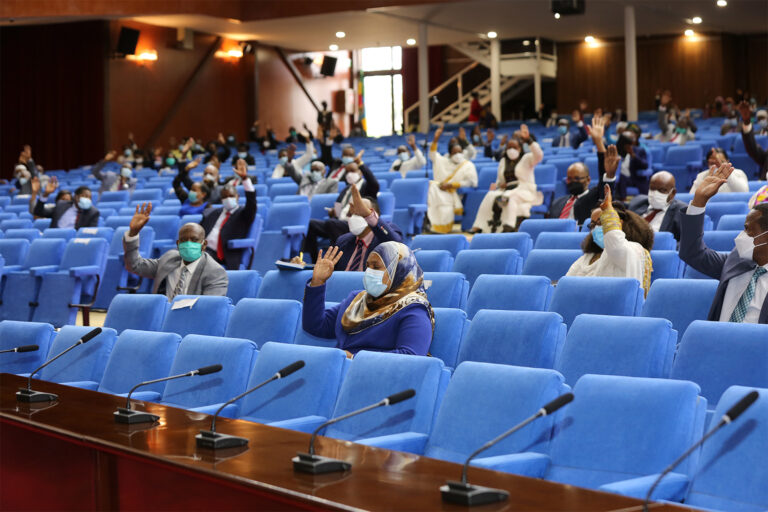
The highly anticipated but delayed contract farming proclamation has been tabled to the House of Peoples Representatives.
The proclamation that experts in the sector frequently suggested to be establish under a legal framework to boost the agricultural sector as well as for structural transformation has finally been tabled at the parliament on Tuesday for ratification.
Experts in the sector have suggested that the legally binding law shall allow farmers and buyers who get on the contract farming to benefit equally on mutual and trust basis rather than the current effort of using out growers without any formal procedure.
At its preamble, the draft proclamation stated that it is tabled on the aim to increase quality, productivity, competitiveness and improve the linkage between the agriculture-sector to agro processing that leads to economic transformation.
It added that farmers will focus on the market oriented products to create long term relation with value addition processers, agro processers and big buyers.
“The contract farming will support the establishment of higher production and productivity primarily based on knowledge, technology transfer, and market linkage on legal framework,” the preamble explained.
The explanation attached within the draft proclamation that is supported by the House of Federation states that the law will help to form legal binding and productivity elements.
It added that besides improving production and productivity and post-harvest wastage, farmers shall get strong and sustainable market linkage to buyers.
In addition to the benefit for the two parties it has also presented an opportunity to boost the sector development.
According to the explanation document attached within the draft proclamation, on the scheme, farmers shall get better technology, technical support, new market, and finance. It added that on the other side receivers shall get quality product as per their standard, on time and sustainably. “Due to these contributions, the agricultural sector shall embed structural change and poverty reduction shall be attained,” the explanation said.
It said that such kind of law shall frame the negotiation between buyers and producers and benefit, mainly the producer, who are mostly very small scale producers that are easily dominated by buyers.
“The agriculture sector is highly vulnerable to external factors like climate change, disease and others. In order to unburden this, the legally supported contract farming has also helped to de-escalate the disagreement between the two parties that shall be created because of the reason mentioned above,” it explained.
The proclamation shall also give an opportunity to establish a legal binding contract on the contractor farming scheme. It recalls that currently there are efforts to work together under contract farming but that is not supported by legally bandaged law.
Technology, technical support, finance as well as labour shall be provided on the scheme of contract farming under input arrangement.
In the past, rather than supporting small scale farmers under contract farming or out growers, the government had transferred their plots to investors and they settled in other places or facilitated compensation, which creates massive disagreement and dispute.
Under the draft proclamation, article two, there are two types of contract farming; the first is that investors provide input that includes technical, finance, and technology support for the surrounding small scale farmers as out grower scheme, and the second is that contract givers who received the agricultural products like industries, exporters, market centers, correction centers, and hotels get agreement with farmers and provide input support.
The scheme will allow the farmer to deliver the product in accordance to the agreed upon quality, quantity and time and the buyer in turn must commit to purchasing the cultivated product and has to provide farming inputs including seeds, fertilizer and technical support.
Agricultural produce means all produce, whether processed or not, of agriculture, apiculture, sericulture, horticulture, floriculture, aquaculture, animal husbandry, or forestry as well as products directly derived from this produce including milk, honey, and silk.
