

Ministry of Urban Development and Construction (MoUDC) says that it is awarding delayed government office building projects to the public construction enterprise the Ethiopian Construction Works Corporation (ECWC).
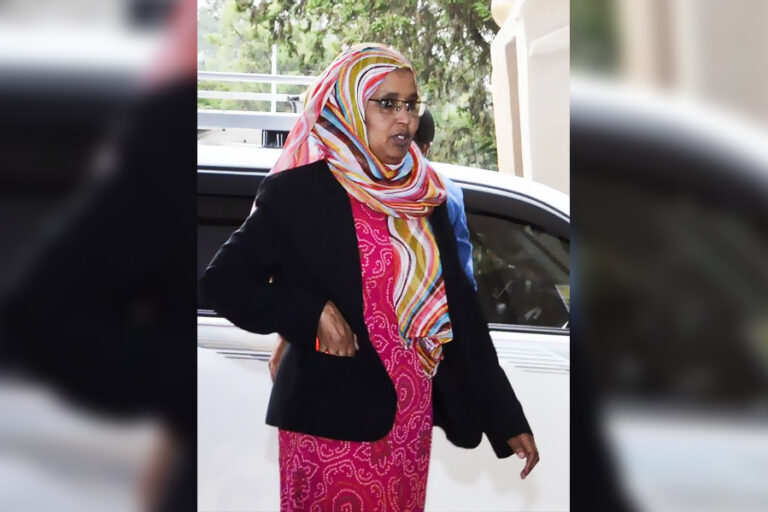
Aisha Mohammed, Minister of MoUDC, said that the ministry has been trying its best to accelerate the construction of federal government office building projects, while some of the projects have been delayed due to various reasons.
She said that very few construction companies have handled more than one project which affects their capacity to handle them at a time, “it has also made complex to solve the problem.”
Aisha said that over 70 public offices are leasing private facilities for their activity that is expected to ease construction of their owned buildings, which is handled by the Federal Government Buildings Construction Project Office that is under MoUDC.
“Previously, the projects have contract complication and contractors have also different massive projects besides the public buildings projects. The failure of contractors has affected the accomplishment of our projects that forced us to solve problems on an administrational manner and different supports, while some of the contracts have been terminated,” she explained at the meeting with Urban Development, Construction and Transport Affairs Standing Committee.
“Although we tried to hire other contractors it did not bear fruit. As a result we have been forced to award for the stated owned, the Ethiopian Construction Works Corporation,” she added.
There are also other complicated issues for instance the contractors have taken bank and insurance guarantees to access advance payment and other guarantees, “we are working to solve the matter amicably.”
Aisha told Capital that the failure of contractors is the failure of the sector and directly affects the country’s economy thus the ministry preferred to support them than terminate contracts. “They are our assets due to that terminating the contract is not feasible and if terminating contracts occur, the problem interlinks from the companies to banks. The projects that are taken are very small compared with the problem,” she added.
Tekleberhan Ambaye Construction and Afro Tsion are some of the companies that are in trouble with regards to delivering projects on time.
The Minister told Capital that the effort to solve the problem with Afro Tsion Construction has been achieved, while the effort with Teklebrahan has been solved for one and the other has been terminated.
“Their major problem is related with capital, due to that we are trying to support them to access finance than awarding projects for others,” she added.
Shortages and price hike of construction materials like cement and rebar is also a challenge for the sector.
She further hinted that the project for Civil Aviation will be awarded for another contractor.
Tekletsadik Teklearegay, Head of Project Office, told Capital that the project for Ethiopian Mass Media Agency has awarded for Ethiopian Construction Works Corporation.
According to the Project Office Head, currently 13 projects that are in different stages are under construction, “six of them like projects of National Meteorology Agency, Documentation and Authentication Registration Agency and Ethiopian Leather Industry Development Institute are new.”
Tekletsadik said that not less than 80 public offices are demanding for their own offices building facilities.
Under a cluster, the projects will be handled in the future besides those who may be undertaking their own facilities that is excluded from the 80 offices.
Those that get a green light from the government to undertake projects separately on their existed location are ; the Ministry of Revenue, Job Creation Commission, and Ethiopian Meat and Dairy Industry Development Institute, which is in Bishoftu.
They are under preparation like conducting feasibility study, developing bid document and others to carry out projects.
Aisha said that the government does not have intention to fully cover the demand of the public offices thus supporting by accessing their buildings is also part of empowering the private sector as long as they have facilities as per the standard of the public offices.
ECWC taking over delayed government office building projects
Alternative bank scheme proposed for NBE

Urban Job Creation and Food Security Agency drafted a study for the formation of micro, small and medium enterprises (MSME) banks as an alternative of a financial firm to expand access to finance.
Currently, the sector actors are only having a source of fund from micro finance institutions (MFIs) according to the study highlighted by Urban Job Creation and Food Security Agency.
On the meeting called by Urban Development, Construction and Transport Affairs Standing Committee on the Ministry of Urban Development and Construction for the nine months performance evaluation, Gebremeskel Challa, Director General of Urban Job Creation and Food Security Agency, said that the access to finance is currently monopolized by SMEs.
Gebremeskel said that MFIs has played pivotal role to flourish MSMEs and revolve the private sector in urban areas despite their major focus area being the rural community.
“However, they have contributed for urban job creation they are the only source for access to finance for the MSMEs and that trend is supposed to change,” he says, adding, “making MFIs the sole source for MSEMs has made it to dominate as a monopoly as opposed to competition that is observed in other financial sectors.”
He argued that there are also practical and understanding gaps on releasing the finance.
“For instance towns should be seen independently on debt settlement than taking actions collectively,” he said.
“Overall, if one town failed to repay the loan on time other towns that have good performance on debt settlement shall be neglected to access fresh loans. It was not seen as if competitions were existent on the sector,” he explained.
The agency head reminded that the new loan disbursement for the year is very low because the settlement for the previously release debt was very poor.
“As per National Bank of Ethiopia (NBE) standard, the loan repayment and collection has evaluated that it is poor for both regular and revolving fund loan schemes,” the Director General said.
He says that the default on loan settlement indirectly affects the saving since the fresh loan is lagged.
Currently, the agency is focusing on supporting the financial institutions to accelerate their loan collection that some time improves and in other time lags.
To alleviate the challenge and expand the competition like other financial sector the government has decided to see MSME banks to be operational that would include MFIs as shareholders.
“In the five year plan one of the major pillars is to establish banks to accelerate the activity of MSME. To realize that the inception assessment report has been carried out and feed backs have been already given by the regulatory body, NBE,” he said.
Gebremeskel told Capital that according to the agency assessment gaps on the area has been identified that shall be filled. “NBE has given crucial feedbacks and will be expanded on the detailed feasibility study that will jointly undertaken by stakeholders including NBE,” he elaborated.
The access to finance needs such kind of banks according to the study and the sector should be vulnerable for market competition.
“Commercial banks, MSME and SMIs shall have stake as a shareholder on the new MSME banks,” Gebremeskel added.
Recently, NBE has issued a directive that allows MFIs to upgrade to bank, while it imposed a rule that they are supposed to continue to provide services for MSMEs as the existed experience.
The agency head said that the new initiative is different with the recent NBE directive.
As per the NBE first quarter bulletin there are 39 MFIs operating in the country which mobilized 47 birr billion in saving deposit which grew 13.9 percent over last year same period. Their total outstanding credit increased by 4.9 percent and reached 64.6 billion birr while their total asset expanded 12.6 percent to 93.4 billion birr as of September, 2020.
Ethio- Telecom launches telebirr
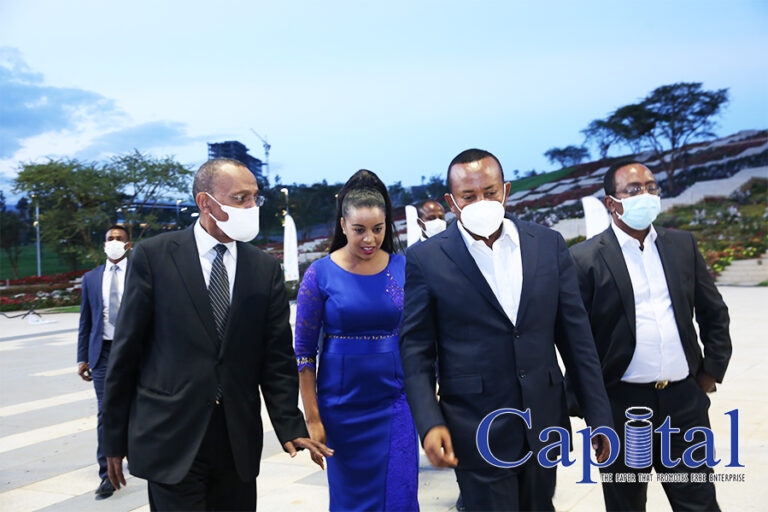
Ethio Telecom, on Tuesday May 11, launched a mobile phone-based financial service, seeking to boost growth by offering cashless transactions. Customers can deposit, receive and transfer money using their mobile phones in areas where network service is available.
The new service, telebirr, aims to extend mobile services to financially excluded sections of society.
Prime Minister Abiy Ahmed during the launching ceremony said that the decision to exclude mobile money from the terms of the two new telecom licenses has cost the government about USD 500 million from bid levels. The block was imposed to allow the country to build its own expertise in phone-based financial technology. This will be lifted after about a year according to PM Abiy Ahmed.
He said that the government will protect the country’s national interest at any cost. “We have to protect our national interest and have to give way for Ethio telecom to be better prepared to compete with other operators before we give them the license. Next year I hope Ethio telecom will be able to compete with others,” PM Abiy added.
Mobile financial services have become a significant part of African telecom operators’ businesses after Kenya’s Safaricom pioneered them with M-Pesa in 2007, giving people an alternative to banks.
Ethio telecom plans to recruit 21 million users for the service in the first year of operation, rising to 33 million in five years, said Frehiwot Tamiru, CEO of Ethio telecom. About 40 to 50 percent of Ethiopia’s annual economic output will be transacted on the platform by the end of the five years, she said.
“So far, more than 1,600 agents are onboard and the number of agents will increase to more than 15,000 within a year to ensure accessibility and convenience to our customers,” Frehiwot added.
“We are working with international remittance companies to launch a service that allows our customers to receive remittances easily and at a low cost, on which we are working on integration and due diligence to make it available in a few weeks. The service is of additional national benefit in rerouting 15 to 20% of the grey market remittances into the formal economy,” the CEO added.
“Telebirr service will play a major role in narrowing the financial inclusion gap, we are currently working to increase financial inclusion at least by 25 to 30 percent and improve the overall national financial inclusion to 60 percent,” she added.
Telebirr will help provide formal financial services to those who do not have access to bank accounts. It will also enhance security by discouraging criminals who target cash.
Mobile money services will narrow the financial inclusion gap in our country; enable people to get better, faster and easier financial services at a lower transaction cost. Financial Inclusion is an economic concept that makes all financial services accessible to all sections of the society, and mobile money services are an important solution to ensure financial inclusion. In addition to creating a healthy money flow, telebirr service will increase the overall development of the nation and wellbeing of our people by increasing savings, reducing poverty, encouraging entrepreneurship and investment, reducing printing costs and eventually boosting the economy.
Huawei technologies has powered the first telecom mobile money platform for Ethio Telecom. Huawei Mobile Money platform deployed currently have the capacity of processing up to 100 transactions per second (TPS) and can be easily scaled up to 1000 TPS in the future.
The service is accessible with SMS, USSD and smartphone applications and it can scale up to more functions in the future.
Ethio Telecom, which had revenue of 25.57 billion Ethiopian birr in the six months to the end of December 2020, has 52.7 million total subscribers.
COVID-19 variant surge in Africa proves detrimental
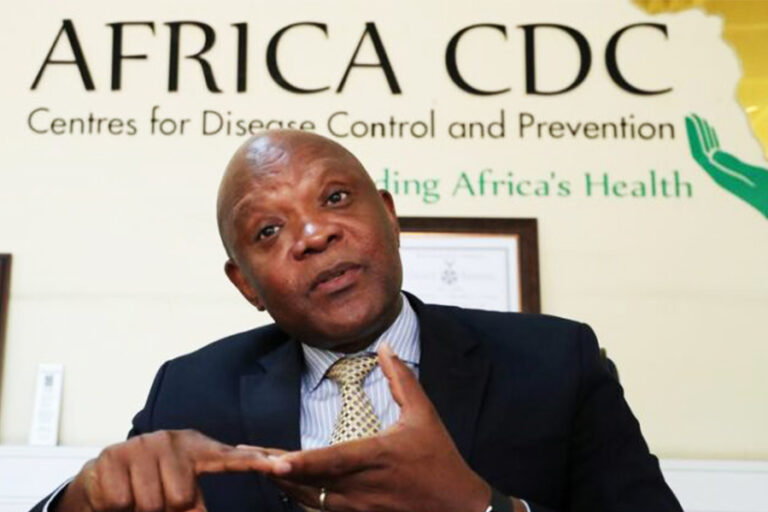
“Africa has to prevent an Indian-scaled Covid-19 tsunami from hitting its shores – because curing it after it arrives is not an option,” Dr John Nkengasong, director of the Africa Centres for Disease Control and Prevention (CDC), has warned. The first few infections of the deadly B.1.617 variant of the coronavirus have already been picked up in Africa, exacerbating fears of the spread of the Covid-19 strain that is devastating India. Nkengasong noted that Covid-19 was still under control in Africa. Over the past week, the number of new infections recorded across the continent was about 65,000, a 10% drop on the week before.
The number of deaths recorded during the week was 2,181, a 0.15% decrease from the week before. But the Africa CDC head noted that there was no room for complacency. India’s figures had also been relatively low, at about 3,000 new infections a day in March, before they rocketed to the present daily increases of more than 400,000. Nkengasong said that, on average, Africa’s health systems were too fragile to deal with such a wave of infections that had completely overwhelmed the Indian health system. Nkengasong warmly welcomed the US government’s decision announced on Wednesday that it had rescinded its opposition to moves – led by South Africa and India – to secure a waiver on the patent rights of pharmaceutical companies so that Covid-19 vaccines could be produced by others more cheaply.
Nkengasong said the meeting would first review the AU’s continent-wide strategy for tackling Covid-19 since the start of the pandemic in February last year. It would then attempt to chart a way forward for the continent and the AU’s 55 member states. This would include closer monitoring of the occurrence of the different coronavirus variant strains so far detected and identifying Covid-19 hotspots. It would also include quantifying the availability of vital treatments such as oxygen, something that has proven to be a critical deficiency in India.
Nkengasong said we should avoid making the same mistakes and not hold political rallies or allow large religious or other gatherings. “Our health systems on the continent are very fragile. We do not have the kind of supplies that India has “We don’t have enough oxygen, beds, vaccines or health workers to deal with such a massive attack,” he said. “But if we prevent it, we don’t need to get ourselves into a catastrophic situation. It’s very possible to prevent it and we have to prevent it.
Scientists and public health officials are racing to understand the risk posed by a coronavirus variant known as B.1.617, which the World Health Organization on Monday designated a global “variant of concern.”
The variant, identified in October, is a mutant form of the virus that causes Covid-19. It has 13 mutations, including two notable ones in the spike protein that the virus uses to attach to and infect cells.
