Friday, November 27, 2026
Home Blog Page 332

Ethiopia defers Eurobond payment to next fiscal year

0

The Ethiopian government has officially announced the deferral of its Eurobond debt payment obligations to the next fiscal year. This decision is framed as a core component of a broad macroeconomic reform aimed at shifting the country’s debt distress rating from “High Risk” to “Moderate Risk.”

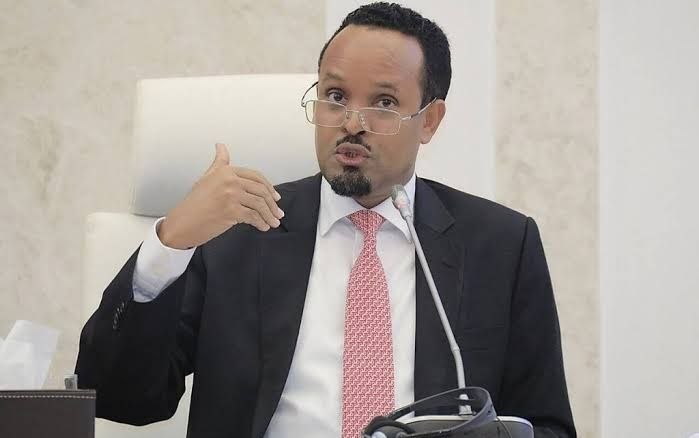
According to the Ministry of Finance (MoF) , although a partial payment for the $1 billion Eurobond was initially anticipated for the 2025/26 fiscal year, the payment has now been rescheduled. Finance Minister Ahmed Shide clarified that this rescheduling is not a sign of financial instability, but rather a mandatory requirement under the G20 Common Framework.

The Minister explained that the framework follows the principle of “Comparability of Treatment,” which ensures that private bondholders do not receive more favorable payment terms than official bilateral creditors. This alignment is necessary to maintain equity among all lending parties involved in the restructuring process.

The extension of the Eurobond payment is one of three pillars the government identifies as strategic victories for the country’s financial future. The first is support from multilateral institutions; Ethiopia has secured significant Balance of Payments and fiscal support from the International Monetary Fund (IMF).

Combined with budget support and project financing from the World Bank and other development partners, this creates substantial financial capacity.

The second pillar involves bilateral debt restructuring. The government successfully led complex negotiations with the Official Creditor Committee (OCC), resulting in a Memorandum of Understanding (MoU) for a general common framework with 15 creditor nations.
The third pillar is debt sustainability, with the ultimate goal of lowering Ethiopia’s Debt Sustainability Analysis (DSA) result to “Moderate Risk,” which will facilitate better access to international credit financing in the future.

While Eurobond negotiations continue through alternating points of agreement and divergence, the government reported success with bilateral partners.

Specifically, negotiations with China, Ethiopia’s largest bilateral creditor, have reached a critical stage. A “Minutes of Negotiation” was recently signed, and the final legal document is expected to be signed within the coming weeks.

During a recent nine-month report to Parliament, Ahmed Shide confirmed that Ethiopia will begin making certain payments to China within the remaining two months of the current fiscal year.

This indicates that the debt restructuring process is transitioning toward a regular payment schedule under a new agreement.

Negotiations with private Eurobond holders remain a highly sensitive issue. The Minister noted, “Sometimes we agree, and sometimes differences arise.” Any agreement made with private creditors must be approved by the OCC to ensure the terms are consistent with the concessions granted by other sovereign governments.

Despite the complexities of the negotiations, the government maintains a positive outlook. Efforts are underway to reach a comprehensive debt restructuring agreement by the end of the fiscal year to provide the economy with the necessary “breathing room.”Current data shows that the government allocated 463.4 billion Birr for domestic and foreign debt servicing this year. In the first nine months, 226.8 billion Birr was paid.

While this represents 81% of the nine-month plan, it accounts for only 48.9% of the total annual budget. This lower-than-planned performance is directly attributed to the ongoing debt restructuring negotiations, as several payments remain suspended until final agreements are signed.


The Digital Engine Behind Ethiopia’s Infrastructure and Construction Renaissance

0

As Ethiopia marks Infrastructure and Construction Week 2026, the national dialogue has evolved from traditional brick-and-mortar development toward a more sophisticated blueprint known as the Construction Industry Transformation of Ethiopia 2025–2050. While physical structures define the horizon, their operational intelligence now relies on silicon and fiber. At the heart of this transformation is Ethio telecom. By shifting from a traditional utility provider to a leading digital solutions provider, the company has aligned its “Next Horizon: Digital and Beyond 2028” strategy with national goals to ensure all new infrastructure is born digital.

The Digital Backbone Driving Smart Construction

Modern project sites require a high-speed “nervous system” to function efficiently. In response, Ethio telecom has expanded its footprint to 10,438 mobile stations and extended 4G LTE to over 1,069 cities, covering 74% of the population.

The company has also extended its fiber backbone to over 23,000 kilometers, complemented by 14,769 kilometers of metro fiber. Urban connectivity was further bolstered by new metro fiber and dedicated “Fiber to the Tower” (FTTT) installations to support 5G requirements. This infrastructure allows engineers to utilize Building Information Modeling (BIM) and Digital Twin technology to simulate structural integrity in real time. These tools bridge the gap between site offices and headquarters, thereby helping to eliminate the cost-overrun culture of the past.

Securing Data Sovereignty through Modular Infrastructure

Infrastructure is only as smart as the data it produces. Modern construction generates vast amounts of information, from procurement logs to structural sensor readings. To manage this massive inflow, Ethio telecom has invested in state-of-the-art modular data centers with a 5-megawatt IT load capacity, 624 IT racks, and a storage capacity of 4.5 PB in elastic compute. These centers are supported by an international internet gateway that has grown to 3 terabits per second to ensure seamless data flow.

This infrastructure allows construction firms to host project management software and historical data securely in the cloud rather than on vulnerable local servers. Furthermore, these facilities offer the industry digital sovereignty by hosting project data, land titles, and legal frameworks locally. This centralized single source of truth reduces administrative friction and enhances transparency which are critical factors in attracting international contractors and fostering trust in large-scale public-private partnerships.

Fostering Green Urbanization and Sustainable Smart Cities

As global investors prioritize environmental and social governance (ESG), Ethiopia’s urban expansion must remain sustainable. Ethio telecom is leading this charge by integrating electric vehicle (EV) infrastructure and resource management into the urban fabric. The company has already deployed four super-fast charging stations, capable of powering 60 vehicles simultaneously to reduce the carbon emission and installed 101 new solar-powered sites to bring its total solar capacity to 30 MWp (megawatt peak).

Beyond transport, the company is developing hundreds of digital solutions, including Smart City and Smart Campus tools. These applications utilize Artificial Intelligence (AI) and the Internet of Things (IoT) to automate water distribution, track municipal waste, and optimize energy consumption in high-rise buildings. This ensures that today’s urban expansion does not become a future environmental liability. This commitment to future-proof, eco-friendly infrastructure not only attracts climate-conscious investors but also secures Ethiopia’s place as a modern industrial leader in the global landscape.

A Shared Vision for 2030 and Beyond

Infrastructure and Construction Week 2026 has made it clear that the physical and digital worlds are now inseparable. As the construction industry reshapes the nation’s geography, Ethio telecom provides the cognitive infrastructure to make those structures smart and sustainable. By tethering its technological roadmap to the national vision, Ethio telecom is securing Ethiopia’s place as a modern industrial leader. Progress is no longer measured just by the height of towers, but by the strength of the digital connections that bind them together.

As the nation moves toward its Digital Ethiopia 2030 vision, the synergy between telecom innovation and construction excellence will remain the primary driver of sustainable economic growth.