Friday, October 2, 2026
Home Blog Page 3331

A One-Earth Balance Sheet

0

At the dawn of the nuclear age, Albert Einstein wrote that “a new type of thinking is essential if mankind is to survive and move toward higher levels.” As the world confronts the escalating climate crisis, a new type of thinking is needed once again – and it starts with a new type of accounting.

By Andrew Sheng and Xiao Geng

Last week, the world marked the 51st Earth Day. This year’s theme – “Restore Our Earth” – was apt. As the COVID-19 pandemic has reminded us, the effects of human activity on the planet do not respect borders. The Earth is a single living, self-regulating system, and it demands a single, shared system of accounting that balances at the global level. We need a one-Earth balance sheet.
In a 1946 telegram, Albert Einstein pleaded for funding to finance the “life-and-death struggle to harness the atom for the benefit of mankind and not for humanity’s destruction,” arguing that a “a new type of thinking is essential if mankind is to survive and move toward higher levels.” The same can be said about the environmental crisis humanity has created. Surviving it, and achieving a better, more sustainable future, requires “a new type of thinking.”
The old type of thinking produced a policy framework based on the nation-state. Policymakers consider the material impact of their actions on the local population, as measured by quantitative economic indicators like GDP. The United Nations System of National Accounts – devised in 1953, updated in 1993, and reaffirmed in 2008 – emphasizes the measurement of flows, such as income, expenditure, imports, and exports.
But even if there were enough data – such as on land valuation and intellectual property rights – national accounting systems would suffer from stock-flow inconsistencies. Under-measurement of many assets and liabilities, and of profits and losses, means that imbalances are often lumped into Errors and Omissions, making their impact difficult to gauge.
At the one-Earth system level, all flows and stocks would have to balance. This would make it far easier to measure the impact of each country’s activity on the whole.
There is a traditionally economic dimension to this imperative. After the 1997 Asian financial crisis, for example, it became clear that efforts by Japanese firms and banks to restore their balance sheets led to depression or financial contagion elsewhere. In today’s ultra-integrated global economy, there is no pretending that national balance sheets exist in isolation. And if one country’s balance sheet becomes too fragile, others will also be put at risk.
But there is also a social dimension to this challenge. Consider the growing global debt overhang. Every debt incurred has a corresponding asset, which is sustainable if it yields a social rate of return larger than the cost of the funds. Yet these social returns (or costs) are rarely measured – a significant blind spot for those devising policies to avoid debt distress. A better approach would account for both the debt and the associated asset, including the relevant costs and benefits. That requires a global perspective, shaped by economic, social, and ecological considerations.
More broadly, a one-Earth balance sheet would go a long way toward mapping global imbalances. Some, such as income and wealth imbalances, are already obvious. But others, such as pollution and choke points in global supply chains, have not yet been mapped adequately.
Innovative initiatives by companies like Visual Capitalist suggest the benefits of such maps. For example, by charting high-cost carbon-emitting consumption patterns more clearly, the world would be better equipped to address them through targeted innovation and investment.
This points to another major benefit of the one-Earth balance sheet: it may reveal areas where global or regional cooperation would deliver important, if indirect, benefits. For example, a system-wide perspective would probably show that the world has a strong economic and ecological interest in acting collectively to help Africa manage challenges relating to population, food, energy, health, and security.
Perhaps most fundamentally, the one-Earth balance sheet would highlight that individual countries’ right to act in their interests comes with obligations. If a country, say, expands intensive land use or builds polluting factories, its national account would highlight the GDP benefits, which might be deemed to outweigh the ecological costs. But the one-Earth account would show how externalities like deforestation and pollution damage human health, jobs, and the environment elsewhere, thereby changing the calculation significantly.
Japan’s recent decision gradually to release treated wastewater from the Fukushima Daiichi nuclear plant into the Pacific provides a clear example of this tension. Japanese authorities say opposition is unscientific. But critics insist the release would damage the environment and violate human rights in surrounding countries.
Whatever the best solution is, the issue clearly does not affect only Japan. The country must, therefore, account for not only the internal costs of finding an alternate solution, but also the external obligations its chosen solution implies. Even if the wastewater itself proves safe, the decision could fuel mistrust that may end up producing large shared losses.
The pandemic has highlighted how collective challenges need whole-of-government and whole-of-society solutions. It has also showed how a lack of complete, transparently shared data can lead to flawed and piecemeal approaches, as well as harmful misunderstandings.
We have enough economic and ecological data to prepare a first draft of a one-Earth balance sheet, thanks partly to Big Data and social media. These data can and should be compiled collectively, much like Wikipedia. Indeed, given the one-Earth balance sheet’s multidimensional and multi-disciplinary nature, it would be inappropriate for any one individual or group to take on the task. A global commission, convened under multilateral auspices, should spearhead this effort.
Creating a one-Earth framework will not be easy and will undoubtedly run into nationalist resistance in many countries. But, like the harnessing of the atom, this is a life-and-death struggle. And a one-Earth balance sheet represents the “new type of thinking” we need to “survive and move toward higher levels.”

Andrew Sheng, Distinguished Fellow of the Asia Global Institute at the University of Hong Kong and a member of the UNEP Advisory Council on Sustainable Finance, is a former chairman of the Hong Kong Securities and Futures Commission. His latest book is From Asian to Global Financial Crisis.
Xiao Geng, Chairman of the Hong Kong Institution for International Finance, is a professor and Director of the Research Institute of Maritime Silk-Road at Peking University HSBC Business School.
China-Africa Cooperation is Vital In the Post-COVID Global Economy

0

By Yi Fan
With COVID vaccines rolled out in more countries, we have reason to expect to be more equipped in the fight against the pandemic. Exiting the pandemic and reviving the economy is a first-order priority for all countries.
Africa, like other parts of the world, has fought hard in containing the virus and reinvigorating the economy. Addressing the fallouts and looking forward to post-COVID recovery, governments of African countries have adopted comprehensive response plans. In Ethiopia, for example, relief asssitance has reached families and businesses, in addition to tax cuts and liquidity support.
For us all to navigate this trying time, cooperation and mutual help between China and Africa are critically important. Last week, China hosted the annual meeting of the Boao Forum for Asia, a China-based international forum with a mandate to explore better solutions for the common good of the whole world despite its name. Delegates from both online and offline discussed how the world can best recover from the pandemic. As countries in Africa are also striving for a stronger emergence from the pandemic, perhaps here are some of the priority areas where greater synergy can be built:
No. 1: China and Africa can grow faster together with the help of the Belt and Road Initiative.
The pandemic brought the world to a sudden halt. But for most of the time, the Belt and Road projects have remained resilient in keeping global supply chains running. The freight trips along the New International Land-Sea Trade Corridor were up by 104.9% in 2020. New routes were opened, such as the one from the southwestern Chinese city of Nanchong to Nigeria. A record number of goods, including the much-needed medical supplies, were shipped to cities in Africa,Asia and Europe. On this continent, the Ethiopia-Djibouti Railway, a flagship Belt and Road project, recorded an over 51 percent increase in revenue in the first half of 2020, when the pandemic was at its height. The railway was instrumental in ensuring the transportation of supplies in Ethiopia.
With China at the beginning of implementing its 14th Five-Year Plan, a guideline toward more efficient, equitable and sustainable growth, the Belt and Road Initiative is now aiming at higher-quality development. This, along with China’s own economic recovery, will foster greater connectivity, openness and inclusiveness, further energize the development of participating countries, and, as a result, inject greater confidence and impetus to global post-COVID growth.
No.2: China and Africa can embrace new prospects with a digital boost.
The pandemic has, to some extent, given a strong boost to the already-flourishing digital economy worldwide. New technologies and creative forms of business including 5G, online shopping and remote learning are gaining momentum, providing a new pathway for economic growth.
Both China and Africa will benefit from this digital boom. Africa, a continent with around 1.3 billion people,is now enjoying fast growth in telecommunications and e-commerce. As it seeks to improve its digital infrastructure, China is ready to share its experience in e-commerce, digital payment and logistics management.
Such mutually-beneficial cooperation is already paying off during the pandemic, as the two cooperated in selling African agricultural products, including coffee and chili sauce, on Chinese e-commerce platforms. Likewise, Kilimall, an online shopping mall set up by Chinese founders in Africa, has served as a window for African consumers to purchase Chinese products.
No.3: Multilateral economic cooperation can make us all better off.
The pandemic has reminded the world of the significance of cooperation. This is what both China and Africa have advocated as staunch supporters for multilateralism and free trade.
For Africa, the recently-commenced African Continental Free Trade Area (AfCFTA) has made the continent the world’s largest free trade area in terms of participating member states after the formation of the World Trade Organization. Signed by 54 African Union members, the AfCFTA will increase Africa’s capacity to respond to future crises, disease outbreaks and global economic shocks, and also assist in Africa’s economic recovery.
China too has made similar endeavors: setting up platforms for international economic cooperation, including the China International Import Expo and the China International Fair for Trade in Services; facilitating the signing of the Regional Comprehensive Economic Partneship (RCEP) agreement, one of the largest free trade agreements in recent history.
These efforts of China and Africa illustrate the critical importance of cooperation and multilateralism in unlocking economic potential. They may also present major opportunities for each other and the world at large, and pave the way for closer economic ties among countries and shared prosperity in the post-COVID world.
For a changing world eyeing for closer cooperation and a stronger, more resilient post-pandemic global economy, China and Africa, coming together, will surely set for the world a fine example of mutually beneficial cooperation, and contribute their share to the post-COVID global economy.

The author is a Beijing-based observer of international affairs

Intercontinental Addis rebrands

0

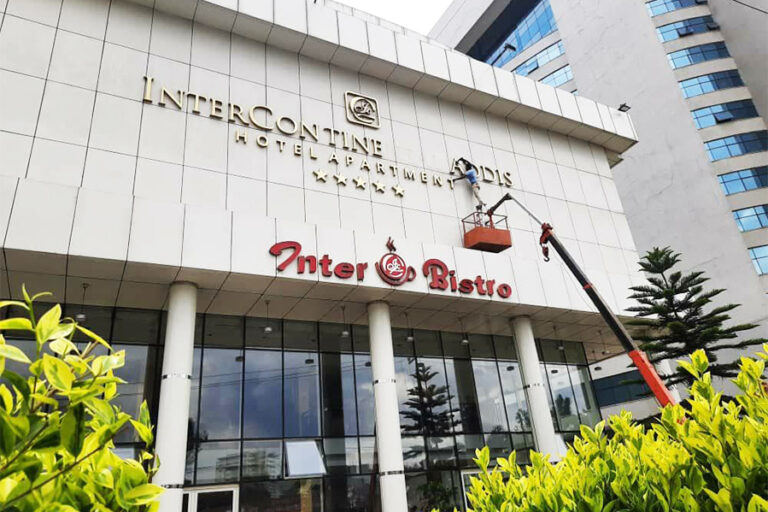
After almost eight years of legal dispute Intercontinental Addis finally gave up and changed its brand name to Inter Luxury Hotel as of last week. Intercontinental Hotels Corporation (IHG) owned by the Crowne Plaza brand was in a legal battle with the local hospitality firm JH Simex, the operator of Intercontinental Addis Hotel.
Last year in June the Federal Supreme Court gave a final decision in favour of the US hotel brands owner IHG. The Supreme Court verdict indicated that the local firm, which has been operating for about 13 years, was also penalized to settle royalty compensation for the US hospitality business operator.

Cement price spike stiffens market

0

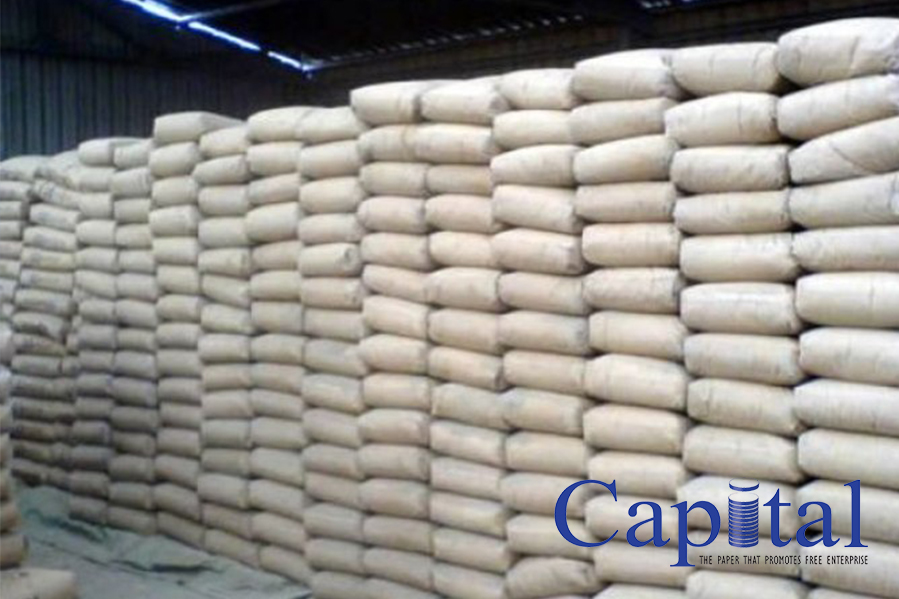
While the government is working to solve the problem with the cement market, traders continue to distract the already disturbed market by selling a quintal of cement up to 800 birr.
The illegal increasing price of cement in the open market has sparked challenges on the construction industry. The government is a taking number of steps to improve the supply chain and increase the price of cement which is the main impute for the construction sector. Capital has observed that by night time in different parts of the country, cement wholesalers are selling cement up to 800 birr per quintal.
The government has set a factory production price for the 12 listed cement factories ranging between 233 birr and 300 birr to control the illegal brokers.
In an attempt to solve the chronic shortage of cement in the market in a sustainable manner, the Ministry of Trade and Industry has been working for more than one month by assigning overseers at the factories to control their operation, and has organized taskforces in each cities as a control measure by mayors, said Kassa Alamrew, acting head of public relation at the ministry. However, he sensitized that the problem is deep and it is difficult to solve the problem by control unless the problem with supply is solved, hence surge in price unfolds from time to time.
Most of the stake holders claim that there is little control measures taken by of government on the market, and they state this as the main problem to the price spike. Cement producers on the other hand are tackling a long list of challenges including, unfavorable supply-demand balance, higher cement prices, escalating production costs, low utilization rates, social unrest, and a lack of foreign currency.
“The government has shown a strong determination to create a conducive business environment,” stated on of the cement producers.
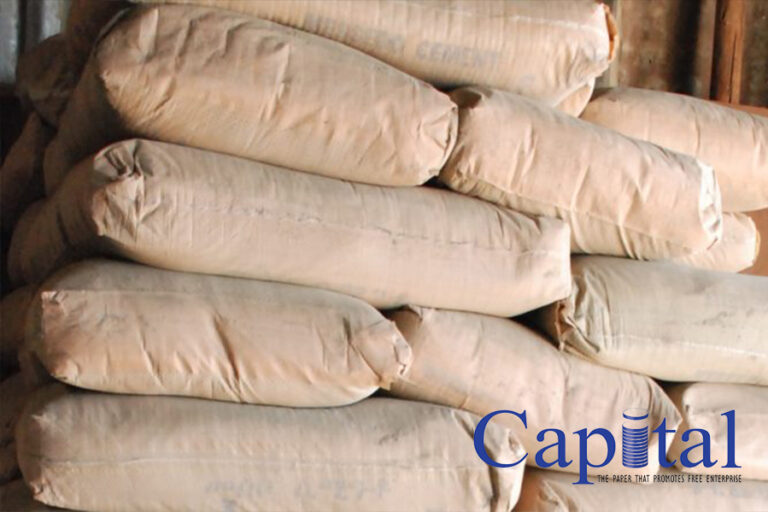
Cement is well known as the back bone of the construction world an in similar fashion Ethiopia is a typical heavy-consuming cement market. However, the Ethiopian cement production had proven insufficient in meeting demand. In previous years through the development of the construction industry, massive public investment and infrastructure projects have increased the demand and consumption of cement.
After asking manufactures to set constant prices and pursue their distributers, the ministry has set a standardized price one month ago. According to the list 233.45 birr is the lowest price set from Derba cement, while 300 birr is the highest price from Ethio cement factory.
Last summer, due to the shortage of production, in the retail market cement had been sold up to 600 birr per quintal. Different stake holders in the sector have pin pointed that the price hike has been caused majorly by the rise of illegal brokers and the inefficient control of the government on the market. Moreover, in an attempt to solve the chronic shortage of cement the ministry has also allowed companies who had Diaspora account to import cement to sustain the market. Additionally the government has allocated 85 million dollar to alleviate the shortage of spare parts in the factory.
According to the Ministry of Trade and Industry, the shortage is mainly due to lack of spare parts, power outages, lack of inputs, lack of leadership and professional skills, security problems, supply of raw materials, amongst other problems.
Currently, there are about 12 cement factories in the country with 345,000 tons of production capacity per day.