Triumphalism serves as an opioid for the Washington establishment. It can breathe easier if the, once upon a time justified, claims about the United States’ economic superiority are endlessly repeated. With the rise of China, Americans’ penchant to resort to triumphalist rhetoric about the United States is becoming ever stronger. Such recitations have traditionally also served as an opioid for the masses. Things might not be so great for oneself, but at least “we as a nation are still number one.”
According to Robert Atkinson, President of the Information Technology and Innovation Foundation in America, there are three main strains of triumphalist sentiment. The first comes from the United States foreign policy establishment, which cannot envision national decline under its watch. In its view, the United States is firmly ensconced as the “shining city on the hill.” While there may be occasional bumps in the road, such as the Trump presidency, nothing can keep the United States from fulfilling its pre-ordained destiny.
Harvard’s Joseph Nye, with his claim that “America may not actually be declining, but those predicting it are ascending,” is the patron of this group. A second camp are foreigners who look at the United States with longing and admiration, but often, lack of understanding. Joseph Joffe, co-publisher of the German weekly Die Zeit, and the author of “The Myth of America’s Decline”, is emblematic of this group. The third group are bankers and investors who view the U.S. economy through a distinctly financial lens and see nothing but success. But they ignore production in favor of financial metrics, especially the strength of the dollar and the stock market. And they are unperturbed in their rugged advocacy of shareholder capitalism, believing that strong financial metrics equate to a well-functioning economy and society.
The latest version of someone giving voice to this third point of view comes from Ruchir Sharma, the chief global strategist at Morgan Stanley Investment Management. In his article “Comeback Nation: U.S. Economic Supremacy Has Repeatedly Proved Declinists Wrong,” featured in the May/June 2020 issue of Foreign Affairs, Sharma tells a happy story, one that could only be told by someone on Wall Street. Indeed, the illustration highlighting the article shows two smiling, fist-bumping stock traders. For them and for Sharma, financial metrics, rather than production system metrics, determines success.
Sharma argues that the United States economy has never been stronger (leaving aside the COVID 19 economic crisis): “During the 2010s, the United States not only staged a comeback as an economic superpower but reached new heights as a financial empire, driven by its relatively young population, its open door to immigration, and investment pouring into Silicon Valley… the 2010s turned out to be a golden decade”. Mr. Sharma goes on to rhapsodize that, “For the first time since at least the 1850s, when record keeping began, the United States traversed a full decade without suffering a single recession.”
But this ignores the obvious fact that this growth came in the aftermath of the economic collapse of the 2009 Great Recession, which was so severe that of course there was going to be a long recovery. Besides, the business cycle is not an indicator of long-term growth, which is what really matters. Indeed, the single most important economic factor, the one that could actually lift more boats than just those of investors, is the rate of productivity growth.
The simplest indicator of the United States’ relative economic power is its share of global output. Sharma writes that the United States share has accounted for a steady 25% since 1980. That would seem to rebut of any declinist argument. However, to arrive at this finding, Sharma artfully plays with the numbers. He uses nominal GDP in United States dollars, while almost all economists and the OECD agree that using purchasing power parity (PPP) is the right way to compare the relative size of economies. And on that measure the evidence is clear: The United States’ share has fallen from around 40% after the Second World War to just 15% today.
Sharma also sees the 2010s as a golden decade because of the stock market performance. He writes, “Lifted by the strong performance of American technology companies, the United States stock market rose by 250% in the 2010s, nearly four times the average gain in other national stock markets.” To be sure, a strong stock market is good for investors, but what really matters is robust real output growth, widely shared. We don’t consume stocks; we consume real goods and services.
Finally, much of Sharma’s triumphalism comes from the fact that the United States population is growing faster than in other regions like Europe and Japan. In this regard, he is sadly stuck in a 19th century frame of mind. He writes that, “[the] more important United States advantage has been a relatively high population growth rate.” But any developed country can rapidly grow its population by simply adopting an open-borders policy toward developing nations. Immigrants will flood in in search of a better life.
Winston Churchill once said you can always count on the Americans to do the right thing, but only after they have exhausted all other options.
Financial triumphalists and the United States economy
THE VOICE OF THE PEOPLE MUST BE HEARD
An Appeal to the people of Ethiopia from Obang Metho
Government alone cannot solve this present crisis, those crises that will follow or those now festering below the surface, waiting to erupt. Civil Society, including our religious leaders, elders, women and youth, must be part of the solution.
To my dear Ethiopian brothers and sisters,
We are presently at a very dangerous impasse due to the military confrontation between the Federal Government of Ethiopia and the Regional Government of the Tigray region. As a part of the shared family of Ethiopians, I am highly concerned, as are most of you.
A military attack was reported to have occurred on November 4, 2020, when members of the Tigray Peoples’ Liberation Front (TPLF) attacked the Ethiopian National Defense Forces of the Northern Command, stationed in the Tigray region. It was reported to have included a robbery of the artillery and military equipment of the Northern Command. No casualties have been reported, but few details are yet known.
In response, Prime Minister Abiy Ahmed ordered a military confrontation by Ethiopian National Defense Forces, asserting in a letter from November 4, that: “war” was necessary “to save the country and region from spiraling into instability.” Since that time, he reported that federal troops had used military force in the region. Again, few details are known.
In a separate action, the Federal Council of Ministers have decreed a State of Emergency in the Tigray Region for six months and appointed a State of Emergency Task Force, described in a different letter made public on November 4, that the task force was “to be led by the Chief of Staff of the Armed Forces, composed of representatives from pertinent institutions and accountable to the Prime Minister.”
This conflict has escalated over disagreements between the Tigray regional leadership and the federal government’s leadership under Prime Minister Abiy regarding the latter’s decision to delay the Ethiopian National Election, originally scheduled for May 2020, and then moved to August, due to concerns regarding COVID-19; however, the election was again delayed for a non-specified period of time, suggesting the possibility of nine months or more. The present term of the government of Prime Minister Abiy was supposed to officially end on October 10, 2020, now creating an automatic extension of their power.
The regional government of the Tigray Region challenged this third delay, calling it unconstitutional. Instead, they held their own regional election in defiance of this plan, also calling out the present government as illegitimate and no longer having the authority to rule, following the October date, due to its lack of compliance with the Ethiopian Constitution. In response to what was seen as an illegal election by the Tigray region, the House of Federation, under the present government of PM Abiy, voted to redirect government funding from the Tigray region, worsening the situation and leading the outbreak of military action.
Why are other options of resolving this crisis not tried before military action? Is the escalation to a military conflict, a civil war, the only option to this impasse? Are there not other approaches; like a genuine national dialogue; and other resources, not only government, but especially members of civil society, that could be engaged to address these issues? Where is the effort to help prevent this conflict from intensifying or others from reaching this point?
Yes, some efforts have been made; however, much is at stake and some independent voices of reason from respected members of Ethiopian civil society may be needed to intervene in this power struggle in order to de-escalate the tensions between the federal government and the Tigray regional leadership that have already led to an unwanted war. The fear among many is that this conflict could trigger the destabilization of the entire country, and beyond, setting into motion a tragedy beyond comprehension.
Challenges:
Currently, in Ethiopia, no one trusts each other, and sometimes for good reason. Trust has been repeatedly broken over the years as truth is exchanged for whatever feeds one’s self-interest. The lack of trust between the major players in this present crisis is a critical factor, especially when both believe only one can win. To give in or to give up would make only one the winner and the other the loser as there is not any win-win solution at present. At the same time, the Constitution is being used to justify both positions. What voices of reason need to be heard? What process or solutions will lead to the best outcomes? Additionally, this is not the only problem right now in the country; help is needed in many other places.
Too little attention is being given to the widespread ethnic based killing, human rights atrocities and destruction of property being carried out over the last months against our fellow Ethiopians. It is affecting many of our people throughout Ethiopia, from Afar to Oromia, to Benishangul-Gumuz, to the Southern nations, the Amhara region, Harare, Dire Dawa and Gambella. No ethnic-based killing has been reported yet from either the Somali or Tigray regions. Yet, in other places, hundreds of people are dying violent deaths as many are targeted based on their ethnicity or religion. Just this past week, dozens of people, mostly of Amhara ethnicity and Orthodox faith, have been killed. No one should be silent about this. It is clearly wrong and cannot be ignored. Why did this happen? How can it be stopped?
Our current ethnic federalism system is based on ethnicity, stoking division, win-lose politics, injustice, poverty, insecurity and instability. If we based the structure of societal institutions on God-given principles that promote human dignity, as well as on what actually works to produce peace, security, a robust economy and human flourishing, what would that look like? If what creates the first list of difficulties could be changed for the better, why do we not take action on it? Why do we think we must choose the most violent alternative before implementing a variety of approaches that may help us avoid human rights crimes, displacement, civil war and the accompanying destruction that affect our people? We may all lose much more than we can imagine if we fail to address these worsening crises.
Currently, there is no mechanism to provide a venue or structure for strategic dialogue, conflict resolution, meaningful reforms, peace building, reconciliation and the restoration of justice based on shared principles to enhance the lives of all Ethiopians. In fact, our structures, institutions and even our Constitution may actually be used to create divisions and undermine freedom, justice and equality among the people.
The opportunity to create a people-driven mechanism to genuinely address these problems and to bring meaningful change is now. It has been made all the more apparent through the current crises we are facing. During the time period preceding the election; and, as a way to avert a civil war, we, the people of Ethiopia, must act to demand a voice in resolving this crisis and supporting genuine democratic reforms.
In suggesting this, I am presenting a proposal to be explored, examined, criticized and improved upon as a workable alternative before we escalate this conflict into greater violence, destruction and civil war; all of which could lead to Ethiopia becoming a failed state like Syria or Yemen. I hope others will also present their ideas, so together, we can come up with the best course of action for our shared future.
Proposal:
Government alone cannot solve this present crisis, those crises that will follow or those now festering below the surface, waiting to erupt. Civil Society, including our religious leaders, elders, women and youth, must be part of the solution.
I propose the establishment of an independent council of highly respected, non-political and diverse stakeholders, voices of reason and wisdom, all of whom are committed to the basic principles of human dignity, basic freedoms, justice, equal rights and opportunity for all citizens of the country, whose role would be to study, advise and lead an inclusive, people-led movement for the building of a New Ethiopia for all the people. This would include convening a Sovereign National Convention—a national dialogue— where participatory democracy would be advanced to achieve freedom, justice and human flourishing for all Ethiopians.
Conclusion:
The current impasse serves to highlight some of the legitimate issues we face that should not be overlooked until they explode into full scale crises, where those involved seek to resolve potential problems through the use of force and violence, especially when other options may be available. When possible, this should be proactive rather than reactive in nature in an effort to set up principle-based structures that will help us avoid future problems.
The principles of putting humanity before ethnicity or any other differences, based on the truth that our Creator has endowed value to every human being, is foundational to a healthy, well-functioning and peaceful society. To this we add the social responsibility to care about the freedom of others, not only because it is right, but because no one will be free until all are free. Let us speak up for each other to ensure a better Ethiopia for all of us. This is our vision for a New Ethiopia. This is a voice from the people.
In closing, this recommendation is not new, as it has been proposed by us, the Solidarity Movement for a New Ethiopia (SMNE), from its conception nearly fourteen years ago; yet, due to the current situation, the urgency is all the more clear. The time to move forward is now.
May we seek God’s leading at such a time as this. May He also protect the people and land of Ethiopia and beyond. Long live Ethiopia!
Ensuring equitable access
A flurry of nearly 200 COVID-19 vaccine candidates are moving forward through the development and clinical trials processes at unprecedented speed; more than ten candidates are already in Phase 3 large-scale trials and several have received emergency or limited authorization. Also unprecedented is the number of advance market commitments (AMCs) made by countries and multilateral partnerships eager to reserve vaccine supply, even before any candidates are on the market.
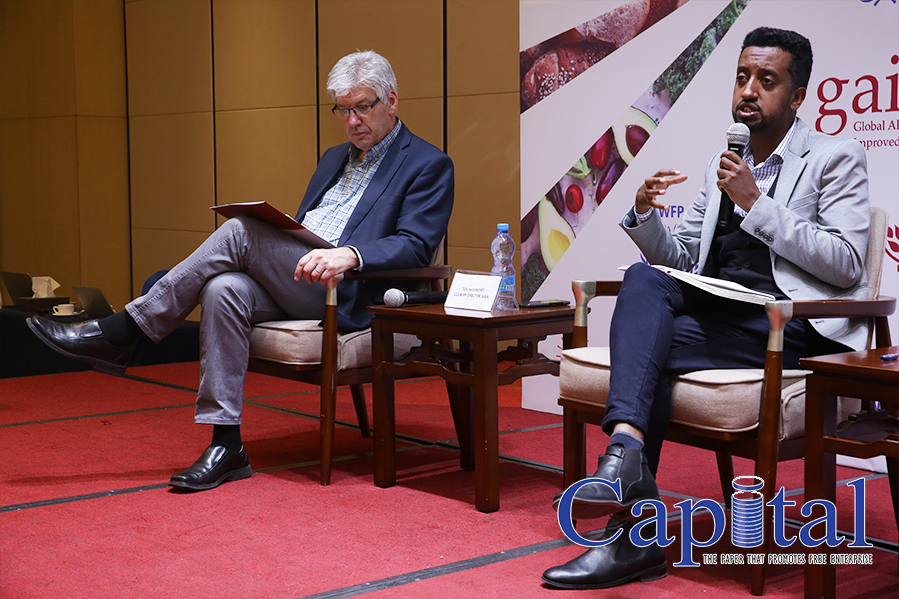
A team of experts from Duke University has aggregated and analyzed publicly available data on vaccine procurement and manufacturing to track the flow of procurement and better understand global equity challenges. They developed a data framework of relevant variables and conducted desk research of publicly available information to identify COVID vaccine candidates and status, deals and ongoing negotiations for procurement and manufacturing, COVID burden by country, and allocation and distribution plans. They have also conducted interviews with public officials in key countries to better understand the context and challenges facing vaccine allocation and distribution. Andrea Taylor, MSW is Assistant Director of Programs, Global Health Innovation Center, at Duke University. Andrea Taylor leads a portfolio of global innovation programs focused on evaluation, scaling, and adaptation of healthcare innovations to address critical access and quality challenges. Her research and implementation work drive evidence-based recommendations for scaling transformative models of care, adapting models into new contexts, and facilitating system change. She is based in the UK and serves as the primary UK and European contact for both the Duke Global Health Innovation Center and its sister organization Innovations in Healthcare, working closely with colleagues in the US and Kenya. She discussed the outcome of the data and how countries like Ethiopia will not get COVID vaccines on time with Capital. Excerpts;
Capital: Your new assessment shows that high-income countries, as well as a few middle-income countries flush with manufacturing capacity, have already purchased nearly 3.8 billion doses of COVID vaccines, with options for another five billion. What is the impact for low-income countries?
Andrea Taylor: Our analysis indicates that there are four factors that have allowed countries to secure pre-orders of COVID-19 vaccines: capacity for vaccine development in-country, capacity for vaccine manufacturing in-country, large investment of public dollars into the development of COVID-19 vaccines, and purchasing power to make large orders that assume some level of risk. It is primarily high-income countries that have most or all of these factors and have been able to secure enough doses to cover their entire populations (in some cases several times over). There are some middle-income countries that are able to leverage their vaccine development and vaccine manufacturing capacity to secure pre-orders. Some other middle-income countries that do not have any of these factors have been able to support clinical trials and use that to leverage purchase deals. But our analysis shows that low-income countries have not been able to make any pre-orders and are losing out.
Most low-income countries, like Ethiopia, are depending entirely on the COVAX Facility to receive COVID-19 vaccines. Because of manufacturing constraints, the advance market purchases made by other countries reduce the number of doses available to partnerships like COVAX that are committed to equitable access for the least developed nations. This will make it more difficult to ensure that low-income countries receive initial doses to cover frontline workers and high-risk populations at the same time as wealthier countries. It will also likely mean that low-income countries are waiting longer before their entire populations can be vaccinated.
Capital: An ambitious effort to create a global system of vaccine equity is being undermined as a handful of countries—including those who made a commitment to equality—secure as many doses as they possibly can, which countries are to blame?
Andrea Taylor: In terms of numbers of confirmed doses, the USA has pre-ordered the largest number (810 million confirmed, with another 1.6 billion doses under negotiation), followed by India (600 million doses confirmed, with another 1 billion doses under negotiation), and the EU (400 million doses confirmed, with another 1.565 billion doses under negotiation). But in terms of percent of population covered by confirmed purchases, Canada has pre-purchased enough vaccine to cover 527% of their population, followed by the UK at 277% of their population. Of course, it is important to remember that mostly likely only some of the vaccines purchases will come through, depending on regulatory approval.
It is also important to note that the EU, Canada, and the UK have invested in the COVAX Facility in addition to making direct deals (while the USA has not). India has also committed to prioritising low- and middle-income countries through its manufacturing capacity.
Capital: How could this greed from high income countries delay access to COVID-19 protection across large regions—including sub-Saharan Africa—until almost the middle of the decade?
Andrea Taylor: This comes down to limits on manufacturing capacity and who gets access to the first doses. Manufacturing capacity is not set in stone, however, and we can expand manufacturing capacity to some degree with targeted investment.
Additional investment can open up more manufacturing capacity in three different ways: reserving capacity with existing vaccine manufacturers (as CEPI has recently done, building new manufacturing capacity (as the UK and many other countries are doing, and retrofitting other pharmaceutical manufacturing centres to be able to produce COVID-19 vaccines (this is particularly relevant for Africa, as there is manufacturing capacity within Senegal, South Africa, and Kenya that could potentially be retrofitted to manufacture COVID-19 vaccines).
A second issue here is which countries will get access to the first doses, once vaccines are approved. The COVAX Facility can act as a global coordinator to ensure that all participating countries receive initial doses at the same time. For deals outside of COVAX, doses may ship first to high-income countries, further delaying the availability of doses for sub-Saharan Africa and other regions.
However, the African Union and the African CDC are coordinating an ‘Africa-wide’ approach to pool financing for vaccine procurement and to increase manufacturing within Africa. This may change the game, providing Africa as a whole with more leverage and a stronger position globally.
Capital: The data reveal that several COVAX signatories, including the United Kingdom (UK), the European Union (EU) and Canada, are effectively undermining the pact by negotiating “side deals” for large vaccine shipments that will “result in a smaller piece of the pie available for equitable global allocation.” What are your comments?
Andrea Taylor: It is understandable that countries are acting in their national interest; they are incentivised to focus first on the safety of their populations. But globally, this leads to a pattern of behaviour that will leave some countries with little to nothing, deepen existing inequities, and prolong the pandemic.
The COVAX facility is our best opportunity to ensure global access for three reasons. First, it mitigates risk by investing in a portfolio of vaccine candidates to maximise the likelihood of having one or more succeed through the regulatory process. Countries are doing this individually, but it is generally only high-income countries that can afford large orders of multiple vaccines. For the rest of the world, COVAX’s portfolio approach is critical.
Second, the COVAX Facility, through partners CEPI and GAVI, can reserve manufacturing capacity globally without tying it directly to a specific vaccine, ensuring that there will be capacity to ramp up production once a winner is identified.
Third, and this is most critical for equitable access, COVAX can function as an air traffic controller, ensuring that vaccines ship out to all countries at the same time, rather than the first doses to the highest bidder. Through COVAX’s coordination, all participating countries can receive initial doses to vaccinate frontline workers at the same time. Without COVAX, there is no global coordination of distribution as doses become available.
COVAX can also ensure that, if multiple vaccines are successful, they are deployed in a best-fit approach. This means that if one approved vaccine is single-dose and requires only standard refrigeration cold storage, while another approved vaccine is two-dose and requires freezer storage, it will be most efficient to allocate the single-dose vaccine to low-income countries and ship the two-dose vaccine to countries that have stronger cold-chain infrastructure and tracking systems to ensure the two doses are implemented as required. Without COVAX, however, there is no coordinating body to ensure this happens, increasing the chance of wastage.
Capital: The analysis shows that not a single low-income country has made a direct agreement to purchase vaccines, suggesting that low-income countries will be limited to the COVAX pact to secure vaccines. How can this be changed?
Andrea Taylor: Regions at risk of not having enough vaccines could potentially coordinate to increase their leverage and purchasing power, as the African Union and African CDC are doing now with a ‘whole Africa’ approach. We are also seeing this happen across Latin America.
In addition, though our research points to the need for high-income countries and multilateral funders to unlock additional manufacturing capacity (particularly in the Global South) and invest in preparing countries for effective distribution of vaccines. High-income countries should also work with COVAX, as a global coordinator, to ensure that, once their populations are covered, excess doses are redeployed where they are needed most around the world.
Capital: The researchers found that Ethiopia, Africa’s second largest country, is counting on COVAX for enough vaccines to cover 20% of its population and has no avenues to secure additional doses, what does this mean to the country?
Andrea Taylor: We don’t know yet but are investigating this further as the landscape continues to change. It appears to mean that Ethiopia is at risk of not having enough vaccines to cover its population until after higher-income countries are covered. But this may change with additional manufacturing capacity (particularly within Africa) and additional investment in partnerships like COVAX.
14th Addis International Film Festival
Initiative Africa announced that the 14th Addis International Film Festival (AIFF) will be held in Addis Ababa from December 16 to 20, 2020. The five-day documentary film festival presents a selection of 30 local and international films, under the theme of human rights and a free world in their different forms taking place at the Hager Fiker Theater, Hyatt Regency Hotel and Vamdas entertainment with COVID-19 safety precautions and maximum number of attendees of 50 per screening.
“AIFF will have its opening on December 16th, at 5:30 PM at the Vamdas Entertainment with the presence of invited guests and ambassadors making the ceremony memorable,” reads a statement sent to Capital.
“The documentaries aim to contribute to the humanitarian efforts to put a spotlight on issues like human rights, discrimination due to gender, women empowerment, children rights, unfair labor practices, racial discrimination and ethnicity,” the statement further reads.
Through the screening of relevant documentaries and by convening discussions among experts and practitioners, AIFF is focusing on addressing the key drivers of change to engage in exchange of challenges and dilemmas related to the issue of human rights and sustainable humanitarian responses to social justice.
Each year the program highlights the industry’s emerging talent, paying homage to the year’s best documentary films, allowing the audience the opportunity to experience thought-provoking and insightful documentary cinema that offers unique or controversial perspectives in our world.
Over the past years, hundreds of award-winning documentary featured from the globe have been screened in several cultural centers and cinemas in the capital city, and various local youth centers and universities across the country.The event is a promotion of general underutilized standard of practice of documentary film making, production and post-production and advertising of local businesses that have sponsored the film festival. Entrance is free, for all screenings and workshops!