

The Ethiopian Commodity Exchange (ECX) announces that it will commence the trading of additional nine commodities including industrial product and spices.
The exchange that opens new facilities on the western Ethiopia to simplify the supplies of commodities into the trading floor stated that in the coming year it will add more commodities at the electronic trading platform that is expanding the products that it manages exclusively to connect buyers and sellers.
It said that in the coming year it will add nine commodities including cotton, spices and different type of pulses at the trading floor. The news for planning to trade cotton is not new, while it is yet brew fruit.
The trading floor is not new to trading industrial products since early last year it had introduced the trading of soybean, which is mainly considered for industrial purpose than using as a raw product for the household level. When the trading of cotton is included it will be another step for the commodity exchange to expand the trading for industrial commodities.
However, ECX is yet to trade spices in its 13 years operation.
The modern trading floor that celebrates its 13th anniversary has made available warehouses and other facilities at Mizan Aman and Tepi towns in the western part of the country.
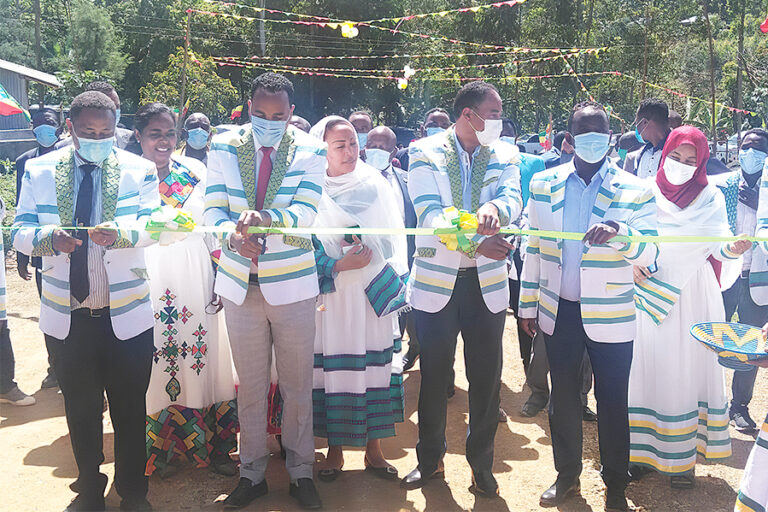
The Mizan Aman, 576 km west of Addis Ababa facility that was inaugurated mid this week has a warehouse with the capacity to manage 40,000 quintal and other relevant offices and laboratory.
According to ECX, the facility located in Bench Sheko Zone, SNNP shall serve eight woredas in the zone additional to other seven woredas in West Omo Zone.
“The facility will reduce 120km on average for the farmers in the two zones to transport their products to the trading centre,” the trading floor explained.
The area is the major coffee beans source in the SNNP region; ECX says, “The facility will help to enhance the supply of quality product for the international market.”
The area is also producing sesame seeds, mung beans, which are traded at ECX exclusively and different spices. ECX said that the facility at Mizan Aman would be crucial to host spices products thus will start the trading by next year.
The other facility inaugurated on Wednesday April 28 was at Tepi, 626 km west of Addis Ababa, which is also located at Sheka Zone of SNNP. The facility will serve four woredas in the zone and two woredas in Mazang Zone of Gambela region. Like the Mizan Aman facility it will also reduce 130 km for farmers to supply their product to market compared with the previous trend.
Sheka and Mazeng zones are also popular with their coffee product, which are the major hard currency earnings for the country. They are also producing sesame seeds and mung beans besides spices.
The south and western Ethiopia is well known on its enormous spices resources.
Currently, ECX has 25 branches and trading 12 commodities. In its 13 years history the exchange has facilitated the trading of 7.13 million metric tons commodities with the value of 308 billion birr.
More facilities in Bahir Dar, Shakiso, Qelem Welega, and other places are expected to be opened.
ECX to start trading industrial products, spices
Tax immunity landscape for diplomatic, international missions
Ministry of Revenue (MoR) reassures all tax offices to effect the waiver of the diplomatic missions and international organization from value added tax (VAT) for their house rent and telecom services.
It is to be recalled that MoR expressed on its directive no. 148/2019 which introduced the VAT immunity for diplomatic mission, international and continental organization and international nongovernmental organization.
On the latest circular issued on April 6 and signed by Meseret Kebede, Tax Refund Team Leader at MoR, the ministry reaffirmed that tax offices will continue to operate under the directive that was issued in 2019.
The circular showed the clarification of West Addis Ababa Small Tax Payers Branch Office which asked the head office about the VAT exemption for house rent for one of the diplomatic mission and the letter confirmed that it is correct to exempt the same by mentioning the 2019 directive.
The letter which showed the branch office clarification added that all branches should follow the directive.
It added that the branch offices to issue a VAT exemption certificate for those who are immune.
The directive article 9 sub articles 1 and 2 indicated that the stated diplomatic missions, international and continental organizations and international nongovernmental or nonprofit organizations are immune from paying VAT for house rent and telecom services.
It added that from the stated service, government shall not receive the VAT on behalf of the tax authority, moreover the tax authority is supposed to give a certificated for the stated type of organization as a reference that they are exempted from the stated tax.
Some international nonprofit told Capital that they were not aware about the directive, even though they are getting the stated service as per the previous trend.
Some of them are also reconsidering to request for the refund from MoR for the payment they already did since the issuance for the directive.
The 148/2019 directive was issued to review the previous directives on the aim to harmonize and modernize the VAT refund scheme. It has combined 4 different circulars and six directives under a single directive. The directive has enabled to shorten the refund scheme time to 45 days from the previous two months.
CBE’s third quarter performance
The Commercial Bank of Ethiopia generated 55.8 Billion birr income in the third quarter of the current fiscal year 2020/21. The bank earned 13.4 billion birr profit before tax during its 9 months overall performance.
From interest income, the bank gained 46.5 billion birr, while 8.8 billion birr was obtained from charges while 231 million birr from was got from other services.
The bank has raised its incremental deposit to 102.7 billion birr which is 82.4percent of its target of 124.6 billion. The bank has grabbed 101.1 billion birr incremental deposit from the private and cooperates which is 99.8 percent of its goal which makes the private deposit to 698 billion birr. According to the bank, private deposited shares account for 97 percent of the total deposit.
In the last nine months of the fiscal year, the bank has grown its deposit to 698.2billion birr from 595.5 billion birr. The total deposit of the bank has reached 698.2 billion birr, explained the president of the state giant bank.
The bank has collected 36.9 billion birr in repaid loans over the past nine months, which is only 54 percent of its target. On similar lines, 67.3 billion birr loan has been distributed to its customers over the nine month which is 67.8 percent of its goal.
He said the bank has provided over 67.2 billion birr in loans and bonds, adding that special attention should be paid to the fundraising.
In the first nine months of the current budget year, 62 new branches were opened and an additional deposit of 886 million birr was collected. The total number of branches has been increased to more than 1665. In the last nine months, 4.27 million accounts have been opened and the total number of deposits has reached 29.37 million, Abie Sano explained.
The Commercial Bank of Ethiopia’s nine-month performance appraisal was held in the presence of the Board’s Board of Directors, management members and other participants.
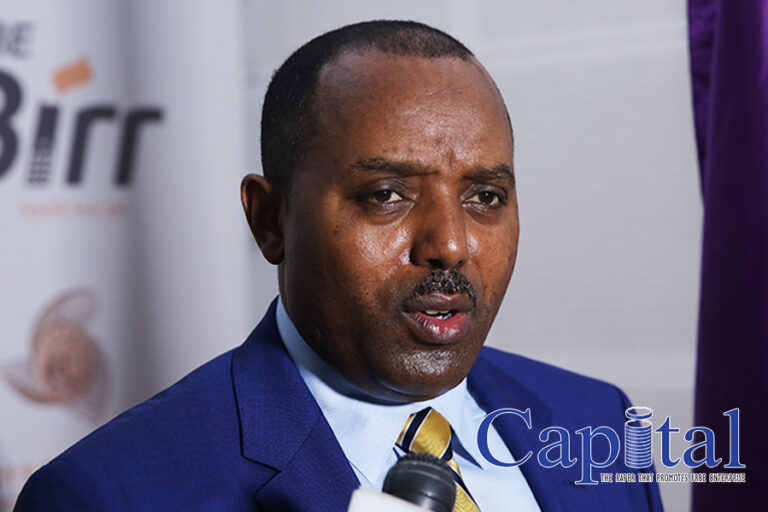
The President of the Commercial Bank of Ethiopia, Abie Sano, who opened the conference, said the implementation of the major goals and strategic measures in the first nine months of the current budget year are encouraging.
Abe recalled that the bank had planned to collect 2.7 billion USD in foreign exchange in the first nine months of the current budget year.
Deposit growing significantly, customer account, digital transaction growth, significant strengthened liquidity, review its structure and maintain profitability are listed as success while loan collection, FCY generation and COVID-19 were listed as challenges that the bank has faced during the last nine months.
“Fundraising will continue to be a major focus of the bank, adding that human resource development, the implementation of various technology projects, consolidated loan repayment, reduction of bad debts and COVID-19 are among the issues that need attention” said the president.
Ethiopia calls for the Diaspora to contribute for GERD accomplishment

On the webinar organized by the Ethiopian Embassy in Canada in collaboration with Alliance for Grand Ethiopian Renaissance Dam (GERD) in Canada Seleshi Bekele, Minister for Water, Irrigation, and Energy called the Ethiopian Diaspora community in Canada to stand together and extend help to the completion of the national flagship project.
On the webinar discussion entitled, ‘Updates on GERD and Information Session on GERD Bond Purchase’ Seleshi tabled presentations over the current status of the GERD construction and what is expected of the Ethiopian Diaspora to support the project.
The Minister made a call to Ethiopian Diaspora in Canada to stand together and extend help to the completion of the national flagship project.
According to the statement that Ministry of Foreign Affairs, he said the Diaspora should consider themselves as ambassadors to their country declaring the rights of Ethiopia to an equitable and fair utilization of the Nile River basin.
Diaspora Branch Manager at the Commercial Bank of Ethiopia, Lemma Wakeyo, explained the various modalities regarding the purchase of the GERD bonds.
Ethiopian Ambassador to Canada, Nassise Chali, on her part, reiterated how the GERD would benefit us all and underscored the need to support the project in advocacy, funding, and in every other possible way.
Ethiopia has announced that it would start the second filling in the coming flooding season that would be in July or August. The country has made a stand on equitable water use on the Abay/Nile River that is the source of the GERD.
Despite the downstream countries mainly Egypt expressed its concern on its water flow Ethiopia strongly reassured that the project would not have harm on others and the country does not have intention to affect others.
Ethiopia contributes more than 86 percent of water share for Abay, while the river does not provide required economic benefit.
GERD that is financed by local sources is expected to generate more than 5,000 MW in electric power.
