

Plans for the Ethiopian Athletics Federation to hold its Olympic marathon trials in Geneva, Switzerland, this weekend have been scrapped. The race, which had originally been scheduled for Sunday, May 2, will now be held on Saturday, May 1, in Sebeta, Ethiopia which sits at 7,730 feet of elevation roughly 15 miles southwest of the Ethiopian capital of Addis Ababa. The format will remain the same, with the top three finishers earning spots on the Ethiopian team for the Olympic marathon in Sapporo this summer, though the distance will be 35 kilometers (21.7 miles) as opposed to a full marathon.
Haji Adilo, coach of the Ethiopian Olympic marathon team, told LetsRun the trials were moved from Geneva due to COVID concerns. Many top Ethiopian athletes have been based in hotels in Addis Ababa since January and Adilo said there was concern that traveling to Switzerland could result in a positive test ruling an athlete out of the trials at the last minute.
Despite moving the trials to Ethiopia making the race more accessible to the country’s aspiring Olympians Adilo said the races will remain small. Adilo said the women’s race will consist of just six athletes: Roza Dereje, Birhane Dibaba, Degitu Azimeraw, Zeineba Yimer, Tigist Girma, and Ashete Bekere.
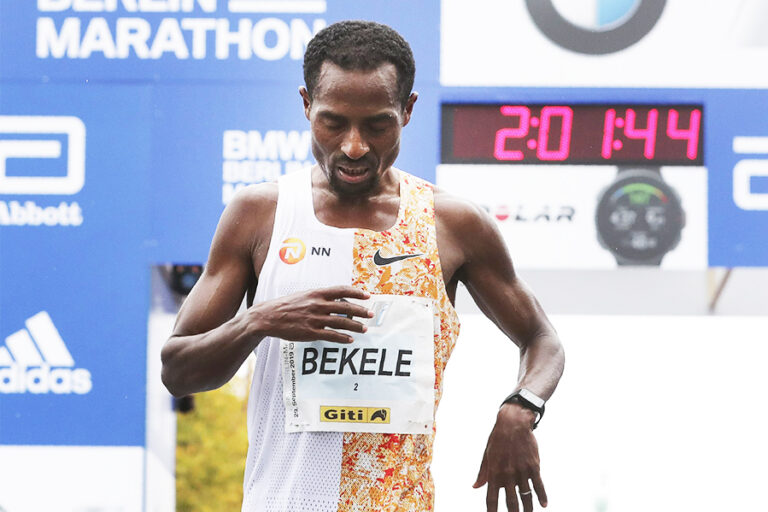
The men’s race will be slightly larger, in part due to injury concerns surrounding three of Ethiopia’s biggest stars: Kenenisa Bekele (three-time Olympic gold medalist, second-fastest marathon ever), Birhanu Legese (two-time Tokyo champ, 2:02:48 pb), and Mosinet Geremew (World Championship silver medalist, 2:02:55 pb). It’s possible all three of them don’t run the race and with only three other athletes (Sisay Lemma, Lelisa Desisa, and Shura Kitata) in the field, it would have made little sense to hold a three-person trials if Bekele, Legese, and Geremew end up withdrawing. So the field has expanded, with Adilo saying Mule Wasihun (2:03:16 pb), Getaneh Molla (2:03:34 pb, 2019 Dubai champ), and Kinde Atanaw (2:03:51 pb, 2019 Valencia champ) also expected to compete.
Ethiopian Marathon trials to be held in Ethiopia, Kenenisa might not participate due to injury concern
St George, Ethiopia Bunna suspend senior players

Though it is not known that both teams have an established policies and procedures related to players’ disciplinary actions, record champions St George and popular side Ethiopia Bunna handed a serious suspension to their senior players despite the season coming to end in two weeks’ time. To the amazement of football fans each side suspended four senior players having huge influence in the outcome.
Four frustrating seasons in a row without a trophy St George club officials appeared to reach their limits on Monday handing a suspension notice to the club’s heavyweights. National team skipper and twice Ethiopian Premier League player of the year Getaneh Kebede, national team central defender and second skipper Aschalew Tamene, upcoming striker Gadissa Mebrate and die-hard midfielder Mulualem Mesfin are the players subjected for suspension until the end of the season.
Though the statement from the club states that these players are accused of a number of disciplinary actions including the accusation of a sportive behavior while the team was in Baherdar, many suggest that the move is more of shifting away the blame from the club’s administration and Board of Directors. “The move is simply to lure away supporters against the players rather than the Board. Thus soon the ban will be lifted” a source close to the club suggested. “The action taken after the title race ended therefore it means nothing except for the club officials” he added.
Bunna’s much talked about playmaker who signed contract extension recently Tafesse Solomon, striker Mikias Mekonen, midfielders Addis Fisha and Haile G/Tensay are the players who got the suspension. Why the suspension turned out this time is what takes many by surprise. Although the statement states that committee members including the Physio Yishak were involved in taking the motion, many are not convinced about the move. “The players are sacrificed for the team’s failure to win the title” one football fan remarked.
Tokyo 2020: Tegla Loroupe’s concerns over Olympic Refugee Team
Tegla Loroupe, the Chef de Mission for the Olympic Refugee Team, says athletes who have decided to stay in Europe rather than return to the training camp in Kenya ‘cannot’ compete in Tokyo this year.
However the athletes from South Sudan are still hopeful a solution can be found to enable them to run at the delayed Games.
Former world marathon record holder Loroupe is also concerned about the image of the project after the athletes decided to start afresh in Europe.
Kenya’s Loroupe will again take charge of the refugee team made up of competitors from around the globe set to take part in various sports in Tokyo after she led a similar team at the 2016 Games.
“The athletes who stayed in Europe, we feel so bad,” Loroupe told BBC Sport Africa.
“They cannot go [to Tokyo2020] because if you give them the opportunity to run in the Olympics, then you are encouraging more people to do wrong things.”
“What they did has blocked other athletes from getting visas, because now nobody trusts the other refugees. They do not see that they leave a very bad image. They kill the trust.”
At the Rio Olympics the refugee team consisted of 10 athletes (five originally from South Sudan, one from Ethiopia and two each from DR Congo and Syria) competing in athletics, judo and swimming.
Loroupe says endorsing athletes who have left Kenya for Europe by selecting them the refugee team going to Tokyo could also damage the future of the project, especially for African competitors.
“We could lose some of the partners, which is not good for the project and the upcoming athletes,” she pointed out.
“The government and embassies are also partners, it’s like you are just playing around with the support of the nation.”
Sponsors of the refugee team project include the International Olympic Committee, the United Nations Human Rights Commission (UNHCR) and the governments of France, Kenya and Qatar.
Still hopeful
One of the athletes who has chosen a fresh start is 800 metre runner Gai Nyang and he is still hopeful of earning a place on the Refugee Team for Tokyo.
“I want a solution to the impasse that works for the refugees living there, the Kenyan people and the Kenyan government,” he told BBC Sport Africa.
“I can run 800 metres in 1.48 now, which is just three seconds short of world-class. The athletes in the refugee team camp are never told they have to make an official (qualifying) time, just to ‘go faster’ to have a chance of winning a Games slot.
“The dream of all the athletes in the refugee team is not just to go to the Olympics, but to qualify through achieving the standards demanded of the regular athletes. Then to have a life beyond that.”
The 29-year-old explained that he decided to stay in Germany after reading of compatriots being kidnapped in the Kenyan capital Nairobi and some of them being forcibly repatriated to South Sudan.
Loroupe however does not believe that the South Sudanese athletes had anything to fear from staying at the Ngong training camp near Nairobi or even from returning home.
Nyang says he will “always be grateful to Kenya for hosting me” but wants greater awareness that the status of refugees is insecure in the country he attempted to make his home.
“Being a refugee means different things in different countries and in Kenya there is no ‘contract’ that says once you have been there for a certain amount of time you can become a citizen,” he pointed out.
“I hope to one day be a citizen of Germany, not always a refugee somewhere.
“Here in Germany I can speak freely about the president of South Sudan, but I did not feel safe to do so in Kenya. I took the decision to save my own life before it was too late.”
Other athletes scouted by Loroupe from the huge Kakuma refugee camp near her home on the border with South Sudan have left for Switzerland and the United Kingdom respectively.
The decision by the athletes to stay away from Kenya has left Loroupe disappointed as she says her proudest achievement was not as an athlete but being “one of the first in sport to recognise the plight of refugees.”
She also believes that the refugee team project can “produce leaders” for countries troubled by conflict.
Despite these athletes having decided not to return to Kenya those who have remained still have a chance of making Loroupe’s team heading to Tokyo in July.
(BBC)
NBE drafts directive to modernize the money market
The National Bank of Ethiopia (NBE) is drafting a directive on Open Market Operations (OMO) and Standing Facilities (SF) to establish a formal and modern interbank money market on the itinerary to capital market.
Since the Home Grown Economic Reform Agenda was introduced about two and half years ago, the government has been putting in place different reforms and introducing new approaches to improve and correct the macroeconomic imbalance whilst commencing new economic paths.
The development of financial market is one of the pillars that have mainly engaged the liberalization of the sector for the Diaspora.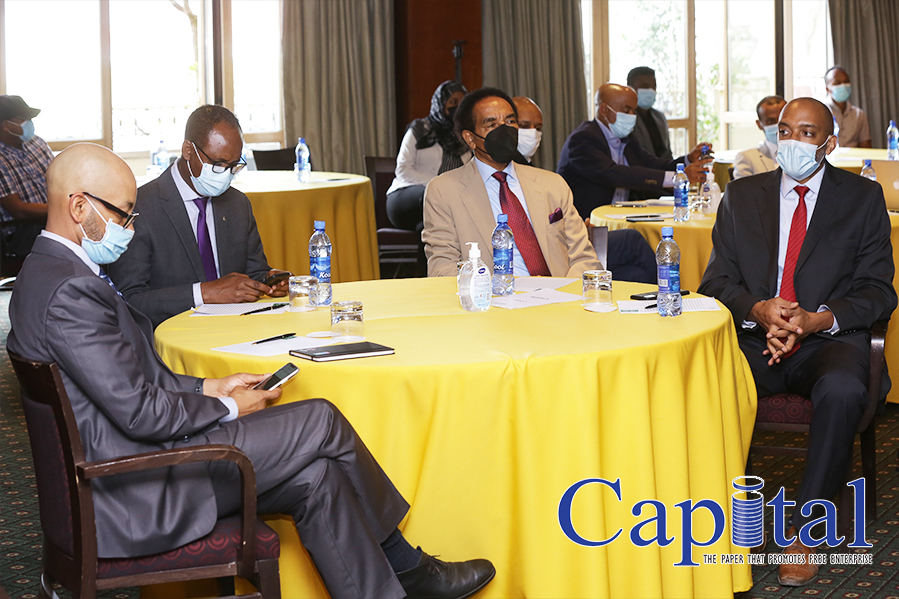
Rippling the NBE bills has also been implemented in November 2019 which was the other move that was followed by the improvement of the money market.
On this money market development, the Treasury bill (T bill) was liberalized in December 2019 in to the competitive auction and free for interested players.
On this reform, the volume of money that was collected under T bill has expanded significantly and even contributed to the government to replace the major share of direct borrowing from the central bank.
In the second phase the development interbank money market is in works.
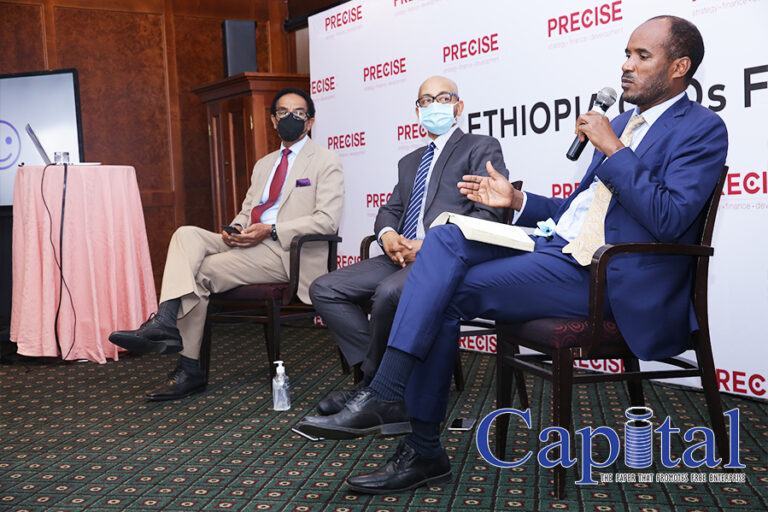
At the latest CEOs Forum on the theme, ‘Capital Market Proclamation’ that was organized by Precise Consult and held on Friday April 23 at Sheraton Addis, Melese Minale, Senior Macroeconomic Advisor at NBE expressed that the NBE is working in developing the formal interbank money market.
“There is no interbank money market today. Whilst there is informal deposit placement between banks, that is not really efficient. It is not long term and based on bilateral and mutual trust. So it is not as a formal market and is not equally serving the banking industry,” he said.
The Senior Macroeconomic Advisor added that to develop the interbank money market NBE has hired a consultancy firm based in the Netherlands, working on the area of capacity building, legal framework for secure financial transaction, market infrastructure such as Central Security Depository (CSD) and trading platforms and others. “We are working with banks since they are part of capacity building,” he remarked.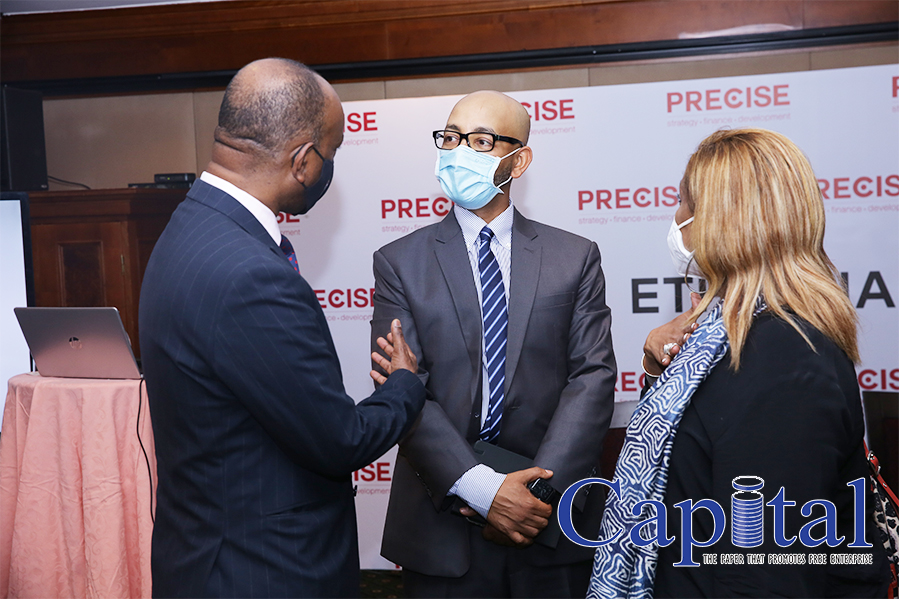
Melese told Capital that, including banks in capacity building helps them better understand how to trade among themselves in the modern platform. As a market maker, NBE will introduce market instruments based on monetary policy operations that are OMO and SF.
The directive for the OMO and SF, shall avail instruments to provide and absorb overnight liquidity at banks, and is under development and will be launched in the near future.
Introducing these instruments means NBE is trading with banks and when banks have marketable security instruments they shall trade it as using collateral with each-others.
According to Melese, legal and regulatory framework has also been incorporated with the capital market proclamation to legalize the money market instruments, which is a primary market.
The market infrastructure such as CSD is enables to register securities electronically at a central platform that allows interested trader to use it electronically.
“So far, currently, a bank that demands to borrow from NBE is required to come physically with collaterals like T bills or other physical certificates, which is inefficient. But if it is deposited at CSD any bank need not to come physically, while using the trading platform at the core banking system,” Melese, who is one of the leader for the formation of the capital market for Ethiopia, explained.
He said that NBE is developing the CSD infrastructure on the process of launching the new scheme at the primary market.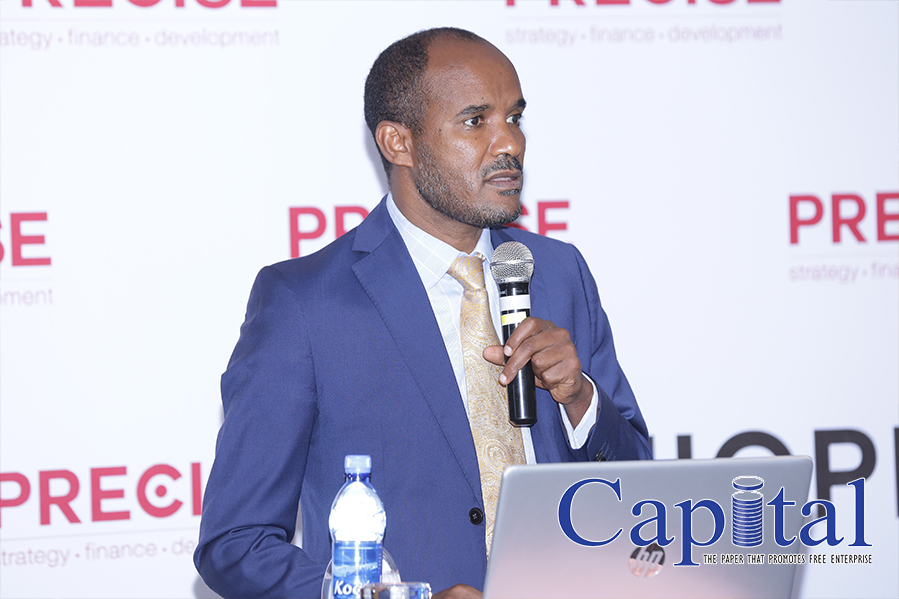
Melese reminded that the current interbank money market is inefficient in different forms. He showed that trust is the only bandage for trading rather than under a legal framework, due to that the interest rate on the current interbank trade is very high.
“The money market should be highly secured and this may happen when banks have marketable liquidity on their hand as collateral whilst NBE is involved as a regulator allowing trade with banks itself,” he added drawing a picture of what the new scheme will create when it launches.
Currently, the central bank is providing loans for banks on two traditional forms; standing facility and emergency liquidity assistance.
On the new money market, NBE shall be lending money on a standing facility on penal rate and at the same time it shall have an overnight deposit facility for banks that have excess liquidity at a predetermined interest rate. “So the interbank money market is benchmarking between the middle of central bank’s lending and deposit interest rates that allow NBE to introduce guidance,” he elaborated further regarding the standing facility.
The emergency liquidity assistance may lead for investigation at the banks before providing the money.
Melese explained that modernizing the money market is crucial for knowing the overall market since it is a liquidity source and the benchmark of pricing, “For instance in the US the T securities margin is the standard for other market.”
“Due to that modernizing the primary market will help for the upcoming secondary market that is expected to be introduced and is in due process since the Capital Market Proclamation has received approval by the parliament,” he told Capital.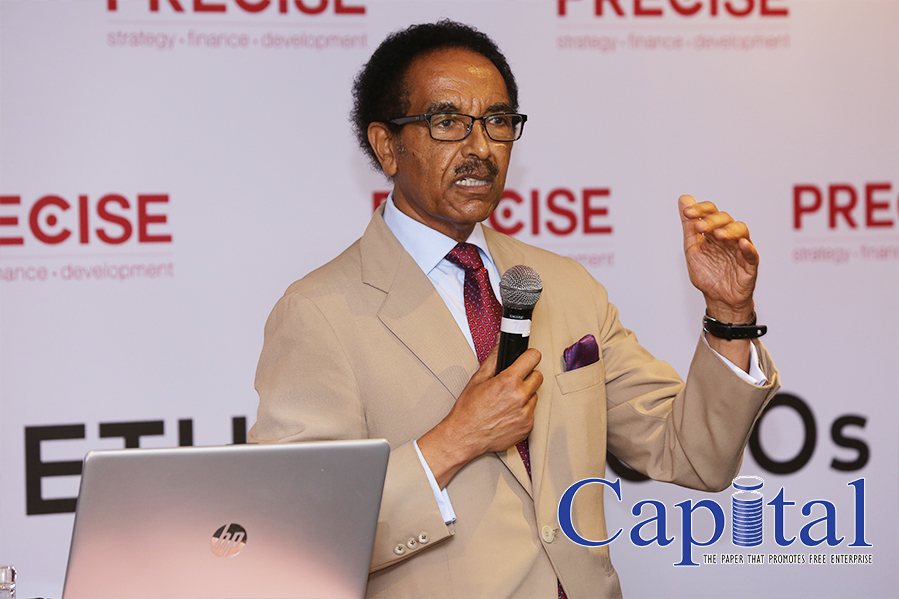
On his presentation at the CEOs Forum, the Senior Macroeconomic Advisor also told participants that the benchmark for pricing of any assets in developed market economies is financial market instruments in particular T bills, “without that it is not even clear how you price assets. For example I don’t know how banks price collateral assets today; simply because there is not a benchmark and there is not transparent market where we can see the price of an asset. A clear and transparent market for assets is crucial for efficient resource allocation.”
On the capital market forum that mainly involved the private sector actors as participant, he showed the different rationales on how the new market would benefit the economy.
The commencement of capital market would have different inputs for the economy starting from the expansion of the liquidity in the economy.
“Based on different surveys of the World Bank, World Economic Forum and other local studies access to finance is indicated as a serious bottleneck for the Ethiopian economy and doing business that shall be mitigated by such kind of secondary market mainly for long term projects,” he said.
Developing alternative financial market opportunities has also a rational of market foster price discovery and promotes very important efficient allocation resources in the economy.
Mobilizing national saving would create massive liquidity which will benefit the economy. National saving, mainly the financial saving, will narrow the absence of opportunities for long terms saving in the economy.
He reminded that mobilizing the national saving can also smash from dependence on foreign capital that the country now currently uses for different developmental project. “The national saving expansion would help to reduce the use of foreign capital, foreign exchange imbalance and macroeconomic vulnerability,” he stated.
