

In partnership with MasterCard, Zemen bank issued the first ever contactless prepaid travel card in Ethiopia.
Zemen prepaid MasterCard will enable cardholders to use cards with two major currencies namely, U.S dollar and the Euro based on their travel destination.
“Zemen is known for introducing banking technologies in the country, we are delighted to see this product address our customers’ needs for overseas travel without the need to hold cash,” said Dereje Zenebe, CEO of Zemen bank, adding that the move will pave the way for more E-commerce payments too as customers are able to book their flights and hotel using their card.
In addition to the two currencies, in the future Zemen is planning to work with master card to issue cards for other currencies based on their popular customer destination to add convenience and avoid currency conversion cost.
Card holders are able to load up to 10,000 U.S dollar or equivalent depending on their purpose of travel. All Zemen machines and most ATM accept contactless master card as a result of Zemen’s significant investment and diligent approach to providing contactless solution.
Zemen’s prepaid travel master card include access to all master card points of sale and ATMs in the world as well as platinum insurance benefits which covers card fraud protection and purchase protection.
In addition to Zemen MasterCard, Zemen bank has also launched the next generation mobile banking application in addition to the traditional mobile app functionalities to enable customers to view account information.
Moreover, Zemen customers can self-onboard themselves and be able to get 24/7 instant support through the in app chat functionality by downloading the app from Google play and Apple app stores.
The bank is among one of the pioneers in introducing mobile banking with the then existing technologies. It has now revamped its mobile banking solution knowing fully well the current and future customers needs for harnessing evolving technologies.
App banking customers can access their finance faster and send money to friends and families without any hassle. In addition, financial and non-financial transaction can be initiated on the app which can send instant cash to any recipient at Zemen ATM for immediate needs. Furthermore, customers can access their accounts to get relevant information, plus all digital channels of Zemen bank are seamlessly integrated for customers to initiate a process in one channel and finish in other channel.
Using the app customers will be able to manage cards initiate, Z-cash voucher and collect cash through AT, pay bills and can resolve their day to day banking queries and get information related to products and offers.
Zemen, MasterCard unburden overseas travel with contactless card

The status of Ethiopia’s hunger level

In a peer reviewed report, a global hunger index published by Welthungerhilfe and Concern Worldwide on an annual basis set Ethiopia 92 out of 107 countries in 2020.
Even so Ethiopia has experienced dramatic improvements since 2000 with a GHI scores dropping by more than 27 points from extremely alarming to serious despite it only ranking 92 under the 107 countries in this years GHI-ranked-countries.
In East Africa, Ethiopia ranks 5th out of 9 countries regarding the level of hunger and lies just beneath the average of Africa’s South of the Sahara.
According to the study, Ethiopia despite all progress, about 20 percent of the population is still lives undernourished in which child mortality is still very high.
Child wasting which an indicator of acute under nutrition is very high in Ethiopia, Chronic child under nutrition is thus more pronounced than acute child under nutrition
The GHI highlights the countries that are already suffering from hunger and undernutrition and looks at their long term trends. It therewith points to the areas that are particularly vulnerable to a worsening of the hunger situation.
As the study suggested that the key is to create a healthy and just food environment with fair and adequate income for small holder farmers, fishers, and producers.
Smallholder farmers need to be supported to become more sustainable, resilient, and diversified producers, such as by improving their access to agricultural inputs and extension services, coupling local and indigenous agricultural knowledge with new technologies.
“Local and regional food markets should be strengthened to promote sustainable local agricultural production. Global trade in agricultural products and food should be fair and climate friendly; due diligence along the entire value chain is crucial,” guides the study.
The report was done in order to measure and track long-term trends of hunger on a global, regional and national level. With only ten years to go, this year’s report focuses on how health and sustainable food systems need to be linked to reach Sustainable Development Goal 2 “Zero Hunger by 2030.”
To capture the multidimensional nature of hunger, GHI scores are based on indicators like inadequate food supply, Child under nutrition and Child mortality.
As the report reads on a global level, hunger has decreased over the past 20 years. Many countries have made substantial progress. 46 countries in the moderate, serious or alarming categories have improved their GHI score compared to their 2012 score. Since 2000, Nepal and Cameroon went from alarming to moderate an improvement of two categories. Angola, Ethiopia, and Sierra Leone have decreased their scores substantially by more than 25 points. Although their hunger levels remain serious, this shows that it is possible to reduce hunger.
“Even though the dramatic improvements are too slow (if they continue with the same speed) to achieve the goal of “Zero Hunger 2030” they will be on track. Since defeating hunger is not only possible in theory and these countries should fuel the motivation to speed up the improvements,“ advised the report.
“Perhaps the Progress is way too slow, too many people are still suffering from hunger and undernutrition,“ stated the study.
The double-edge sword of scouting top notch bankers

Getting senior bankers has become difficult in the fast growing banking industry where there is a come up in the massive number of new banks. Further, the National Bank of Ethiopia (NBE) says unhealthy remuneration development is observed in the banking industry.
Human capital development experts and professionals in the banking industry said that the banking sector is struggling to hold up the seasoned experienced staff at the senior level including the directorial position, while the new entrants are experiencing trouble in grabbing experienced experts at the medium level to key managerial posts.
Experts like Gemechu Waktoal, Professor at Addis Ababa University and Founder of The i-Capital Africa Institute that is engaged on consulting companies like banks on the development of human capital besides its different activities, says the challenge is expected since there is weakness in producing skilled labour. Furthermore, he expressed there is lack of attention for developing succession plan internally at the banks in addition to other external factors.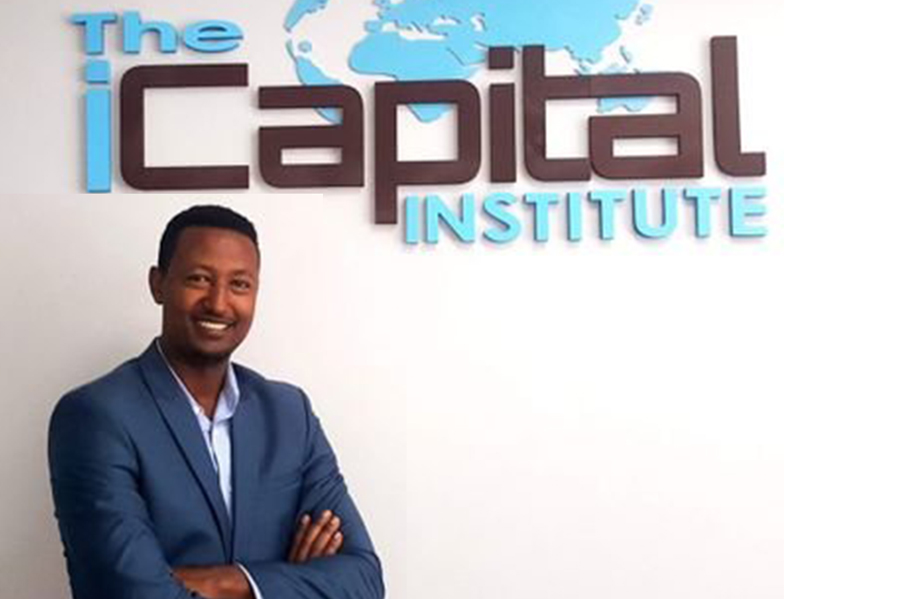
According to the sector experts, on the external side besides limitation of producing qualified and competitive experts, the NBE’s strict requirement at the senior management when hiring has presented a challenge.
Head hunting and filling the required staff for the new entrants and fighting to hold bankers at the established banks has become one of the discussed issues at the sector arena. Capital has got different information from sources that show the value of bank experts spiking in relation to factor of grabbing or losing the financial firms from one to the other.
The banking sector has become one of the leading fields that pay huge sums as salary besides providing different incentives.
For instance, recently one of the bank presidents has secured a double promotion in his salary as a result of Board of Director fearing to loss him in addition to his value as seen from the stakeholders who appreciate his achievements.
Similarly, senior bankers in different banks are getting different incentives like providing tens of millions of birr loan scheme and giving bank shares besides an attractive and extraordinary salary increment.
“The recent scheme of providing different encouragement initiatives by banks for their employees might vary from position to position but most of the beneficiaries are those who worked for many years at the given bank and that are engaged on the activities from a director level,” one of a senior bankers at one of the long established bank told Capital.
On the other hand the new entrants are in trouble when it comes to acquiring experts in different positions including chief executive officer or president, which is required in order to get a license for operation from NBE.
Experts said for these up and coming new banks one of the burden and major cost is salary because they have to pay a competitive sum to attract skilled labour, who shall come from well established financial firms.
Frezer Ayalew, Banking Supervision Directorate Director at NBE, agreed on the tendency tof unhealthy development in staff benefits. “Recently, there has been an unhealthy remuneration development in the banking industry, but one needs to ask is it really related with lack of skilled labour in the industry,” he expressed.
A bank expert who manages a key position at one of the oldest private banks assured that the latest move by bank owners and boards is directly related with the shortage of skilled and qualified professionals as per the standard of NBE. He added that losing staff even at the branch or lower level might have effect for any given bank.
He said that operational banks should hold their staffs especially those who have key roles in the banking activity because the damage is not only related with losing a staff but also in relation to the day to day activity at the centre and even at the branches.
“Owners of are not only afraid of losing staff but also their clients and proficiency since a staff would not leave a bank alone,” he explained.
“Stalling and implementing others strategies and drawing vulnerability from company business secrets when you get the chance is unfair,” Gemechu stated arguing that such moves are against professionalism and ethics.
“So it creates a lose win situation in the business besides labour movement from one place to another,” he added.
He added that it is practical that within very few years, experts shall move up to four banks, which shows how much the sector is at huge risk.
Gemechu with his insight said that based on the experience that the sector has been through; access to qualified experts would be eroded. He said banks did not work on skill development and most of them do not have succession plan and are not focused on producing and qualifying new leaders, “Due to that of course the pool will be dry which leads to push factors.”
“I know there are about two strong banks working on supersession planning but most of them are not with it and some of them do not even understand the issue of working human capital development,” he explained the reason for the scarcity of qualified leaders besides the strong rule of NBE.
He said that because of the requirement, new banks are supposed to hire experienced bankers as per the NBE directive. “Just how many of them have been under operational preparedness for their lower level staffs as they open their doors? They are simply awaiting the licenses and then engage on taking others from existing established banks.”
He said that the NBE directive, which for instance requires presidents to have at least 12 year of experience out of which 5 year should be spent at a vice president level in the banking industry. This requirement limits the scope for the human capital search thus new banks focus on acquiring top notch bankers from other banks reeling them in with attractive benefits; of course this is of great benefit to the experts because of demand of expertise.
According to the leader of The i-Capital Africa Institute, a consulting firm that delivers intellectual capital development packages; when the source is becomes dry, the sector shall look into other alternatives to fill the gap. “There might be use of experts from abroad as per NBE criteria, while it is embarrassing for a country with concerns of high graduates with high unemployment rate.”
“When banks are unable to fill the gap from the local pool of talent they will seek to import professionals,” another expert on the banking industry, who demands anonymity said explaining that those who come from abroad may not have similar expertise and bank practice that is found with Ethiopia.
He also underlined that the regulatory body, NBE, itself may not have a capacity to control the expats that have huge experience in the dynamic sector. “The banking sector in Ethiopia is very traditional, while those who come from abroad have huge exposure on the global market that would be difficult for NBE to manage them,” he added.
Future
Experts in the sector insist the central bank to relax its directive. “I understand the motive of NBE which is considerate of trust and experience which is set as a criterion but similarly the realty should also look into talents alongside length of experience,” Gemechu said.
He recommended internal and external solutions to mitigate the challenge that will be applied as soon as possible.
“The regulatory body should consider the dynamism on the sector, and banks on their part to apply multilayer intervention,” he added.
Frezer said that NBE does not have a plan to change the directive that it amended in 2019 under the directive number SBB/70/2019.
The directive stated senior executive officers mainly referring to vice presidents indicated that they have a minimum of 10 years of experience in the banking, of which, 4 years as department manager and other senior executive if directly reporting for the board of directors to have 8 year experience and three years on managerial position.
“Currently, there are 18 banks in business the new comers shall get vice presidents with NBE requirements from them,” he added otherwise there will be no change regarding relaxing the directive,” the Banking Supervision Directorate Director told Capital.
According to The i-Capital Africa Institute leader, internally the board of directors of a bank should work on talent and succession strategy mainly on key roles like what they do today on profit escalation.
“They have to also establish and hire qualified experts on capacity building department,” Gemechu said.
“The banking sector, which is knowledge based industry, shows dynamism from time to time on different conditions like on fin-tech, COVID 19 leads new approaches and others. Due to that the knowledge expansion is required with different approaches which focused on specialized certifications,” he added.
He reminded that NBE has enforced banks to allocate two percent of their revenue for skill development but that should be properly revisited by the regulatory for its effectiveness.
Gemechu said the Ethiopian Bankers Association should take its role on the area.
Frezer reminded that NBE is working to revamp and massively engage on knowledge development at its facility located at Akaki.
“Of course the financial sector is strictly regulated but I am afraid that it would affect the industry’s health that may leads to crisis,” an expert said.
Dashen interlinks global clients through new eCommerce gateway

Pioneer on Fintech, Dashen Bank, has introduced another milestone service on the eCommerce platform that allows Ethiopian businesses to transact easily with their global clients. The new service is a gateway for international payments in Ethiopia that align with the government digital economy strategy.
On the event held on Tuesday April 13 Dashen’s Amole, Ethiopia’s largest mobile eWallet platform and Visa, the global leader in digital payments, announced a strategic partnership and the launch of the Amole eCommerce Gateway, using Visa CyberSource infrastructure which supports digital payments for merchants and banks.
On its statement, Moneta Technologies, the Fintech firm that collaborated with Dashen to introduce Amole, stated that the partnership will be a game changer for emerging Ethiopian exporters and online businesses along with Ethiopian Airlines logistics to fulfill Ethiopia’s aspiration to become the eCommerce hub of East Africa under the African Free Trade Agreement (AfCFTA).
The initiative has made Dashen Bank the first bank to use the Amole eCommerce Gateway making it the first Ethiopian bank to acquire all three major international cards; Visa, MasterCard and American Express.
It has been stated that with this strategic relationship, Amole and Visa will seek to eliminate barriers to regional and cross-border commerce and offer an expanded set of eCommerce capabilities to Amole merchants by enabling secure and convenient cashless payment solutions.
Asfaw Alemu, President of Dashen Bank, said that the effort makes Dashen the first Ethiopian bank to acquire all three major international cards to drive eCommerce to its 8000 merchants.
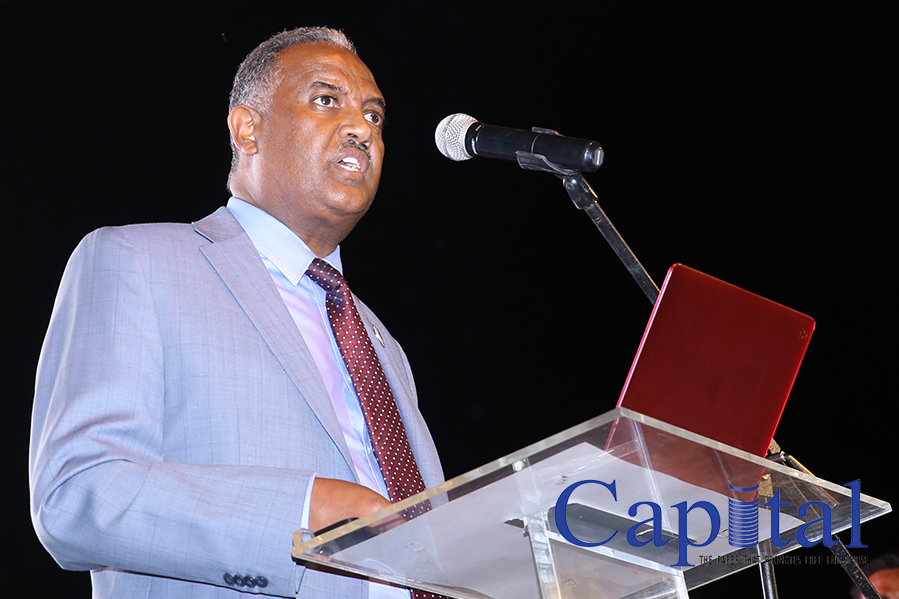
He said that it will have tangible meaning for the country’s economy and hard currency earnings besides massive job creation and comprise businesses that were not in the export industry are now able to sell their products online at the global market.
“We are very excited to work with Moneta and Visa Cyber Source to bring this product to the Ethiopian market, leveraging our combined assets to broaden our offering to a larger number of Dashen merchants. We believe this product will help the National Bank of Ethiopia’s goal to increase the formal forex inflows and reduce the forex cash being brought into the country which potentially ends up in the informal market,” Asfaw said.
The Amole eCommerce gateway is the first eCommerce gateway in Ethiopia to accept all three major international cards. On the statement of the bank, Dashen will expand its acquiring relationship with additional digital payment methods in the near future. The Amole eCommerce Gateway has been available to select merchants since March of this year.
“Today, with this partnership, we can accept digital payments from anywhere. As recently as 2018, a developer or business owner in Ethiopia did not have the ability to accept online payments until Amole introduced its open API platform in July 2018. We started Amole to become the payment and commerce platform to harness the great potential inherent in the B2B2C market that makes Ethiopia the sleeping giant,” said Yemiru Chanyalew, CEO Moneta Technologies.
“For merchants, digital payments mean reducing costs associated with handling and losing cash and broadening their customer base as more and more people move away from cash,” said Abebe Girmay, Visa’s Country Head for Ethiopia, “We are very proud to partner with Moneta Technologies ‘Amole’ to ensure that the market enjoys a range of domestic and international benefits that will transform their e-commerce experience.”
The Amole eCommerce Gateway uses the Visa Cyber Source infrastructure making it secure with fraud-monitoring systems to protect merchants from charge backs.
To date, Ethiopian businesses do not have the ability to accept digital payments on their digital channels like websites and mobile apps. As a result, hotels, tour and travel agencies and retail businesses cannot sell their product and services online to international customers. Local hotels chains were at a disadvantage because they cannot accept international cards online to guarantee a reservation which means the customer cannot get a confirmed reservation and peace of mind, when traveling to Ethiopia. Now, as of today, local hotels in Ethiopia can accept online payment and secure reservation to customers.
In related development Lime Tree, a restaurant chain, has entered into a co-branded gift and loyalty card program agreement with Dashen Bank and a co-brand acceptance incentive agreement with Amole and Fly Dubai.
Under the terms of the agreements, Amole, Ethiopia’s largest digital payment issuer would become the exclusive issuer of Lime Tree’s co-branded card. Lime Tree’s co-brand gift card would provide cashless and card not present “eCommerce” payments, generous rewards such as “Instant Cash Back”, round-trip tickets to Dubai by Fly Dubai and also serve as Lime Tree’s membership card which will be used by over 100,000 customers at all Lime Tree and affiliate locations in Ethiopia.
