Monday, November 30, 2026
Home Blog Page 3360

The covered call trading option for Bitcoin

0

In recent weeks, Bitcoin prices rose by 50%, giving rise to a new mania. So, what’s the best way to trade it? Because of Bitcoin’s extreme volatility, it does not provide a steady income. Its other drawback is that it does not provide a predictable stream of income. Fortunately, we can generate income by using options on Yuan Pay Group Website.

Crypto stocks like Coinbase are popular, so we could look at how we can generate income by using option income strategies. Alternatively, if you want a less volatile strategy, you can trade covered calls on the Amplify Transformational Data Sharing ETF. While this exchange-traded fund is very much volatile, it is still less volatile than Bitcoin and other crypto shares.

The pool of securities in BLOK consists of investments in companies specialized in blockchain production, including PayPal, MARA, Square and Nvidia. Here is how a covered call trade on BLOK works.

How to trade Bitcoin using the Covered Call option

An option to buy a 55-call contract that expires in September was trading Monday for around $1.55 per share, generating $155 in profit per share. Selling the call option generates an annualized income of around 30% in less than two months, equal to 3.13% in just under two months.

Selling the call option generates an annualized income of around 30% in under two months, equal to 3.13% in just under two months. Moreover, selling the call option has some upside potential as well. When the shares are called away at 55, the trader will have gained $555 on the shares bought at 51, in addition to the $155 premium option. It is equivalent to a 10.9% profit.

Any gains you make from selling this Bitcoin-linked ETF may be erased if the ETF drops. Investors should be aware that options are risky, and they can lose their entire investment.

Fixed-income profits are desperately sought by institutional investors since traditional finance typically offers yields below 5%. Although you can receive 4% a month with bitcoins because there are certain risks involved in using derivatives on trades with low risks.

According to Paul Carpelli talking to Cointelegraph, the deflationary schedule of issuing bitcoin and its stable supply curve makes bitcoin a demanding hedge against poor money policies and inflation which can cause to cash to devalue over time. Most centralized services like BlockFi, Nexo, and Crypto.com yield between 5% and 10%/year for depositing stablecoin. To raise payout, you must face huge risks, which need not mean a lesser-known intermediary.

However, Bitcoin derivatives can be used to attain a 2%/week. At present, the liquidity of those instruments resides on exchanges. So, when analyzing such trades, you can look into account counterparty risk.

Selling the covered call may be a partially fixed business

An option buyer can buy Bitcoin on a set date at a fixed time in the future. To obtain this right, you have to pay upfront. Usually, buyers of this instrument pay for it as insurance, while sellers see it as a semi-fixed instrument.

As each contract sets a strike price and expiry date, it is possible to estimate losses and gains ahead of time. By selling covered call, most above the current market price, a covered call strategy is used to hold bitcoin and increase its value.

Bottom Line

In my opinion, it would not be fair to call the trade fixed income because the trade raises the Bitcoin balance, but does not protect against negative prices for those returnsdollars.

The strategy does not increase the risk of any Bitcoin holder since the position remains unchanged whether the price rises or falls.

 

COVID 19, Conflict and Hunger

0

Few years ago, Swedish diplomat Jan Eliasson observed that unless we made peace with nature, we would never be able to solve the problems of global hunger. Jan Eliasson suggested to the community of food experts to consider the nexus of a sustainable food supply with the ongoing threat of climate change.
As the world observed World Food Day on October 16, it is pivotal to consider the challenges of eradicating global hunger in the context of the warming of our planet. Until 2014, the decades-long-decline in hunger in the world was one of the great achievements of progress, the world’s ability to grow enough food to feed billions of people. Hundreds of millions of people in Africa, Latin American and especially Asia were lifted out of poverty.
Today, that global progress is in jeopardy. Johanna Forman, a scholar-in-residence at American University’s School of International Service noted that, we ignore this reality at our peril. She stated that the ranks of the food insecure are increasing. In March 2020, the UN Food and Agriculture Organization (FAO) sounded an alarm as the initial data on global hunger confirmed what we already suspected. More than 60 million undernourished people, up by 10 million people between 2018 and 2019, joined the ranks of the food insecure. In 2019, over 1.25 billion people experienced moderate food insecurity, and 750 million experienced severe food insecurity. The majority of hungry people worldwide live in countries wracked by conflict, 489 million people. The arrival of the COVID 19 pandemic only aggravates these pressures further.
Johanna Forman further stated that with ten years to go until 2030, the year the United Nations set as the target to reach the Sustainable Development Goals (SDGs), we are now off track to achieve them. The SDG target of zero hunger by that date is no longer in reach. If the global community continues to keep the discussions about solutions to hunger separate from ways to tackle climate change, we will certainly lose the battle for survival.
The United States and China, the two largest sources of greenhouse gas emissions, have taken irresponsible positions regarding ways to keep the earth’s temperature stable. So, what can citizens do to create a global grassroots movement that will help put the planet on a more hopeful trajectory to address hunger and the continued warming of the earth?
For this end, the young generation plays a key role in this battle. Young people are individually very much aware of the connections between agricultural production and climate. The young Swedish activist, Greta Thunberg, has inspired a generation to call out their governments and local communities to make changes in the way they manage food waste and generate energy that do not pollute the atmosphere.
Ford Runge, Director of the Center for International Food and Agricultural Policy stressed that mobilization requires the private sector to operate its own campaigns to use their businesses for good purposes. There are many multinational companies that are signing on to agreements to address their carbon footprints. This movement must now also be duplicated in both small and medium-sized enterprises. A new initiative, 10x20x30 intends to get 10 major retailers to enlist 20 suppliers to commit to meeting the 2030 UN Sustainable Development Goal to cut food waste by half.
Ford Runge argued that the technology sector has created a remarkable array of options for generating energy that will not emit carbon. It must now insist that these options for wind, solar and other forms of renewable energy generation are made available at low cost to all countries that are at risk of falling further back in feeding their populations. According to Ford Runge, there must be financial incentives that both sovereign lenders and the international financial institutions provide to those countries at the greatest risk especially small island states where rising sea levels threaten their very existence. This is possible if a target list of priority states starts the process of energy sector modernization.
The fossil fuel production companies talk a good line about transitioning to renewable energy. But they are still focused on further extraction of oil in spite of all the warning signs of disaster. The United States and Saudi Arabia, the two largest oil producers, could better serve the global community if they agreed to reduce harm to the respective energy sectors. This is where citizen mobilization could play a major role as investment dollars could be conditioned on an energy transition.
Johanna Forman stressed that food growing companies worldwide can become a positive force in each of the countries where they operate by providing a decentralized approach to agriculture. This would allow them to produce what the world needs to eat, while creating mechanisms to give those in the most remote parts of the world a way to reach markets. They can achieve that by guaranteeing these small farmers a means to sell their products locally. Big companies have the logistical capacity to help governments develop these types of decentralized approaches to their agricultural policies.
Dealing with food waste as a major issue in tackling the dual global hunger and climate change challenge. It needs to be tackled at the systems level rather than by looking at it as a piecemeal solution to reducing carbon emissions. According to Project Drawdown, if landfills were a country, they would be the third largest emitters of greenhouse gases, coming only after China and the United States. A global approach to landfills, while not easy to implement, could also help focus attention on food waste. This would create an enduring solution to one of the greatest offenders to the environment.
Observing World Food Day may give people around the globe a chance finally to consider how their own impact on the planet must be considered in light of the threats we all face. As Johanna Forman suggested, all United Nations member states must take responsibility to protect the earth. Now is the moment to act on this, for failing to act will be done at our peril. It is indeed a must to make peace with nature.

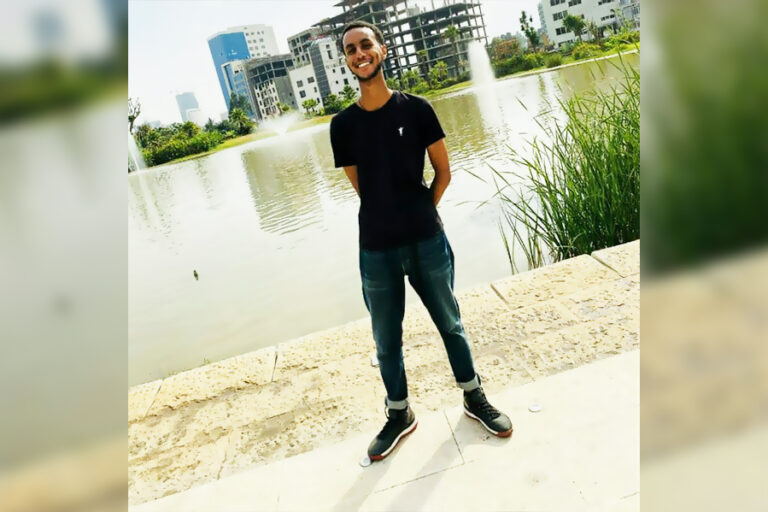
Kidus Amanuel

Name: Kidus Amanuel

Education: Degree student

Company name: Ballager Life Style Co.

Title: Co-owner

Founded in: 2021

What it does: Makes different kinds of clothing

HQ: Addis Ababa

Number of employees: 24

Startup Capital: Confidential

Current capital: Growing

Reasons for starting the business: Entrepreneurial mindset

Biggest perk of ownership: Time freedom

Biggest strength: Passion for craft

Biggest challenging: Capital

Plan: Expanding the business

First career: None

Most interested in meeting: No one

Most admired person: Successful people in different sectors

Stress reducer: I don’t encounter stress

Favorite past time: Reading books

Favorite book: Think and grow rich

Favorite destination: Anywhere in Ethiopia

Favorite automobile: Ford

Tender Notice

0

Tender Notice

Project title: Project to create employment opportunities in Ethiopia by establishment of a garment accessory factory, introducing a dual-education model and creating employment opportunities.
Country: Ethiopia
Date: July 28/2021
ICB no: 4
Dear Concern,
Desta PLC has received financing from the Facility Investing for Employment (IFE), which is an investment facility created by KfW Development Bank (KfW) on behalf of the German Federal Ministry for Economic Cooperation and Development (BMZ) as an integral part of the Special Initiative on Training and Job Creation, is cooperating with KfW under an investment for jobs project and now it wants to procure an Elastic Waist Band, Full Set and this contract will be jointly financed by Investing for Employment) GmbH and Desta PLC. Bidding process will be governed by the Desta PLC.
The Desta PLC now invites sealed Bids from eligible Bidders for the specification of the products
Bidding will be conducted by means of the International Competitive Bidding procedure with qualification as specified in the “Procurement Procedures for Recipients” from the facility Investing for Employment (IFE) and/or in KfW’s Procurement Guidelines (“KfW Guidelines”).
Interested eligible Bidders may obtain further information from Elias Woldu, +251 93-913-1333
A complete set of bidding documents is available to interested Bidders at Desta PLC, Eresha Subcity, Kebele 01, Industrial Zone Shed 02, Butajira, Ethiopia. Also, you can email to info@bekdesgroup.com to have the access to the e-files that are downloadable. The bidding documents received from the Purchaser are not transferable.
Bids must be delivered to the address indicated in the clause ITB 22.1 of the bidding documents on or before 10 September 2021 9am. Late Bids will be rejected.
Bids will be opened on 12 September 2021 10am in a public session in the presence of the Bidders’ designated representatives.