

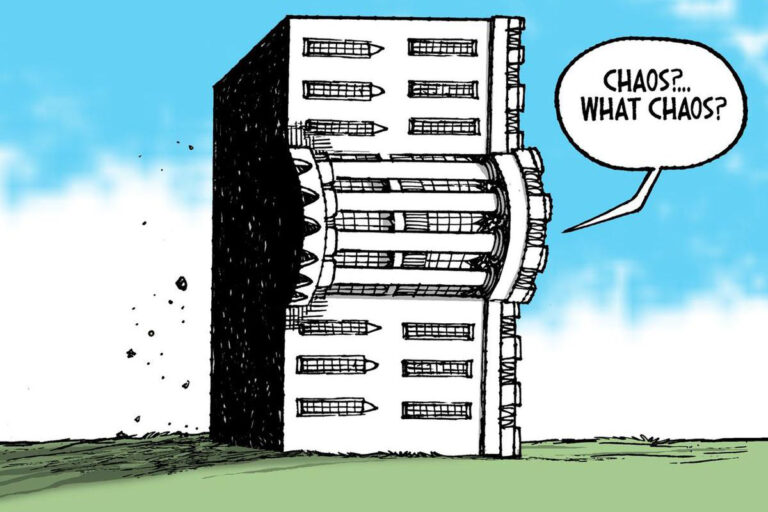
As the modern world system unwinds, chaos is visibly in the ascendance. To those aware of the lopsided (inequity) nature of the world system, (@1500 AD-onward) recent anti-systemic developments cannot be altogether unexpected. Expectedly, those who have been immensely benefitting from the global regime are increasingly concocting schemes to retain their (mostly) undeserved privileges. Continuous wars are amongst the overall contemplated schema. Unlike before however, many of the wars the psychopaths/sociopaths’ want to wage, will not be easily winnable. Observe the situation in MENA (Middle East & North Africa) and Afghanistan. At the same time and characteristically, the gullible sheeple (human mass) is, by and large, at a loss as to the real reasons for the various wars!
The polarizing economic regime of the world system is undergoing acute distress, not only in the core countries of the West, but also in the peripheries and semi-peripheries. For instance, in South Africa, a member of the BRICS (Brazil, Russia, India, China and SA) major rumbling is in the offing. The South African sheeple is demanding an equitable share of the country’s wealth, as in the distribution of land. Despite provisions agreed upon at the time of liberation, (from apartheid) the sheeple is forcing the compromised political leadership of ANC to raise the issue of land afresh. This certainly doesn’t spell peace in ‘Rainbow La La Land’, at least in the coming few years! The Namibian sheeple is also eager to review the issue of land. One should recall the political arrangement on the eve of independence in that neighborhood! Mozambique has now succumbed to another round of debt slavery, so to speak, a mere two decades after it was relieved of its massive debts, odious as they were. The situation is more or less the same in many of the so-called ‘emerging countries’ of Africa. Beware; debt is mostly a weapon of control and not always a tool of economic progress! Here is how one analyst put it: ‘Globalization is all about world control. It is about getting the nations addicted and dependent on fiat currency and then managing them for the benefit of the looters.’
South Americans’ suffering is leaving them without much energy to instigate debates on the fundamental reorganization of theirs’ structurally ‘dependent economies.’ Brazil is witnessing its most severe depression in its modern history! The attempt (by the current politicos in power) to bring back the traditional regime of social polarization and economic stagnation a la old-style compradorial servitude might not work this time around. The whole ‘Africa Rising’ meme also belongs to this stupid charade. Luckily, it is being challenged by the growing militancy of the sheeple, eager to redress parasitic economic and social orders. Anticorruption movements in Nigeria are becoming more virile. In the wider East African region, anti-establishment activities are gaining ground, despite the numbing rhetoric of the status quo at the service of dominant/oppressive capital. Even in the relatively progressive developmentalist state of Ethiopia, its unripe ethnic federalism notwithstanding, the sheeple is flexing its muscle, intent on throwing out degenerate political goons and affiliated oligarchs (foreign & domestic, big & small) who have been taking unfair advantages of its decency for far too long!
Last week the Chinese state/leadership made the decision to look at its complex economy more soberly and realistically. Accumulating debt with the objective of growing the economy non-stop, as if there is no tomorrow, will bring stagflation and more, the day after tomorrow (even if most of the debt is domestic, like Japan.) Prudence and resilience, both in economic development and social progress need an atmosphere of predictability, transparency and most importantly, integrity, in other words-the rule of law! The decision to slow down the current rate of growth in China should be commended, as resources are/were being wasted royally, for the sake of maintaining unrealistic growth rate that might not bring much to human happiness, at leas at this level of economic development. It should also be noted that in the long run, newly minted parasites/cronies exclusively benefitting from state largess would only undermine collective harmonious existence, even in places like China!
Admitted or not, the Western world is also in secular decline, mostly as a result of unsustainable debt, parasitism (cronyism), militarism (overreach), overconsumption, complacency, etc, etc. The dominant global system has no clue about the core essentials that can potentially foster general peace & wellbeing amongst diverse humanity, outside of the absurd, narrow and untenable idea of infinite growth, on a finite planet! Consequently (and amongst other things), the system cannot bring its stupid self to accept the benefits of depopulation. The system is finding it difficult dealing with the welcomed trend in global demography, because it negatively impacts the economies of the core countries as well as the semi-peripheries (China, etc.) So far, the system’s panacea for all and sundry has been the massive creation of debts (to increase unnecessary consumption to compensate for declining income and population), but debts (only pull future consumption forward) take away, not only opportunities, but also rights of the unborn future generations. The humongous debts being created all over the global system will hardly be payable and therein lies the source of major conflicts in the years to come! Two centuries later, the following pertinent observation still applies to each and every country of our planet!
“If the American People ever allow the banks to control the issuance of their currency, first by inflation and then by deflation, the banks and corporations that will grow up around them will deprive the people of all property until their children wake up homeless on the continent their fathers occupied. The issuing power of money should be taken from the bankers and restored to Congress and the people to whom it belongs. I sincerely believe the banking institutions having the issuing power of money are more dangerous to liberty than standing armies.” (On the dominion of banks – letter to James Monroe, January 1, 1815) Thomas Jefferson. Good Day!
CHAOTIC TIMES
COVID vaccine launched nationally

On its one-year mark of the COVID-19 outbreak in the country, the Ministry of Health has launched the vaccination on Saturday, March 13, 2021 across the country. This comes in the nick of time as the spread of the pandemic has reached to 20 percent contamination which is worse than ever.
However, more than seven European countries and recently Thailand have suspended the vaccination over the fear of thrombosis /blood clots/ and some countries have also banned the AstraZeneca vaccination for people aged 65 and plus.
To this regard, Dr. Boureima Hama Ethiopian representative of WHO highlighted that, “reports of blood clots received so far are not greater than the number that would have occurred naturally in the vaccinated population” adding that, “every vaccine has its own side effect, even those we use on simple diseases. The WHO has not yet released the so called side effects in relation to taking the vaccine.”
Dereje Duguma, State Minister of Ministry of Health expressed that so far there are no plans of suspending the vaccination as it is not clear that the vaccine was responsible for the so called side effects. “The safety of the vaccine has been studied in certain clinical trials and confirmed well-tolerated,” said Dereje adding that, “the vaccination will play an integral part to end the serious stage of the pandemic and to that end will continue to give the vaccine.”
However as he said, the ministry is fully organized to following up the whole process and condition of vaccinated population to readily combat any side effects that could come.
To maximize the public health benefit, the national COVID vaccine development plan prioritizes the first doses of the vaccine for health and essential workers and other at risk groups. From the first batch of the vaccine, the ministry has planned to give the priority for more than 300,000 health workers and supporters in the country including interns.
On Sunday, March 7, 2021, the Ministry Of Health had received its 2.2 million doses of the first international deliveries of COVID-19 vaccine through the COVAX Facility from the 7.6 million doses of vaccine shipped by Ethiopian airlines. The Ministry Of Health is preparing to receive its entire first quota of 7.6 million doses until the end of April. Even though the quota was said to be nine million doses as reports shows, the number has decreased to 7.6 million doses. According to Dereje, the rest of the doses of the vaccine will be brought in to the country in one month’s time.
During the launching ceremony, Yared Agdiew (MD) head of Eka Kotebe general hospital highlighted that not only have the cases been increasing but also critical patients’ cases have also been rising as well. Similarly, Dereje echoed the same sentiments and told Capital that with 20 percent contamination rate, it is increasingly becoming difficult for hospitals to handle patients with the virus. He expressed that strict measures are being taken to control the spread as the country awaits the better days to come.
“COVID has affected all aspects of our lives. Today, I would like to call upon all of you to spread the message, to create a strong demand for and acceptance of the COVID-19 vaccine and be role models for proven COVID-19 prevention measures. It is my firm belief that through our collective efforts, we will be able to beat COVID-19,” remarked Dr Boureima adding that the arrival of the first batch of the vaccine through COVAX provides an effective tool to ends the acute phase of the pandemic.
Government officials have also received the vaccine to be role models to the public. In Somalia region, Mustefe Mohammed head of the region, Mulu Nega head of Tigray region are some notable mentions.
Ethiopia, Africa’s second most populous nation, has the fifth largest number of COVID-19 cases on the continent, after South Africa, Morocco, Tunisia and Egypt.
Oromia region finally receives Langano Resort Hotel
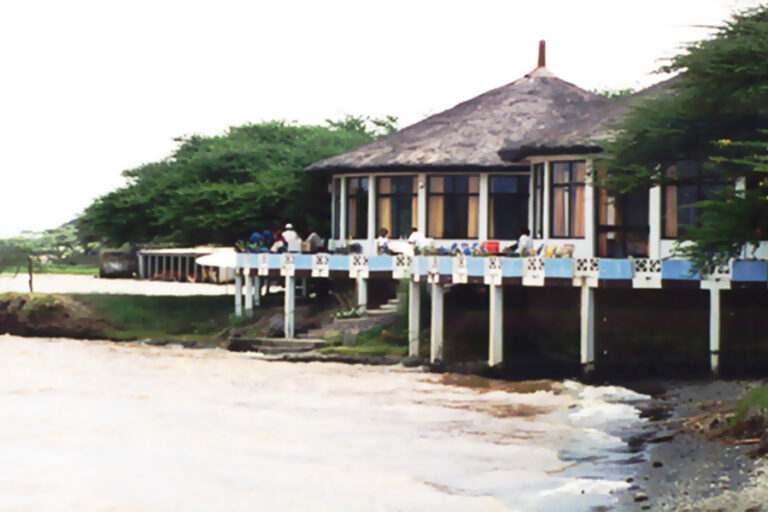
After three years delay, Oromia region has settled over 54 million birr to receive Langano Resort Hotel.
The hotel that is located about 155km south of Addis Ababa at the beach of Lake Langano in the Great Rift Valley has two locations that are known as Langano Resort Hotel one and two.
Langano Resort Hotel one is well developed with different facilities including 65 rooms and restaurants.
About three years ago, the regional administration had asked the Office of the Prime Minister to buy and manage the hotel that was accepted by the federal government.
Since then, Public Enterprises Holding and Administration Agency (PEHAA), which is responsible for managing public enterprises and taking lead on the privatization process, has conducted the asset valuation and as a result, had invited the regional administration to settle the payment and take the ownership.
“Due to different reasons including delaying to pay the 54.5 million birr, the transferring process had not been concluded for years,” Wondafrash Assefa, Public Relation Head of PEHAA, told Capital.
He said that the region under Biftu Adugna Business SC settled the payment in advance before the two bodies signed the ownership transfer agreement on Friday, March 12.
Biftu Adugna Business SC was an endowment under Oromo Peoples’ Democratic Party that was one of the four parties under the dissolved ruling power EPRDF.
He added that Langano Resort Hotel one has a compound of 110,700 square meters whilst Langano Resort Hotel two has several summer houses at the beach extended to the south of the lake.
The golden colour of Lake Langano is one of the well-known recreation destinations at the weekend for Addis Ababians and the expat community.
Besides Langano Resort Hotel, there are several destinations at the lakeside but Bekele Molla Langano and the Langano Resort Hotel are the pioneers.
On different occasions, the government had attempted to privatize the recreation facility but it was managed by Filwoha Hotels Enterprise. It was managed by Wabi Shebele Hotels Enterprise until 2010 but when the main hotel of Wabi Shebele Hotel, located at Mexico Square at the heart of the capital returned to the grand family Emperor Haile Selassie, who are the original owners, the lakeside hotel management fell to Filwoha.
Oromia region had proposed to buy the hotel on the aim to undertake additional development and making the youth in the area beneficiaries of the facility.
Habtamu Hailemichael, head of PEHAA and Mohamed Abdi, head of the regional enterprise, signed the transfer agreement.
At the signing ceremony, Habtamu said that he expect the regional enterprise will undertake massive development in the area and create huge job opportunities along the process.
Currently, under the privatization scheme the government is under process to sale some sugar factories and partly privatizes the sole telecom operator, Ethio Telecom.
Other parties of EPRDF; TPLF, ANDM and SEPDM had also managed businesses under the so called endowment. In related with the political reform about three years ago ANDM, which changed its name to Amhara Democratic Party, has decided to transfer the ownership of Tiret Corporate to Amhara region, while the giant TPLF’s (Tigray People’s Liberation Front) Endowment Fund for the Rehabilitation of Tigray (EFFORT) was controlled by the party until the party was removed from power from Tigray region that occurred when the regional party and its force attacked the national defense force on November 3.
In the past, the stated political party companies have also been involved on the privatization and bought some enterprises from the government either on bid but mainly on the decision from the central government.
Fuel cash base supply to start this week

The new initiative that will change the relation of Ethiopian Petroleum Supply Enterprise (EPSE) and petroleum companies is expected to commence in the coming week.
The recently formed Petroleum and Petroleum Products Supply and Distribution Regulatory Authority, which is under the Ministry of Trade and Industry, had conducted different studies under the initiative to improve the petroleum business in general and improve the distribution without fraud.
One of the initiatives was to improve the relationship between the oil companies and EPSE, which is the sole oil supplier for companies, and payment modality for the supply of oil.
In this regard, the authority had disclosed that the companies will start buying the fuel on cash basis which will be fully implemented in one year’s time.
Ahmed Tusa, the first head of Petroleum and Petroleum Products Supply and Distribution Regulatory Authority, told Capital that the companies and EPSE will sign the new contract arrangement in the coming few days, may be up to Tuesday March 16, to introduce the cash base supply.
He said in the first phase that may stay for a month, companies will have to pay the 10 percent of the total amount of the supply and the rate will gradually become 100 percent in a year time.
The existed experience was that companies receive the product on a one month credit scheme, while it has affected the state owned enterprises because of default mainly from new entrants.
Tadesse Hailemariam, CEO of EPSE, recently told Capital that the new arrangement will improve the enterprise’s cash flow and working capital.
Ahmed said that the new scheme will not have any effect on dealers, while the minor cost incur on a liter of oil will be revised by the government to keep the companies and enterprise benefit.
“Any business has a cost like the bank charge or interest that will be revised,” he explained for the case that the new scheme will have additional charge on oil companies which may come with different instruments to settle their bill on the cash base trade with the enterprise.
“The relation with dealers to companies will continue as usual that does not have any correlation with the latest decision that the government has taken,” he added.
Initially the government had announced that the new scheme will be commenced as of March 10. “While some paper works have delayed the process I hope the two parties will sign the new contract in these few days,” he strongly underlined.
