Tuesday, May 12, 2026
Home Blog Page 3389

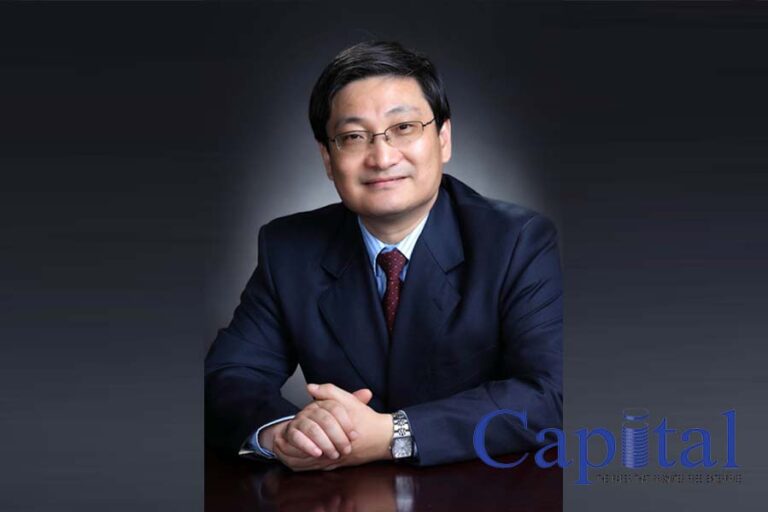
Maedot Teshale

0

Name: Maedot Teshale

Education: Studying in College

Company name: Maed Milks

Title: Owner

Founded in: 2019

What it does: Sell milk

HQ: Bishoftu

Number of employees: 2

Startup Capital: 90,000 Birr

Current Capital: Growing

Reasons for starting the business: Financial freedom

Biggest perk of ownership: Using opportunities

Biggest strength: I see opportunities

Biggest challenging: Capital

Plan: Increasing my products and start business in Addis Ababa

First career: I am still a student

Most interested in meeting: Emperor Minilik II

Most admired person: My mother

Stress reducer: Sleeping

Favorite past time: Traveling

Favorite book: ‘Alemenor’

Favorite destination: England

Favorite automobile: Ford

TOMORROW’S PRINT: SEAMLESS, SMART, CONNECTED

0

By Ben Gossage
Print is no longer an analogue medium. The format might be familiar, trusted and tangible – all attributes that are strongly in print’s favour – but print is now part of complex digital eco-systems, in sectors from marketing to publishing to retail.
So, what do we mean by ‘eco-systems’ in this context? It’s a way of expressing the rich mix of channels, formats and mechanisms for sharing marketing messages and content with consumers and how closely they’re interlinked.
Print doesn’t exist in isolation. It works in tandem with websites, apps, email, social media, mobile, audio, video, virtual and augmented reality, out of home, instore and experiential marketing. Consumers expect to switch between offline and online experiences based on their preferences. This means brand and content owners need to create intuitive journeys that allow them to flick between channels, almost without realising.
The role that print can play as the connecting point between these other media makes the future of our industry so exciting. So take time to understand the challenges customers are trying to overcome and how consumers’ preferences for receiving and processing information are evolving. You’ll see how print can enrich their experiences and start to imagine amazing new opportunities.
Rather than being intimidated by digital media as rivals to print, think about how you can connect on-demand digital print cleverly with other media to help your customers deliver contemporary experiences that extend choice for their consumers, build their loyalty and drive growth.
Let’s look at promotional marketing as an example. We know that most consumer brands today make extensive use of e-marketing to share promotional messages with customers. Their marketing mix may also include personalised printed direct marketing materials, which already give print an important role in their campaigns (though they may struggle to find the metrics to prove their ROI from print).
But what if those same brands could combine the immediacy of email with the impact of print, triggered automatically by a customer’s actions online or vice versa? Sounds futuristic, right?
Actually, even though print is a physical medium, it can be automated or triggered through algorithms and machine learning like any other technology. So, by the same principle that digital advertising can be prompted by online behaviour, it’s possible to embed print seamlessly into a digital marketing journey too.
Here are a few examples relating to typical consumer marketing scenarios:
An online shopper’s abandoned basket triggers a personalised promotional direct mail shot to arrive at their home address within 48 hours, with a prompt to take the basket to checkout, perhaps with an additional voucher incentive.
A customer has been searching a retailer’s website for blue shorts and red trainers. This search data prompts the production of a promotional mini-catalogue featuring these items, with some extra suggestions for matching clothing or accessories, together with a personalised discount to stimulate them to purchase while their intent is high.
These ‘programmatic print’ concepts are different, but what they have in common is that they use dynamic data from an online interaction to trigger the automatic production of a printed asset, using individual insights about the customer.
The same principle can apply in high value marketing scenarios too. A customer views a video on a car manufacturer’s website and uses an online tool to try out various paint and upholstery colours. The same week they receive a premium quality personalised brochure in the post, showing them the car in the specific configuration they chose. The package includes a VIP invitation to a local dealer event and test drive, informed by their location data.
Key to making this work is harnessing and interpreting the brand owner’s digital customer data quickly and using these insights to automate decisions about what content to include within a promotional communication. Then it’s a question of initiating immediate production and dispatch of an individualised printed promotional item.
This may sound ambitious, but if you’re part of a value chain supplying digitally printed marketing collateral on demand, you’ve taken the first step already – especially if you’re already actively promoting the advantages of personalisation. There are certainly software tools you can add that can help you gain deeper experience of personalisation and of integrating print into trackable, multi-channel marketing campaigns.
The next practical move is likely to involve building a more seamless process between all parties in the supply chain and thinking about how to unify workflows and automate production processes. If you want to enable decisions to be streamlined or even automated so that one action triggers another, then closer technology integration with your customers is probably needed, which might ultimately lead to you creating bridges between your customers’ customer relationship management systems and your own workflow.
And it’s not only online activity that can trigger print. Print can enhance the customers’ brand experience and prompt actions online to support lead generation by incorporating innovative digital technologies. For example, you could receive a mailer that encourages the recipient to interact with the physical print by playing a video integrated into the printed direct mailer to bring a product to life (think of the moving newspaper from Harry Potter!).
Taking it a step further – print can also act as a platform for augmented reality, elevating print beyond the paper. For example, a direct mailer could unfold to reveal a rotating 3D interactive hologram of a product, bringing about a completely new experience in the way that new products or offers are delivered or ‘experienced’ by the consumer. And the physicality of the print contributes to its novelty.
The great news is that these concepts have become real applications today. And the added bonus? The ROI on the print element of any campaign is now measurable in a way that just hasn’t been possible before. Now a brand owner can directly trace the consumer’s response to the printed item and see how it provokes a purchase or another interaction in a separate channel.
The place to start today may simply be to initiate an exploratory conversation with your customers to understand how print could increase the value and impact of their customer marketing. Ask how they’re communicating with their target audiences today; which channels they’re using and which are most effective. What are the gaps in the journeys they want customers to follow? Which loopholes are they trying to close? What are the stumbling blocks to maximising engagement with their customers?
It’s time to be bolder about print’s capabilities and see all the new possibilities for print in a connected, data-driven world. Print can already be a smart, seamless step in the customer journey, with a unique ability to engage, provoke response and drive sales. And that will only get smarter – and more creative – as we head into the future.

Ben Gossage is B2B Sales and Marketing Director, Canon Central and North Africa

Remembrance of Tsegaye Gebremedhin as a ‘Poet philosopher’ and ‘Poet Prophet’

0

By Eyob Asfaw
On Sept 13, 2020 ‘HOHE Chapter’ as trailblazer of promoting literary culture held an online memoriam discussion on the life, poetry and script plays of the late Laureate Tsegaye Gebremedhin. Being moderated by the renowned Wondwossen Adane, slotting Architect Michael Shiferaw and Desalegn Seyoum as commentator of the works of Tsegaye. The ‘HoHe chapter’ webinar conveys the death of Laureate Tsegaye in a decade ago was not an individual affair for which the nation would eventually easily relieve from the grief. However, many forget that Tsegaye had a forgotten story which deserves to be told. Michael
From his early childhood, Tsegaye was remembered to recite before the Emperor Haile Selassie on the occasion of Imperial tour to the regions. Being born and raised in Ambo on August 17, 1936, his life witnessed as he unfailingly lived for literary arts until his death on February 25, 2006 in Manhattan – New York. His biography conveys us his literary engagement was not discontinued from the moment he wrote his first play when he was fifteen all the way to his advanced scholarship to various European theaters in 1959. Also when he became director of the national theater in its golden age he was observed to change the dynamics of Ethiopian Theatre.
Laureate Tsegaye Gebremehin is legendary poet and playwright deserving the ultimate remembrance among the literary community and artists alike than a mere mourning. Once, Wendy Laura Belecher, in the article appeared via the Ethiopian Observer appeared on October 1998 noted that “ No living person more symbolizes than this poet and playwright”. Moreover, Belcher commented that “Tsegaye is devoted to an African reading of the West and an Ethiopian reading of Ethiopia” by way of stressing his exceptional quality.
Coming back to the discussion on the ‘HOHE Chapter’ webinar, Michael audaciously rebranded Tsegaye as ‘Mistergnaw Balkine’ (to mean ‘the secret puzzled poet’). In its appraisal, the literary culture of puzzled poems were well observed within the sociologist- Donald N. Levin’s book called ‘Wax and Gold: Tradition and Innovation in Ethiopian Culture’. Levine emphasized that Ethiopia’s ‘sam-ena warq’ (to mean ‘Wax and Gold’) refers to a number of poetic figures which embody this twofold meaning. Levine contends that the use of such figures distinguishes the Amhara equivalent of true poetry from ordinary verse, in which everyday language is merely embroidered with verse and rhythm. For Tsegaye, it is a leisure other than burden to convey message in his puzzled poems, by way of keeping dual imagery consistent throughout the stanza. His work undoubtedly poses habesha’s excellence in state of the art. By and large, Tsegaye is anatomy of the Ethiopian cherished literary tradition of Wax and Gold (puzzled poetry).
Desalegn brought his insightful commentary on plays and poems. In his commentary, Tsegaye was characterized as his pen would be better sharpened during political transitions. In his opinion, Tsegaye optimizes the short lived privilege of freedom speech to be exercised within the window period of political transition. Reference being made to the 1974 brought ‘HaHu be Sidist Wor’(to mean ‘reciting alphabet during infancy’) and the 1991’s ‘HaHu wes PePu’ (to connote ‘alpha omega of the social and political change’. ‘Poets are prophets of their Society!’ in the words of Wondwosen Adane. For Desalegn, Tsegaye was cherished for overriding time and space in his works by characterizing his pilgrim of prophecy. Tsegaye’s prophecy of abortive and saboteur mentality of the Ethiopian society was narrated in the play and poems. To our surprise, his characterization of the Ethiopian political society is works to this day. Undoubtedly, no political commentator denies how the political elites engages on trivial interaction and the mob justice of social groups in a post 2018 political transition against the hopeful aspiration we have.
In sum, we can say that there is no real poet without philosophizing and prophetic utterance. But Tsegaye will be remained to remember for showcasing both ‘poet philosopher’ and ‘poet prophet’. Lastly, I wish a good week for the reader of this piece but urge not to forget the weekly food for thought ‘Tsegaye is literary guru deserved to be a national icon!’

Japan and Prime Minister Shinzo Abe

0

Japan is a land of contradictions. An economic powerhouse, once considered, and feared to be, on the verge of global dominance, but now suffering from a sense of drift and malaise. Japan also features an Emperor in a democracy. The reign of wartime emperor Hirohito, whose reign lasted from 1926-1989 is described as “Showa” – enlightened harmony.
Japan has a democracy where the Liberal Democratic Party which is considered as not liberal but deeply conservative, has been in power for all but of a handful of years since 1955. Japan’s pacifist constitution is viewed as an obstruction to re-armament by the political right and it may soon be, as the government puts it, “reinterpreted” again before being changed for the first time. Japan is also a land where tradition is honored but that has undergone profound changes and even upheavals under each modern-era emperor.
Japanese history indicated that Emperor Akihito, was the fifth Emperor since the Meiji Restoration of 1868. Back then, the shogunate, a system of feudal military rulers, collapsed. The emperor was plucked from relative political obscurity in Kyoto to reside in Tokyo. He was meant to symbolize stability and a link to the past. It is this harking back to other eras that has bedeviled a country noted for its Blade Runner cityscapes. In Japanese folklore, the first Emperor was Jimmu (about 650 BC), giving Japan, according to legend, the world’s oldest hereditary monarchy.
According to Japanese history, concubinage was only abolished in 1926, the year Akihito’s father, Hirohito, became Emperor. The Americans, the occupying power after WWII, realized that this system had produced a number of possible competing claimants to the throne. This fear resulted in the Imperial Household Law, introduced in 1948, which limited the succession to male descendants of the emperor, Hirohito. The only succession most Japanese recall was Emperor Akihito’s in 1989 when the past truly was another country. But so was the future.
History may look far more kindly on Prime Minister Shinzo Abe than Japanese voters did during his last few months of office. Shihoko Goto, Deputy Director for Geo-economics with the Woodrow Wilson Center’s Asia Program stated that he resigned only days after setting a record as Japan’s longest-serving Prime Minister. Of late, Prime Minister Shinzo Abe had been struggling in public opinion polls, not least because of voters’ frustration about his handling of the COVID 19 pandemic. Yet, far from declaring good riddance to a Premier who most likely would have continued to slide in popular support, Japan is already beginning to look back nostalgically on Shinzo Abe’s seven years and eight months in office. There is widespread recognition of what he has achieved – not only a stable Japan, but one with a clear view of its own identity and role in the world.
Shihoko Goto noted that even his staunchest critics would not deny that Prime Minister Shinzo Abe had a clear vision for Japan at a time when countries across the globe have been struggling to grapple with the shifts in the international balance of power and challenges to economic growth. Until 2012, Japan had struggled with defining its identity in a post-Cold War order. As it ceded the number two spot in the global economy to China in 2010, the narrative for Japan both at home and abroad was that it was a country that had peaked, and would continue to slide with an aging population and growing debt.
Tom Clifford, an Irish journalist, currently based in Beijing argued that Prime Minister Shinzo Abe, however, brought forth a grand vision, if not a strategy, for Japan to be able to reassert itself as a global power that would champion the rules and institutions that had helped the country reestablish itself after the end of World War II. Faced with a more ambitious China that was not only increasing its military capabilities, but also eager to offer an alternative roadmap for international development that challenged United States dominance, Japan under Abe sought to enhance its defense capabilities and play a greater role in ensuring that the rule of law prevailed across Asia. Tom Clifford stressed that Prime Minister Shinzo Abe’s vision was undoubtedly welcomed by the United States and by EU member countries as well.
According to Shihoko Goto, Prime Minister Shinzo Abe’s challenge, however, was that the prospect of a more muscular and assertive Japan had tepid support from Japanese voters themselves and from neighboring China and Korea in particular. The prospects of Japan changing its pacifist constitution despite China’s growing military capabilities, the ongoing threat of North Korea and a less dependable United States as a security guarantor failed to garner wide public support. What’s more, Abe’s much-noted overtures to reach out to President Donald Trump personally to secure greater United States commitment to Japan has had mixed results, and did not necessarily translate to greater public support for his administration. At the same time, many continued to see Abe’s vision for Japan as an extension of his own family’s aspiration, even as he became the country’s longest-serving prime minister.
Daniel Stelter, the founder of the German think tank “Beyond the Obvious” stated that there is no doubt that Abe is as political blue-blood as they come, with former Prime Minister Nobusuke Kishi as his maternal grandfather, and maternal grandfather Kan Abe a former member of the House of Representatives. His family legacy no doubt gave him a considerable advantage especially within the conservative Liberal Democratic Party, but at the same time, it had continuously been a double-edged sword in winning over public support. Abe’s single greatest achievement is undoubtedly the fact that he brought stability to Japanese politics and became an established global statesman at a time of great global upheaval.
According to Daniel Stelter, amid the rise of anti-globalization and economic nationalism, Abe’s endeavors to press ahead with the Trans-Pacific Partnership trade agreement and a bilateral trade deal with the EU positioned Japan as a champion of free trade and enhanced its standing as a keeper of the international order. Prime Minister Shinzo Abe’s handling of the coronavirus pandemic and the postponement of the Tokyo Olympics provided two important dampers, defining his government in 2020. Neither are expected to have easy solutions moving forward. So perhaps it is no surprise that he resigned when he did. It echoed Prime Minister Shinzo Abe’s first resignation as prime minister when he previously served in the post in 2007, when he left office after only a year due to health reasons.
As things stand, it seems unlikely that Prime Minister Shinzo Abe’s eventual successor will be able to command the world stage as he did, and with it, Japan’s ability to be a global stabilizer will diminish as well.