

The increasing price of Mung bean becomes the new wave for the Ethiopian Commodities Exchange /ECX/ as local production and international demand and market price increase exceeding the price of sesame.
The Mung bean market is currently being driven by numerous factors which include its numerous health benefits, population growth, changing dietary habits and new market opportunities which have resulted on ECX trading it highly.
Now, the price of Ethiopian Mung bean is fluctuating than before due to normal production and demand factors.
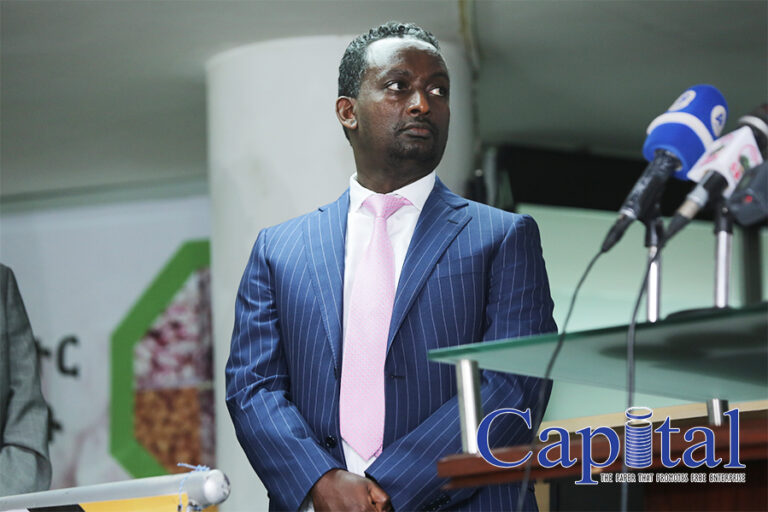
“The reason as to why it has garnered interest is because the Ethiopian production of Mung bean is non GMO which makes it preferable in the global market,” emphasized Wondemagegnehu Negera, CEO of ECX, adding that, “the global growing of the demand for Mung bean is the other factor.”
In 2020/21 trade year, ECX has traded 30,000 metric tons of Mung bean which valued 1.2 billion birr. “One of the big factors for the trade is the international trade competition between China and America, which in perspective increases the Ethiopian trade, in the overall market scene,” stated Wendmagenehu.
In the year 2020/21, The Ethiopian Commodity Exchange (ECX) traded 614,586 metric tons of products at a cost of 39.6 billion birr. According to the commodity exchange platform, the stated number is 96 percent of the target in value while it is 102 percent of the target in cost.
From the stated number, coffee accounted for 35.5 percent of the market while sesame took 31 percent and other grains account for 33.4 percent of the market share.
In terms of financial performance, the GDP earned a total of 775 million birr has been generated from operating and non-operational sources in the 2020/21 budget year, which is up 106 percent from the target. This is an increase of 20 percent compared to the same period last year.
The total expenditure was Birr 517 million, an increase of 14 percent over the same period of last budget year 2019/20. Also the number has shown that the profit is 15 percent higher than expected.
With regards to tax, a Holding Tax of 756 million birr; VAT 847 Million Birr from Domestic Coffee Traders; 60 million birr from VAT was collected by the Commodity Exchange and a total of 1.7 billion birr tax has been collected and transferred to the government.
This year, 68,391 quality certificates were issued by inspecting the quality of the products offered for sale. With ECX’s secure payment and delivery system, more than 10,000 buyers and suppliers’ bank accounts have been successfully connected to 17 banks.
In the just completed year, Ethiopian Commodity Exchange has opened a special marketing window for agro-processing industries also during the fiscal year; pigeon, bean sprouts and pinto bean were added to the trading system.
The problem faced by the commodity market during the last fiscal year was the smuggling and illegal trade, although efforts are being made to prevent it. The trading platform affirmed that it will continue to intensify its efforts to prevent illegal trade, as the products that are traded in the commodity market can still be smuggled to neighboring countries.
For the coming year ECX has signed a memorandum of understanding (MoU) with the Ministry of Mines and Petroleum (MoU) to start trading of opal, safari and emerald minerals in the 2021/22budget year.
Mung bean gains traction on ECX
Fatigue in health measures leads to COVID-19 rise in Africa
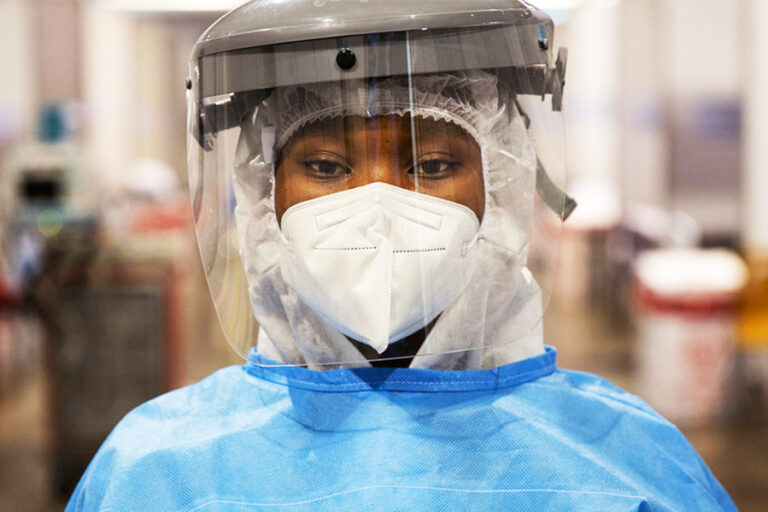
COVID-19 cases in Africa have skyrocketed, with a recorded 43% week-on-week rise in deaths according to the World Health Organization (WHO).
The surge in cases is a result of frustration and fatigue with key health measures, according to the WHO. It’s also possible the three COVID-19 variants, Delta, Alpha, and Beta, are responsible. The Delta variant, the most transmissible strain so far, has been detected in 21 African nations, the Alpha variant in 35 and Beta in 30.
“This is a clear warning sign that hospitals in the most impacted countries are reaching a breaking point,” said Matshidiso Moeti, WHO Regional Director for Africa. “Effective treatment is the last line of defense against COVID-19 and it must not crumble.”
The recent surge is the fastest the continent has seen during the entire pandemic. Over the past month, Africa has recorded 1 million new cases, and is now only 1% away from the weekly fatality peak from January 2021. 6,273 deaths were recorded last week, 83% of them from Namibia, South Africa, Tunisia, Uganda, and Zambia. Currently, an average of 2.6% of COVID-19 cases in Africa become fatal compared to a global average of 2.2%.
Hospitals are suffering extreme oxygen shortages due to disrepair or poor maintenance of production plants, as well as distribution challenges, personnel or technical skills. At least six African nations are experiencing a bed shortage in intensive care. Medical oxygen demand has spiked, hitting 50% higher than at the same time last year, while only 27% of the needed supply is produced.
Additionally, only 18 African nations have confirmed that they are including corticosteroids, a medication recommended by the WHO, in their national treatment guidelines. Nine countries are using non-recommended treatments, including hydroxychloroquine and lopinavir.
“The number one priority for African countries is boosting oxygen production to give critically ill patients a fighting chance,” Moeti said. “Under-resourced health systems in countries are facing dire shortages of the health workers, supplies, equipment and infrastructure needed to provide care to severely ill COVID-19 patients.”
Vaccinations in Africa are also at levels deemed inadequate by the WHO. Africa accounts for only 1.6% of the 3.5 billion people vaccinated worldwide, despite being around 17.21% of the world’s population. Only 18 million Africans, or 1.5% of the continent’s population, are vaccinated. Around 190 million doses are needed to raise the percentage up to 10% by September 2021. 750 million doses are needed to raise it to 30% by the end of the year.
“The double barrier of vaccine scarcity and treatment challenges is seriously undermining effective response to the surging pandemic,” Moeti added.
The WHO is providing guidance on clinical management and support in updating procedure and training health workers in order to improve COVID-19 treatment. It will also work with partners to deliver medical supplies, including oxygen cylinders, and supporting the manufacture and repair of oxygen production plants.
Sustaining Ethiopia’s food system
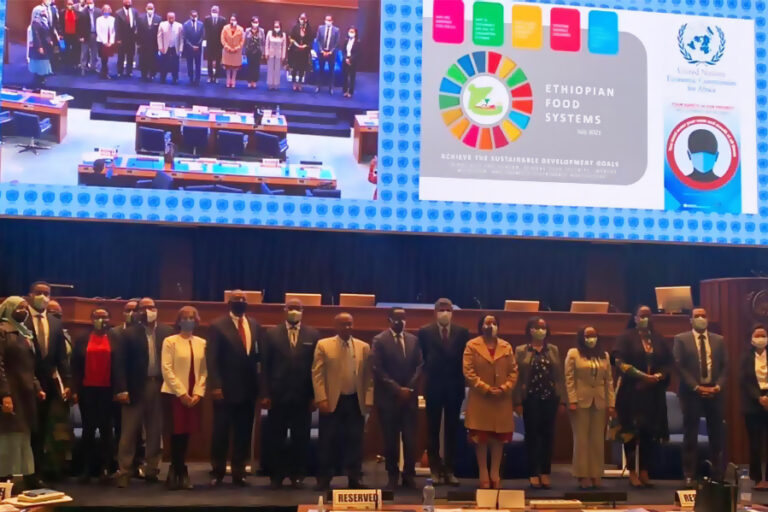
The Ethiopian Food Systems (EFS) that is aligned with the UN Food System Action track has launched to come up with a game changer solution for citizens.
On the event held on Thursday July 15 at the Economic Commission of Africa Conference Hall the EFS, which targets to gain massive changes in the food systems from farming to table including different aspects, partners and sectors, synthesis report and position paper developed by the implementers, was launched by the Ministry of Agriculture and Ministry of Health.
The launch was held under the theme “Attain the Sustainable Development Goals especially end hunger, achieve food security, improved nutrition and promote sustainable agriculture”.
To address Ethiopia’s challenges, 14 action areas have been identified which align closely to the UN Food System Summit 2021 Global Action Tracks.
The UN Food Systems Summit will be held in September 2021, and aims to transform global food systems to support the SDGs.
The EFS has gone through a process of identifying, selecting, and finalizing 22 game changer solutions which require a strong policy commitment, with an exceptionally strong unified commitment from all stakeholders.
The policy commitments that are required for the game changers are establishing a finance system, selection and timely supply of inputs and technologies to boost production and productivity, rural electrification to promote environmentally friendly and climate smart technologies, index based crop and livestock insurance as disaster risk mitigation measures, implement land reform and land administration, and introduction of land use planning.
On the initiative, 14 action areas have been identified that includes ensuring food security and ending hunger, improving access to nutritious food, making food safe, slashing food loss and waste, conserving and restoring degraded natural eco-systems, managing existing and transforming food system and sustain positive changes, increase investments in technologies for smallholder farmers and promote sustainable agriculture, eliminate worker exploitation and ensure decent work in food systems, and ensure food systems resilience.
According to Mandefro Nigusse, CEO of ATA, a game changing solution should be sustainable, actionable, scalable and impactful, “when we do these, we achieve a significant, positive and sustainable change in our food system that is what we called sustainable EFS.”
The EFS process has brought together over 120 participants from government departments, donors, multilateral organizations, NGOs, CSO & private sector and has identified key challenges for the Ethiopian food system.
The key ingredients for financial developments

The opening up of payment system operators and agent network business is recommended to fetch the expected benefit on the financial industry development.
The position paper developed by Precise Consult International under the title of ‘Achieving Interoperability and Digitizing G2P and P2G Payments are Critical to Expanding Financial Services for the Poor in Ethiopia’ reminds that the National Payment Systems proclamation, proclamation no. 718/ 2011 that allows NBE to establish, own, operate, participate, regulate and supervise an integrated payment system consisting of a large value funds transfer system and retail funds transfer system.
The proclamation led to the formation of the Ethiopian Automated Transfer System (EATS) that includes a real-time gross settlement and an Automated Clearing House, a digital clearing and settlement platform.
The National Payments Proclamation has cleared a path for digital payments and interoperability of digital payment platforms. In 2020, NBE released three directives that helped in defining roles and enabled the licensing of institutions that make interoperability of all platforms possible.
Other laws including the directive that allows non-financial firms to be involved on digital payment solution that targets to expand the digital payment ecosystem has also been issued on the past couple of years.
The Licensing and Authorization of Payment System Operators, Directive No. ONPS/02/2020 that allows non-financial institutions to be involved on digital payment systems gives recognition to platforms that act as switch, automated teller machine, operator, point of sale operator and gateway operator.
Precise’s paper said that interoperability that makes financial services easily accessible is crucial for financial inclusion for rural and low income areas, and enable financial service providers to reach communities in lower cost.
However the involvement of the other that is not financial institution is opened and only allows Ethiopians and the diaspora to enjoy similar to the investment on financial business. While the paper highlighted that investment on digital payment system is not easy since it requires a not so small investment.
It recommended for allowance of limited or full foreign investment and ownership in the payment system operator and agent network business is required.
“Previous attempts to create interoperability among the Ethiopian financial institutions have resulted in limited impact. This is due to the required large investment and innovation needed to reach scale in interoperability,” it explained.
It reminds that there have been efforts by banks individually, bilaterally and multilaterally to create payment Switches, which amounted to the creation of Eight Switches, “however, all of these Switches couldn’t meet the demands of customers because they weren’t able to achieve interoperability to include account-to-account and online payments.”
It shared the experience of other countries in Africa and Asia that succeeded on the way to digital payment solution “it is evident that building an agent network business for payments requires a vast amount of resources, experience and accepting short term losses.”
The position paper shows that the success of Tanzania on the implementation of digital payment solution has registered massive growth every year. “Tanzanian market players were equipped with international experience, large sums of investment and innovative competition which boosts their ability to scale fast,” it shows, highlighting, “Their main objectives in creating this market led interoperability in order to make transactions convenient, cheap, fast, tackle the dominance of cash transactions and encourage people to keep their money in their wallets and bank accounts.”
“Thus, it is recommended for Ethiopia to allow limited or full investment and foreign ownership of payment system operator and agent network business to leverage their experience, investment and innovation. This includes businesses like payment switch, point of sale and automated teller machine operations,” it added.
Putting in place non bias mobile network operators is crucial according to the position paper to role in the scaling of digital payment services to the poor and underserved communities in remote areas.
It has also recommended government offices to use digital payment schemes to encourage the society to put their money in the system.
