

Pragma Investment Advisory announced its partnership with Specific Tools & Techniques Ltd, a Nigeria-based engineering and facility management company, with the aim of contributing to Ethiopia’s ambitions in building a world-class telecom sector.
The partnership will allow the transfer of state-of-the-art practices, innovation and technology by ST&T which for more than a decade has served large operators and infrastructure developers involved in the telecommunications, Real Estate, education, and energy sectors of West African economies by establishing operative linkages with global suppliers of choice for innovative technology backed by the highest level of services.
Following the holistic reform that Ethiopia is undergoing, new mobile operators are expected to be licensed soon and Ethiotelecom, the sole state-owned telecom company, is bound for a partial privatization. Strengthening and developing the country’s telecom infrastructure capabilities is key for enhancing telecommunications accessibility in which the private sector plays a crucial role. In light of this, Pragma is joining forces with prominent technology companies to foster an atmosphere of technological learning and digital exposure for the Ethiopian public and private sectors with a focus on telecommunications, financial technology, enterprise resource planning, ICT training, and e-commerce.
Pragma partners with Specific Tools & Techniques Ltd. for the Supply and Deployment of Telecom Infrastructure in Ethiopia
Emperor Paul Kagame The Mouse Impersonating a Lion

By The Queen of Sheba
Pundits, armchair analysts, paid operatives, compromised journalists and media houses are having a field day blasting and censuring Ethiopia following the adventurous attack of the erstwhile TPLF cabal forces on the Ethiopian Defence Forces of the Northern Command. Just to briefly recall: The cabal forces attempted a fatal putsch by mercilessly and cowardly slaughtering the national army in their sleep. This triggered a fantastic and thunderous response that ended up consuming the plotters. This remains the undisputed narrative openly and officially acknowledged both by the victors and the vanquished alike.
This treasonous act was expressly and promptly condemned by a number of powerful entities including the former US Secretary of State Mike Pompeo. The small country, Djibouti, awarded the highest national honor to the Chief of Staff of the Ethiopian Defence Forces in recognition of the decisive victory in crushing the plot which would have had a catastrophic impact in the region. Many other heavy weights, such as China and Russia, openly recognized the matter as an internal one and helped curtail the undue and ridiculous pressure on Ethiopia.
Here cometh Emperor Kagame squealing on the issue during an interview with Hoover Institution, a US-based think tank, subtly and deviously faulting Ethiopia. In the interview, he audaciously called “for direct UN Security Council intervention in Tigray” when this is an indubitable matter of national jurisdiction.
Who is Emperor Kagame?
Emperor Paul Kagame, “the-savior-of-Rwanda”, has indeed played an important role in stabilizing the country. However, the same cannot be said for the region. Rwanda has long been implicated in the looting and embezzling of natural and other resources in neighboring countries. It once sparked a conflict which engulfed the continent involving more than half-a-dozen countries. It was also accused of numerous atrocities in the region.
The Emperor of Rwanda, who now lectures on Ethiopian peace and security, is a villain well known for persecuting and killing his political opponents at home and in exile. The killing of a high-ranking former intelligence chief, Patrick Karegeya, in South Africa which ensued a diplomatic fallout with the country is just one example. After the murder, Kagame boasted: “Whoever betrays the country will pay the price. I assure you. Letting down a country, wishing harm on people, you end up suffering the negative consequences. Any person still alive who may be plotting against Rwanda, whoever they are, will pay the price…Whoever it is, it is a matter of time.” Opposing Emperor Kagame of the small kingdom is tantamount to betraying the country punishable by death.
And yet the TPLF cabal treacherously and perilously betrayed the army, the country and the people of over 110 million. The Emperor is yet to condemn this treason; if he has, I have yet to see it.
The monarch, who has won all the elections under the skies of the small kingdom multiple times, and handsomely, for as long as he has been in power should be slightly more modest in his lectures. Oh, yes, he has only been in power for over two decades probably with an intent to rule as long as he breaths.
Kagame the mouse, who thinks that he is a lion, is not even a cat. He has been effectively hoisted by lavish funds of “development partners” who have been largely dashing to cleanse their sins for their devastating inaction to prevent the tragic genocide. Kagame has been adept at effectively manipulating it in advancing his oversized global ego and also capturing the limelight of the international media.
African Solutions to African Problems: Really?
The Emperor who deploys “African Solutions to African Problems” when it fits him, in this interview which is the source of the article, blurted: “the US new administration and the UN and others should be thinking what we can do together with Africa” and just as an afterthought pitched: “Africa needs to be engaged primarily.”
In the interview, he further pontificated that “I have not known of AU or UN or individual countries trying to help in dealing with the matter.” He contemptibly gestured “It is still just within the country itself of Ethiopia”. Kagame, one of the purported active actors in the African Union, seems to declare ignorance of the proactive role played by South Africa’s President Cyril Ramaphosa who exactly did that though Ethiopia, as a sovereign state, rightly, declined the brotherly gesture.
Kagame’s Motives: Speculations
I have struggled to establish the motives of Emperor Kagame in distorting Ethiopia’s ability and resolve in surmounting its internal challenge. But somehow, I managed to cobble up two.
We know that Emperor Kagame hails from the minority Tutsi tribe which completely dominates the political, economic, financial, military, intelligence, social and culture space of Rwanda. This is comparable to the Ethiopian situation where the minority Tigreans, only about 6 percent of the population, did exactly the same, probably with more brute force, treachery and cowardice. It should be cautioned that the greedy cabal does not represent the great majority of Tigreans whose trust has been betrayed.
Alas, these two have a lot in common among others they both tend to win more than 99 percent of the votes multiple times a statistical impossibility where it is disproved in these kingdoms! Losing is unthinkable and is not even on the menu.
Is it possible that Emperor Kagame is silently mourning the demise of a comparable, probably more monstrous, minority mafia next door as a warning shot for his small kingdom? He may as well be, as at the end, the reality of the voices of the majority over the minority remains inevitable at times with catastrophic consequences as genocides. And Rwanda has already seen a barbaric one.
The second motive, I speculate here again, is that this Emperor who has no clothes, may be suffering from an inferiority complex of size, economic and political influence, global visibility and military standing of its neighbors. Ethiopia has been a central force of peace and security in the region for a long period of time and this has earned her a respectable place in the UN peace-keeping missions, among others.
The little mouse appears to be deviously maneuvering to diminish the omnipresent lion in the region.
In Conclusion
Nations after nations have fully recognized the critical importance and need of thwarting treasonous acts as in the case in Ethiopia, through their favorable voices and their calculated silence. Emperor Kagame had a choice between these two plausible and appropriate alternatives. He picked the wrong one.
In fairness, Kagame may have been the victim of TPLF inspired and funded disinformation and lies. But then, he should have been more cautious if he, by his own admission, is aware that “the other problem is that it has been cut off from the rest of the world; people do not know much about what is happening there.” So how is it then the genius Emperor advising the UN to intervene in Tigray without information on the ground. This observation further lends some credence to my two speculative motives.
For all the genuine critics of Ethiopia, it is imperative to seek the truth first, before uttering disastrous solutions; or else Ethiopia will continue to spurn them whether they come from a demagogue former US president or a miniature lifetime African emperor. If you cannot be part of the solution, do not be part of the problem.
Truth always prevails. Ethiopia shall overcome.
The Queen of Sheba may be reached at QueenOfSheba2020@outlook.com | Twitter: @TheQueenofSheb5
South African Jazz ‘Giant’ Jonas Gwangwa Dies Aged 83
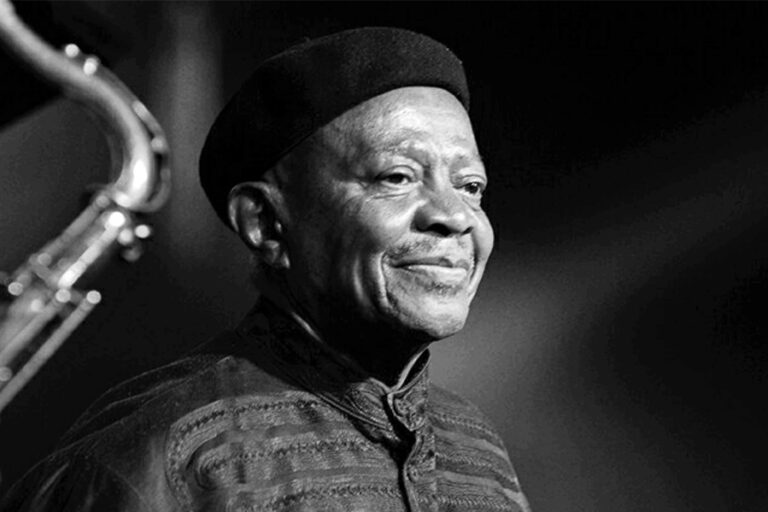
South Africa jazz trombonist and composer Jonas Gwangwa, whose music powered the anti-apartheid struggle, died aged 83 on January 23.
South Africa President Cyril Ramaphosa led the tributes to the legendary musician who was nominated for an Oscar for the theme song of the 1987 film “Cry Freedom.”
“A giant of our revolutionary cultural movement and our democratic creative industries has been called to rest,” Ramaphosa said.
“The trombone that boomed with boldness and bravery, and equally warmed our hearts with mellow melody has lost its life force” the president added.
There were no immediate details on how or where Gwangwa died.
He passed away on the third anniversary of the death of the “father of South African jazz” Hugh Masekela and the second anniversary of the death of Zimbabwean musical legend Oliver Mtukudzi. January 23 had become “the day the music died,” the South African and other media outlets said.
Gwangwa was born in October 1937 in Soweto and went on to have a career spanning 40 years.
“He delighted audiences in Sophiatown until it became illegal for black people to congregate and South African musicians were jailed merely for practicing their craft,” the presidency’s statement said.
He was awarded the Order of Ikhamanga, South Africa’s highest national award presented for achievements in art and culture, in 2010.
The award recognized his work as composer, arranger and musical director of the Amandla Cultural Ensemble, a cultural group formed by activists from the African National Congress in the 1970s.
AMBASSADORS OF SCIENCE
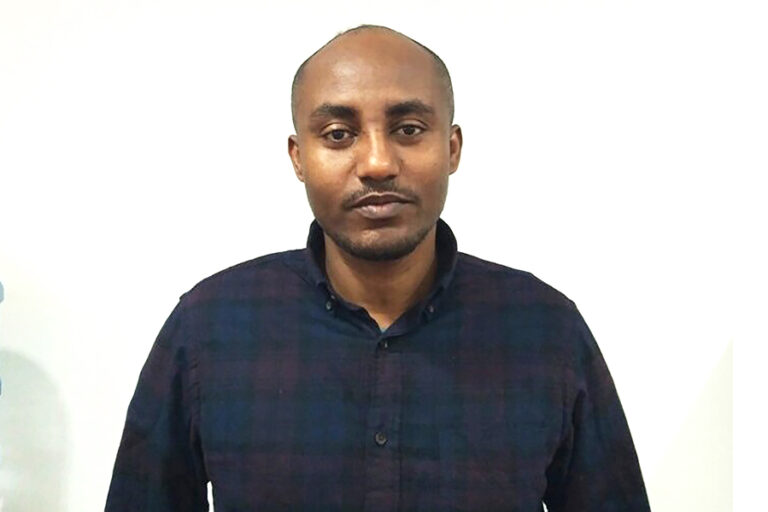
In the recently concluded Virtual Edition of Next Einstein Forum held in Kigali Rwanda, NEF Ambassadors ‘class of 2019-2021’ was unveiled. NEF Ambassadors are the NEF’s young science and technology champions, one from each African country. All under 42 years, they drive the NEF’s local public engagement activities while growing their careers through the NEF’s partnerships that offer opportunities for mentorship and collaborations with established researchers.
Among these is a budding Ethiopian scientist, Andebet Gedamu who was distinguished and recognized by Africa’s biggest scientific gathering.
Andebet Gedamu was engaged in conducting cutting-edge research in the area of next-generation rechargeable batteries from 2017 to 2018, after completing his PhD in 2015 from the department of Chemical Engineering, National Taiwan University of Science and Technology. He is currently an Assistant Professor of Chemistry at Kotebe Metropolitan University (KMU), Ethiopia. Capital linked up with this extraordinary scientist for an analytical review of his cutting-edge research. Excerpts;
Capital: How would you explain the next-generation rechargeable batteries?
Andebet Gedamu: First, I would like to make clear that the existing commercially available rechargeable batteries, which are largely lithium-ion batteries, suffer from low energy density and is approaching the theoretical value. On the other hand, the development of portable electronics, electric vehicles, and grid-scale energy storage systems which require batteries with a higher energy density are growing rapidly. The trade-off between high energy demand and huge performance gap of existing systems led to the developments of next-generation rechargeable batteries. We can describe next-generation rechargeable batteries as energy storage systems with superior characteristics of outmost importance. They have higher energy densities, light weight, better safety characteristics, environmentally friendly and longer cycle life than the current battery systems, often while simultaneously cutting costs.
Capital: Are these batteries lithium-ion? How long will they last and how fast can we charge them?
Andebet Gedamu: Next-generation rechargeable batteries include both advanced lithium-ion batteries such as all-solid-state lithium-ion, lithium-metal, lithium-air, lithium-sulfur and post-lithium battery chemistries such as sodium-ion, multivalent metal-ion, metal-air, redox flow, etc.
Yes, the durability and speed of charging are both critical issues in commercialization of battery especially in electric vehicles which are powered exclusively by batteries. The current, lithium-ion batteries suffer from slow charging time, low cycle life and low energy, which can significantly impact the overall performance of the device. In fact, the newly emerging batteries vary each other greatly in terms of various parameters but, regardless of their type and application we expect batteries charged within a couple of minutes. The battery packs will also be designed to last for more than a decade of life. However, I believe that no single battery technology will dominate the industry at large.
Capital: These batteries are already reaching out to the market, what makes your batteries different from these that are already in the market?
Andebet Gedamu: Yes! New advanced batteries are currently in research and development, plus a few types of advanced batteries are also currently commercially available. Since battery is a complex electrochemical system, various requirements must be achieved before released to the market. For instance, high energy and power density, longer cycle lifetime, lower cost, fast charging time, environmentally friendly and safe. I believe that over time advanced battery will eventually replace some, if not all, current commercial rechargeable Li-ion batteries.
My research project mainly focuses on enabling the use of silicon electrode as an alternative to graphite electrode in Li-ion batteries. I would like to make clear what is the major gap of the current existing lithium-ion battery. Most commercial lithium-ion batteries are based on graphite anode electrode, which has a maximum attainable capacity of 372 mAh/g. Hence, graphite fails to meet future demands of the optimal capacity of 1000 mAh/g. In this regard, silicon stands as one of the most outstanding options, with a theoretical capacity close to 4000 mAh/g, more than 10 times higher capacity than graphite. Therefore, the shift from graphite- to silicon-based electrode can significantly increase the energy density of batteries. In addition, silicon is highly abundant and environmentally friendly. However, large volume change of silicon during charging and discharging process remains the major challenge in commercialization of silicon-based anode batteries. Therefore, researchers in this area, including my research, aim at designing electrode integrity and increase battery life.
Capital: You were one those who were selected from Ethiopia by the Next Einstein Forum that offer opportunities for mentorship and collaborations with established researchers. Can you explain how you will benefit from this?
Andebet Gedamu: You are right! I am the Next Einstein Forum Ambassador, representing Ethiopia for two years until the end of 2021. Like other African scientists, one of the challenges in my career is lack of research funding and collaboration. To this end, NEF helped me to connect with leading scientists and make collaborations and networks with other NEF members and other renowned scientists. In addition, NEF creates several platforms to present my work at global level and thereby gain global visibility to my research outputs. It also creates chances to meet successful African scientist and leading innovators which will help me to become acquainted with how to tackle the real challenges that hamper to conduct research. As a young scholar and researcher, I am challenged with the way how my research outputs to a level of end-user products. In this regard, NEF creates an opportunity to communicate with industries, product developers and other stakeholders.
Capital: What do you think the future of battery technology will be?
Andebet Gedamu: In fact, the answer for this question is not as such simple, as it depends on a range of factors, from the speed of innovation to the ability to reduce costs of the new technologies. But, as there is a high expansion of smartphones, computers, tablets, electric vehicles, flexible and wearable electronic devices and other portable electronic equipments there is a growing demand for high-performance rechargeable batteries for these devices.
There are still significant challenges to implementing new battery materials, such as silicon which I mentioned earlier and high-voltage cathodes. If both changes can be made, I think, we could see batteries with better mechanical and electrochemical properties in the market within a couple of years. For instance, leading automobile manufacturers, including General Motors, Ford, Toyota, Nissan, Honda, and Tesla, are actively engaged in the design and development of Electric and Hybrid Vehicles and established giga factories to produce high-capacity, reliable batteries, hinting that a future switch for EVs could soon take place. Overall, I would say the future of battery technology would be very exciting and bright.
Capital: How can Africa benefit from this technology?
Andebet Gedamu: Africa’s population is increasing very rapidly. Concurrently, the need for portable electronic devices and electric vehicles is growing rapidly in the continent. In this regard, next-generation batteries are expected to promote the sustainable development of the society. Africa has huge potential for solar, wind, hydroelectric, geothermal power, and other sustainable energy sources. Thus, highly reliable and well-designed stationary batteries with higher energy, better charge-discharge cycle and durability characteristics are needed to ensure electricity from these renewables can be stored for use when the wind isn’t blowing or the sun shining. In addition, Africa is rich in resources. For example, cobalt, one of the key elements for battery making, is in the Democratic Republic of Congo with more than half of global supply. However, as the rest of the world is heading to new green energy storage systems, I am afraid Africa will be dumping ground for the existing old batteries unless researchers, industries, product developers and other stakeholders are engaged to developing new energy storage systems.
