The first quality policy that is currently under discussion with stakeholders is to be tabled for the Council of Ministers for ratification.
Ministry of Trade and Industry (MoTI) also drafted the first trade policy that took several times to include international expertise, while the existed industry policy is under revision.
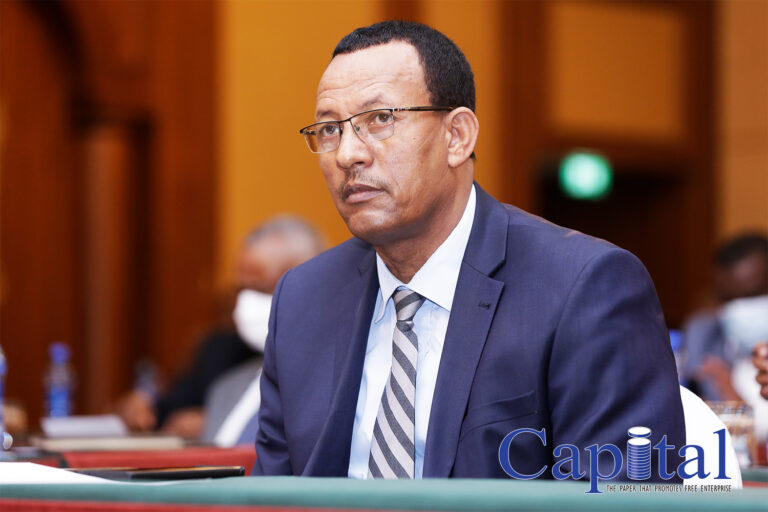
Eshete Asfaw, State Minister of MoTI, told Capital that Ethiopia has formed relevant National Quality Infrastructure (NQI) agencies but it does not have a policy framework that shall lead the agencies.
“The regulatory bodies like Ethiopian Standards Agency, Conformity Assessment Agency, and Ethiopian National Accreditation Office have been formed to control quality and standard but they do not have policy that help to run on given legal framework,” he said.
The policy shall abide by legal framework that allows the country to be competitive, “the policy will allow us to develop required legal frameworks under the goal of the policy,” he explained.
He said that the policy will cover every diminution of production quality whether it is service or goods.
“For instance a hotel that has a five star standard would be investigated on its rate quality as per the policy,” he said expressing that, “We have 253 compulsory standards and there are about 11,200 voluntary Ethiopian standards that would be supported by policy to enforce properly.”
He said that quality standard on goods is a universal language that creates consensus in every corner of the world. “In the past, we faced challenges on our coffee and sesame quality but if we have such policy the problem shall be elevated and the export shall be expanded. At the same time under quality products would receive refusal for import,” he added.
Currently the policy is under discussion before tabled to the Council of Ministers.
On the other hand, MoTI has drafted the first trade policy that targets to boost the trade in the country.
The policy will evaluate everything from the scratch and indicate the end goal of the commercial sector; it will also show the actors and contributors in commerce.
“It took more time for ratification by the Council of Ministers, while we have accomplished it,” Eshete said.
“We had developed the first trade policy but now we considered that it is supposed to consider the current and future exposure in trade. Due to that experts with international experience have now revised the draft trade policy which explains the delay.”
“Regarding policy crafting, it is supposed to work for several periods thus it is undertaken in detail and shows future strategies,” he explained showing why the policy development takes several periods.
The ministry has been announced that it commence the policy work on trade early 2019.
In the local market hording, smuggling, overstating price increases, and uncontrollable and lack of adequate supply in terms of goods and services have been major problems over the past several years. The Ministry has attempted to come up with solutions by imposing laws and controlling mechanisms to smash illegality and or supply products on its own but things have not gone as per the demand.
For international trade; contraband, contract defaults, artificial rates and weak export earnings have been major challenges, while there are improvements since last year.
In related development MoTI is revising the industry policy.
Ministry of Agriculture (MoA) is revising a two decade old agricultural rural development policy in taking into account the latest context on the sector with ten major pillars. The new policy will promote inclusive development in the agriculture sector with the consideration of the pastoralist and lowland development.
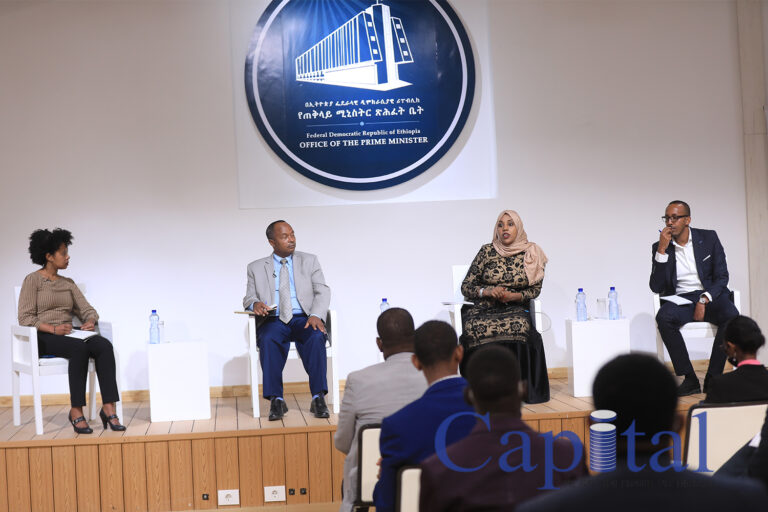
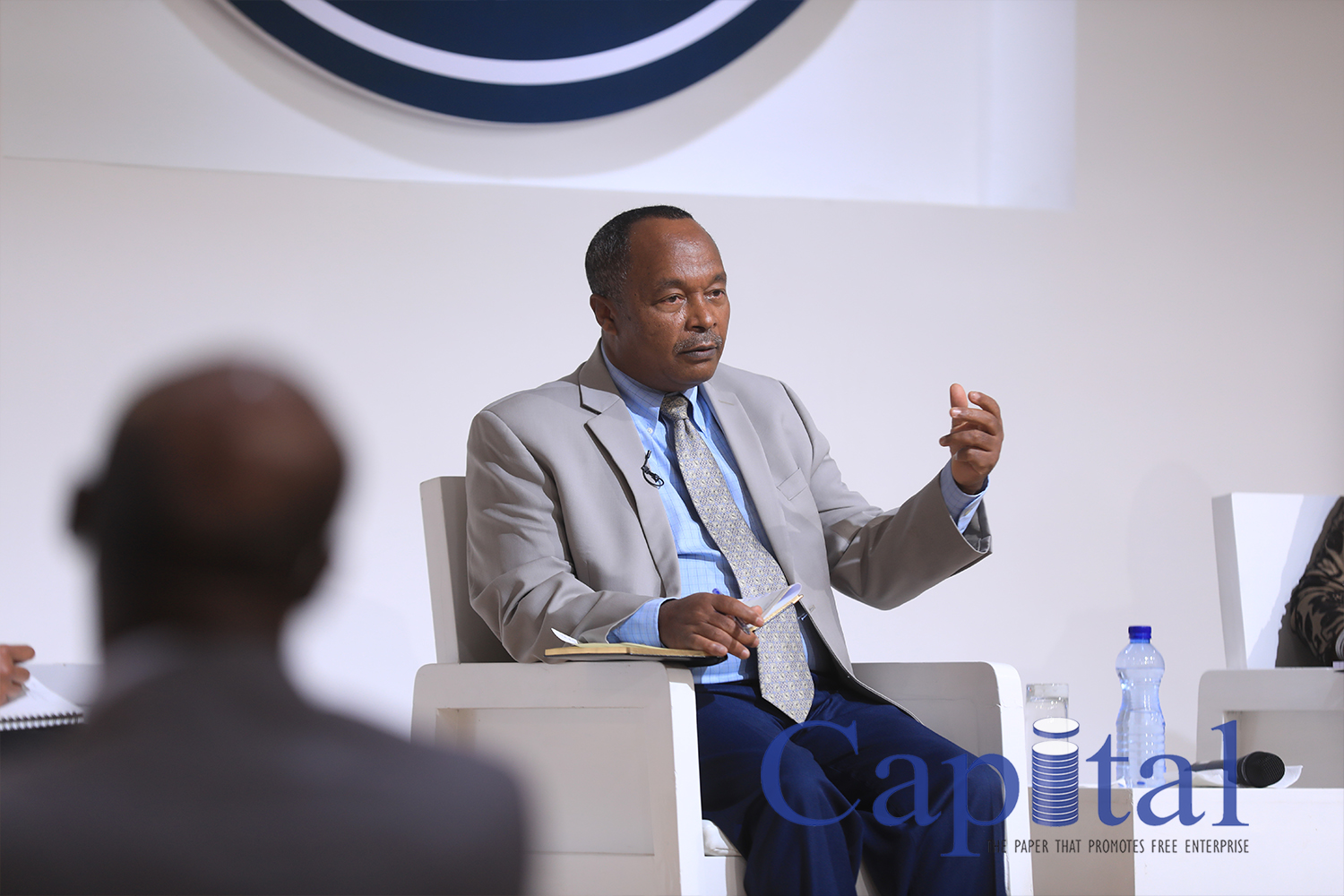
Mandefro Nigussie, State Minister for Crop Development at MoA, said at Addis Weg Round Table discussion on the development journey of pastoralist communities was held on Thursday January 14 at the Office of the Prime Minister Office and that the policy that existed for the past 19 years is under revision that needs contextual changes.
He said that there are some of the agendas that need holistic changes with regards to promoting inclusive agriculture and rural development on the consideration of irrigation, financing, land issue, sustainable development, natural resource development, mechanization and others.
“The policy has considered an integrated approach on social and economic dimension and environmental issue,” Mandefro, a crop production scientist, said.
Mandefro Nigussie
Regarding pastoralist areas development plan, in the past the policy and effort had focused on the establishment of massive commercial farms by private and government on the pastoralist system.
“Such direction has a gap on benefiting the pastoralist that could not assure the benefit of the community and even affects the pastoralist system,” Mandefro says that the current upcoming policy will consider developmental programs with the assurance and the benefit of the community in the pastoralist areas.
Under the existed policy developments at the lowlands were not sustainable, which is one of the result occurred in the past, according to the sector expert.
Mandefro said that meanwhile necessitate attention was not given for lowland it is hope of the future Ethiopia, since it has ample resources including enormous surface and underground water that shall creating enabling environment for agricultural production throughout the year.
“All areas would not transform to crop production but there are areas that will be opened for fragile condition in the lowland area. The production would also consider fodder, which shall support the pastoralist besides hard currency revenue from export,” the State Minister said, adding that “Environment wise the irrigation development we have learnt from the past mistake was that the need of drainage system that needed for sustainable utilization of land that we follow in the upcoming policy.”
The discussion explored the existing livelihood of pastoralists, the benefits and challenges of the policies implemented over the years, and the ongoing efforts to ensure sustainable development and benefit the community.
“National and regional mindset on developing the sector with required investment is needed to change the way of life of the pastoralist community and the areas that is the future potential of the region,” the State Minister added.
Wondimu Tekle, Irrigation Commission Commissioner at the Ministry of Water, Irrigation and Energy, said that the Ministry has revised the policy and strategy of the sector and developed a ten year plan.
“The country has a potential of 123 billion cubic meter of surface and 40 billion cubic meter underground water that are crucial for agriculture development. The country has 12 river basins and eight of them are wet. From the 8 river basin five of them pass through lowlands,” he said.
“Meanwhile most of Ethiopian rivers sourced from highlands their potential is at the lowlands,” Wondimu explained that how the lowland is a good potential for agricultural development.
The GenaleDawa, Baro Akobo, Shebelle, Awash and the Rift Valley shall develop over four million hectare of land.
According to Wondimu, the Ministry has identified 15 major irrigation corridors and 10 of them are located in lowland areas.
Abdurahman Eid Tahir, Head of Irrigation and Basin Development Bureau of Somali regional, said that the policy for the pastoralist’s areas development mainly focused on as core on security and administrational issues.
Abdurahman appreciated the discussion that brings the pastoralist issue at the front and show the interest of the government to give encouraging attention for the community, the resource and social development in lowland areas unlike in the past, “we can learn from the past failure and achievements that supposed to be followed in the future.”
“One of the key issues forgotten in the past was that there was no undertaking of such kind of discussions. Such kind of dialogues indicates that we shall come up with effective policy formation for demanded growth in the stated sector and areas,” the regional Bureau head said.
He reminded that the livestock policy inception was began in the Emperor Era that mainly focused on settlement that still influence the policy developments up to today.
Citing the challenges like and positive aspects of pastoralist policies over the past decades, Abdurahman recalled that the settlement of pastoralists which was believed to simplify administration and to reduce security concerns, has not benefited the pastoralists.
He shows that the pastoralist’s development is still followed by Ministry of Peace that at least supposed to be managed by Ministry of Agriculture.
The development activities that can be considered positive are the attempts to improve the literacy of the pastoralist community under alternative basic education initiative, animal health, and to enable the production of fodder for consumption within Ethiopia and neighbouring countries.
Honey Hassen, consultant on agricultural economy and one of the panelists, said that pastoralist sensitive development should be considered for sustainable development in the low land area.
“Settlements for the community shall apply but it must to account the management of livestock and put emplace systematic approach with the real understanding of the society and the situation,” she adds “when we plan for development is would be inclusive in all areas.”
Regarding to access to finance Mandefro said that the new policy has given attention and put a strategy up to the establishment of Agricultural bank to back the agricultural development.
Abdurahman recalled that access to finance was one of the bottlenecks for the sector development in the past that is improving now, “the opening up of Interest free banking is a good transformation in terms to solve access to finance for the Muslim community like in Afar, Somali and other lowland areas.”
Honey explained that pastoralists located in different areas have differing living conditions, structures and interests, and hence development plans and policies should consider these existing conditions.
Mandefro stated it is crucial to implement sustainable development options in a way that preserves the pastoral lifestyle of the communities and takes climate change into account. Cotton and wheat crops, for example, have been successfully harvested three times a year in pastoral areas.
The lowland covers 60 percent of total area of Ethiopia and up to 14 percent of the population included on the livelihood.
Afar, BenshangulGumuz, Somali, SNNP, Oromia, and Gambella have lowlands
Abdurahman said that from the GDP contribution is up to 15 percent is contributed from pastoralist area and 95 percent of livestock and its product export is sourced from the stated areas.
The Ethiopian Human Rights Commission (EHRC) stated that the security situation of civilians in the war affected areas in the Tigray Region as well as surrounding areas and persons displaced as a result could turn into a humanitarian crisis. The Commission has published a Brief Monitoring Report of its investigative mission in Gondar and Dansha from December 15 to December 20, 2020 and in Bissober and Ullaga Kebeles/Villages of Chercher Woreda in Raya Azebo from December 31,2020 to January 5, 2021. The report presents the findings from EHRC visits to affected areas, hospitals and temporary shelters for displaced persons as well as testimonies from government and non-government sources, victims and other relevant bodies.
EHRC further stated that the findings of the Commission’s on-going investigation missions in Mekelle other parts of Tigray region since January 10, 2021, will also inform upcoming reports as it continues to monitor developments in the region and the situation of civilians and internally displaced persons.
In Dansha, Humera, Bissober and Ullaga, where the investigation mission principally focused for this report, the war has led to civilian casualties including death, bodily harm, exposed civilian residences and commercial properties to looting and various damages, and caused the destruction of infrastructure in the areas. The continued disruption of public services such as electricity and water risks further exacerbating the humanitarian situation for residents and displaced persons. In Bissober and Ullaga, 31 civilians have died, 104 residential houses were partially or completely destroyed by fire and the local school and health centres sustained heavy damage.
Jobs Creation Commission (JCC) announces that its new strategy gives attention for informal business actors.
The strategy that is expected to be done for the implementation by the end of this budget year has different components that target to improve job creation in urban and rural areas.
Under the new strategy JCC has given attention for those who have significant contribution to the economy but have not yet been identified by the government.
Dawit Mulugeta, Manager of Innovative Jobs and Projects at JCC, told Capital that the informal business sector is taking up to 30 percent of the country’s economy, but those who engage in this sector are neither formally registered nor pay tax.
“Since they have enabled to sustain themselves and their family and generate revenue as JCC we recognize them because that they are also contributing to the economy,” he said.
Due to that, under the latest strategy revision that will replace the ten years old ‘Micro and Small Business Strategy’ the informal sector has got big attention to find ways to include them on a formal system.
“It will of great benefit to them on tax net and they will be able to get different type of support from the government which they have so far missed due to the miss link between the two. Therefore, they will get the required support that is facilitated by the government and the relevant stakeholders,” he added.
“Awareness creation will be a priority to inform them on the benefit that they may get if they become formal business operators. Mostly those who are engaged on informal sector do not have required information, knowhow and required trainings, meanwhile some of them are awarded but preferred the informal way to hide tax,” he explained.
Making the informal sector competitive in the business environment is the second phase of the strategy. The level of competitiveness is to be set by making them tailor made business actors under the improvement of doing business.
Under the new scheme identifying those who purposely avoid the tax scheme and demand to exist in the informal sector would be also undertaken in different policy measures with required government offices.
Those who are involved on ‘gig economy’ like working on delivery services has also grabbed the attention of JCC.
It has formed a taskforce to look after the activity of the gig economy actors to operate on formal ways. “There is a significant number of citizens engaged on more than two revenue making jobs, but because they are not benefited properly due to that there is no formal platform that recognized them and connected them with customers on affordable rate,” Dawit explained.
In this regard a platform that has a market linkage scheme and others shall be developed and currently JCC is working on it.
“To solve the problem and come up with solutions, policy and infrastructure like digital literacy and internet facility have to be developed,” he said. In this aspect we are now working with the support of UNDP and other partners and government offices, and service providers that will brew fruit in the coming couple of years.