Saturday, October 3, 2026
Home Blog Page 3440

Somali Region, DBE in negotiations over land restoration

0

Somali region is negotiating with Development Bank of Ethiopia (DBE) to restore the land that the bank seized for collateral from those who failed on agriculture investment.

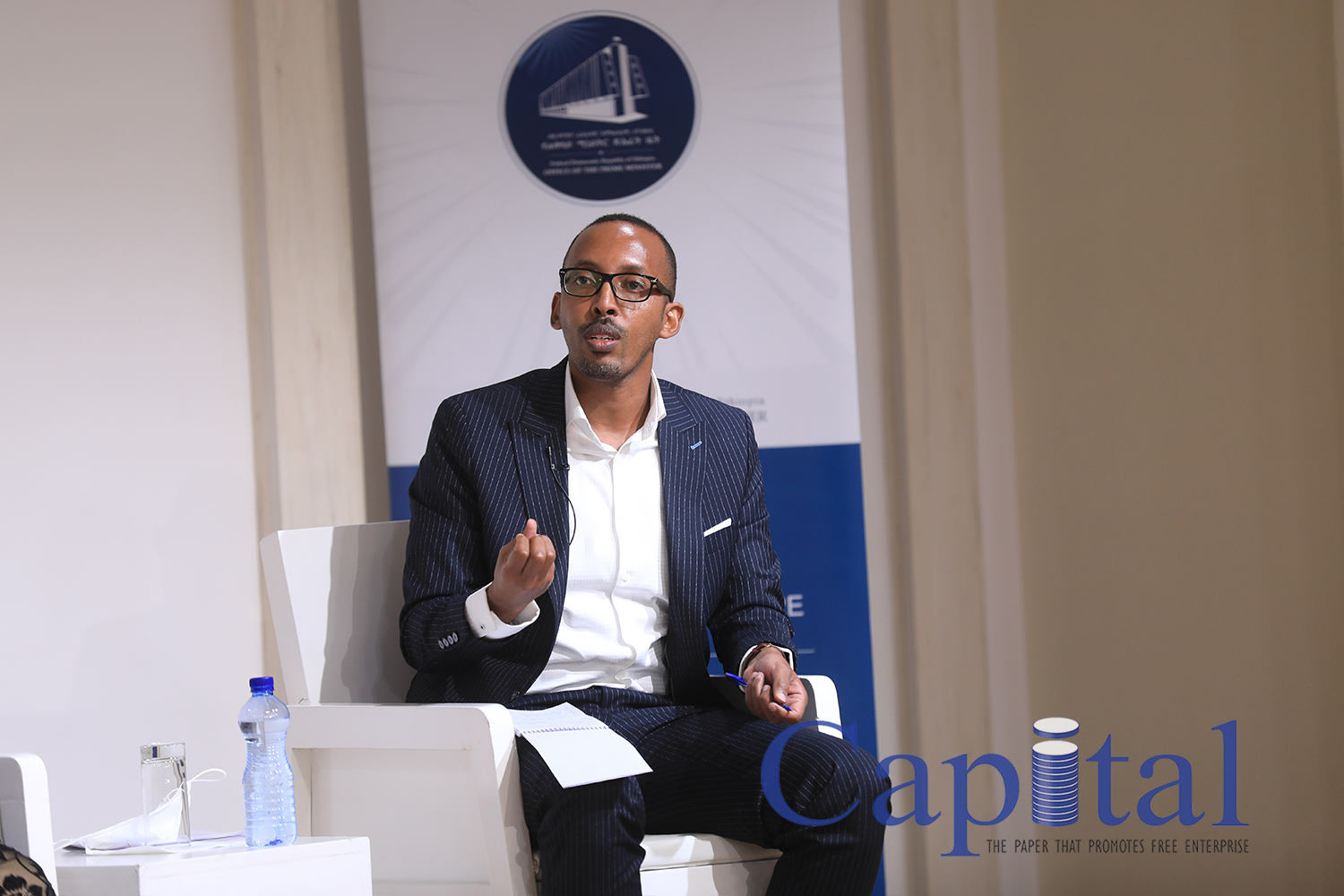
Abdurahman Eid Tahir, Head of Irrigation and Basin Development Bureau of Somali regional, told Capital that the interest of investors in the region mainly in the past couple of years is growing. He said that the interest of foreign investors is growing giving an example of an investment on agriculture irrigation at Adi Gala that is run by two investors.

“Few days ago, we have received investors from Saudi Arabia to investment on irrigation development, which was not observed in the past,” he says, “the regional peace and security have created good opportunity for foreign investors.”

He expressed his anger on the previous so-called investment practices that made local investors grab huge amounts of land without coming up with results.

“These so-called investors have secured huge amount of loan from DBE on collateral of the land but disappeared without any action,” he explained the situation that had transpired in the previous administration before the reform.

He expressed that those who received the loan without settling the payment made DBE to possess the plot which currently has massive potential for development, whilst it sits idle at the moment.
The plots that are located around Gode area shall be developed because of their potential due to that the region is negotiating with the bank.

“This potential land is idle, borrowers and the money is not available so we are looking for solution to tap the potential,” he explained.

A steering committee led by Mustafa Mohoumed Omer, President of Somali region, are in talks with DBE so that the bank can at least transfer the land for other investors to be productive.

Similar mischievous undertaking of loans from state banks mainly from DBE have transpired in different regions like Gambella and BenshangulGumuz, while the expected investment was not registered.

Due to that financial institutions were in trouble because they don’t have adequate collateral possession except the plots, which is under the constitution are public asset not individual’s resource.

New hope

Investors are interested not only in crop production but also fodder cultivation and export to potential markets in the Arab World.

Abdurahman said that mainly in Gode area about 2,000 hectares of land have been covered by lowland wheat cultivation, which is a new initiative that the federal government commenced to cut the wheat import that consumes a billion dollar per annum.

Under the participatory project that is led by the government but developed by the community, new promising performances are observed, according to the regional bureau head.

He said that this new approach to develop the resource by using the community and resource there, signals new hope.

In the past six months, 10,000 hectare has been in development by the community by supplying different agricultural equipments like water pump, “we have four major rivers; Genale, Dawa, Weeb and Wabi Shebelle, and besides that there are also potential small rivers like Fafen and Cherer so we have distributed about 1,000 water pumps with different capacity for the community to engage on agricultural activities based on the revisers,” he said.

The region is working to attract investors because it needs huge investment and there is enough resource including land and water.

“If the government facilitates the required infrastructure, investors shall exploit the opportunity and produce for local and international market and we will work to ensure that than the previous experience,” Abdurahman said.

He reminded that significant number of the society in the region is living on aid, “Under the safety net program, about 1.8 million people have benefited, which shows that the food security issue in the region is a priority, therefore, the federal and regional governments should give priority.”

Regarding agricultural investment, the regional reformist government is working strongly and if the outcome is positive for wheat production it would be a good lesson for further development.

“We are focused on food sufficiency in the ten-year development plan that is expected to be run by different stakeholders in the coming 10 years,” he explains.

The region has 1.5 million hectare of land that shall be easily developed by using Genale and Shebelle rivers.

“If we include resources other enormous underground water resources like in Shinelle, City Zone, the capacity shall be expanded thus the land is very suitable for irrigation development,” the Head of Irrigation and Basin Development Bureau added.

Under the new commercial farm and participatory investment, the cultivation will not only cover crop but fodders in the regional like Somali, which has a huge pastoralists base that needs to mitigate the environmental effect and natural disaster for their livestock.


PROBLEMS WITH THE AU

0

The African Union is a vision, a desire to bring about some kind of unity amongst the various African nation states. The original objective of Pan Africanism, as articulated by the founding fathers of post-colonial Africa, was sufficiently diluted to make room for less resolute trajectories advocated by some member states at the time of OAU’s formation. The OAU, whose sole compromised mission was ‘flag independence’, ended its task about a quarter of a century ago. Its subsequent replacement, the AU, was empowered to envision and seek continental unity. The AU is primarily driven by Africa’s polity leveraging the apparatuses of the nation states to achieve consolidation, much like the now troubled European Union!

To be sure, the AU, just like its counterpart in the North, doesn’t seem to care much about inputs from the African sheeple (human mass). In a world where ‘populism’ is fast accelerating, it would be wise to listen to the agonies of the Africans on the ground and not only be fixated on the long term wishful desires of comfortably sitting elites. Like its brethren in the West, the African sheeple seems ready to organize itself outside the logic of the current totalizing and polarizing globalization. Granted, there is a dire shortage of leadership in Africa when it comes to articulating a more sustainable alterative to the reigning neoliberalism. Reasons abound; lack of meaningful democracy, etc., etc. As the saying goes; ‘revolutions will forge their own leadership’ and Africa will have to wait for their timely arrival. Unfortunately, the majority of African nation states do not seem to fully appreciate the protracted problems associated with the current lopsided globalization and are merely/gullibly following the marching orders of the system’s bosses. On the other hand, the African sheeple doesn’t seem to buy the likes of ‘Africa Rising’ meme of the continent’s neo-liberalizing elites at the service of capital, transnational or otherwise!

For any organization to function properly and achieve its short term as well as long-term objectives, there must be tangible commitment on the part of its members. In this regard, the performance of the AU (as an organization) along with its constitutive members, leave a lot to be desired. When members fail to fulfill critical obligations, like annual contributions/fees, etc. required for operation or when they purposely undermine the capacity of the organization by insisting to assign useless cronies, not only to vacuously created positions, but also in position of leadership; the institution’s performance cannot be expected to inspire confidence. Out of expedience foreign governments have been willing to support some of the critical functions of the organization, like ‘peace & security’, etc., but this cannot be taken as a model for sustainable financing. Member countries must be serious about their obligations to the institutions; otherwise the whole thing will be just a farce leading to functional irrelevance and inevitable institutional collapse. So far the AU has been a mere talk shop without delivering much substance to the continent’s overall well being!

To reignite the AU, a draft reform proposal is expected to be tabled to this week’s Summit in Addis. It is hoped the recommendation, to be presented by President Kagame, will sufficiently address the critical problems of the AU. Hopefully the reform will galvanize the institution to become a more committed and visibly competent voice of not only the African states, but also the people at large. One should realize that non-stop bureaucratic maneuvering and continuous angling for positions, by meddling politicos, is a sign of a feeble and corrupt organization. AU must abandon these futile weaknesses if it wants to survive, let alone thrive. We hope the reform will take precedence over the election of the new AU head so that the new system can kick in without undue interference from erstwhile routines.

At the end of the day, a resilient socio-economic alternative is what Africa must strive for, particularly given the severe climate change that is clearly upon us. To this end, a new dynamic and forward-looking leadership is a must. The current crop of African leaders (state or otherwise) are hardly capable of grabbling with our precarious predicament subsumed inside a complex global reality, with a view to foster a resilient development strategy outside the overwhelming but confining logic of the globally dominant and yet destructive ‘techno-sphere’! Be that as it may, instead of silent desperation, we should probably cling on to the late Pan Africanist’s slogan (who was cut short on ‘Africa Liberation Day’): “Don’t Agonize, Organize!” Dr. Tajudeen Abdul-Raheem  (1961-2009). Good Day!

CBE, Green Agro link up to ease transactions

0

Commercial Bank of Ethiopia signed an agreement with Green Agro Solution PLC to work together on the financial transaction of ‘Lersha’ an application developed for agriculture.

The agreement is said to be effective in providing agriculture inputs through CBE birr and it will also help them to use other services of the bank explained Yohannes Milion, vice president of CBE, adding that since customers are not obliged to come to branches to make payment rather by Agents could satisfy the customer.

Lersha, is an application developed by green agro solution PLC to work with smallholder farmers. Lersha provides a one-stop digital service to small holder farmers and enables them to access farm inputs, hire mechanization services, and request dynamic agro-climate advice using technology.

The application targets to assist 35,000 small holder farmers in Oromia and Amhara region, with 32 mechanization service providers. To make the operation smooth and support the farmers both in digitalization and banking, Green Agro Solution has prepared 145 Lersha agents and 10 farm service centers.

Currently the application is working at in Arsi, Oromia region at 10 Woredas.

“We designed Lersha Digital Agriculture Platform to support the smallholder farmers to develop their farming in an easier way,” said Abreham Ismael.

Using this agricultural marketplace, farmers can place orders and purchase their products of need. For each product of need, Lersha offers credible and relevant advice regarding the how-to, where to, and much more. Upon purchasing a product from our market place, farmers have the option of having their goods delivered to them. In addition, farmers will also get information Agro-Climate Advisory & Crop Extension. The advisory content is provided or verified by the Ministry of Agriculture.

Lersha aims to solve inadequate advisory services leading to poor agronomic practices and slow reaction towards changes. Through the Lersha Agents and this swift technological access every farmer is set to get this advisory access on time and on point.

HuaHong set to construct KEFITA

0

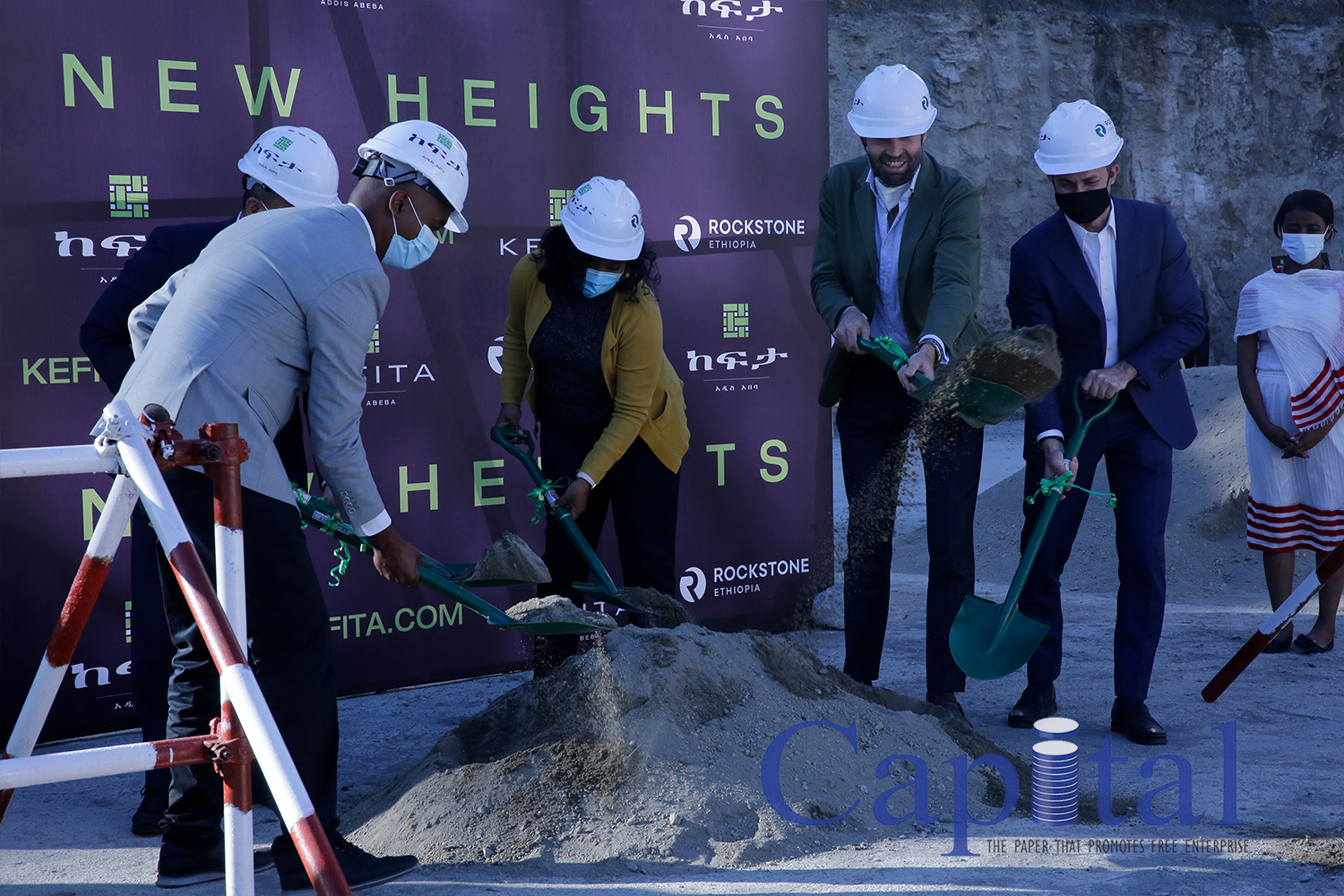
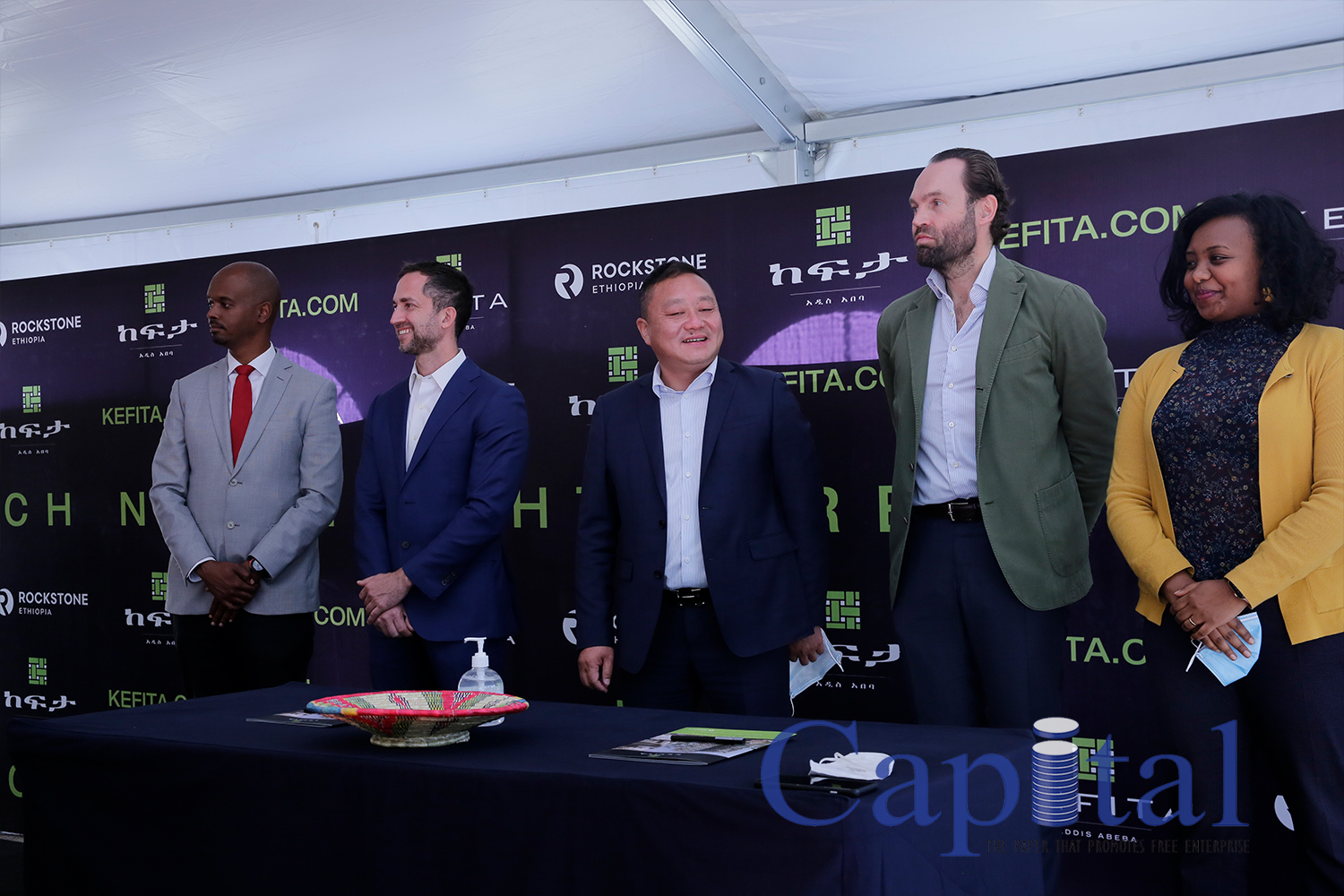
ROCKSTONE Ethiopia has committed one Billion birr to build KEFITA, an exclusive apartment building with hotel-like amenities, off the road in the Signal district of Addis Ababa for scheduled completion in mid-2023.

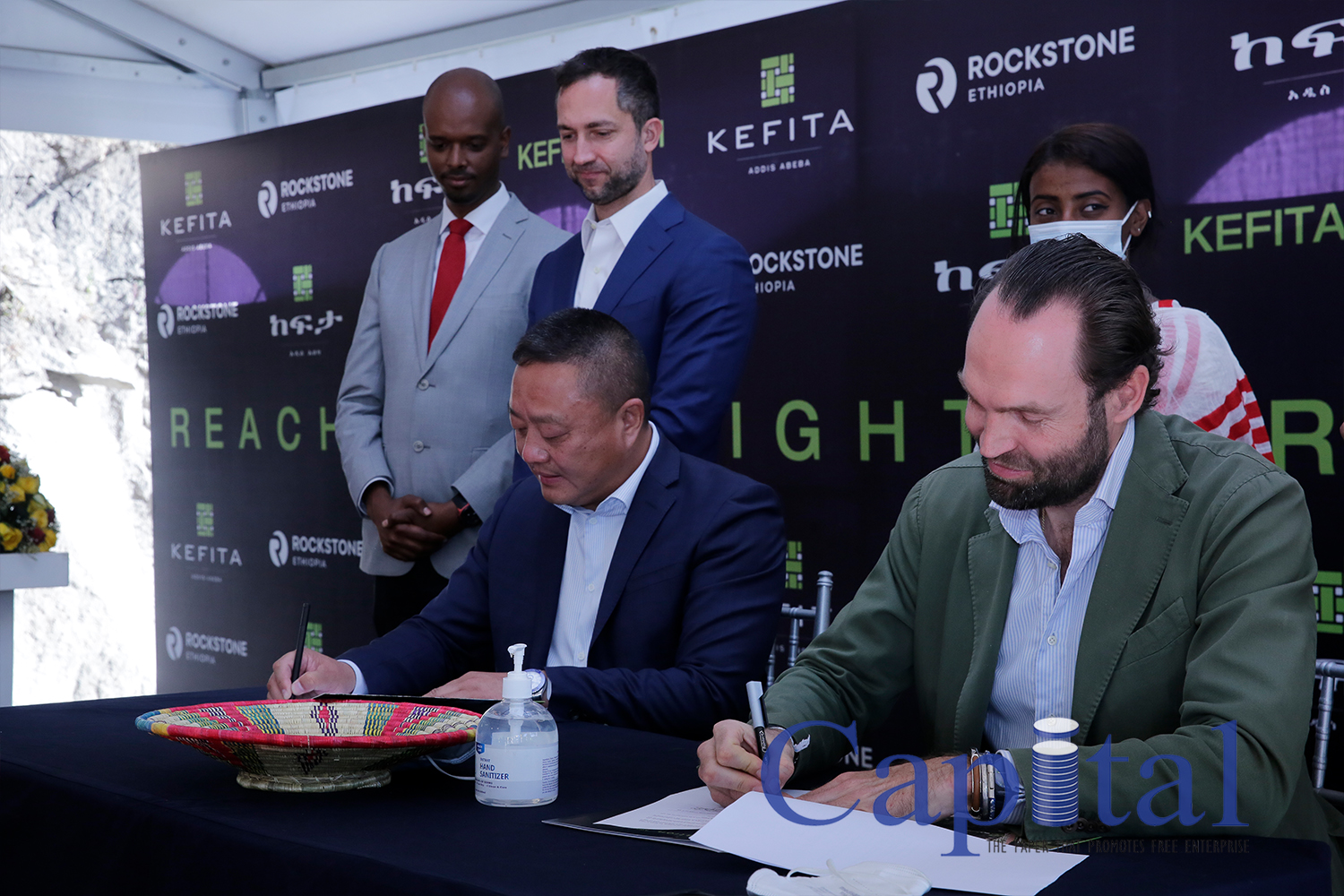
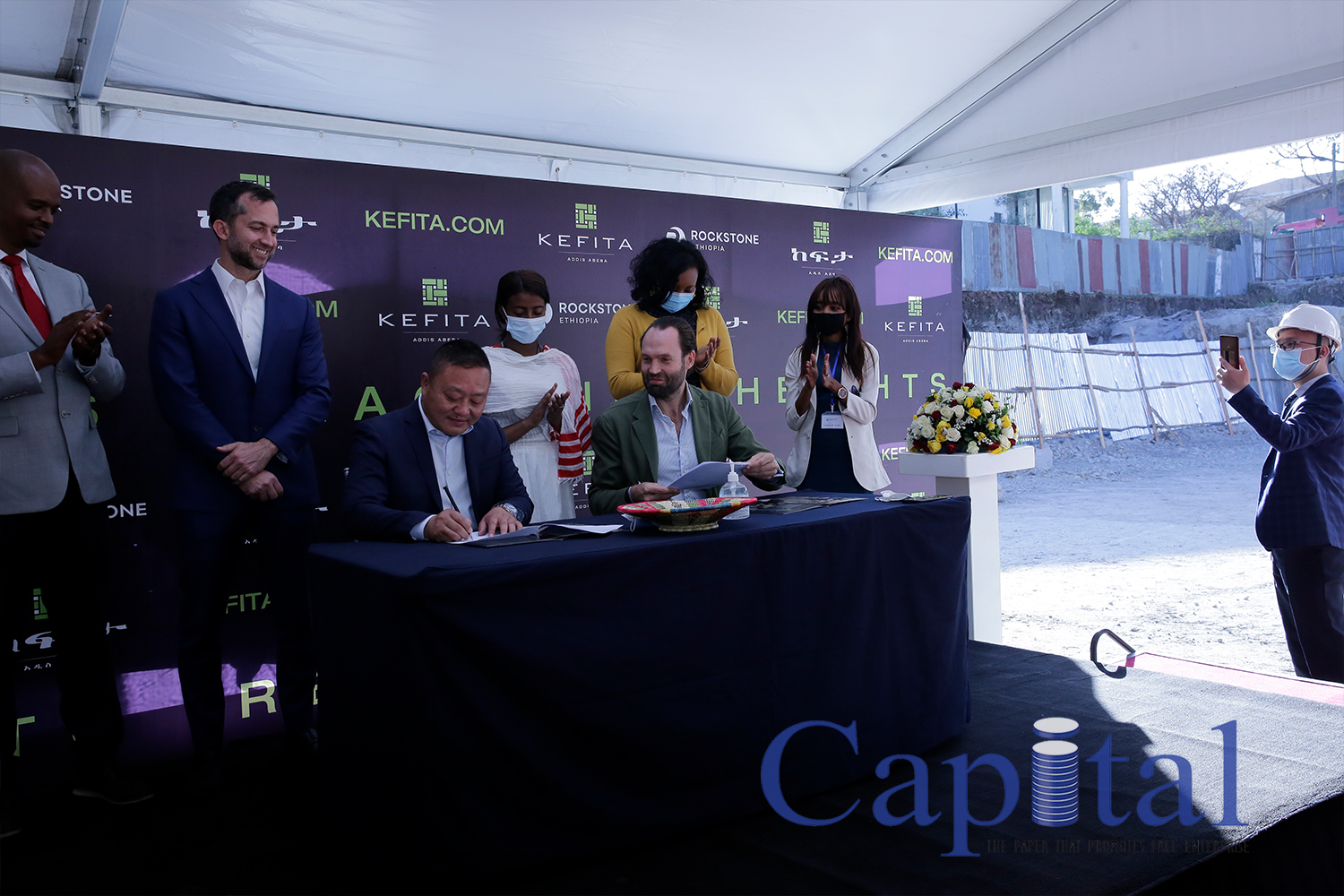
The Premier German real estate developer, ROCKSTONE Real Estate, and local partner, BIGAR Builders and developers awarded the construction contract to HuaHong construction PLC to build a G+20-storey apartment building.

The design and architecture of the project is led by an award-winning European architect, with guidance and consulting provided by local advisors.

According to the CEO and founder of ROCKSTONE Real Estate, Dietrich E. Rogge, the company looks forward to sharing its international building expertise and unique approach with local talents. As KEFITA stands for the future of Addis Ababa, the first investment is beginning of a long and fruitful partnership between ROCKSTONE and the people of Ethiopia.

“KEFITA combines international design and building standards, quality amenities and parking, all of which is professionally managed and will be run with German precision, delivering hotel-like services. The project is the first Ethiopian residential building in the process of obtaining the green building certification, EDGE.”

BenjiamVetterli, Head of ROCKSTONE Ethiopia, added “ROCKSTONE is here for the long run; we have therefore setup a unique organization structure revolving around internationally and multi-disciplinarily to overcome best local challenges such as material supply and foreign-currency shortages. Furthermore, we work closely with local and international partners and are backed by foreign investors, which strengthens our confidence about the successful outcome of the project and that the building will inspire similar projects in the future and change the face of Addis Ababa.”

KEFETA is on track to be completed in mid-2023 and will deliver one hundred apartments, designed specifically to suit Addis Ababa’s unique microclimate, with a building façade inspired by Ethiopian fabrics and all aspects of design meticulously detailed to serve the needs of discerning international and local residents.

ROCKSTONE Real Estate is a German based full-service real estate developer and investment manager, with offices in Germany, Spain and Portugal as well as Ethiopia. It has carefully chosen Ethiopia as its first office in Africa. Its focus is on high end residential and commercial real estate projects with a typical project size of 25-75 million dollars, in prime CBD or residential locations, providing professional services, modern designs and sustainable construction qualities. Currently developing projects worth 500 million dollar ROCKSTONE combines real estate know-how with its own principal capital and active real estate management.

BIGAR builders and developers on the other hand was formed by four partners in 2012 in Addis Ababa, Ethiopia, with a cumulative experience over 40 years practicing in fields of architecture, engineering, urban design and project management.