

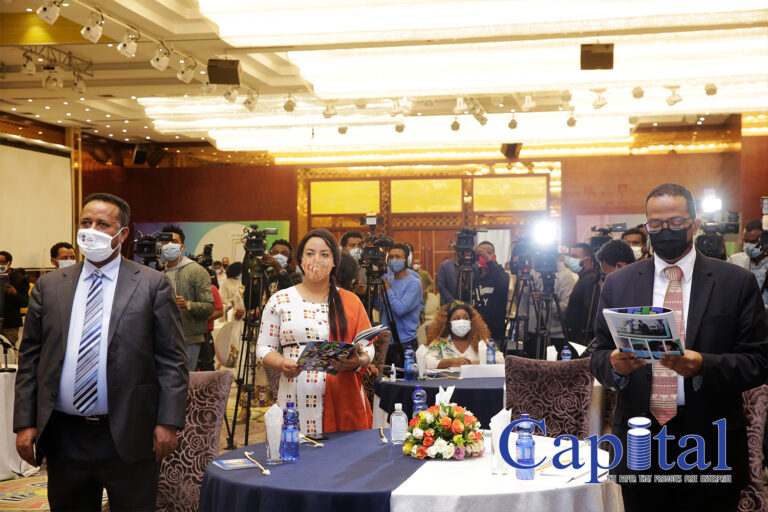
The Ministry of Health, the Ethiopian Institute of Public Health and the Addis Ababa City Health Bureau have jointly launched a six-month action plan to stop the spread of COVID 19 virus.
The campaign under the motto, “wear a mask to be served” which will continue for the next six months having been launched on Wednesday, January 13, 2021.
The program was attended by Addis Ababa City Deputy Mayor, Coordinator of Public Service Institutions, Jantrar Abay, Minister of Health, Dr. Lia Tadesse, Director General of the Ethiopian Institute of Public Health, Dr. Eba Abate and other senior officials. Federal and Addis Ababa senior officials, religious leaders and other community representatives attended the launch of the national and Addis Ababa City Movement.
“Teachers and administrators in schools, in addition to making sure every student wears a mask, urged students to keep their hands clean and, if they have any symptoms, do their best to get professional help,” said Dr. Lia Tadesse. Institutions are serving only those who wear masks, and they are urging staff and consumers to join hands with the movement, urging them to keep their hands clean.
On the program as Dr. Lia expressed a 10 percent of samples from the total number are found to be positive, which indicates the high spread of the virus in the country.
According to the Ministry of Health, until Thursday January 14, 2020; 1,870,415 laboratory tests had been done in which 129,922 of them tested positive and of which 114,749 of them recovered safely. 2008 deaths have been recorded so far and 13,161 are active cases.
Safeguarding against another pandemic wave
The Golden year: Construction of gold mines facilities set to begin
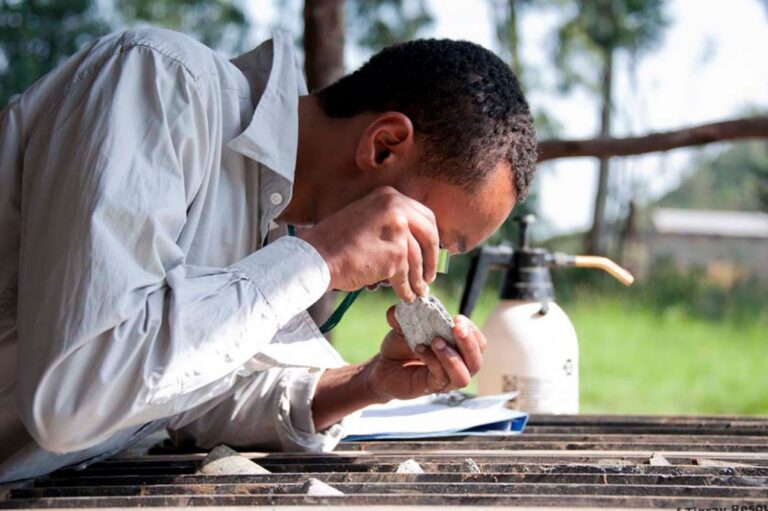
East Africa Metals Inc (EAM), Vancouver based mining company, has said that it will commence the precious metal mining development project as soon as the Ethiopian government allows it to enter the Tigray region to start its operation.
The company had delayed its schedule due to the global pandemic of COVID 19, while it was projected to start the facility development in November last year.
On its latest statement the company disclosed that Tibet Huayu Mining Co. Ltd. (THM), EAM’s operating partner for the Adyabo projects, had prepared to initiate the development of the Mato Bula and Da Tambuk mines since November 2020, when COVID travel restrictions were projected to be lifted and the mobilization of staff and equipment to site was expected to commence.
“This mobilization effort was further delayed by imposition of a state of emergency in response to conflict between the Ethiopian Federal Armed Forces and the Tigrayan People’s Liberation Front,” it said.
“According to statements released by the Ethiopian government, security has been re-established in the Tigray region and current activities are focused on facilitating a return to normalcy. THM will resume the mobilization of staff and equipment to Ethiopia and initiate the construction as soon as the government mandated travel restrictions in the Tigray region are lifted,” it added. 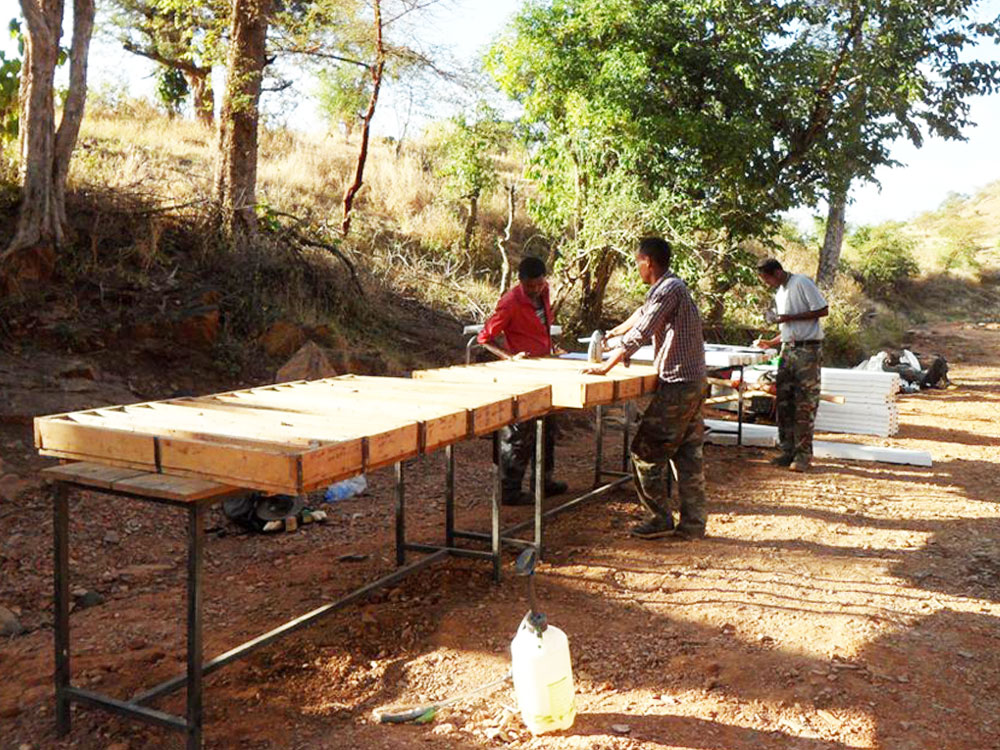
EAM currently has three approved mining agreements with Ministry of Mines and Petroleum. The Terakimti Oxide deposit mining license had been issued in December 2017 and the mining agreements for the Mato Bula and Da Tambuk deposits have been approved and licenses issued in May 2019.
For the additional prospective targets of interest that are located on ground outside of the existing mining licenses, the company has received extension/inclusion agreements from the Ministry to allow additional time to qualify targets, as they may complement existing license resources.
The company said that construction and production plans remain unchanged, with the start of construction now anticipated in early 2021 with a one-year construction timeline to complete the parallel development of both mining operations.
EAM informed that plant commissioning will be initiated upon the completion of the mine development and full production capacity expected within three months thereafter.
The mining operations will lead to the processing of a combined 300,000 tonnes annually.
The first stage of plant processing operations will be based on a combination of gravity and flotation recovery with projected metallurgical recoveries of 70 percent for gold and 85 percent for copper.
The company said that A C.I.L. (Carbon in Leach), step in gold processing that involves simultaneous adsorption and leaching, plant is planned for construction in the third year, and the processing of the tailings projected to increase the gold recovery up to 90 percent.
“The detailed design for construction is now complete, and THM has filed the revised engineering study with the Ministry responsible for mining,” it explained.
“The mine development plans for Mato Bula and Da Tambuk have been revised to consider the simultaneous development of the two neighboring projects instead of the original plan to develop the mining operations one after the other,” said Andrew Lee Smith, President and CEO of EAM. “This change will allow the operations to take advantage of the strong gold markets and is an approach that has the potential to improve project economics over the near -term.”
East Africa retains exploration rights on areas of the properties outside the Mato Bula, Da Tambuk and Terakimti mining licenses in all Ethiopian projects and anticipates the commencement of exploration drilling to test priority targets during the first quarter of 2021.
THM is be responsible for 100 percent financing of both Mato Bula and Da Tambuk mine construction costs resulting in a 70 percent THM and 30 percent EAM ownership.
EAM, which owns 70 percent of the Harvest Tigray Gold, will be the first large scale gold miners in Tigray region if it would run as per its schedule.
The company has been engaged in gold exploration project in Terakimiti locality since 2011.
Tigray region is one of the regions that have potential of gold mineral, while in the past few years the precious metal that is mainly produce by artesian have been growing. Besides EAM some other foreign companies like Newmont Venture Limited Ethiopia are also looking to develop the gold in the region.
Besides the big investors, artisan mining also expanded in the region as well as new resource areas were found.
Over 700 associations that have 10,000 artisans are involved in small scale gold mining in the region, but the figure does not include informal artisans.
According to the information that Capital obtained a year ago so far the gold deposit is available in 21 woredas from the total 34 woredas in the region.
FAO warns desert locusts continue to migrate in East Africa
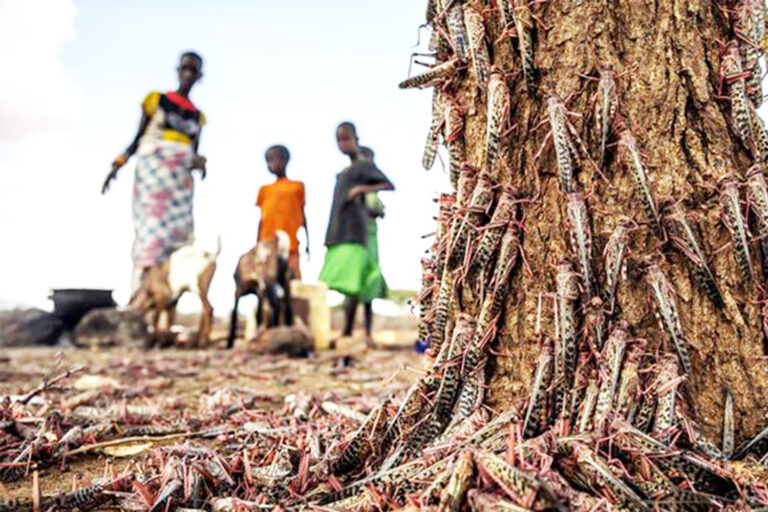
Immature locust swarms continue to migrate southwards from different breeding areas in eastern Africa, the Food and Agriculture Organization (FAO) said Monday.
In its desert locust situation update, the FAO cited the migration of immature swarms from eastern Ethiopia and central Somalia to southern Ethiopia and northern Kenya.
It also showed that a few immature swarms recently reached Mwanga district in northeast Tanzania.
“In Kenya, immature swarms continue to arrive and spread throughout the north. So far, swarms are present in the four counties of Wajir, Garissa, Marsabit and, most recently, Isiolo,” said the FAO.
“Breeding continues, and hopper bands are present in the southeast [Kenya] near Taita Taveta and along the coast.”
In Ethiopia, according to the FAO, immature swarms have concentrated along the eastern side of the Harar Highlands in the Oromia region on their way to southern areas of the country, including southern parts of the Rift Valley region.
The situation update also indicated that there are cross-border movements of locusts in areas around the northwest of Somalia and along the southern border with Kenya.
The UN agency called on all countries to maintain the necessary survey and control operations to reduce migration and breeding.
It also warned that dry conditions in some areas where the swarms are arriving could facilitate their spread throughout southern Ethiopia and northern Kenya.
There is a moderate risk that a few swarms could reach central Kenya and perhaps the southwest as well as northeast Tanzania, eastern Uganda and southeast South Sudan in January, according to the FAO.
“Once swarms arrive in favorable areas, they will mature and lay eggs that will hatch and cause hopper bands to form during February and March,” said the FAO, reaffirming its commitment to control measures, which it said would continue in all affected countries in East Africa.
Last year witnessed the most serious outbreak of desert locusts in recent years which spread across East Africa, posing an unprecedented threat to food security.
Five countries have been especially hard hit by the African migratory locusts: Ethiopia, Kenya, Somalia, Sudan, and Yemen. As a result, more than 35 million people suffer from food insecurity. FAO estimates this number could increase to 38.5 million if nothing is done to control the new infestation.
Spearheading the Ethiopian Tech Scene
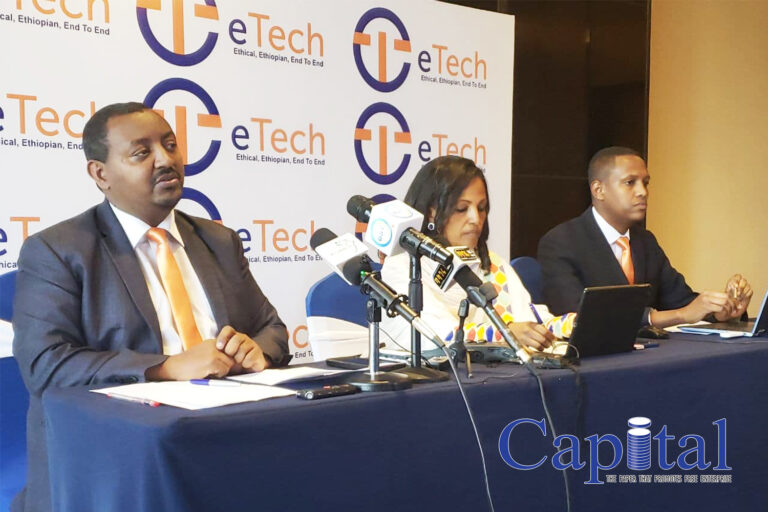
eTech invites the public to take hold of remaining shares
eTech share company, the local IT firm, announces its operation by offering the remain 20 percent of share for the public on its 200 million birr investment. The company has expressed its interest on the telecom reform that will have partial privatization on the telecom monopoly.
The company that formed about two months ago to engage on the emerging IT business that the government lately gave priority has disclosed that since its formation it has already handled about four projects.
Before the launching ceremony held on Thursday January 14 at Skylight Ethiopian Hotel, founders told journalists at the press conference that the company targets to manage inclusive IT business by local experts to local market.
Melaku Ezezew, Board chairperson, said that Ethiopia is buying the IT products with huge amount of foreign currency from aboard, while there is growing skilled labour in the country.
“The IT service and products have huge demand in the country but the sector in the country is at its infancy and therefore it will be expanding,” he said.
“Because the products are developed in other countries there are compatibility issues with Ethiopian demand. It is therefore one of the major challenges on the sector and service in the country,” he explained.
He reminded that the government is growing the sector through initiatives that it launched such as digital strategy 2025 to boost the sector regarding service, product, job and other areas, “It is good incitation for the establishment of strong IT firms in terms of capital and capacity.”
“The IT sector develops a holistic success in the economy and social sectors, due to that for the past two years the government has given proper attention to improve the sector. Understanding this we decide to establish a strong company in terms of capital and capacity,” Melaku, who is president of the national chamber, added.
According to the board chairperson, the company has included Ethiopians and the diaspora with ample experience on the sector.
“Because of lack of facilities in the country, brain drain on the IT sector was one of the problems that the country experienced but under our initiative we can tap the expertise of the diaspora who are engaged on the IT industry in different countries with big companies,” he added.
He said that the higher education facilities in the IT sector had produced huge amount of professionals for the past close to two decades, while the sector was not proportionally developed due to that most of them left the country to get jobs.
So far the company has 300 shareholders and about 200 of them are the diaspora from 17 countries in the business of the IT sector.
The company leaders said that half of the share has sold by foreign currency for the diaspora.
Shimelis Gebremedhin, CEO of eTech, said that country must work to tap the benefit that the sector brews before others take it.
“The technology ecosystem must be established locally than buying products from abroad. It is our goal to operate in the country,” he said.
The company has targeted to engage on the software development, cyber security and consultancy service, telecom and infrastructure development and service, and engagements on the financial service through fin-tech, which recently the National Bank of Ethiopia (NBE) opened to the non-financial sector operators.
Shimelis reminded that the company has also given priority to cyber security that is currently being handled by a single public institution called Information Network Security Agency. The firm aims to support the agency with other local IT firms.
“When we studied to commence the new company we identified that ethics is one of the challenge on the sector in the country. We have targeted to provide ethical, Ethiopian born and end to end service for customers,” the CEO explained.
“Regarding laws and strategy, currently the government has provided a conducive environment where we are able to create Ethiopian and big technology firms that shall fill the existed vast and growing sector,” he added.
He reminded that Ethiopians should be alert on the telecom reform, and encouraged them to be a major player before it is taken over by others.
Melaku said that the IT firm is closely following up the development regarding the telecom reform and partial privatization on Ethio Telecom. The government has announced that it will sale 5 percent of the Ethio Telecom share for Ethiopians and the diaspora besides 40 percent for foreign companies.
Shimelis indicated that the company has already engaged on four projects that it secured from private clients. He expounded that this shows how the sector is very big and is in need of such kind of local companies.
“We will provide product and service that are really compatible and automated system with the country,” he added.
The company leaders said that it is engaged on platform like payment system, ecommerce and e-payment creation, IT security, software development, development.
The company disclosed that it is discussing with the government to get a facility at ICT Park, which was established few years ago on the aim to form an Ethiopian Silicon Valley. “At the facility we will have incubation centers that will produce sharp players on the service we provide,” Shimelis said.
Mekdes Mintesnot, Board Member, said that the company has targeted to be one of the top global IT business leaders by 2030.
Shimelis said that on the first cycle, share sales of only 20 percent or 40 million birr remain that is now open to be bought by interested buyers.
Shimelis told Capital that currently it is undertaking 2 software developments on electronic hospital management system, which is led by USA based development leader, and Etech portal. “Telecom value added service on electronic voucher distribution application and cyber security consultancy are some others projects besides these projects that we are looking into.”
