

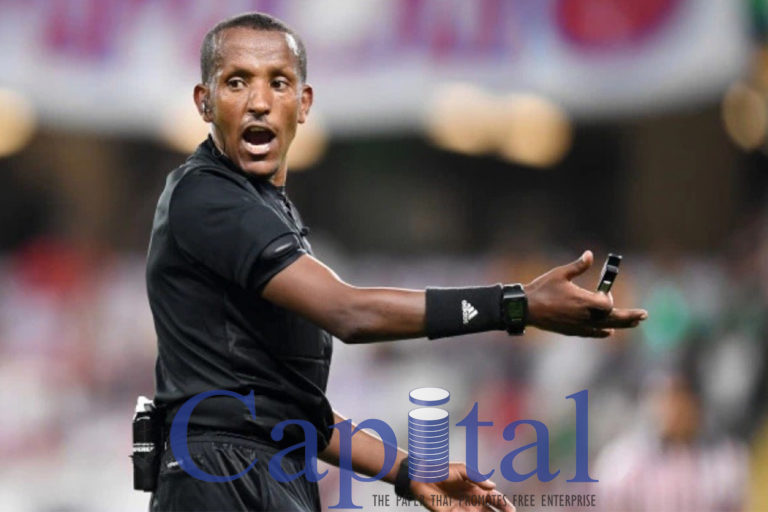
Renowned Ethiopian referee Bamlak Tesema taking in command of VAR and compatriot Lydia Tafesse the only women central referee in the championship, the Confederation of African Football (CAF) has appointed nine referees and assistant referees from the Cecafa region for the 6th edition of the Total African Nations Championship.
CAF’s Referees Committee appointed a total of 47 referees and assistant referees – including Video Assistant Referees – from 31 countries in the continent.
Host nation Cameroon and Morocco the hot favorites the 16 nations’ Championship will take place January 16th to February 7th in three Cities in Cameroon.
Though Bamlak Weyesa is one of the two experienced central referees now taking over at the sensitive VAR referring, naming Lydia Tafesse to be the only female central referee at the competition is what called huge attention from football fans. The 40 year-old Lydia her name derived from ancient Maeonia first king Lydus is a proven item in the profession for she had been referring numbers of local Premier League matches including big derbies.
The other central referees from the Cecafa region include; George Gatogota (Burundi) Peter Waweru (Kenya), Jean Claude Ishimwe (Rwanda) and Pacifique Ndabihawenimana (Burundi/VAR) and Ethiopia’s Bamlak Weyessa (VAR).
Uganda’s Dick Okello, Ibrahim Mohamed (Sudan) and Gilbert Cheruiyot are among the assistant referees selected by CAF.
The African football body said the selection of the final group of referees was made on the basis of their physical and athletic skills, as well as their understanding of football including their ability to read the game.
The Championship that will attract 16 teams will kick off on January 16th between hosts Cameroon and Zimbabwe at Ahmadou Ahidjo Stadium in Yaoundé.
Nine Cecafa matches including Ethiopian Bamlak and Lydia appointed to CHAN
Ethiopian Marathon ace Legesse sets sights on Olympic glory

While the staggering marathon feats of Eliud Kipchoge and to a lesser extent Kenenisa Bekele have quite righty earned the bulk of media attention in recent years, it would be a little churlish not to also acknowledge the feats of Ethiopian marathon ace Birhanu Legese.
Standing at 1.68m the diminutive Ethiopian, an NN Running Team team-mate of Kipchoge and Bekele, has claimed four successive marathon podiums which have included back-to-back successes in the Tokyo Marathon, a second place finish in the 2019 Berlin Marathon – to advance to third on the all-time marathon lists – and more recently a third place finish in the 2020 Valencia Marathon.
For sheer marathon consistency few can currently match the 26-year-old athlete, who according to his coach, Getaneh Tessema, has the potential to make history.
“There is no doubt Birhanu is a quality athlete,” explains Getaneh. “I see that every day in training. If everything goes perfectly, I know he can achieve the same results as Kenenisa and Kipchoge.”
Described by Tessema as his “speed killer” – Legese is part of a strong training group which includes 2019 London Marathon podium finisher Mule Wasihun and 2019 women’s Berlin Marathon champion Ashete Bekere – it is perhaps little surprise given his attributes that the marathon marvel started his athletics journey as a promising schoolboy sprinter in Woliso, around 100 kilometres south of Addis Ababa.
However, it was only shortly after leaving school and on the advice of Birhanu’s club coach to step up to the endurance events, that his athletics journey began in earnest.
Legese, the third eldest of seven siblings, enjoyed his breakthrough performance at the 2012 10km Great Ethiopian Run when placing second in 28:41 behind 2016 Olympic 5000m bronze medalist Hagos Gebrhiwet.
He continued to make steady progress for the next couple of seasons: in 2013 he clocked a slick 27:34 for 10km on the road in Taroudant and the following year posted a 5000m track PB of 13:08.88 in Shanghai.
Yet it was on the roads where Legese has most excelled and in 2015 he further hinted at his exciting potential by winning both the Berlin (59:45) and New Delhi (59:20) half marathons.
Unlike many elite Ethiopian athletes, Legese has chosen not to live in Addis Ababa but just north of the capital city in the town of Sendafa, where he lives with his brother, Gezahegne, and training partner Tariku Kinfu.
Away from the pollution of the city and living closer to his regular training routes has cut down his commute time to and from training and aided his rest and recovery with the consequence that he enjoyed a smooth build up to the 2019 Tokyo Marathon.
Competing in wet and windy conditions in the Japanese capital he made his winning move just before 35 kilometres, kicking clear of former world half marathon silver medallist Bedan Karoki.
Despite the inclement weather he crossed the line first in 2:04:48 to record the second fastest time in the history of the race and claim a victory, which was pivotal to his career development.
Zelalem took ever at struggling Wolayta-Dicha
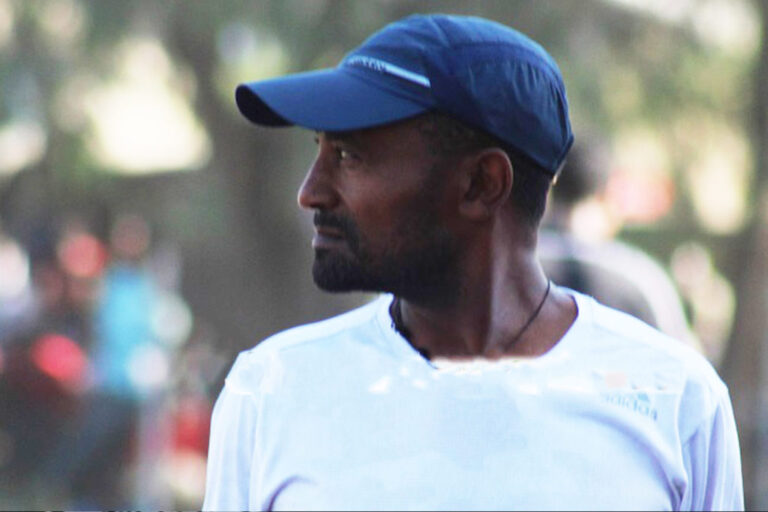
Ethiopian national team former assistant coach who led Woldya Ketema and Dubub Police into relegation Zelalem Shiferaw took over at struggling side Wolayta Dicha replacing Delelegn Dechasa. Just five months in the hot seat Delelegn became the premier league’s new season’s first Coach to get the boot from the back.
Though the speculation of who to be the first to be axed was buzzing around the three Ethiopian Premier League coaches namely Kidus Giorgis’ South African Maahier Davida, Sebeta’s Abraham Mebratu and Fasuil’s Seyoum Kebede, bottom of the table Wolayta took no hesitation to sack Delelegn who took over the side at the start of the season one win and five defeats, the officials could do nothing but showing the exit to the former Physical Education teacher who had been with the club as assistant to Zenebe Fisha before taking the mantel mid last year.
One of the most travelled coaches in the premier league; (Adama, Dedebit, Hawassa, Sidama, Deredawa, Woldya and Debub Police) Zelalem was hardly in the news since he left Debub Police in 2019. But having vast experience with players from the Southern region namely at Hawassa ketema and Sidama Bunna, this may be his chance to bounce back into the Coaching career notorious for being the Lion’s den.
Five defeats and a single win so far in the season plus the fixtures getting momentum far from home at Jimma stadium, Zelalem is left under the obligation of helping the side to premier league survival.
Ethio-Telecom to invest in the financial sector

Mobile money within sight
The Council of Ministers amends the establishment of Ethio Telecom establishment regulation to boost the telecom giant’s operation besides its traditional telecom service.
Sources close to the case told Capital that the regulation amendment mainly targets to allow the state telecom operator to invest in the financial sector.
Currently, the government is in the process to partly selling the share of Ethio Telecom to foreign and local investors, while the major share will remain under the government control.
Experts in the sector said that the Council of Ministers decision passed on Friday January 8, would not contradict the process of the partial privatization.
However, some experts argued and expressed their confusion, “Since the enterprise’s 40 percent share would be owned by foreign investors indirectly it will allow foreign companies or individuals to be involved in the financial sector, which is exclusively given for Ethiopians and Ethiopian Diasporas.”
A source, which is close to the case, explained that it would not have any effect and the privatization process will be undertaken as per the given schedule.
“The cabinet decision is only amending the regulation that the telecom operators demand to expand its business on other sectors,” an expert who is familiar to the case explained.
“Due to that it will not be related with the privatization process. It will be clear when the privatization process and negotiation is finalized in the future. So far Ethio Telecom is a public enterprise and you may not reject its demand to expand its operation and revenue,” the expert added.
According to experts, there are different legal mechanisms that will be implemented regarding the ownership of operations.
It is expected that as per the amended regulation Ethio Telecom will be involved in mobile money.
Recently the telecom giant CEO, Frehiwot Tamiru, disclosed that her enterprise has shown interest to involve itself in the financial sector like other telecom companies around the world.
Ethio Telecom had filed its application to the National Bank of Ethiopia, financial firms’ regulatory body, to launch a mobile banking service in the country. The CEO disclosed that the regulatory body has given a green light to commence business on the new segment for one of the oldest enterprise in Ethiopia.
Currently, the privatization process is in the initial bid process for interested international investors for the 40 percent share.
Deloitte was hired by the Ministry of Finance as a transaction advisor besides undertaking a detailed due diligent, business valuation, tender document valuation and others.
The existing regulation that was amended in 2011 allowed the telecom operator to provide and make accessible next generation network based world class standard information technology services; to engage, in accordance with development policies and priorities of the government, in the construction, operation, maintenance and expansion of telecommunications networks and services; and to provide domestic and international voice, data, video, and other related value-added services.
The statement that the Council of Minister passed on Friday afternoon explained that the regulation is amended on the aim to abide Ethio Telecom with the industry’s fast development and dynamic circumstance and provides additional and related services by using its infrastructure.
Capital’s effort to contact Frehiwot Tamiru for further information was not fruitful.
