Saturday, October 3, 2026
Home Blog Page 3462

Transporting parcels under AfCFTA

0

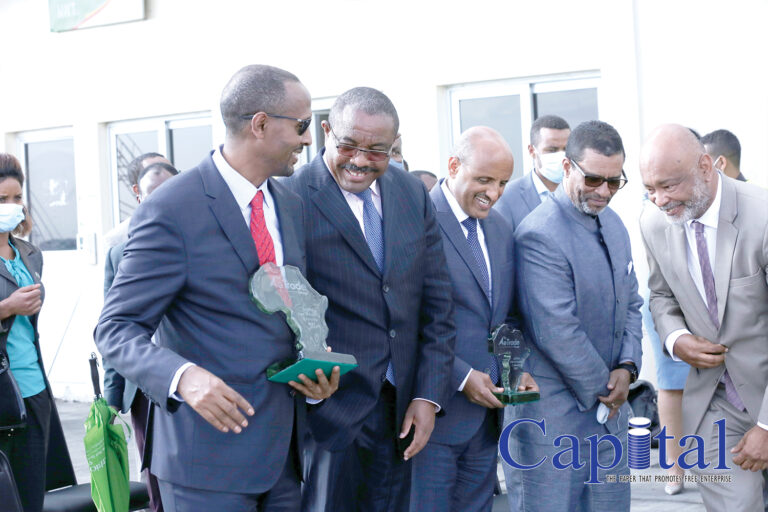
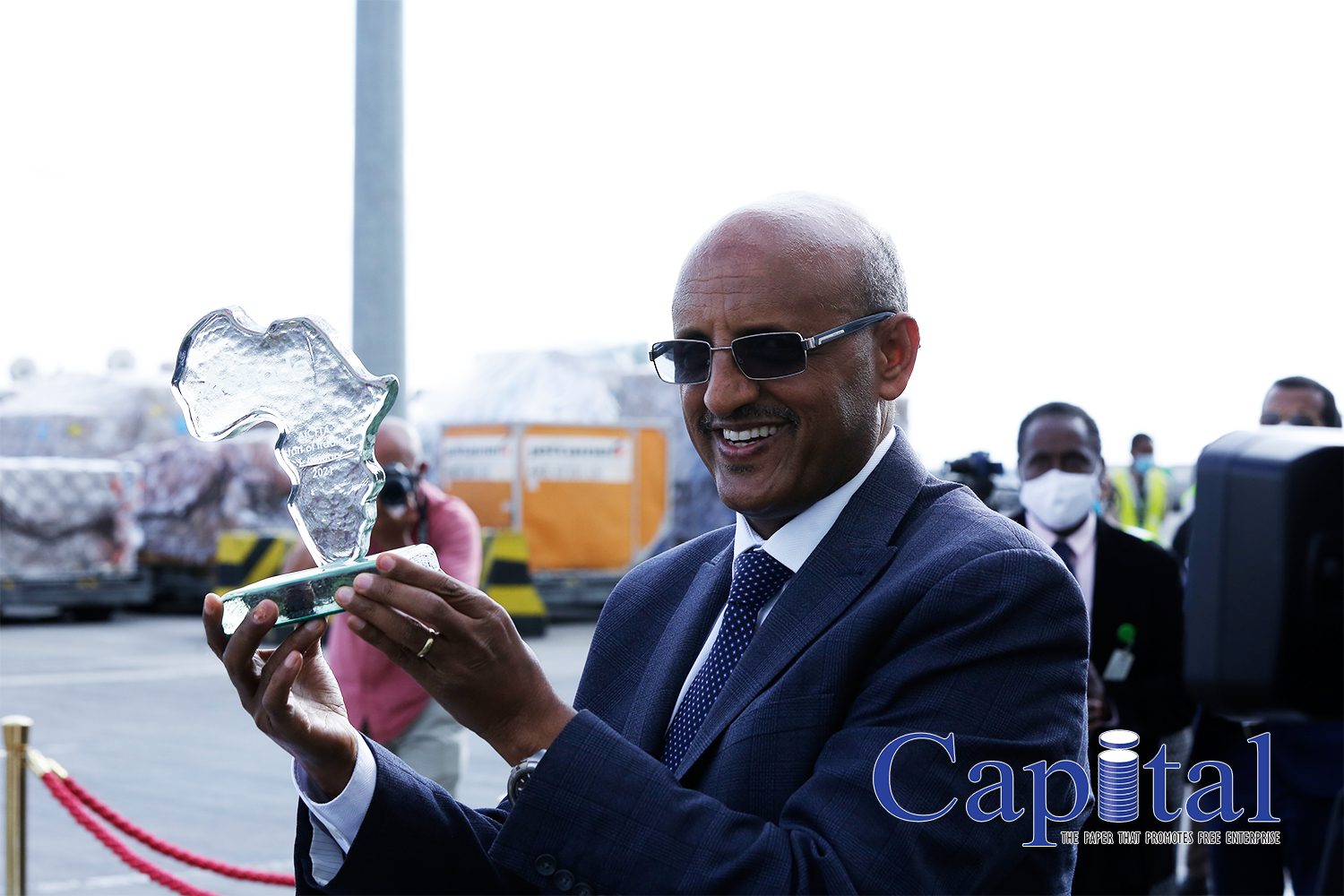
Ethiopian Airlines-DHL and African Electronic Trade Group partnered to transport parcels in the African Continental Free Trade Area (AfCFTA). The partnership is meant to invoke the start of trading of the African Continental Free Trade Area market and the operations of the African E-Commerce Platform in the continent.
The first batch of the goods arrived at Addis Ababa Bole International Airport on 1 January 2021 at a ceremony graced by high-level officials from the public and private sectors, African Union, DHL and Ethiopian Airlines Group.
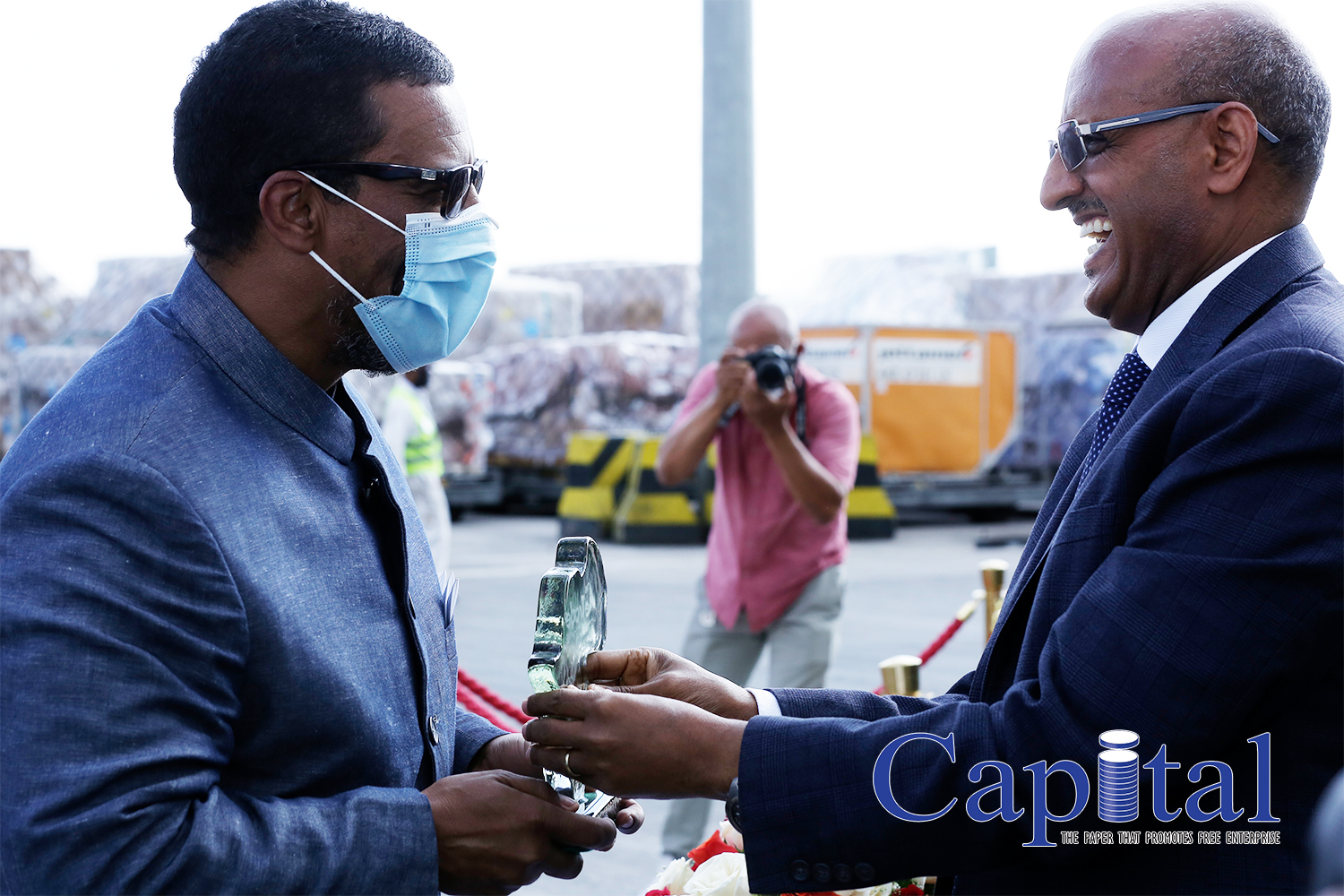
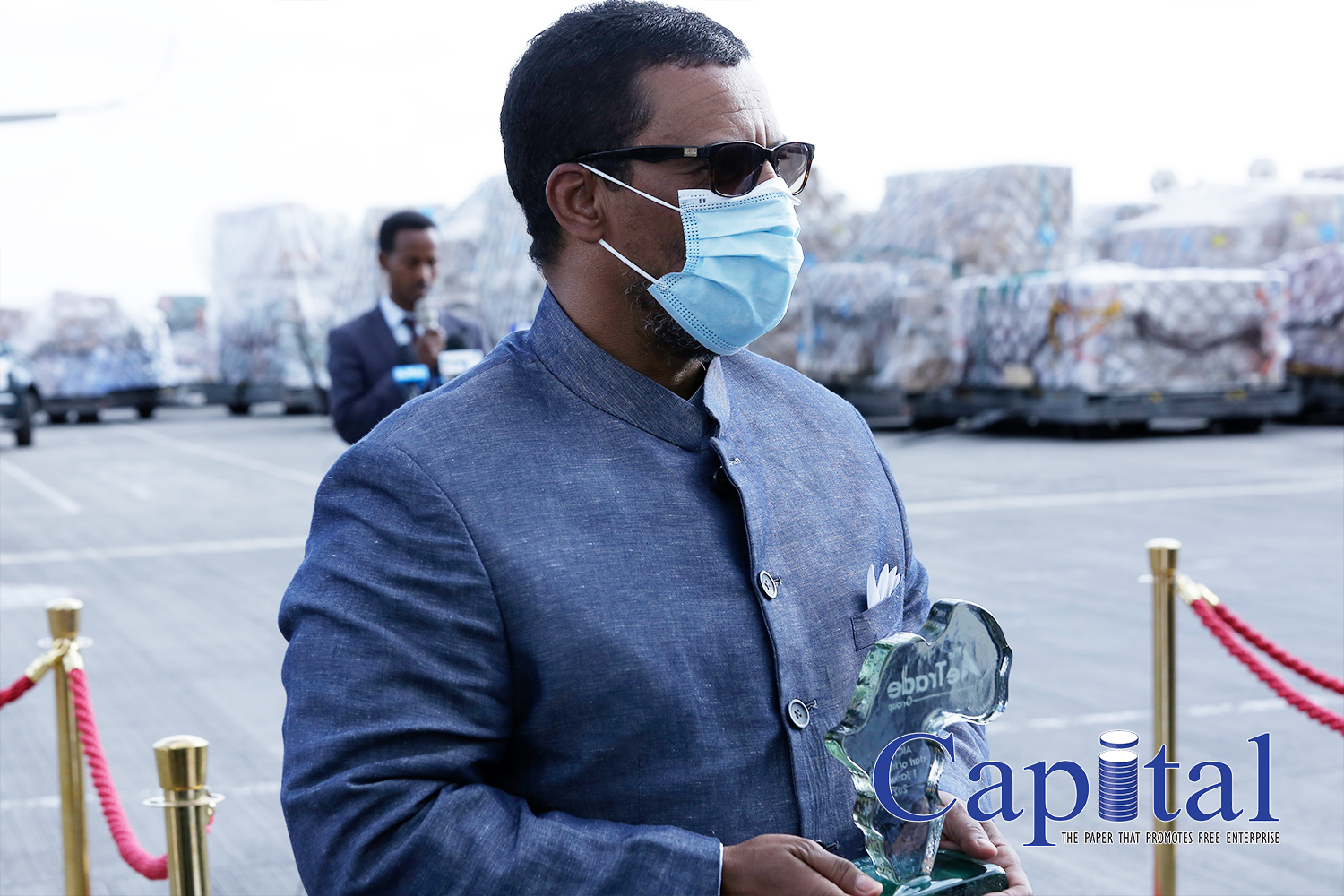
Working in collaboration with African Union Commission and the African business community with a vision to enhance intra-and inter-African trade, the African Electronic Trade Group transports fragile trophies to various African countries as AfCFTA commences.
This partnership joins the pre-existing continental partnership between Ethiopian Airlines and DHL that has strengthened the multimodal logistics systems established by Ethiopian at its hub in Addis Ababa.
So far, the fragile goods have passed through Eswatini, South Africa and Ethiopia – the three countries have signed and ratified the AfCFTA Agreement.
Tewolde GebreMariam, Group CEO of Ethiopian airlines said “the link between an integrated African marketplace, free movement of persons and the single air market in Africa cannot be underestimated as it serves as a catalyst for unlocking immense opportunities in Africa for the benefit of Africans and all stakeholders.”
“While fighting the COVID-19 pandemic, we need to work to boost intra African trade to pave the way for a brighter future,” Tewolde added.
The event is held to mark the start of trading of the African Continental Free Trade Area and the operation of the African E-Commerce Platform named “Sokokuu’’ which means big market, central market and unity in Kiswahili.
The items are produced in Eswatini and transported to various destinations across the continent to symbolize that Africa is ready to exchange goods originating in this marketplace from the first day of trading.

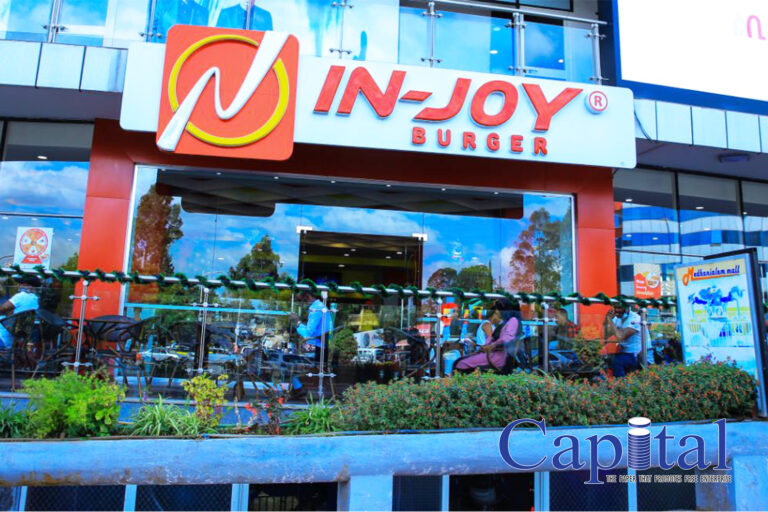
Branding charges leaves In-Joy burger un-joyful

0

Continues to cost the country

Yet another Ethiopian company which used the trademark of In-N-Out Burger has lost the legal battle in its dispute with the US Company over its trademark. However, Molalign Melese, Lawyer of In-Joy said the verdict of the High Court is not fair and added that the case was not about the trademark.
In December 2014, the US fast food chain In-N-Out Burger had filed a charge on the Ethiopian company, which recently changed its trademark to In-Joy Burger, on the claim that the Ethiopian company is using its brand illegally.
After a six year battle, the Federal High Court Ledeta Civil Bench has given a verdict in favor of the US Company which has operated the business and trademark since 1948.
“As per the country law we were using a trade name that we got a certificate from Ministry of Trade and Industry, which is our legal right,” Molalign argued.
“We did not use the trademark of another company, meanwhile in the middle of legal battle the company issued a trademark that is registered at IPO,” Molalign says and reminded that the trade name has also been changed recently.
“The international company did not file the charge in relation with trade name so the decision of the court is not acceptable and the fine of 150,000 birr is not appropriate. Due to these two reasons we will appeal for the case,” he told Capital.
According to the information Capital obtained, the US company trademark has been registered at Intellectual Property Office (IPO) in 2011, while the Ethiopian company claimed that it registered the trade name at Ministry of Trade and Industry.
However the Ethiopian company revoked its trade name and changed it to In-Joy recently before the delayed final verdict come out this Thursday December 31, 2020.
The local company has also been fined for using the brand without the permission of the trademark owner.
It is not the first case for Ethiopian companies to lose their legal battle in this regard. In the past couple of years, Intercontinental Hotel of the US brand had defeated two Ethiopian hospitality firms for sharing its hotels brands.
Regarding In-N-Out the American franchise lawyers have approached the Ethiopian business operator to change before the case is pushed to legal process. However, the Ethiopian company which had a business license from Ministry of Trade did not come up with expected response until recently.
The Ethiopian company that has got well acceptance in the market and expanded its chains in different corners of the city changed its name to ‘In-Joy’ mid 2020 after a ten year operation with the former disputed name.
At the time, it has been reported that one of the reasons to change the name was that there is another international brand on the same trademark and that would create dispute and will be a challenge for the expanding business of the Ethiopian company that also targets to expand its shops in the region besides the country.
Experts in the legal sector said that Ethiopian’s are not alert on the issue that costs the country besides them, while these days there are improvements.
For instance, the trademark that was registered at IPO by foreigners about two years ago was over 11,000 but Ethiopian companies’ trademark that was registered would not reach a quarter of the foreign companies.
“This shows how Ethiopian businesses are not vigilant for trademarks while due to recent aggressive advocacy operation it is improving,” a legal expert on the sector told Capital.
“Our market importance is very immature for instance in Kenya over 150,000 trademarks are registered; even when it comes to Ethiopia trademarks from Kenyans or Tanzanians are registered in here,” the legal expert added.
The expert recommended the trade bureau or Ministry of Trade and Industry to work jointly with IPO on the registration of trade names and trademarks, otherwise the problem will continue in the future and will direly affect the economy and the country. He reminded that the way to join World Trade Organization (WTO) would also come up with another crisis for Ethiopian businesses that are functioning foreign trade names and trademarks.
He advised local businesses to focus on improving their operation and services besides crafting genuine brands than using other brands for their businesses.
Most notably private banks in the name of rebranding are spending millions of birr on their brands that are copied from foreign sources.

Ethiopia aligns itself with AfCFTA as tariffs reduction begins

0

Africans join hands for a better Africa

Ethiopia announced that the country is well prepared to go with the African Continental Free Trade Agreement (AfCFTA) that became effective as of Friday January 1, 2021.
Eshete Assefa, State Minister of Trade and Industry (MoTI), said that the country focused on trainings to catch up with the continental free trade scheme.
The training focused on public institutions, House of People Representatives and the business community.
“We have undertaken massive preparation for the new scheme that shall keep the interest of the country and armed the implementers with relevant awareness,” Eshete says. “We have to be armed to win the competition and have equal role on the game,” he added.
The AfCFTA is signed by 54 countries with the exception of Eritrea and 34 of the 54 countries have ratified instrument of ratification in their respective parliament that was first scheduled for July 2020, owing to COVID-19 distortions and rescheduled for January 2021.
AfCFTA targets to create market opportunities, scale economies, improve competition, lower business costs and aims to consolidate Africa into a USD 2.3 trillion market of 1.3 billion people.
From January 2021, tariffs on 90 percent of goods traded between AfCFTA state parties are to be reduced in equal annual installments until they are eliminated within 5 years for non- least developed countries (LDCs) and 10 years for LDCs, which Ethiopia is included.
So, a product facing a tariff of 25 percent being imported into a non-LDC would be tariffed at 20 percent from January 2021, then 15 percent from January 2022, with such reductions each year until it is traded duty-free by January 2026.
For an additional 7 percent of ‘sensitive’ goods, tariffs will fall within 10 years for non-LDCs and 13 years for LDCs. A final 3 percent of ‘excluded’ products are to retain their tariffs to allow flexibilities for state parties with particular sensitivities, but will be subject to a review every five years.
The AfCFTA also contains commitments on customs cooperation and mutual administrative assistance, trade facilitation, technical barriers to trade, sanitary and phytosanitary standards and trade transit.
These work ‘behind the scenes’ to simplify and harmonize trade procedures and logistics, expedite the process of importation, exportation and transit, and to harmonize and mutually recognize standards, and eliminate unnecessary barriers to trade.
State Parties will submit schedules of commitment for the liberalization of trade in services in the five priority sectors of professional and business services, tourism, transport service, communication services and financial services.
According to Jamie MacLeod, Trade Policy Fellow of the Africa Trade Policy Centre (ATPC) at the UN Economic Commission for Africa (ECA),Intra-African exports would increase the most for industrial products; with gains ranging between around 25 per cent (or USD 36.1 billion) and almost 30 per cent (or USd 43.3 billion) under low ambition scenario and high ambition scenario.
In his presentation on December 22, 2020, he said that largest increases in exports of vehicles and transport equipment, energy, metals, machinery, chemical products, sugar, other food products, wood and paper, and textiles.
“These are under-estimates, as they do not include the benefits from services liberalization: priority service sectors for liberalization are: financial services communication, transport, tourism and business services,” he said.
Prime Minister Abiy Ahmed also congratulated the countries on starting to trade within world’s largest free trade area. PM Abiy said “Congratulations to our continent for the beginning of trading under AfCTA. The new frontier for Africa is indeed regional integration, where minds are open to ideas and markets are open to trade. Trade defuses the most fraught relations & integrated markets generate prosperity.”
Secretary-General of the AfCFTA Secretariat Wamkele Mene said at the AfCFTA start of trading ceremony webinar that the day is historic. “Truly today is a historic day, a day in which we start officially trading under the preferences of the African continental free trade area. Today is a day we take Africa a step closer to a vision of an integrated continent, a vision of an integrated market on the African continent,” he said.
“This African continental Free Trade Area should not just be a trade Agreement; it should actually be an instrument for Africa’s development. In this regard, we have seen the World Bank produce a report that projects that by the year 2035, if we implement this Agreement effectively, we have the opportunity to lift out of poverty one hundred million Africans. And the majority of this hundred million Africans that will be lifted out of poverty, are women in trade. It will be the opportunity to close the gender income gap, and the opportunity for SMEs to access new markets,” he added.
“This Agreement does not benefit only the big corporations on the African continent, but it should always be inclusive of young Africans, women and African SMEs. Today, as Africans, we are witnessing the beginning of a new chapter in terms of trade and investment relations of the African continent.”
“I have to say, personally, as an African, I’m truly proud today because 54 countries have signed this Agreement, 34 have ratified it, over 40 have submitted their offers. This is a strong signal that Africa is ready to start trading today on the basis on new rules and preferences that will ensure that the African Market is integrated,” he added.
“Finally, I want you, Africans, to join me as we take this historic step to the vision of an integrated Africa, the Africa we want” he concluded.

PROTRACTRED MESS

0

The demise of the prevailing world system is speeding up. Another cold war with a likelihood of going hot is now upon us. The underlying reasons, unsurprisingly, remain more or less the same, though pretexts vary. Essentially, they are resource wars as well as battles to secure profitable markets. Before slogging it out on the battlefield, be it in hot or cold wars, contenders continuously cajole to position themselves in the right spots. Disruption or wars break out when tailor made institutions that were put in place by incumbents fail to deliver desired results. It seems the world system has now entered this phase.
The post WWII accord that secured relative peace between East & West, a la MAD (Mutually Assured Destruction) was promptly dethroned after the demise of the USSR. The immediate aftermath resulted in the balkanization of East Europe, thanks to NATO and the systemic marginalization of Russia. On its part, Russia was willing to abandon its superpower trajectory/aspiration for a new and non-confrontational alignment with the West. But that proved difficult for various reasons. We will not go into the whys & hows of the failure of the intended project today, suffice is to say, Russia is now back on the world stage with its own relatively independent agenda. To students of history Russia’s current move was not entirely unexpected, given the condescending attitude of the triumphalist ‘Atlanticists’, north atlanticists, to be precise!
If current maneuvering is any indication, we believe the Shanghai Cooperation, which was essentially set up to secure peace, stability and good governance across Eurasia might well end up becoming more and more, like that of the Warsaw Pact. Except in this case the protagonists are not small European nations, but formidable emerging countries, like China, Iran, and Turkey. Right now and unlike NATO the Shanghai Cooperation is not organized to have a belligerent posture. But that can easily change if NATO continues to provoke all and sundry. From the look of things, the future will most likely favor the ascent of the massive Eurasian land mass. Be that as it may, the important question remains; how will the West deal with the changing global situation? Will its engagement be more constructive rather than confrontational, as it seems to be the case today? Can Europe and its fragile union re-engage Russia to make it a potential ally or will it continue to provoke Russia into war or war like scenarios following the blue prints of the Atlanticists? What will be the reaction of the rest of the world?
The Middle East & North Africa (MENA) where the West, particularly the US, has been quite aggressive (for a long time) in pursing its narrow interests, might not be smooth sailing going forward. The MENA youth, which is the large majority in many of the countries, has been showing signs that it might not be willing to become docile subject as desired by empire. In the prevailing and highly lopsided economic, political and cultural regime, the losers can only take it up to a point. From there on, what can potentially happen is anybody’s guess. In the absence of liberating ideologies that can be leveraged to address/redress the strangulating grievances (of the beast=human mass), which is perpetrated by entrenched interests, (inside & outside) the large portion of the youth has ventured into age old archaic strategies of identity politics. Sooner than later, we believe, this strategy will hit the wall and more sensible approaches to problem solving might present themselves, once again. Moreover and in the long run, such new trajectories might appeal to the currently hotheaded and testosterone driven youth! Ultimately, unless the gross inequity in MENA is addressed, the situation will remain more than volatile.
Even in the core countries of the system, situations can easily get out of hand. In the US we are already witnessing the excessive militarization of the police force. Surveillance is more than Orwellian and telling the truth has become a crime punishable by death, literally. The various instruments of the law are effectively muzzling whistleblowers. Peaceful activists can easily end up in the various dungeons of the CIA, located throughout the globe! On top of these, there are all kinds of laws being promulgated to usher the formal establishment of totalitarianism across the Western world. For instance, banks & corporations, the police, etc. are already out of control. As a result, resentment towards the .01% is high and spreading across the breadth and depth of the global human communities. Certainly, the global youth cannot be expected to take it all lying down! Unfortunately, what is currently lacking in all these is, yet again; forward looking all encompassing analysis and realistic projections that can appeal to all and sundry across the global human community. The prevailing world order, which has been leveraging identity politics throughout the centuries, mainly; structural racism, sexism, religious fundamentalism, etc. seem to have run out of pretexts to prolong its unsustainable & polarizing doctrine.
The Russian writer, who chronicled the atrocities of Stalin first hand, perceptively framed the prevailing system’s biggest failure, while celebrating the larger potentialities of humanity, which the prevailing system intentionally denies/excludes under various guises. “A society which is based on the letter of the law and never reaches any higher, is taking very scarce advantage of the high level of human possibilities.” Alexander Solzhenitsyn.” Good Day!