

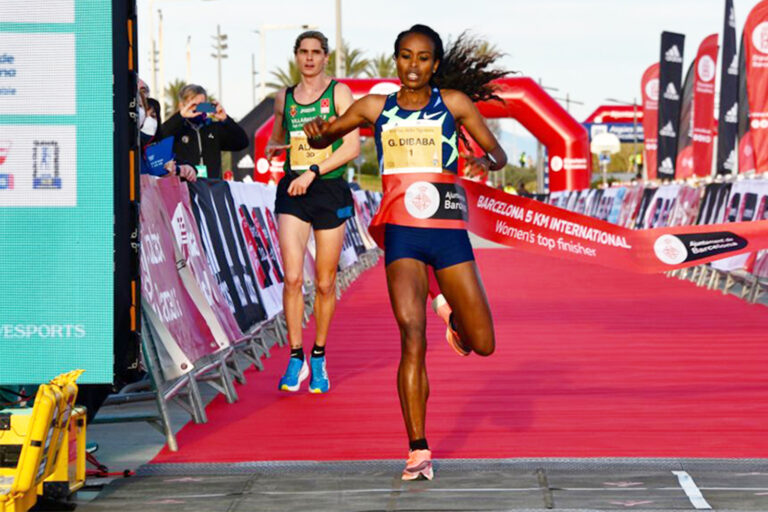
Seven time world record holder Ethiopian great Genzebe Dibaba and Frenchman Jimmy Gressier won the 5km road at the 2020 Cursa dels Nassos road race in Barcelona, Spain on Thursday, 31st December, 2020.
Dibaba attempted the women’s 5km World record of 14:48 while Gressier tried to beat his own European record of 13:18. Neither one of them was able to break records today.
Dibaba who was paced by a pack of 5 men won the women’s 5k in a Wolrd leading time of 15:00. Her younger sister Anna Dibaba was miles behind in second in 16:02 with Spanish 800m runner Esther Guerrero Puigdevall in third in 16:03.
In the men’s 5km race, Greasier in a thrilling sprint finish defeated Santiago Catrofe. Greasier’s winning time was 13:39 while Catrofe clocked 13:40 for 2nd. Yann Schurb concluded the podium with 13:45.
Just 30 minutes later Greasier lined up for the 10km and finished third in 28:13. The men’s 10km race was won by Mohamned Amdouni in 27:42 with Carlos Mayo Nieto in 2nd in 28:06.
In the women’s 10km race, Hellen Obiri, the reigning World champion over 5000m and cross country attempted the World record, but all her plans vanished just 2 minutes into the race after she suffered a heavy fall in one of the turns. Despite the terrifying crash, Obiri was able to stand up and continue to win the race in a very solid time of 30:53.
Genzebe Dibaba wins 5km at Cursa dels Nassos
Cristiano Ronaldo wins Player of the Century Award in Dubai
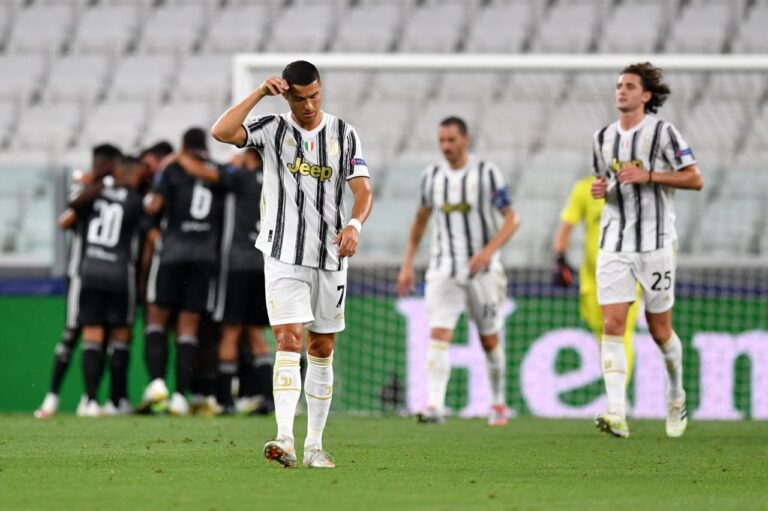
Cristiano Ronaldo was named player of the century on Sunday at the Dubai Globe Soccer Awards.
Defeating Barcelona’s Leo Messi and Liverpool’s Mohamed Salah, Ronaldo was voted best player of the 2000s by a 23-person jury, including coaches and former players and worldwide fan votes.
“CRISTIANO RONALDO presented with the ‘PLAYER OF THE CENTURY’ 2001-2020 Globe Soccer Award,” the Dubai Global Soccer Awards said on Twitter.
The five-time UEFA Champions League winner (four with Real Madrid, one with Man Utd) led the Portugal national team to win their first-ever major title, the UEFA EURO 2016.
Ronaldo, who is also the captain of Portugal, scored 102 goals for his nation.
He bagged the English Premier League title with the Red Devils for three consecutive years (2007, 2008 and 2009).
A Juventus player since 2018, Ronaldo became the Italian champion twice as he scored 81 goals in 103 games for the Italian club.
The superstar also claimed two of the Best FIFA Men’s Player awards, five Ballon d’Or awards, and was chosen the UEFA best player in Europe three times.
In addition to Ronaldo, Real Madrid was named Club of the Century, while Manchester City manager Pep Guardiola won the Coach of the Century title and Bayern Munich forward Robert Lewandowski became Player of the Year for 2020.
Super League new season opens over the weekend
Ethiopian Super League new season Group A and B fixtures kicks off over the weekend while Group C opening matches postponed to the coming Tuesday thanks to the federation’s sudden decision of changing the pre-designated venue Jimma stadium to Diredawa.
Of the twelve sides that comprised Group (C) three are former premier league sides namely, Ethiopia Medin (Insurance), Arbaminch Ketema and Debub Police. Therefore a do-or-die battle is ahead to book the one place reserved for promotion.
Famous for producing young talents out of tight budgets former WolaitaDicha Coach Mesay Teferi is in his second season with Arbaminch thus the hottest favorite to win the group. The hot weather a comfort for the players and Diredawa a second home for the former Ethiopia Bunna striker turned Coach Mesay, Arbaminch appears to have an edge to make it in to the top tier.
Ethiopia Medin under Tsegaye Wondemu (Agro) is considered a strong contender for promotion. Wiping out nearly all players signed under Yared Tolera last season, free reign Tsegaye signed more than a dozen new faces to don the famous Blue Jersey of Medin.
Medin boasts senior players the likes of former national team defender and goalkeeper Berhanu Bogale (Fadiga) and Binyam Habtamu respectively. “Super League fixtures are not about being young and technical, it is rather experience and battlefield medals that count most” once Tsegaye remarked to reporters.
Two years as assistant Coach to the club Alazare Melese is now a full-fledged Coach of Debub Police. Though not as financially strong as Medin and Arbaminch, the club has a huge resource of young talents from which Alazar could build a competent side.
Group © opening fixtures on Tuesday brings a head on clash between Arbaminch and batu Ketema while Medin to face ArsiNegele. Yeka Sub-city against Debub Police, Kirkos versus Butagera, Dilla against Kolfe and Selete taking Shinshicho are the other fixtures at Diredawa stadium.
Naomi voted U.S. Young Female player of 2020
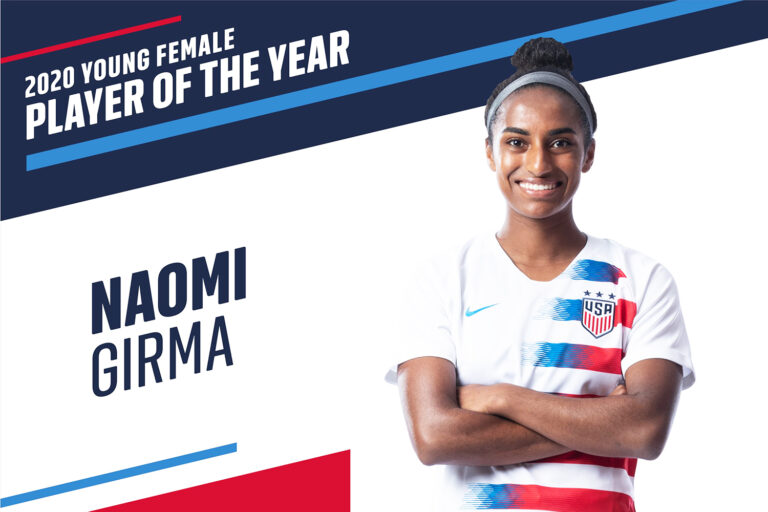
U.S. Under-20 Women’s National Team captain Naomi Girma who attended her first full U.S. Women’s National Team camp this year, has been voted the 2020 U.S. Soccer Young Female Player of the Year.
Naomi, who played a major part in helping Stanford win the NCAA Championship in 2019 as the Pac-12 Defensive Player of the Year, was the leader of the U.S. defense during the 2020 Concacaf U-20 Women’s Championship. As a team captain, Naomi started six games during the World Cup qualifying tournament to help the USA earn a berth to the since-cancelled 2020 FIFA U-20 Women’s World Cup and win the regional title, defeating Mexico, 4-1 in the championship game. She finished third on the team in minutes played while marshalling a back line that played an instrumental part in allowing just one goal. The USA went 545 shutout minutes in the tournament before allowing that score.
In her second and final U-20 cycle, Naomi was the third most experienced player on the team with 31 U-20 international caps. Naomi is only the second pure defender to win the award in its 23-year existence.
Her college season for Stanford – in what would have been her junior year – was postponed to the Spring due to the COVID-19 pandemic so she did not play in a college match this Fall, but in October, Naomi attended her first full U.S. Women’s National Team training camp, which took place in Colorado.
Fifteen U.S. Soccer Young Female Players of the Year have gone on to play in a senior level Women’s World Cup for the USA. The first winner, back in 1998, was current U.S. Soccer President Cindy Parlow Cone.
