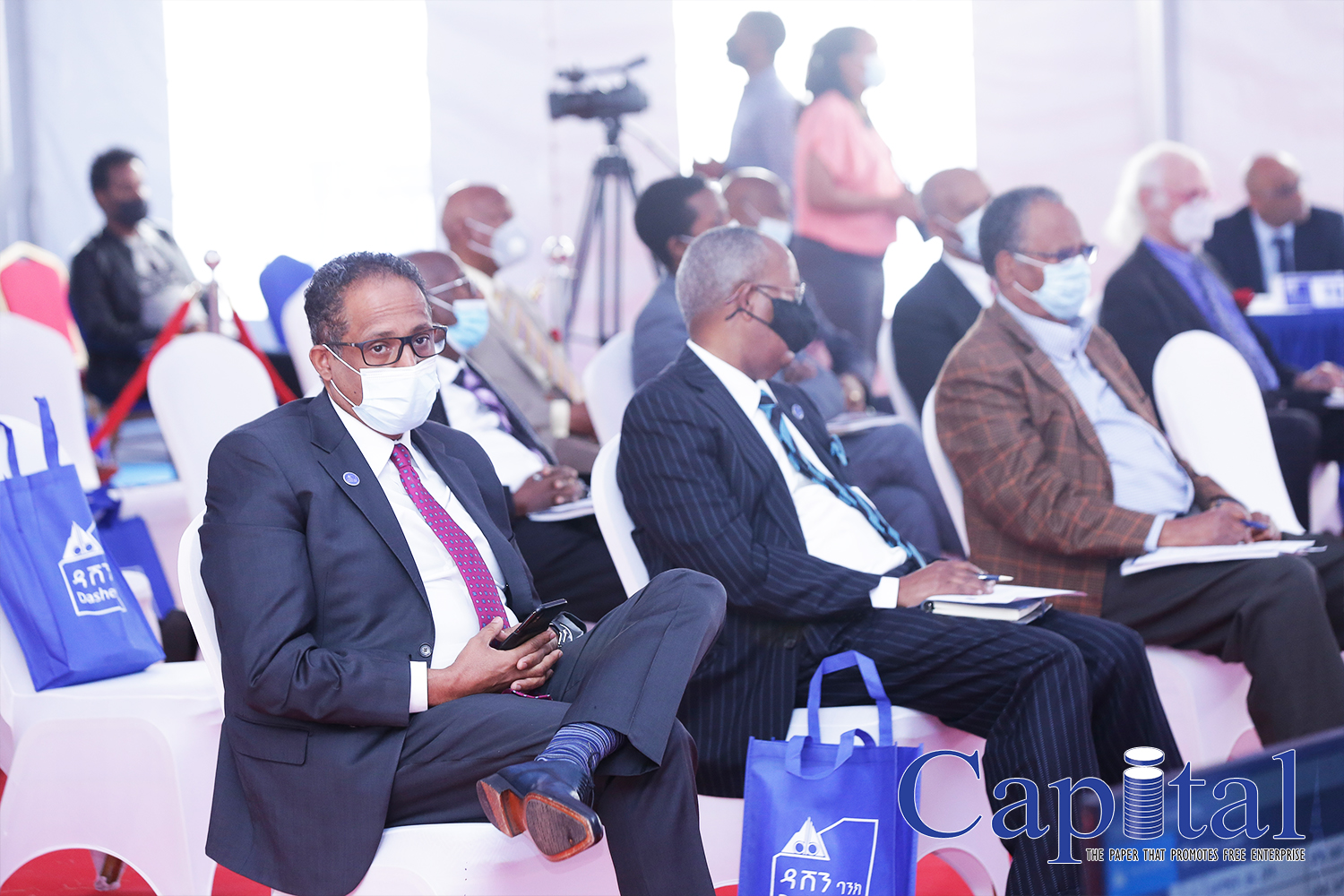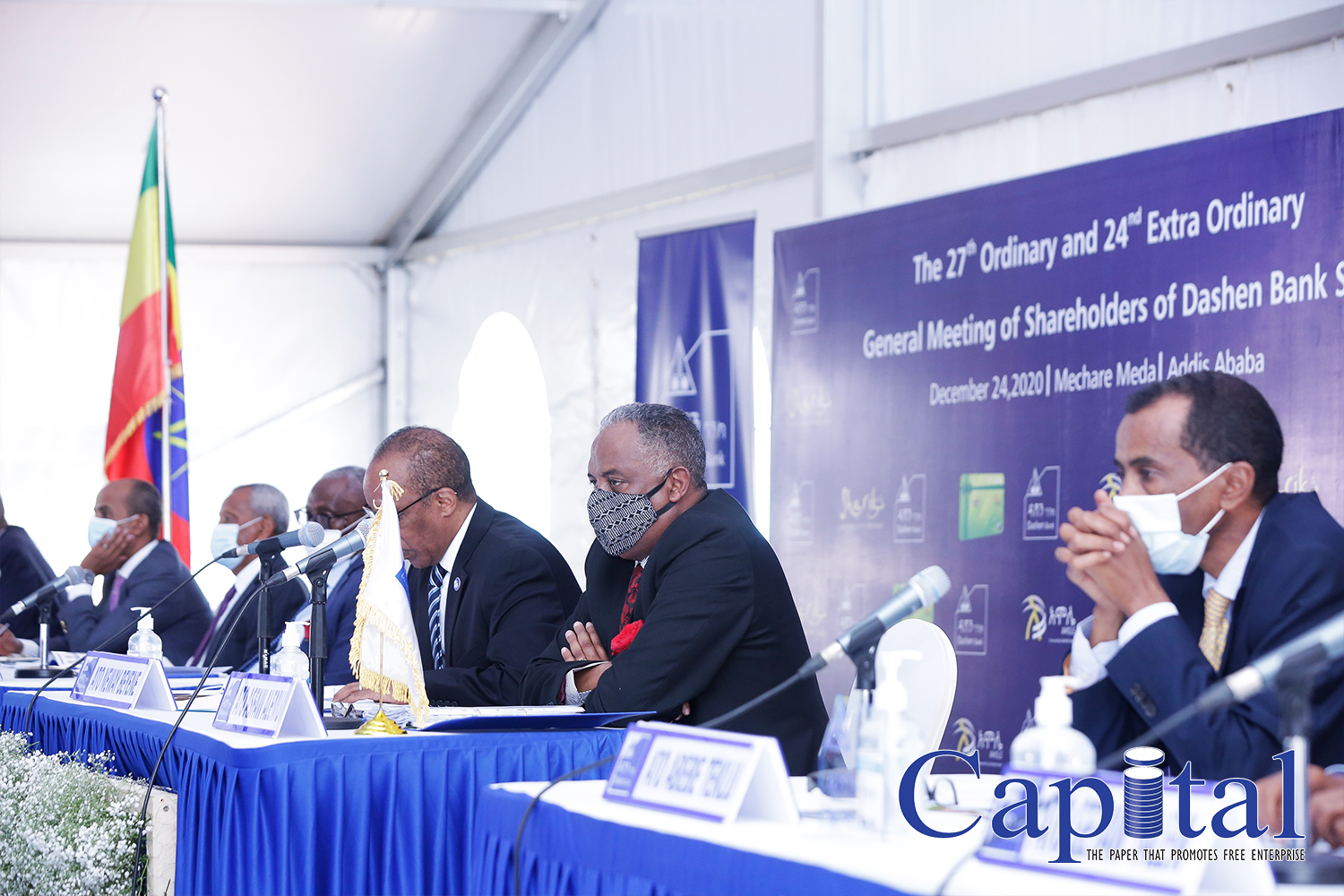
The Ethiopian Communications Authority (ECA) on the closing date of June 22, 2020, received documents of 12 interested companies, of which 9 are telecom operators and 2 are non-telecom operators and 1 incomplete submission.
The ECA acknowledged receipt of complete information and expression of interest from the Global Partnership for Ethiopia (a consortium of telecom operators made of Vodafone, Vodacom, and Safaricom), Etisalat, Axian, MTN, Orange, Saudi Telecom Company, Telkom SA, Liquid Telecom, Snail Mobile, and the two non-telecom operators, Kandu Global Telecommunications and Electromecha International Projects.
On May 21, 2020, the Ministry of Finance and Ethiopian Communications Authority (ECA) launched Expression of Interest process for the issuance of two new full-service telecommunication licenses in Ethiopia. The prospective bidders were given one month to express their interest by submitting the requested information.
ECA receives 12 EoI’s for 2 new Telecommunications Licenses
What to do next
The narrative is changing… Here in Addis, no longer travelers’ are required to be confined for fourteen days to save lives. Now, there are more lives to be saved… elsewhere.
Suddenly our leaders recognized something should change. They realized that they had made it impossible for people to earn their daily bread. How couldn’t they know business cannot remain in hang for long. Already those that are opening (many will not) are reorganizing and economizing; they will get rid of their weakest products and services… and the employees who go with them.
What is sad is life today is not as amusing as it once was. It’s hard to laugh; too many people are insecure and so they retreat into more exclusive identities rooted in conception of blood and territory, when we in fact should be able to gain great strength from celebrating an Ethiopian identity, which is bigger than the sum of its parts. So, what to do?
Let me start off this note with a long ramble. Many readers will surely drop out along the way; but for the rest let’s go over the five issues I picked for discussion.
Restoring legitimacy in the government
The upcoming campaign will be a contest between two parties, the first is vowing to bring prosperity to the country, and the latter (a chorus of many other parties) is vowing to bring back democracy. Part referendum on the past, part hopeful anticipation of a better future, this election offers a choice between the old EPRDF, now labeled Prosperity, and the mostly old ragtag parties with frequent breakups and mergers.
Whether the elections will restore legitimate authority and reunite the country remains to be seen. But all concerned agree, it’s important to hold elections to reduce conflict and legitimize the incoming regime. Will the coming 2021 election be the most corrupt or the cleanest of all to date? Who knows? But let’s not kid ourselves: Expect a rise in violence in the country come 2021, unless federal and regional political leaders work together to strengthen legitimate civil authority and tackle the economic crisis; short of that the country might again fall into violent chaos with potentially dangerous regional repercussions.
Addressing unemployment
There are close to 65 million persons aged 15–54 in Ethiopia, since the Covid-19 slowdown, an overwhelming share of them have remained unemployed. The prospect of getting a job for those who are unemployed is an important issue today. It doesn’t take too much imagination to see that an explosive head of steam is not far away.
The reasons for the continuing rise in unemployment are many. One of the main reasons is that the Ethiopian economy is mostly based on rent seeking, in other terms on gaining wealth without reciprocal contribution of productivity. The second is the manufacturing sector, which creates the maximum jobs, is growing at a snail’s pace. In the agricultural sector, young people wanting to leave farming and work in towns and cities lack the skills to be employed in jobs that would provide a decent living wage. But they still flock to cities in search of employment
What to do?
Throughout most of their history, countries had used employment on public works projects as a way of directly helping the unemployed during especially hard times. The federal government for now can devise policies and programs to fund a wide range of public works projects like the construction or rehabilitation of roads, small dams, schools etc. as long as these work create real wealth and real jobs. As for funding for all these goodies, a little bit of Modern Monetary Theory or MMT (a sort of painless free stuff from government) may suffice as a macroeconomic strategy for jumpstarting the stalled economy.
Of course addressing long term unemployment will succeed if factors such as population growth, education attainment, technological change and other issues are also addressed comprehensively.
Enhancing the federal system
By almost any measure you choose, the federal government has lost ground over the regional administrations. Ethiopia’s federal system as a whole is either unstable or quite simply unsustainable. The response to the challenge of managing Ethiopia’s federal system in current turbulent environment is to place increased emphasis on decentralization. The core idea is that certain of the key issues confronting Ethiopia can best be addressed by shifting decision making responsibilities to the regions but also down to zonal, wereda, and Kebele levels, as opposed to federal unilateralism or independent or uncoordinated regional action. Some of these issues will have to be treated by amending the constitution, but many can be implemented quickly by executive fiat.
Ending (at least reducing) corruption
In a real, honest economy, what you get depends on what you give. People have to earn their money. In a corrupt economy, the wealth goes to those who are connected to power. For quite some time the federal and regional governments have been deciding who gets what. A corrupt economy favors connivers, insiders, predators, cronies, gamblers, and scoundrels. It disfavors savers, workers, innovators, long-term investors, and the patient, disciplined entrepreneurs that tomorrow’s economy depends on.
The key objective should be to work toward a goal of zero corruption; today the country is regularly ranked in the bottom half of corrupt countries in the world, according to Transparency International’s Corruption Perceptions Index. Most notably, in 2019, Ethiopia ranked 96th out of 180 countries on this list.
Ethiopia’s abysmal performance on such corruption indexes can be largely attributed to its feeble laws and flexible (you know what I mean) enforcement by regulatory bodies such as the Ethics and Anti-corruption Commission.
One worrying trend is an accompanying shift in attitudes about corruption and business indiscretions, particularly among the young generations. Obviously continuous education and targeted awareness is key in constantly reminding the public that individual corruption and acts of bribery are serious crimes, regardless of the value of the assets involved. Further it’s clear Ethiopia’s present legal and regulatory framework is inadequate for deterring and ending bribery and corruption. There is much that needs to be done in this area.
Instilling a sense of community
This is mainly directed to city officials and residents who have yet to start building better communities and instill the sense of community involvement in our cities. Take Addis Ababa today, it’s being transformed by the Mayor with parks, new buildings and avenues. But what is a city if those without power (the overwhelming majority) are unable to assert “We are here”, “this is also our city. Or as the legendary statement by the fighting poor in Latin American cities puts it “Estamos Presentes”: We are present, we are not asking for money, we are just letting you know that this is also our city.
It’s therefore crucial to getting it right, and bring citizens to create ‘neighborhood cooperative’s or ‘community councils’ or ‘land use review boards’ or other mechanisms to reshape their neighborhood. The future of our cities will be secured if, and only if, we empower neighborhood groups to take charge of their environment. This will help stimulate the economy, create jobs, and act as a neighborhood booster. Anything less will letting our cities down.
Finally, a quick warning: we are what we are (i.e. poor), because we are badly organized to create wealth and dynamism. We are organized in ways that block people’s incentives and opportunities; we are organized to perpetuate poverty. We cannot continue on this path!
Keep the virus out!
THE END IS NIGH
The global order is in visible disarray. Besides the on-going pandemic/plandemic, there is also a structural collapse taking place behind the scene. This collapse permeates all aspects of life: the economy, social, health, culture, etc. According to a number of critics of modern societies, both past and present, complex societies are prone to collapse. The major reasons are obvious to the inquisitive. Complex societies need myriad inputs to function smoothly. These inputs are obtained direct from nature as well as from derived concoctions. For instance; complex societies need cheap energy and there are many things required to have useable energy broadly available to society at large. Amongst which, we can mention engineering knowhow, finance, transport, power lines, pipe lines, etc.!
The above inputs are mostly of material nature. There are also institutional infrastructures that must be in place to have a viable society, let alone a complex one. The amalgam of the material as well as the institutional, comprise the lion share of what is now called the ‘technosphere’ (Dmitry Orlov). The technosphere puts its ever-increasing dynamic demand on complex societies. Not many complex societies are in a position to curtail these demands. When a problem arises within a complex system, it is usually a compounded (more complex) initiative that is proposed as a cure. To abandon the underlying cause that is creating the problem in the first plac,e has become an unthinkable proposition in late modernity. The natural limit of the planet is already breached, thanks to the shortsightedness of the walking ape (humans)! Nonetheless, these various limits, natural or otherwise, are not to be considered, particularly if the demand comes from the technosphere. Unthinking minions with their infantile logic (infinite growth on a finite entity/planet) are exasperating the already grave situation. It seems the logic of our global ruling elites mimics that of the folkloric donkey. ‘Once I am gone, I don’t care if the grass grows’ (Amharic proverb)!
Once again, almost all critical thinkers, largely basing their analysis on the second law of thermodynamics, which stipulates that the state of disorder always increases with time. Or put another way; order, whatever kind (physical or institutional) requires continuous energy inputs to maintain it, i.e., to preserve the status quo). When this law is applied to complex human societies, the prediction is obvious; all complex societies will ultimately collapse (Ilya Prigogine, et al.)! Taking his cue from the collapse of the USSR, Dmitry Orlov, a Russian born US engineer, has enumerated five critical stages of societal collapse. Orlov has argued the US/Empire has entered the accelerating phase of collapse. The first stage of collapse is financial collapse, to be followed by commercial collapse. The third is political collapse and then comes social collapse. It is what he calls cultural collapse that is the closure of the collapsing processes. Given this line of analysis: are we witnessing financial collapse in the US/Empire? Well, when the US Treasury bonds, the most liquid in the world, have difficulties garnering real demand from buyers, one cannot help but ask; is this it? We do not include the central banks as bona fide buyers of government bonds (FED/EU/BOJ/BOE. etc.,), since they constitute aspects of governments’ monetary operations.
Is commercial collapse on the horizon? Does the ongoing US-Chinese trade altercation count as one more precursor of thing to come? Is the current obsession with identity politics, Political Correctness (PC) or the Woke culture, along with the vicious maneuvering of electoral politics by the Deep State (with attendant consequences) indicate a coming political and social collapse?
Cultural collapse is something that has been holding the human collective together since time immemorial. This is the primordial level of existence where mutual benefits based on relatively peaceful coexistence, was paramount. It was mostly based on familial affiliation and tribal affinity. When this is lost, everything that is ‘human’ is lost. It seems the above five stages of collapse should not necessarily be chronological. They can happen concurrently, or might even occur out of step. Moreover, collapse doesn’t need to be catastrophic, it can take place gradually. For example, it took centuries before the Roman Empire completely disintegrated. The first stage was the breakup or the bifurcation (Immanuel Wallerstein) into the Western and Eastern Roman
Empire. The former collapsed in 456 AD, while the Eastern Roman Empire, basing itself in Constantinople/Byzantine, modern day Istanbul, kept on going for another millennium. It finally fell under the Ottoman Empire in 1453 AD. See the articles next column on pages 30.
Gradual collapse, if it can be orchestrated, might well be better, since it can indicate potential future courses to contemplate about. Here is one way out, as proposed by a 20th century philosopher. “What can oppose the decline of the west is not a resurrected culture, but the utopia that is silently contained in the image of its decline.” Theodor W. Adorno. Good Day!