

The business community blasted the new draft proclamation of the Chamber of Commerce and Industry. A participant called it a ‘Treaty of Wuchale’ that aims to elevate their autonomy on pillar activities.
The draft proclamation that targets to replace the controversial Proclamation Chambers of Commerce and Sectorial Association Establishment no.341/2003 has been discussed as the event organized by Addis Ababa Chamber and Sectoral Association in collaboration with the Ministry of Trade and Industry, who is responsible on the drafting process.
The draft proclamation indicated that the formation of chambers will be carried out under state structure form and most of the participants who attended the discussion on Friday, December 25 at Sheraton Addis, ended up ridiculing it.
They said that at the inception the draft has made problems since it demands the business community to be organized under governmental administration form.
One of the participants argued that the business does not have a region like politics; it shall trade everywhere in the country and cities in different regions, “Such kind of formation process would not be acceptable for the business community.”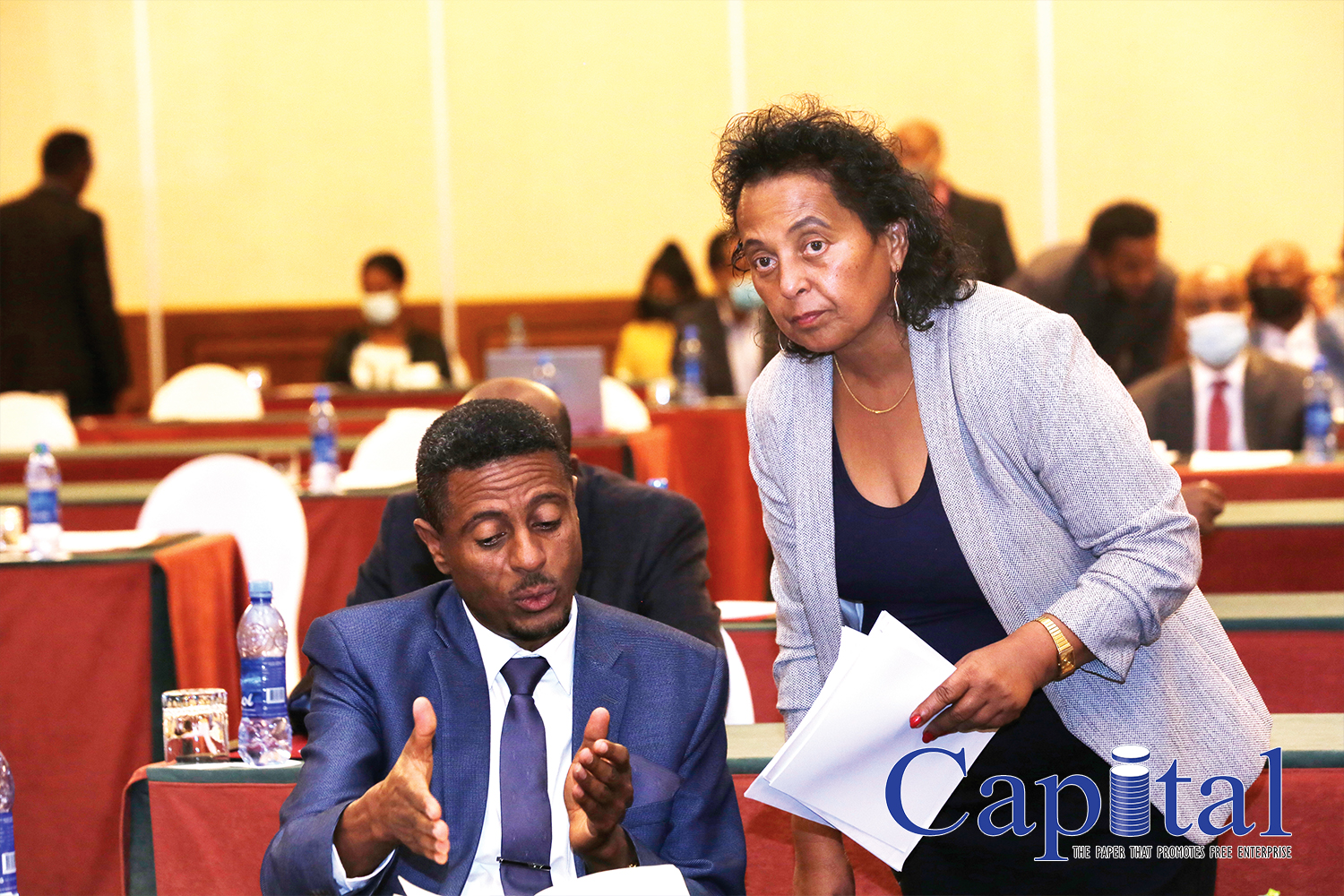
Mohammed Nur Sani, who is well known on the leadership of such kind of business associations, said that basically industry or agriculture are commerce due to that the name should be chamber of commerce other than adding other words. “Most of the countries are using similar name for chambers,” he said.
Mohammed argued that the proclamation does not have any change regarding membership from the existed 18 years old proclamation, “It was one of the major differences on the current proclamation. Membership shall be open for every interested individual companies or businesses.”
He recommended the proclamation to consider the involvement of associate members like higher education or other non-governmental organizations with not vote.
The veteran sector expert said that the percentage on the representation of board of directors would not benefit the interest of the members. Other rationality and optional formula should be considered on the representation,” he added.
The draft proclamation stated that the board of directors comprised by 50 percent from regional chamber of commerce and industry, 40 percent from national manufacturing industry and sectoral association and ten percent from national commerce association.
Yohannes Woldegabriel, prominent legal expert particularly engaged in arbitration at the chamber said that at the preamble the draft stated that the proclamation required the formation of a strong chamber that shall play pivotal role on the economic growth of the country in providing inputs for the government and stake holders.
“Against the experience of other countries, the draft proclamation rejects city chambers and targets to undertake the way of state structure,” he says “Cities are the initial point for the formation of national chamber. In my view urban based chambers should be encouraged.”
He reminded that EPRDF had extreme stereotype on urban based chambers and expressed his concern that this one may repeat that. According to him, two tiers system shall be applicable like others countries by including urban and national chambers other than the idea stated on the proclamation.
“Strong urban chamber shall help the business community than the current situation due to that is supposed to be implemented,” he explained.
The participants also expressed their concern that besides city chambers it totally ignored other economic zones like industry parks and manufacturing industries that for example concentrated on the outskirt of Addis Ababa.
Elias Genete, former President of Addis Ababa Chamber Commerce and Sectoral Association, expressed his concern that the proclamation might not be ratified by the proclamation since it does not take into account the current government structure of the federal system.
“According to the federal system of the country, regions have their own autonomy, while on my evaluation the draft proclamation has not considered that. Due to that it may not be accepted by parliament,” he explained.
He added that city chambers should be formed and they report to regional bodies.
“It mentioned the government economic policies at the preamble, which is not necessary to mention for the formation of chambers because they are independent from politics,” he added
Wubshet Hailu, owner of Watt International, strongly criticized the draft proclamation that he said on the drafting process was not consulting former chamber leaders who perfectly understand the challenges and gaps on the existed proclamation.
He added that the chamber of commerce must be established from the grass root at the city level, while the draft dissolved such structures.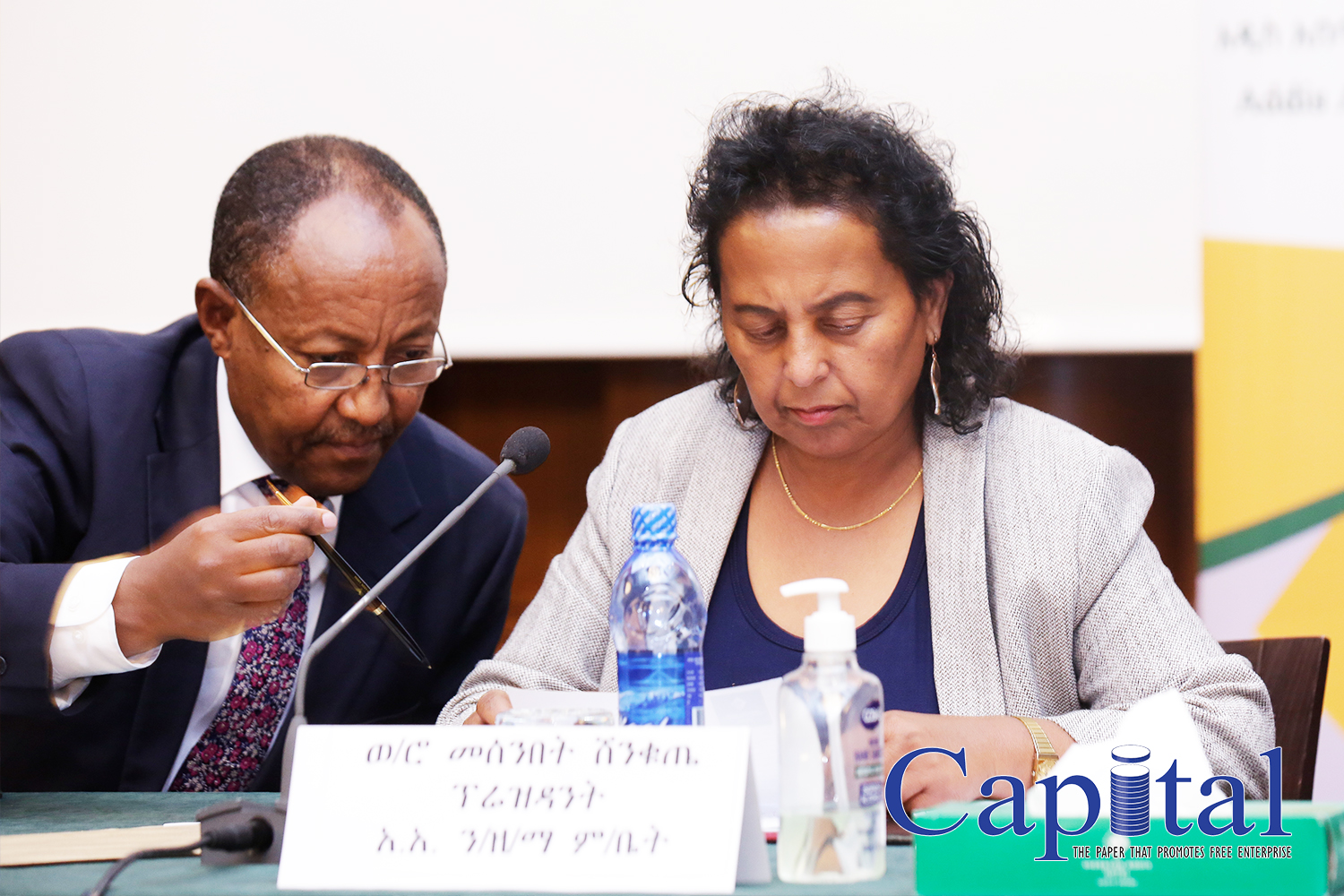
“I fill that it looks like a ‘Treaty of Wuchale’ (a treaty signed between the Ethiopian government in the era of Emperor Minilik and Italy that was the cause for Adwa War) because it aims to enforce members to get certification for their every activities,” he says.
“It is indirect rule like the motive of a ‘Treaty of Wuchale’,” Wubshet said expressing his disappointment on the draft proclamation, and added that his companies will totally leave the chamber if this will be ratified.
Eshete Assefa, State Minister of Trade and Industry, told Capital that the drafting process of the proclamation inputs and claims that were presented by the chamber leadership in the past has been considered.
“We have created open discussion on the draft proclamation and will consider the arguments before finalizing the proclamation,” he stated.
Draft proclamation ridiculed
Ethiopia set to start reporting FSIs for IMF
Ethiopia is set to start reporting Financial Soundness Indicators (FSI) for the Statistics Department (STA) of IMF as of this month in accordance with the 2019 FSI Guide using the workbook developed by IMF mission on the technical assistance that was mid this year.
The STA mission had paid an assistant mission in June remotely, on the aim to technical provide assistance to the Bank Supervision Directorate (BSD) of National Bank of Ethiopia to manage and commence the new reporting.
Meanwhile, Ethiopia has been reporting for IMF’s African Department (AFR) for deposit takers for internal use in its AFR’s financial stability analysis. It is the first time for the country to report to the STA. The quarterly report will be posted on the IMF FSI website, which makes Ethiopia another country alongside 143 countries who posts on the website.
BSD now can compile quarterly FSIs for DTs using the workbook developed by the mission and agreed on for reporting FSI data and metadata, a key for interpreting the FSIs and to allow for cross-country comparisons, to STA for posting on the IMF’s FSI website.
The quarterly reporting will start in this month for DTs with quarterly data beginning from the second quarter of 2017 and the institutional coverage with annual data starting from 2017.
“As this was the first FSI mission to work with the BSD in developing an FSI compilation framework, the mission reviewed the FSIs currently compiled by the BSD to assess consistency with the 2019 FSI Guide and found discrepancies in key indicators, including nonperforming loans (NPLs) to total gross loans, interest margin to gross income, noninterest expenses to gross income, and capital to assets,” IMF explained.
According to IMF technical assistance report, the main objectives of the mission that was conducted from June 15 to July 10 via video conference were to: review the source data, institutional coverage, and accounting and regulatory frameworks supporting the compilation of FSIs; provide guidance for mapping source data for the banking sector to the FSI reporting templates as well as preparing the metadata; and agree with the authorities on the timeline to begin regular reporting of the FSIs for deposit-takers to STA.
It added that the mission also provided technical assistance to the NBE on the compilation of net open positions in foreign currencies.
“This was the first STA mission on FSIs for the NBE. Ethiopia does not report FSIs to STA but it does produce and share a select subset of FSIs with the AFR department. Prior to this mission, Ethiopia received a monetary and financial statistics (MFS) mission which assisted the NBE in compiling MFS standardized report forms for the central bank and other depositary corporations in January 2019,” it added.
Ethiopia is currently under Extended Credit/Fund Facility (ECF/EFF) arrangements with proposed financial sector reforms.
“Improved FSIs are expected to facilitate better monitoring of financial stability by the NBE and help guide economic policies in the context of the ECF/EFF arrangements, by shedding light on the underlying accounting and regulatory frameworks for the FSIs,” the IMF said.
It said that as a result of the mission, the NBE is now in a position to report quarterly FSIs to STA in line with the 2019 FSI Guide. “Together with staff of the bank supervision department, the mission compiled 22 FSIs for deposit takers (DTs), and two FSIs on the size of Offshore Financial Centers (OFC’s) sector from the existing source data. The coverage of DTs for the compilation of FSIs includes 17 commercial banks which cover 90 percent of the entire DTs sector,” it explained.
The FSIs for DTs cover key aspects of capital adequacy, asset quality, earnings and profitability, and liquidity, providing a useful input for financial stability analysis.
The mission was able to assist the NBE in their mapping to the FSI workbook and validated aggregated data from bank- by- bank data for December 2019. In addition, the mission reviewed source data from the balance sheet, income statement, and supervisory data from June 2019 to December 2019 and made various recommendations to improve the collection of source data.
The mission assisted the NBE in the compilation of 11 core FSIs and 11 additional FSIs for deposit-takers as well as two additional FSIs relating to the size of OFC subsectors.
Ministry of Trade and Industry provides support to Tigray Investors
Ministry of Trade and Industry has taken the lead to support investors in Tigray region to reopen their investment and continue their contribution in the region. During the three-week war that began in the Tigray regional state, several factories were severely damaged and looted.
On Friday December 25, officials from the ministry and different stakeholders held discussions with different representatives of investors from the Tigray region.
The ministry has set up an eight members task force from different stake-holders to re-launch industries that have been shut down. The ministry is also committed to finding solutions to companies that are concerned about ports, customs degradation foreign exchange problems financial supply and inability to enter into contracts with their customers
“The first mandate of the task force is to identify information of damage and destroy to re operate industries,” said Yohannes Dinkayehu, state minister of Trade and Industry. He explained that the ministry of Trade and Industry will send its expertise directly to the location of the factories to conduct field study and find a solution to support the factories.
As Yohannes Dinkayehu said, government will support the factories in the region to quickly get out of trouble.
Some of the factories outside Mekelle reported that they had been damaged but some said they were unable to comment on the damage due to the lack of security and communication in the area.
As most of the investors indicated during the so-called operation, most of their investments has been damaged, their employees have been scattered and due to the communication problem in the area some of the investor still have no information about their investments.
Among those burned and robbed are; Zenit Gebs Eseht, Semayata Ceramics, Ajj milk processor, savanna leather and Almed textile are some.
According to Gebreegzi Tshaye, owner of Zenit Gebs eshet, Zenit has set up a modern factory in shire town in addition to Akaki and Gelan birr. His factory was demolished by a heavy machine, destroying property worth of 92 million. Also, another victim of the war is the Semayata ceramics factory which was established five years ago with capital of 500 million birr as result of the war the factory was completely destroyed.
The government has solved the problem in the region and has vowed to restore the region to its full potential.
Along with the law enforcement work, it has set up committees in each sector to work for the restoration of the country therefore, discussions are underway to get employees in the region to work.
The manufacturing industry has a significant role to play in the country’s economic growth, job creation and other social and political issues.
According to the Ministry information, there are more than 90 large industries and about 1000 of small and medium enterprises, which has created job opportunities for 300,000 peoples in the region.
ARRESTING CORRUPTION

Late modernity is characterized by blinding greed. As a result, it is facing mounting public pressure against its multifarious abuses. Systemically structured (undeserved) privileges, facilitated by the reigning neoliberal order obtain all over the world, in every nook and cranny. In other words, from large-scale parasitic activities that unashamedly leverage political power, (grand corruption) to the tiniest operations lubricated by bribes (petty corruption), un-tempered avarice dominates life in the twilight of the prevailing world system. Expected or not, the limit to all such injustices is being reached in one form or another all across planet earth. The increasing wrath of the global sheeple (human mass) is now obvious. Oligarchs are on the run and their handlers are scared. From the notorious Russian oligarchs, to the capitalists of Red China, tumult is becoming the order of the day. The recent crackdown on the princelings and their minions in Saudi Arabia is a continuation of this global uprising!
Thanks to the administration of President Putin, the Russian oligarchs are now cut to size, to the displeasure of global dominant interests, mostly located in the core countries of the West. It would be recalled that after the demise of the USSR, the newly created Russian mafia took over the country’s wealth, literally. Mines of all kinds were paper transferred to accomplished thieves with the help of western banksters. Without the gradual arrest of such gross embezzlements taking place in the Russian economy, extreme violence would have been the result. In the last five years, the Xi administration in China has managed to indict over a million and half individuals operating within the system. The reaction of dominant interests in the west to this initiatives is/was, as expected; Xi is becoming a dictator, akin to Mao. President Putin is considered, at least in the eyes of the deep state, as devil incarnate! Don’t forget, oligarchs all over the world share the same philosophy of blind greed, and want to operate in ways that can only benefit them, whatever the consequences to people and other life forms.
Unfortunately, aspiring oligarchs are also fledging in countries of the periphery, supported by global entrenched interests and compromised/captured states. In this regard, the current African reality is abysmal, not excluding the so-called developmentalist states! Even in poor Ethiopia, situations seem to get out of hand. It is time to round up the ‘princelings’ (privileged parasites) that were created during the last two decades, along with their handlers (degenerate high officials of party/government). Not to worry, we also have our own splendid ‘five star’ hotel in ‘kilinto’ eagerly waiting to accommodate them!
What is happening in Saudi Arabia might well be a last ditch effort to save the monarchy. One should recall that Egypt, Libya and Iran were once (not very long ago) ruled by monarchs. These kingdoms were not able to adapt to the changing world and had to be replaced by more participatory governance structures. The current oligarchs of the oil kingdoms, almost without exception, start with plenty of stolen capital. After their corrupt acquisition of the sheeple’s wealth, they go on acquiring legit businesses (all over the world) to clean up their loot. Just ask how these oligarchs started out and the reply is flimsy just as their so-called businesses. There is always a ‘black hole’ at the center of their empire! Alas, there is a remedy to all such shortcomings, so long as there is money. World known propagandists (public relation firms) are employed to portray these goons as if they were business geniuses or exemplary philanthropists, whose charitable works, (it is purported) can easily outshine that of Mother Theresa’s! The mainstream media (MSM) is another powerful tool that helps propagate the lies. Besides buying stakes in the media businesses, to influence or even shut them up, oligarchs also get full support of core countries governments (OECD, rich countries). After all, where does all the stolen money ultimately end up? Once the sheeple is thoroughly brainwashed about the ‘noble nature’ of these characters, they promptly engage in ‘rent seeking’ activities, which of course are their real forte! In these schemas, the captured states, led by their top honchos, always bowing to the moneyed, gladly facilitate whatever the criminal oligarchs fancy, legal or otherwise! What is sad but not surprising is; even after the thorough cleaning up of their ill-gotten money, the majority of oligarchs still fail to create or run good honest businesses. A glimpse of the financial statements of their companies tells a whole lot about their business ineptitude.
When probity and integrity in the semi-periphery/periphery tend to gain ground, entrenched global interests spin such positive moves as a sign of power consolidation, dictatorship, etc., on the part of existing political leadership. Levelheaded analysis, based on reality is thrown out as backward looking. For example, the assumption that ‘debt is wealth’ permeates the whole neoliberal order, which of course is a farce! Many of the global oligarchs, we are told, are wealthy and have net worth in the billions of dollars. Forget about asking how they earned their supposed wealth! Even without bothering with such pointed questions, the majority of them have massive debts. At the same time, the values of their assets (almost always) come very short of their debts. To rectify this, their assets are valued astronomically by the reigning global institutions; banks, rating agencies, business media, etc. The valuation of oligarchs’ wealth today is at best a joke. It is like valuing a ten year old ‘Toyota Corolla’ at ten million birr. And based on this false valuation banks avail more bank credit to oligarchs. Ludicrous! If truth be told, plenty of the oligarchs in the world have negative net worth! This whole scheme is supported and encouraged by the reigning global banksters. Like it or not, it is such fabrications that encourage oligarchs to engage in criminal activities. The whole idea is to project wealth as if it is the only thing that matters in the universe. The culture/general disposition of a society that is methodically influenced by the narrow-minded global oligarchs, is neither healthy (to individuals) nor harmonious to collective existence!
Unless the utterly corrupt princelings/oligarchs of ME & A (Middle East Africa) are cut to size, the increasingly angry/restive youth of the various countries will cut them to pieces! It helps to remember that about 50% of Saudi’s population (and most of Africa) is under 25 years of age. Here is the current royal decree from Saudi Arabia: ‘The homeland will not exist unless corruption is uprooted and the corrupt are held accountable’ and another statement from one of the most powerful person on earth: “I have great confidence in King Salman and the Crown Prince of Saudi Arabia, they know exactly what they are doing. Some of those they are harshly treating have been ‘milking’ their country for years!” President Donald Trump. Good Day!
