Wednesday, April 1, 2026
Home Blog Page 351

Businesses struggle amid heavy taxes and economic downturn, companies forced to lay off workers

0

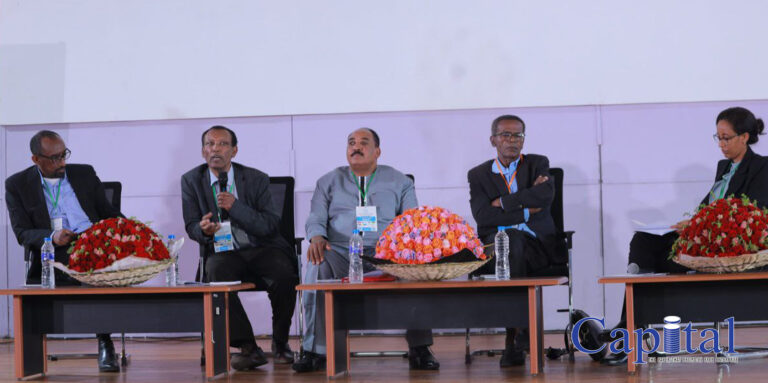
Mounting tax burdens and Ethiopia’s worsening economic downturn are driving a wave of layoffs and job insecurity across the private sector, as highlighted at the 22nd International Ethiopian Economic Conference convened by the Ethiopian Economic Association (EEA). Business leaders and experts at the gathering warned that unless sweeping reforms and safeguards are implemented, continued staff reductions may become the norm as companies fight to remain afloat.

The conference, which focused on the theme of “minimum wage productivity” and the need for a robust legal framework for a national minimum wage, brought together government officials, academics, labor leaders, and private sector representatives to address the economic challenges affecting businesses and workers alike.

Addis Kasahun (PhD), Vice President of the EEA and managing director of Kilimanjaro Consulting, described the situation as a “struggle for survival” rather than progress. “Those of us in the private sector are not in a growth phase. We are in the survival phase,” Addis told participants. He explained that many businesses are being crippled by what he described as “heavy taxes imposed every year,” which, combined with sluggish economic activity, have forced companies to continuously downsize in order to meet their tax liabilities and stave off closure.

Addis argued that Ethiopia is currently experiencing the adverse effects of a “war economy”—referring to the residual economic instability stemming from conflict and macroeconomic shocks. “The pressure to pay these taxes is so severe that we are constantly reducing our staff in order to cover the fees,” he said.

He called for the urgent creation of a clear legal framework for implementing a national living wage. According to Addis, the 2019 Labor Act only provides a general structure for the wage board but falls short of setting a defined minimum wage for the private sector. He emphasized the need for reliable data collection, rigorous social dialogue, and strong implementation mechanisms to inform new wage policy.

Martha Kibru (PhD), another panelist, pointed out the disconnect between the country’s strong headline GDP growth—reported at over 6%—and the realities faced by the majority of Ethiopian workers. She noted the economy has not succeeded in generating enough productive jobs for the country’s rapidly expanding and youthful population. High youth and women’s unemployment rates in urban areas continue to exceed 25% in some years, she said, and inflation has eroded workers’ purchasing power, pushing many employees deeper into poverty.

“Despite rapid growth, the economy is not creating enough jobs for new people entering the labor market,” Martha explained. She further highlighted the absence of a national minimum wage, weak wage systems, and minimal job and social protection—especially in the informal sector, which employs the majority of Ethiopians.

On the government side, Tiumezgi Berhe from the Ministry of Labour and Skills said that a study on the minimum wage had been completed and a legal framework is in development for establishing a minimum wage board. To avoid unintended consequences, he recommended implementing minimum wage policies in a gradual, sector-specific manner. Tiumezgi also stressed the importance of parallel policies that encourage job creation, investment, and consideration of inflation and foreign exchange realities.

Ethiopia faces deepening food crisis amid soaring costs and persistent malnutrition

0

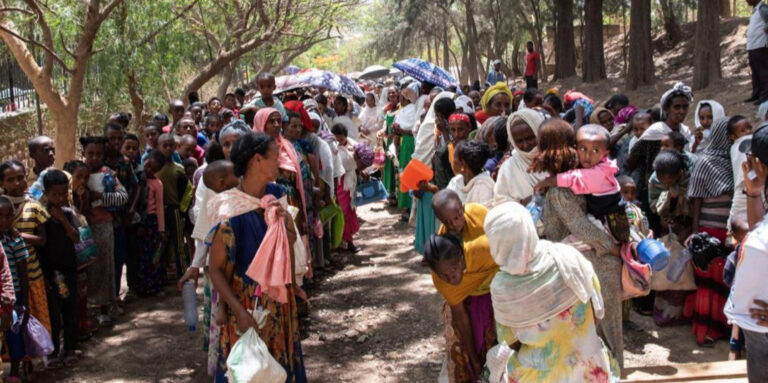
Ethiopia is confronting a severe and worsening food crisis, with millions of its citizens struggling to access sufficient and nutritious food, according to the latest State of Food Security and Nutrition in the World 2025 report released last week. Rising prices for healthy foods combined with inflation are placing enormous strain on the purchasing power of average Ethiopians, pushing many into food insecurity and malnutrition.

The report, which draws on findings from the World Food Crises 2025 study, ranks Ethiopia among the top five countries globally experiencing the highest levels of food insecurity (IPC/CH Phase 3 and above) in 2024. Across 53 countries considered in crisis, approximately 295 million people face severe food insecurity, including over 35 million in emergency situations (IPC Phase 4) and nearly 2 million in disaster conditions (IPC Phase 5).

Historically, sharp declines in real food wages during the 2007–2008 and 2011–2012 food crises led to a 22% decrease in the amount of food people could afford, significantly aggravating food shortages and economic vulnerability for African families. While wages partially recovered between 2013 and 2018, surpassing inflation by 60%, a similar steep drop reoccurred in 2022, creating fresh hardships for Ethiopia’s most vulnerable populations.

Although international real wages are projected to increase moderately in 2023 and 2024, these gains have yet to meaningfully relieve pressure in Ethiopia. The report highlights troubling trends in nutritional status: after some earlier improvement, the overall prevalence of high food insecurity actually worsened from 25.0% in 2014–2016 to 28.0% in 2021. This indicates that a significant portion of the population is unable to consistently secure adequate and nutritious diets.

Child malnutrition remains a critical concern. In 2023, 37% of children under five years old were stunted, a figure nearly unchanged since 2012. While rates of wasting (acute malnutrition) have declined from 12% to 7% in the same period, sustained high stunting rates reflect long-term nutritional deficits that threaten child development.

The soaring cost of healthy food exacerbates these challenges. Measured in purchasing power parity (PPP) dollars per person per day, the price of nutritious foods in Ethiopia rose sharply from $2.94 in 2017 to $4.47 in 2024. This rising expense places healthy diets out of reach for many low-income households, forcing compromises on food quality and diversity.

Despite these concerns, the report identifies some positive developments. Exclusive breastfeeding rates among infants aged 0–5 months increased significantly from 49% in 2012 to 62% in 2023. Additionally, the incidence of low birth weight, though still concerning, has slightly improved from 15% to 14% in the same timeframe.

Nevertheless, the overall picture painted by the data remains sobering, underscoring the urgent need for comprehensive, sustained action. Experts stress that addressing this multifaceted crisis requires strengthening social safety nets, promoting sustainable and resilient food systems, and adopting policies that improve access to affordable, nutritious food for all Ethiopians.

Speaking at the second United Nations Food Systems Summit held in Addis Ababa, Prime Minister Abiy Ahmed affirmed Ethiopia’s active role in transforming its food sector. He emphasized the government’s commitment to a food systems approach focused on healthy eating, designed to tackle interconnected challenges of food insecurity, climate change, social inequality, and economic vulnerability.

Prime Minister Abiy called for predictable and affordable financing for agricultural investments, equitable access to climate-smart technologies, and fair international trade regulations to support Ethiopia’s food security goals. While Ethiopia’s proactive measures offer hope amid the crisis, the inflation-driven rise in food costs remains a formidable barrier to ensuring all citizens can access adequate nutrition.

“Creativity on the Brink? Why Ethiopia Must Act Now to Save Its Creative Future”

0

The rhythms of Ethiopia’s creative pulse beat loud in its music, films, fashion, and visual arts. Yet, behind the vibrant expressions lies a troubling silence  –   one of neglect, underinvestment, and unfulfilled potential. –

Initiative Africa (IA), the long-standing civil society organization renowned for promoting social change through the arts, has pulled back the curtain with a recent groundbreaking survey on Ethiopia’s creative industries. The findings are both urgent and revealing.

“We wanted to go beyond anecdotes,” says Daniel Samuel, IA’s Programs Officer and lead researcher. “This study asked creatives themselves  –   what’s holding you back? The answers were louder than we expected.”

And what they heard was a chorus of obstacles: lack of funding, weak networks, piracy, limited market access, outdated equipment, and poor recognition of the sector’s economic contribution. In contrast to booming creative economies in Nigeria and South Africa  –   where film, music, and design are treated as strategic industries  –   Ethiopia remains years behind.

Daniel puts it bluntly:

“In Nigeria, the creative industry contributes over 2.3% to GDP and employs millions. In South Africa, it’s a policy priority. Here? We’re still asking whether it even counts.”

Yet Ethiopia’s creative sector, often informal and fragmented, has been a quiet engine of resilience  –   creating jobs, preserving heritage, and offering a mirror to society. The survey confirms this: over 60% of respondents reported self-employment in creative fields, while others generate part-time income from performances, exhibitions, or digital content.

Despite the odds, creatives persist. IA knows this better than most. Through its flagship program  –   the Addis International Film Festival (AIFF)  –   IA has become a beacon for documentary filmmaking in the region. Since its launch in 2007, AIFF has screened over 400 films, mentored emerging Ethiopian filmmakers, and given a voice to stories that would otherwise remain untold.

“Next year marks our 20th anniversary,” Daniel adds with pride. “And this survey will guide us on what needs to change before we enter the next chapter.”

The most cited challenge? Access to resources. From camera equipment to rehearsal space, creatives struggle to modernize. Others flagged the lack of consistent contracts, high raw material costs, weak copyright enforcement, and limited digital literacy.

But the story isn’t all grim. IA’s report also uncovered rich veins of talent, ingenuity, and entrepreneurial energy.

“What’s incredible is how much these creators do with so little,” says Daniel. “They aren’t waiting for handouts. They’re building brands, mentoring youth, launching digital platforms  –   all with limited support.”

IA believes that the right mix of policy support, investment, and visibility could unleash a creative renaissance in Ethiopia. The organization is now calling on government institutions, private sector players, and development partners to step up  –   not just with funding, but with strategy.

“This is not just about culture,” Daniel insists. “This is about jobs, exports, innovation. It’s about who we are and what future we want to build.”

With the African Continental Free Trade Area (AfCFTA) opening doors to cross-border creative exchange, Ethiopia stands at a crossroads. Will it invest in its storytellers, designers, musicians, and performers  –   or continue to watch others dominate Africa’s creative economy?

As IA prepares for the 20th edition of AIFF in 2026, the hope is that this moment becomes a turning point  –   not just for the festival, but for Ethiopia’s creative industry at large.

“Our creatives don’t need saving,” says Daniel. “They need partners.”

Global Food Summit urges strategic investment to secure food future

0

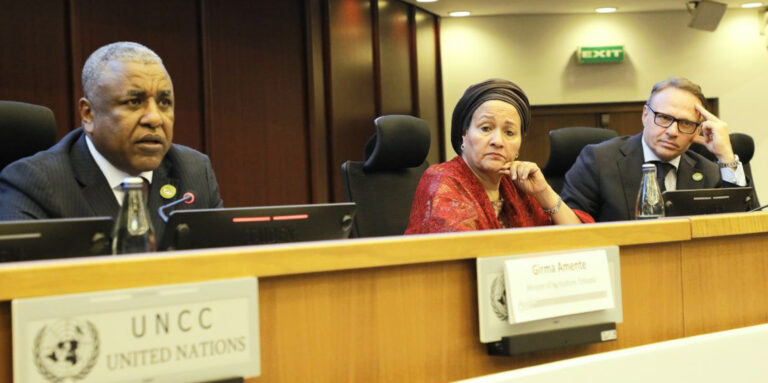
At the recent Second United Nations Food Systems Summit Stocktake (UNFSS+4) held in Addis Ababa, world leaders delivered a clear and urgent message: ensuring global food security requires smart, strategic investment, not mere aid or charity. Ethiopia’s Agriculture Minister Girma Amente emphasized that addressing food shortages is fundamentally about investing in our shared future.

Co-hosted by Ethiopia and Italy, the summit took place amid unprecedented crises, including climate change, geopolitical conflicts, and economic instability — factors which have severely exposed the fragility of global food systems. Girma highlighted the strong international commitment demonstrated by the presence of senior leaders and the UN Deputy Secretary-General, reaffirming the collective resolve to overcome these urgent challenges.

“The summit focused on unlocking and redirecting both public and private financing towards sustainable food systems,” Girma said. “This is not a charitable issue; it is a smart, strategic investment in our shared future.”

Italy’s Agriculture Minister, Francesco Lollobrigida, underscored the deep partnership between the two nations in advancing food security. He stressed Italy’s dedication to promoting sustainable agriculture based on its own agri-food expertise and environmentally sound farming sectors. Lollobrigida also detailed Italy’s “Mattei Plan,” a strategic framework fostering mutual, respectful cooperation with Africa, marking a departure from previous philanthropic models. “Hosting the summit in Ethiopia reflects our commitment to center Africa in this global agenda,” he added.

Representing the UN Secretary-General, Deputy Secretary-General Amina J. Mohammed acknowledged that while nations are developing programs to transform their food systems, current efforts remain insufficient. She expressed grave concern over the weaponization of hunger in conflict zones, specifically citing the humanitarian crisis in Gaza as a “man-made event” causing unjustifiable starvation. Mohammed also drew attention to the dire situation in Sudan, calling for adherence to international humanitarian law and unhindered aid access.

Despite these grave challenges, Mohammed conveyed a hopeful yet urgent call for action: “Change is not only possible; it is happening. Now is the time to step up.” The summit reinforced four key objectives: sharing progress and obstacles, strengthening inclusive multi-stakeholder accountability, mobilizing and broadening investment and finance, and sustaining momentum to achieve the Sustainable Development Goals (SDGs) by 2030.

The 2025 World Food Security and Nutrition Situation Report (SOFI), released during the summit, pointed to a slight global reduction in hunger but stressed that urgent and large-scale investments are critical to accelerate progress. Over three days of deliberations from July 27 to 29, the summit reaffirmed the necessity of transforming commitments into actionable investment strategies to realize the ambitious food security and nutrition targets embedded within the SDGs.