US diplomats disclosed that the TPLF, who ignited the first fire on November 3 evening, had targeted to overthrow the central government and repossess the political spectrum. They hinted that it’s their expectation that the operation will be done sooner.
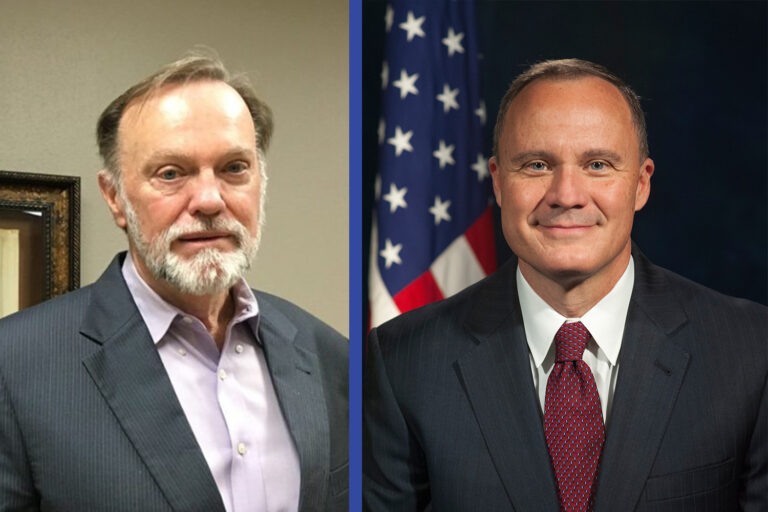
On the telephone press conference that was held on Thursday evening, Assistant Secretary for African Affairs, Tibor Nagy and the US Ambassador to Ethiopia Michael Raynor, have briefed journalists about the current situation in Ethiopia’s northern region.
They said that both sides were not willing to take part in mediation, which the US officials called it’s a way for a goal not by itself an end of goal.
Since the operation commenced by the Ethiopian government following the TPLF force firing on Ethiopian Defense Force, the regional force leaders have expressed their desire for negation, while the Ethiopian government underlined that it will be happen when the mission is concluded and the target of the mission achieved.
However TPLF expressed its desire for negotiation on its media outlets and via some international media. Furthermore the US Ambassador said that both sides are not ready for negotiation.
In response to the TPLF chairman’s argument that he stated for Financial Times this week saying that a breakup of Ethiopia could be one of the consequences of this conflict, Nagy said that, “I am not privy to the thinking of the TPLF leadership when they started this, but this was not to secede and create an independent state from Ethiopia, because the Ethiopian constitution has a provision for the states to be able to secede peacefully.”
“I mean, again, it is difficult to tell the motivation, but it seems like they were doing this more to depose the prime minister from power and to reassert themselves into the prominent position that they had atop the Ethiopian political spectrum for the last 27 years,” he explained the motive of igniting the conflict from the TPLF side.
He ridiculed their tactic for an opposite result has occurred.
“So hopefully right now I think that their tactic has had the opposite effect from what they were planning. It seems like this has brought the Ethiopian nation together, at least for the time being, in support of the prime minister, because this has really stoked Ethiopian nationalism, and hopefully those positive forces will remain,” Nagy said.
“But again, I want to make it very clear that this is not about Tigray. There is no equivalency here. This is not two sovereign states fighting against each other. This is a faction of the government running a region in Ethiopia that has decided to undertake hostilities against the central government, and it has not – in my view – has had the effect that they thought that they were going to get,” he added.
Regarding standing together to tackle the current challenge, the US Ambassador stressed that the central government has grabbed support from regions and general public. “Seemingly regional governments, federal governments, and large swaths of the people galvanizing around the government – the federal government and the national,” he expressed.
“From the first attacks on November 3rd by the TPLF, on the Ethiopian National Defense Force bases in the Tigray region, we have publicly and privately highlighted our grave concern. We strongly urge an immediate de-escalation of tensions, a cessation of hostilities, and a return to peace,” stated Nagy-the Assistant Secretary.
He said that the United States continues to coordinate with the Ethiopian government, local authorities, and international partners to ensure that civilians in and around the Tigray region have access to needed humanitarian assistance, “The protection and security of all civilians is essential. Our top priority is ensuring the welfare, protection, and security of U.S. citizens. The U.S. Embassy in Addis Ababa continues to work closely with the United Nations and others to relocate U.S. citizens in Tigray, as conditions permit,” he expounded.
He criticized the TPLF action that demands more attention and makes the case an international issue by saying the fighting in Tigray shall continue, as events last weekend suggest that the TPLF seeks to internationalize the conflict.
“The TPLF leadership has admitted responsibility for the November 13 missile launches at airports in Bahir Dar and Gondar, in the Amhara region, and the November 14 attack in Eritrea. These unacceptable attacks make the situation more dangerous, and the Secretary condemned them in his most recent statement. We have been in contact with Eritrean Government officials and are urging their continued restraint,” he said.
The Assistant Secretary said that the US continue to press the Ethiopian government to restore communication in the region as an act of accountability and transparency and to enable greater contact with civilians, including American citizens in the region.
“We also urge both sides to maintain access for humanitarian organizations to provide essential assistance to vulnerable groups in the region. We have been unequivocal with the Ethiopian Government and the TPLF on civilian lives since civilians must be protected and humanitarian access must be ensured,” he added.
“We remain deeply concerned over reports that civilians have been purposely targeted and attacked. We condemn the November 12 massacre in Mai-Kadra, apparently perpetrated by TPLF soldiers and militia as they retreated from the town,” he said expressing his concern on the attack of civilians
“Those found responsible must be held accountable in accordance with the law. Additionally, we are working with the Ethiopian Human Rights Commission and the Ethiopian government to ascertain why several journalists were recently arrested, their current status and well-being, and what charges they are facing,” he said.
Nagy appreciated Eritrea for its reservation as TPLF tried to internationalizing the conflict, “We expressed our thanks to Eritrea for not being provoked when they were attacked by missiles because apparently, one of the aims of the TPLF hardcore leadership was to try to internationalize the conflict so that there would be a way to try to really fan the flames of patriotism within the general population of Tigray, and we appreciate the fact that Eritrea has been restrained.”
“Obviously, the Ethiopian government is also very keen to keep the situation from being internationalized because that would be destabilizing the entire region,” the diplomat, who knows the region very well, said.
The Assistant Secretary who appreciated mediation added that it is a tactic and a way to get to the goal that is a quick end to the conflict, restoration of peace, and protection of civilians.
“A whole series of regional leaders, continental leaders, other international leaders have reached out with offers of mediation. At this point, neither party, from everything we hear, is interested in mediation,” he added.
Regarding humanitarian issue, Michael Raynor, US Ambassador says ,“We, along with other humanitarian governments, including the United Nations, have been pressing from the outside: establishing humanitarian access for commodities – fuel, gas, other items; establishing a corridor to enable the insertion of those supplies and also to facilitate and monitor civilians. We raised that with the government. They said they would look into it.”
“When I raised that with the TPLF, they did not really engage on that possibility. But we continue to press it very hard,” he added.
“Another aspect of this is that as the Ethiopian government continues to articulate a vision of the military conflict coming to an end fairly soon, a week or two from now, which isn’t to say that there isn’t a humanitarian crisis on the ground, because there absolutely is,” he said hinting when the conflict might be over and humanitarian crises shall be ended.