

The new interim administration of Tigray Regional state has said it will work aggressively on public relation and communication in the region to separate the people from the TPLF since the people of Tigray have been very close and highly attached to the TPLF.
“The Tigray people have been hostage of the TPLF for many years. One of the important work the interim administration will be involved in is the rehabilitation work on cooperating with the federal government to ensure justice and good governance widens the political space in the region by involving all political parties,” says Mulu Nega, CEO of the interim administration.
One of the mandates of the interim government is reorganizing the government structure of the region.
The Interim Administration said it has finalized its charter to re-establish new Regional and Zone cabinet structures. However, as the CEO explained Woreda councils and Kebele administration will continue.
In his media briefing on Thursday, CEO of the Interim Administration of Tigray Regional State, Mulu Nega said provisional administration will be instituted in the areas liberated from the TPLF.
It is to be recalled the House of Federation has endorsed to establish an interim administration in Tigray Regional State following the defiant TPLF junta vicious attack on the Northern Command of Ethiopian National Defense Force (ENDF). The Interim Administration will also establish an administration with the participation of independent and neutral scholars and political parties operating in Tigray. “The political space in the region has been very narrow. So we will open up this and invite all political parties, groups and individuals to operate by respecting the rule of law,” he said.
Also as the CEO noted TPLF will not be allowed to participate in the new administration. Since high officials and executive bodies are engaged in the crime and the so called illegal election. Moreover, in collaboration with other relevant government bodies it will take steps to address the situation that threatens the constitutional order in Tigray Regional State.
“The establishment of the interim administration aims to ensuring the benefits of the People of Tigray and sustain lasting peace by restructuring the preceding administration system,” the CEO said.
In this regard as Mulu noted the new administration will establish a task force to investigate the case of individuals in custody in the Tigray region.
The Tigriyan people have been suffering from lack of justice and good governance, Mulu noted, adding that the interim administration will work to create an enabling situation whereby these problems could be tackled.
The CEO added that the interim administration will discharge its responsibility in facilitating credible and participatory elections to be held in Tigray Regional State.
“Making smooth transition and conducting free and legal election are the main targets of the Interim Administration of Tigray Regional State,” said Mulu adding that the people of Tigray have been coerced into unfair and illegal elections by the Tigray People’s Liberation Front (TPLF) for years.
According to him, the immediate action will be resuming social services not properly functioning at the moment, including education, health and so forth, in collaboration with the federal government, sector ministries and other stakeholders.
Regarding the relation with Eritrea, Mulu said, “We will try to restore peace and stability with neighboring regions and Eritrea. There is some mistrust. So our task is to restore peace and stability within Tigray as well as with neighboring regions and the Eritrean government.”
Ethiopia has said its forces are bearing down on the capital of Tigray region, in a two-week-old war that has killed hundreds and forced 30,000 refugees to flee into neighboring Sudan.
“Our defense forces are moving forward and closing in on Mekelle,” government spokesman Redwan Hussein told reporters. “There are a number of towns that have fallen,” he added.
Moreover, various international organizations are evacuating their staff from Mekelle and Tigray. As Redwan informs the Capital newspaper, countries, including the United Nations, were evacuating their citizens and staffs from the Tigray region, Hundreds of foreign aid workers have left Tigray through boarders of Afar.
He said the regional government is protecting them from Mekelle to the border of Afar State through their satellite communications. At the same time, all organizations must provide a list of people to be evicted and ensure that they are not wanted for crime. In the meantime, he said, the government is seeking better conditions for humanitarian assistance to the United Nations to alleviate the living conditions in the Tigray region.
As Redwan said the government has organized two groups of fact finding missions to assess the situation on the ground on both the western and east southern parts of the region to find which way is easy to supply humanitarian assistance and there is a plan to bring back the migrants from neighboring countries.
The vow of the new Tigray interim administration
BoA ascends in profit despite surge in expenses
Bank of Abyssinia (BoA) has registered massive profits, while its expenses have surged by 1.3 billion birr in the ended financial year.
The bank that has been in operation for the past 25 years has stated that its revenue for the 2019/20 financial year boosted to about 5.7 billion birr with one third increment compared with the 2018/19 financial year.
In its report that was disclosed on the general assembly held on Thursday November 19, the revenue shows an additional 1.4 billion birr earning compared with the preceding year. The expense has also skyrocketed by 1.33 billion birr, which is a 40.6 percent increment compared with the 2018/19 financial year expense.
In the reported year, the bank’s total expense has been almost 4.6 billion birr. “The interest fee that follows the expansion of deposit and depositors, salary and benefit of staffs, administrational cost including rent and costs on technology development are the major reasons for spiking the expense,” the Bank of Abyssinia said.
From the total expense, the salary and benefits of staff and interest fee took the lion’s share of 39.8 and 38.4 percent respectively. Regarding administration and rent expense the bank that opened 166 new branches in the 2019/20 financial year has allocated huge amount of cost for rent and furnishing of the new branches.
The bank has managed to double the number of depositors in the ended financial year that reached at 2.6 million with 103 percent increment.
The total deposited in the stated period has also surged to 47.6 billion birr by an incline of 48 percent from the preceding year. In the year, additional 15.5 billion birr has been mobilized as saving that have additional 1.2 billion birr compared with the projection.
The bank loan and advance has also climbed by more than half compared with the 2018/19 financial year. In the 2019/20 financial year the loan and advance has reached to more than 37 billion birr with 57 percent increment compared with the preceding year.
In the year, the bank has generated USD 400 million with 17 percent increment, while it was less by USD 104 million compared with the projection. In the stated period, BoA had expected to generate more than half a billion dollar.
In the reported financial year, the company’s gross profit before tax stood at more than one billion birr with six percent increment compared with the preceding year.
The gross profit after tax reached 853 million birr with an increment of 76 million birr compared to the 2018/19 financial year.
The earnings per share for the year have stood at 7.2 birr which was 7.23 a year ago.
The financial firm’s total capital has reached 5.68 billion birr with 14.7 percent increment, while the paid up capital increased by 12 percent and stood at 3.15 billion birr.
The bank asset has reached close to 57 billion birr a hike of 45 percent compared with the 2018/19 performance.
Ethiopia ranked 40th from 52 Africa countries on the Girl-Friendliness Index
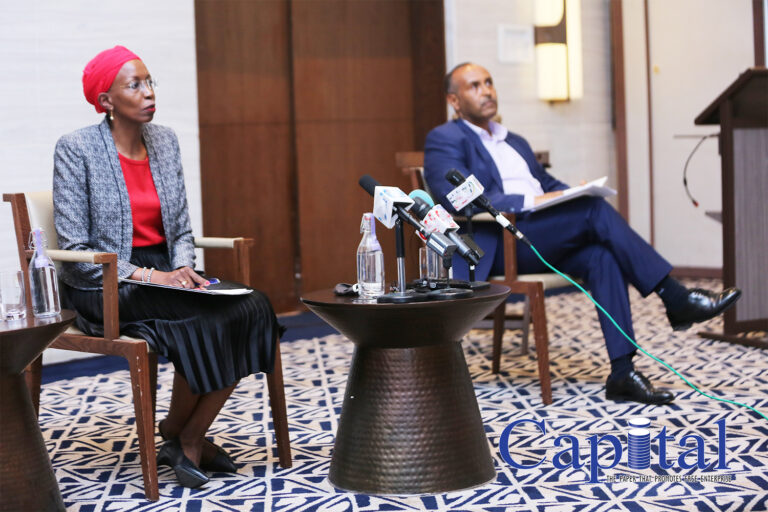
New report by the African Child Policy Forum (ACPF) on Africa and women suggests African countries to create girl-friendly nations through sustainable political commitment reflected in coordinated action that brings together enabling comprehensive legal and policy frameworks, adequate budgeting, and effective implementation.
Ensuring the wellbeing of all girls, particularly the most vulnerable, requires strong commitment and coordinated action to address these systematic barriers since it is evident that girls in Africa face intertwined legal, social, economic, cultural, attitudinal and administrative challenges that hinder the enjoyment of their rights. African girls are being robbed of their future and condemned to a lifetime of discrimination and inequality, according to an alarming report which ranks 52 African countries according to how ‘girl-friendly’ they are.
“To be a girl in Africa frequently means being denied education; getting married too young; enduring sexual, physical and emotional abuse at home, work and school; being barred from owning and inheriting property; and being last in the queue when it comes to state spending on health and Covid 19 make things worse,” says the authors.
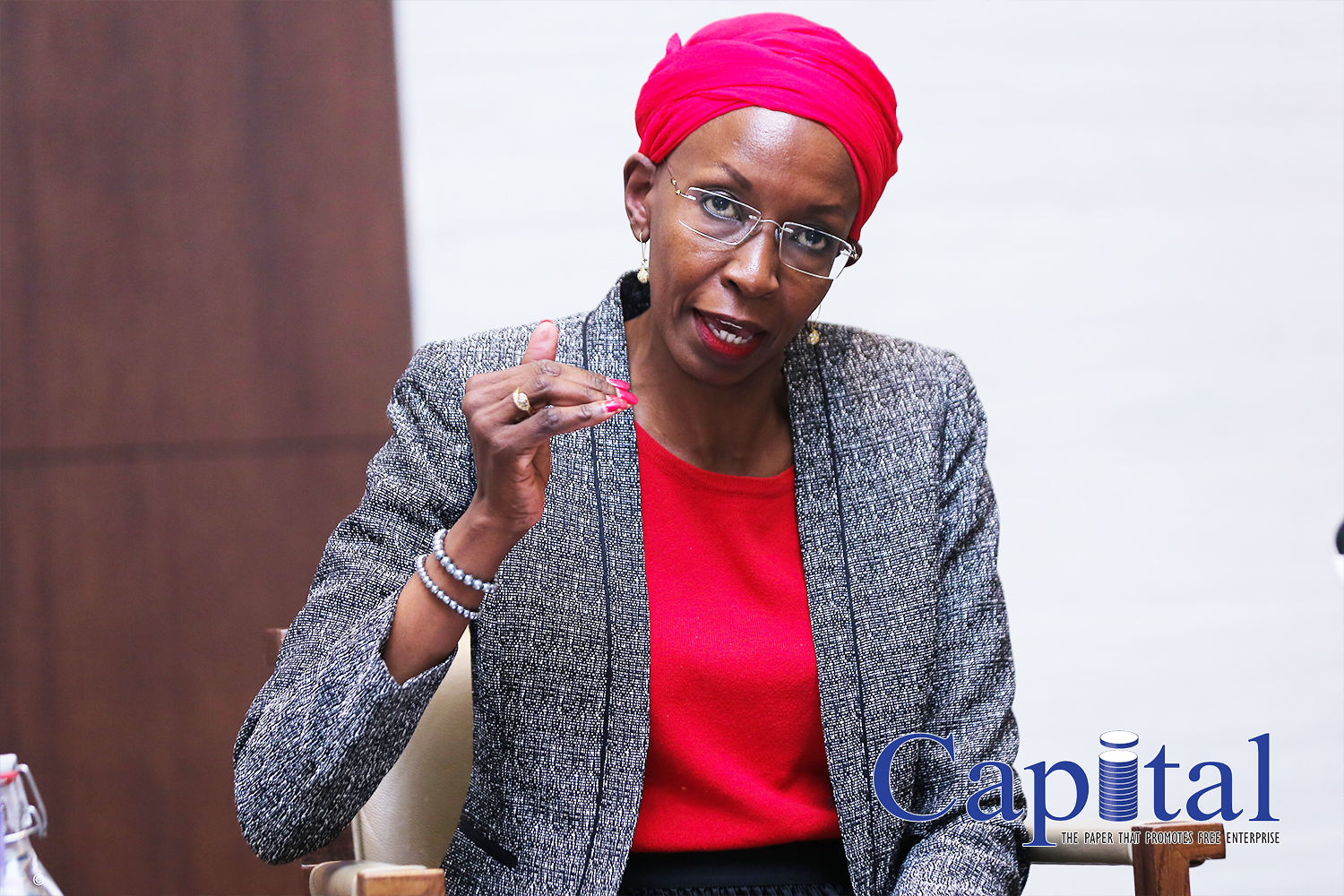
“African girls have endured harmful cultural beliefs, patriarchal gender attitudes and discriminatory laws, policies and practices for far too long,” said Dr. Joan Nyanyuki, ACPF’s Executive Director.
The report finds that girls living in Africa today are more likely to be victims of trafficking, sexual abuse and labor exploitation; more likely to get married much younger and experience FGM than girls anywhere else; discriminated against by laws relating to marriage and inheritance; and likely to be poorer than boys.
In addition, they are at higher risk of mental health problems; more likely to be excluded from healthcare; and denied a decent education and more likely to drop out of school.
ACPF’s unique Girl-Friendliness Index (GFI) shows that African governments are increasingly becoming more girl-friendly and that some African governments take girls’ rights and well being seriously but many do not.
The GFI rates Mauritius as the most girl-friendly country in Africa, with Tunisia, South Africa, Seychelles, Algeria, Cape Verde and Namibia also in the top category. Bottom of the table comes South Sudan, with Chad, Eritrea, Democratic Republic of Congo, Niger, Central African Republic and Comoros all rated as least child-friendly and Ethiopia ranked 40th from 52 Africa countries on how friendly they are to women and girls.
“Without determined and targeted action, African girls will be left behind as we step up efforts to achieve Africa’s Agenda 2063 and most specifically Africa’s Agenda for Children 2040,” said Dr. Joan Nyanyuki.
“This important report acknowledges the progress made by some African governments towards protecting and promoting girls’ rights and wellbeing, but it also shows that much more needs to be done, especially in this time of the Covid-19 pandemic,” she expounded.
The report calls for action in ten priority areas including Develop girl-friendly laws and policies and repeal discriminatory provisions, withdraw reservations to regional and international treaties on the rights of girls, Invest in girls’ education at all levels, Invest in girls’ health and nutrition. To achieve the desired results, these actions need to be undertaken with the active involvement of relevant stakeholders including the private sector, civil society organizations and girls themselves.
Africa’s governance performance declines for the first time in a decade: 2020 Ibrahim Index
The 2020 Ibrahim Index of African Governance (IIAG) launched by the Mo Ibrahim Foundation, highlights a decline in African governance performance for the first time since 2010.
The 2019 African average score for Overall Governance falls by -0.2 points below that of 2018, registering the first year-on-year score deterioration since 2010. This recent decline is triggered by worsening performance in three of the four IIAG categories: Participation, Rights & Inclusion, Security & Rule of Law and Human Development.
In fact, progress had already been slowing down since 2015. Over 2015-2019, performance slackened in both Human Development and Foundations for Economic Opportunity, while deterioration continued in both Security & Rule of Law and Participation, Rights & Inclusion, even worsening for the latter.
However, over the decade, overall governance performance has slightly progressed, and in 2019, 61.2% of Africa’s population lives in a country where Overall Governance is better than in 2010.
The 2020 IIAG is the most comprehensive assessment of governance performance in 54 African countries. It tracks Africa’s trajectory across four main categories: Security & Rule of Law; Participation, Rights & Inclusion; Foundations for Economic Opportunity; and Human Development. The new IIAG incorporates three significant upgrades: an expanded governance scope, including new areas such as environment and equality; strengthened indicators, thanks to better data availability; and a new section fully dedicated to Africa’s Citizens’ Voices.
Progress achieved over the last decade has mainly been driven by improvements in economic opportunities and human development. Foundations for Economic Opportunity (+4.1) and Human Development (+3.0) have made good progress, primarily led by improvements in the sub-categories Infrastructure and Health, complemented by advances in Sustainable Environment.
This is threatened, however, by an increasingly precarious security situation and concerning erosion in rights as well as civic and democratic space. Over the last decade, both Participation, Rights & Inclusion (-1.4) and Security & Rule of Law (-0.7) have registered worrying declines.
Over the past decade, 20 countries, home to 41.9% of Africa’s population, while achieving progress in Human Development and Foundations for Economic Opportunity, have at the same time declined in both Security & Rule of Law and Participation, Rights & Inclusion.
Only eight countries manage to improve in all four categories over the decade: Angola, Chad, Côte d’Ivoire, Ethiopia, Madagascar, Seychelles, Sudan and Togo.
The 2020 IIAG provides a picture of the continent before it was hit by COVID-19. In terms of Participation, Rights & Inclusion, progress was slowing long before the pandemic, which only worsens the existing negative trajectory. Conversely, economic opportunity was set on a positive course of sustained progress, and the impact of COVID-19 is now threatening this hard-won achievement.
In 2019, new analysis of the Citizens’ Voices section in the IIAG reveals that Public Perception of Overall Governance registers the lowest score over the decade, with the pace of deterioration nearly doubling within the last five years.
The strongest correlations of Overall Governance performances are found with the sub-categories Rule of Law & Justice and Inclusion & Equality. The indicators showing the strongest relationships with high overall governance scores span all four IIAG categories, underlining the importance of a balanced approach to governance. The growing imbalance between the various governance dimensions outlined above is likely to threaten overall governance performance.
