Saturday, April 4, 2026
Home Blog Page 3556

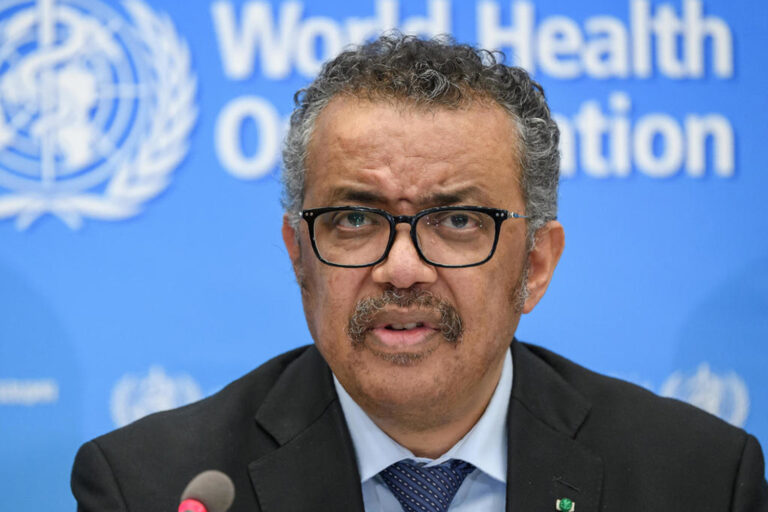
WHO Director-General’s opening remarks at the media briefing on COVID-19

0

The World Health Organization officials said Friday February 28, they are increasing the risk assessment of the coronavirus, which has spread to at least to 49 countries in a matter of weeks, to “very high” at a global level.
Outside China as of Friday morning, 4,351 cases across at least 49 countries have been confirmed, including 67 deaths, WHO Director-General Tedros Adhanom Ghebreyesus said. About two dozen countries have reported only one case. He said most cases of COVID-19 can still be traced to known contacts or clusters of cases and there isn’t any “evidence as yet that the virus is spreading freely in communities.” That’s one reason why WHO hasn’t declared the outbreak a pandemic, Tedros said.
Denmark, Estonia, Lithuania, Netherlands and Nigeria all reported their first cases on Thursday, Tedros said. All these cases have links to Italy, he added.
Tedros reiterated that the virus could still turn into a pandemic. He urged against fear and panic, adding, “our greatest enemy right now is not the virus itself. It’s fear, rumors and stigma.” Below is the full text of his speech.

Good afternoon to everyone online and in the room.
First, as usual, the numbers:
In the past 24 hours, China reported 329 cases – the lowest in more than a month.
As of 6am Geneva time this morning, China has reported a total of 78,959 cases of COVID-19 to WHO, including 2791 deaths.
Outside China, there are now 4351 cases in 49 countries, and 67 deaths.
Since yesterday, Denmark, Estonia, Lithuania, Netherlands and Nigeria have all reported their first cases. All these cases have links to Italy.
24 cases have been exported from Italy to 14 countries, and 97 cases have been exported from Iran to 11 countries.
The continued increase in the number of cases, and the number of affected countries over the last few days, are clearly of concern.
Our epidemiologists have been monitoring these developments continuously, and we have now increased our assessment of the risk of spread and the risk of impact of COVID-19 to very high at a global level.
What we see at the moment are linked epidemics of COVID-19 in several countries, but most cases can still be traced to known contacts or clusters of cases. We do not see evidence as yet that the virus is spreading freely in communities.
As long as that’s the case, we still have a chance of containing this virus, if robust action is taken to detect cases early, isolate and care for patients and trace contacts.
As I said yesterday, there are different scenarios in different countries, and different scenarios within the same country.
The key to containing this virus is to break the chains of transmission.
Yesterday I spoke about the things countries must do to prepare for cases and prevent onward transmission.
The report of the WHO-China Joint Mission has now published its report, which is available in English on the WHO website, and will also be posted in Chinese on the National Health Commission website.
The report includes a wealth of information, and 22 recommendations for China, for affected and unaffected countries, for the international community, and the general public.
It calls for all countries to educate their populations, to expand surveillance, to find, isolate and care for every case, to trace every contact, and to take an all-of-government and all-of-society approach – this is not a job for the health ministry alone.
At the same time, work is also progressing on vaccines and therapeutics.
More than 20 vaccines are in development globally, and several therapeutics are in clinical trials. We expect the first results in a few weeks.
But we don’t need to wait for vaccines and therapeutics. There are things every individual can do to protect themselves and others today.
Your risk depends on where you live, your age and general health. WHO can provide general guidance. You should also follow your national guidance and consult local health professionals.
But there are 10 basic things that you should know.
First, as we keep saying, clean your hands regularly with an alcohol-based hand rub, or wash them with soap and water.
Touching your face after touching contaminated surfaces or sick people is one of the ways the virus can be transmitted. By cleaning your hands, you can reduce your risk.
Second, clean surfaces regularly with disinfectant – for example kitchen benches and work desks.
Third, educate yourself about COVID-19. Make sure your information comes from reliable sources – your local or national public health agency, the WHO website, or your local health professional. Everyone should know the symptoms – for most people, it starts with a fever and a dry cough, not a runny nose. Most people will have mild disease and get better without needing any special care.
Fourth, avoid traveling if you have a fever or cough, and if you become sick while on a flight, inform the crew immediately. Once you get home, make contact with a health professional and tell them about where you have been.
Fifth, if you cough or sneeze, do it into your sleeve, or use a tissue. Dispose of the tissue immediately into a closed rubbish bin, and then clean your hands.
Sixth, if you are over 60 years old, or if you have an underlying condition like cardiovascular disease, a respiratory condition or diabetes, you have a higher risk of developing severe disease. You may wish to take extra precautions to avoid crowded areas, or places where you might interact with people who are sick.
Seventh, for everyone, if you feel unwell, stay at home and call your doctor or local health professional. He or she will ask some questions about your symptoms, where you have been and who you have had contact with.
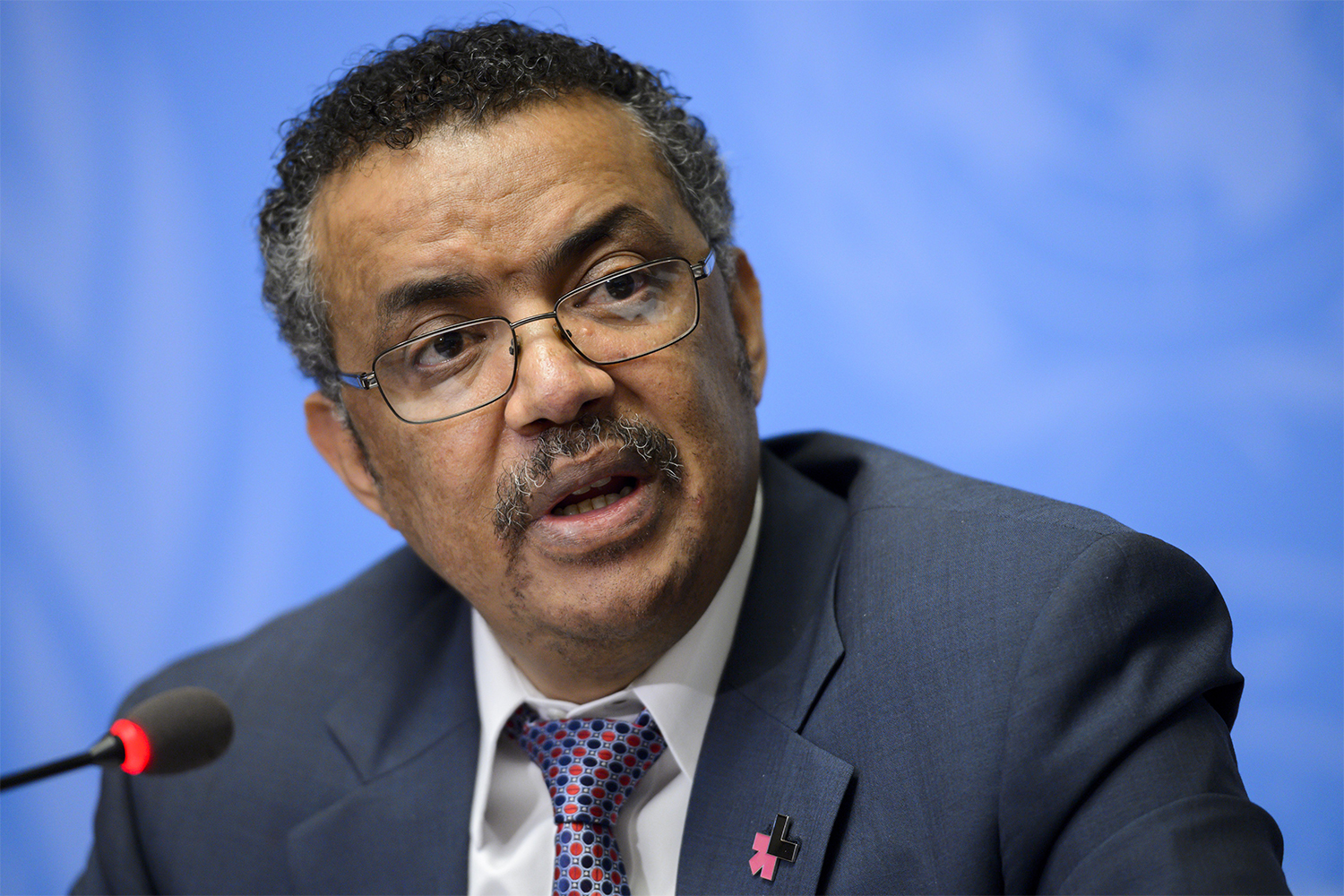
This will help to make sure you get the right advice, are directed to the right health facility, and will prevent you from infecting others.
Eighth, if you are sick, stay at home, and eat and sleep separately from your family, use different utensils and cutlery to eat.
Ninth, if you develop shortness of breath, call your doctor and seek care immediately.
And tenth, it’s normal and understandable to feel anxious, especially if you live in a country or community that has been affected. Find out what you can do in your community. Discuss how to stay safe with your workplace, school or place of worship.
Together, we are powerful. Containment starts with you.
Our greatest enemy right now is not the virus itself. It’s fear, rumours and stigma.
And our greatest assets are facts, reason and solidarity.
I thank you.
outdoor exhibition

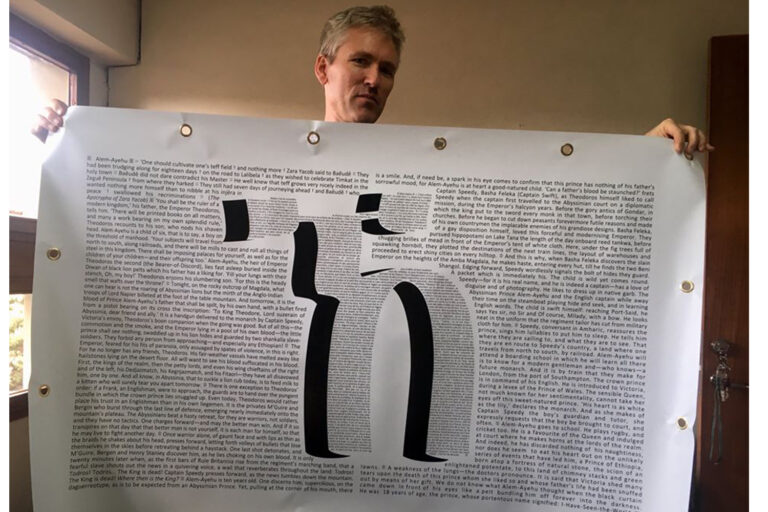
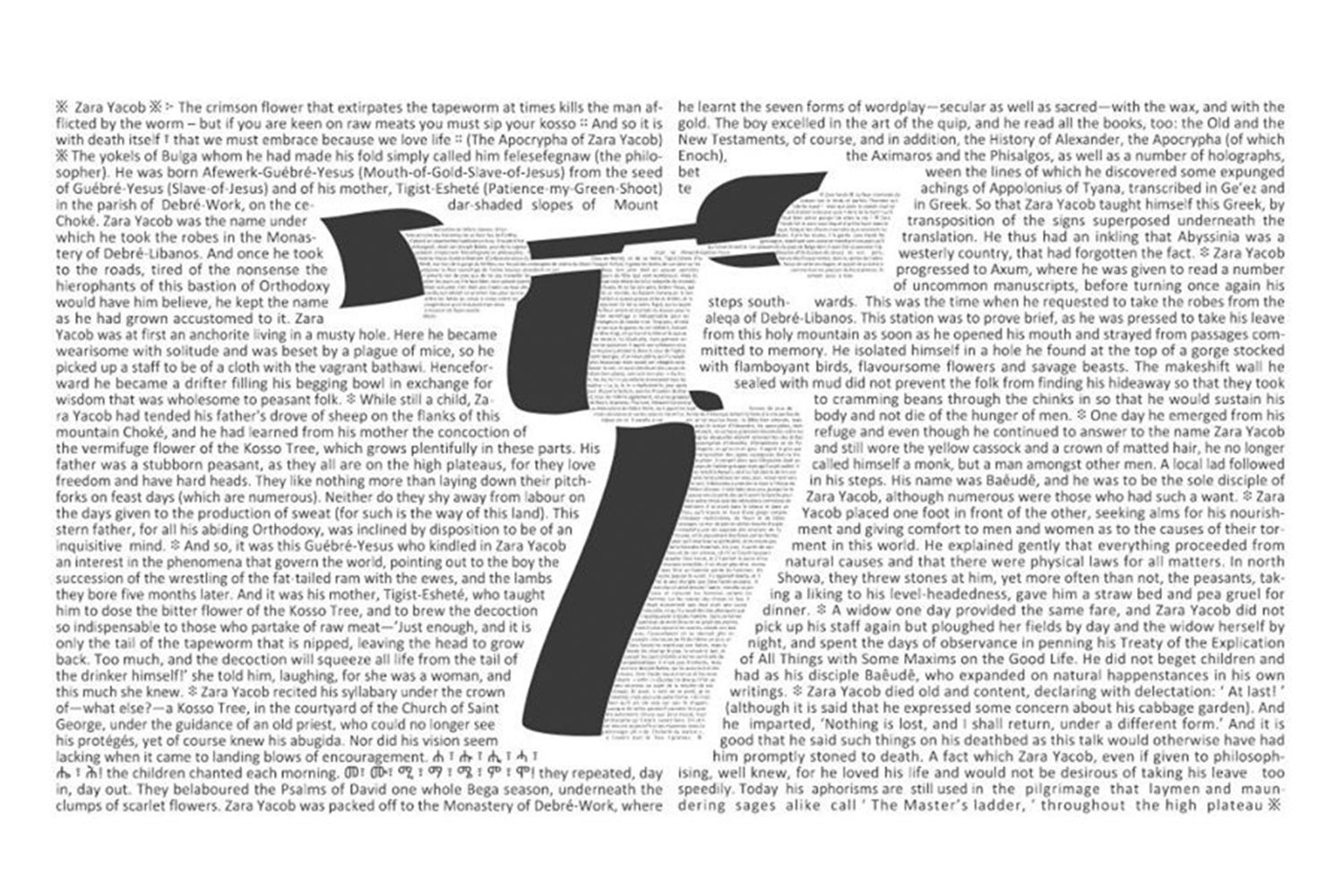
An outdoor exhibition by Yves-Marie Stranger at the Alliance Ethio- Francis, the Abyssian Syllabary exhibition spells out the history of Ethiopia through a series of 33 biographical vignettes of emblematic Ethiopian lives, with each life corresponding to one of the main 33 symbols of the Abyssinian Syllabary.
The exhibition was inaugurated on February 28, 2020 with the support of the French Embassy.
The exhibition will be open for visitors with free entrance for the coming one month up to March 28, 2020. The opening was followed by a discussion with Yves-Marie. Each syllable is mounted on a 1.20 m x 0.90 panel, so that visitors can walk through the exhibition, taking it in visually, or choose to linger, and read one of the stories.
A French-English translator and writer, Yves-Marie Stranger was born in Exeter, Devon, and grew up shepherding goats on the family farm in the French Pyrenees. After living in Ethiopia for fifteen years, he is now based in France. Yves-Marie Stranger is the author of Ces pas qui trop vite s’effacent, The Abyssinian syllabary and Ethiopia through writers’ eyes.

ETHIOPIA RATIFIES THE NEW YORK CONVENTION

0

A favorable arbitral award with limited or no possibility for enforcement may be as good as no award. Enforceability of an award is one of the crucial considerations investors make in their choice of dispute settlement mechanism. It also plays part in their decision to invest in a country. In Ethiopia, it has always been a challenge for investors to determine the seat of the arbitration. Choosing whether or not to designate Ethiopia as the seat of arbitration always came with an opportunity cost. Now that Ethiopia has formally ratified the New York Convention on the Recognition and Enforcement of Foreign Arbitral Award (“NYC”) on February 13, 2020, investors are ideally no longer tasked with concerns of enforcement in Ethiopia of foreign arbitral awards. The ratification of the NYC comes at a time where the country is undertaking major economic and legal reforms including the privatization and liberalizations of mega sectors and enterprises such as the telecom and many others. As a major part of the reform process, Ethiopia has just recently enacted a new investment law whereby sectors that were formerly closed are now open for foreign investment.
Alongside the ratification of NYC, there is a draft local arbitration law under deliberation by the government and anticipated to be adopted soon. It is to be recalled that Ethiopia does not have a separate local arbitration law. We have to wait and see what the draft national arbitration law introduces to facilitate local and foreign arbitrations.
In order to appreciate the significance of the ratification of NYC, it is worth looking into the current experiences of investors choosing arbitration as a means of dispute resolution mechanism. If an investor chooses to designate other countries as the seat of the arbitration, it risks its ability to guarantee the enforcement of a potential award in Ethiopia. This is because the relevant part of the Civil Procedure Code required “reciprocity” as a necessary requirement for any foreign arbitral award to be enforced. This meant that the country in which the foreign award is granted must reciprocally enforce awards made in Ethiopia in order to ensure the enforcement of the award originating in a foreign country. Ethiopian courts interprets the reciprocity requirement to mean the existence of a judicial assistance treaty between the two countries. However, Ethiopia has only one judicial assistance treaty – which is with China – which therefore means that only awards from China are enforceable in Ethiopia. As such, choosing a foreign seat, other than China, meant that an investor risked an enforcement of its foreign award on Ethiopian soil.
An investor who chooses Ethiopia as a seat to counter risk of unenforceability, on the other hand, will also face another challenge. Such an investor risks the finality of a potential award. Ethiopian courts in two prominent arbitration-annulment proceedings (the Consta and Agricom cases against the Ethiopian government) has confirmed that Ethiopian court, particularly the Cassation Bench, has the constitutional power to review and reverse the final arbitral awards on grounds of “fundamental error of law” if the seat designated is Ethiopia. This review power of the Cassation Bench is construed to apply irrespective of a clear finality clause in the arbitration agreement. An investor, after exhausting enormous resource on arbitration, may later find out that its award is worth only as much as the paper it is written on.
The ratification of the NYC means that Ethiopian courts have to automatically recognize and enforce foreign arbitral awards from close to 166 NYC member countries, unless the award is set-aside by the limited grounds listed under the NYC. The requirement for a judicial assistance treaty is now surpassed and foreign arbitral awards are protected from judicial interference by the Cassation Bench.
While awards with the seat of arbitration out of Ethiopia have “foreign award” status without ambiguity, it is not clear if some awards made in Ethiopia can also be considered as foreign arbitral awards on account of several factors. In some jurisdictions, awards having one or more foreign element (including the parties being from different countries) are considered as foreign awards. Ethiopia does not yet have enough judicial precedent, but from the Consta and Agricom cases, it seems that foreign awards are those rendered out-side of Ethiopia (where the seat is outside of Ethiopia).
The NYC ratification proclamation made a reservation that the convention will apply to arbitration agreements concluded after the date of its accession to the NYC, meaning that there is no retrospective application of the convention to agreements signed before Ethiopia’s accession. Further, Ethiopia will apply the NYC on arbitral awards made only in the territory of another contracting state to the NYC.
It is indeed a great leap for Ethiopia to ratify the NYC. Many agree that it is long overdue. Among other factors, the ratification will boost investors’ confidence in investing in a country that recognizes and enforces a foreign arbitral award. Investors do have an interest in a neutral and independent forum with no risk of national bias or political pressure to resolve potential disputes. Allowing parties to agree on a neutral playing field and enforcing the outcome of their contention promotes business and investment. It also makes courts more efficient by avoiding unnecessary diversion of judicial resource.

The writer can be reached at info@aaclo.com

Adwoa and Art

“In the decades following the Adwa victory, Ethiopia was an object of interest among the black literatri who drew on its antiquated history…inspiring poems…” Prof. Kinfe Abraham

As we celebrate the Victory of Adwa and all it means to Ethiopians, Africans and all Black People of the World, I’ve been engaging in conversations as to what imagery and message best represents the glorious, Sunday 2 March 1896. On that fateful day, Emperor Menelik II with his strategist wife, Empress Taitu, flanked by loyal and patriotic fighters, with women doing their part; forces were marshaled nation wide to thwart the efforts of Italian invaders seeking to conquer and colonize the ancient empire. So what does that mean for artists if anything? Discussions range from traditionalist artists expressing the importance of familiar (some may say cliché) imagery including horses, shields and white robed jegenas baring flags. On the other hand more ‘cerebral’ artists say it is what we are living now because of that victory that shaped our today, that is equally important to document. I say yes to both with leaning towards the latter.
Ask and you shall receive is the old saying. On exhibition at Addis Abeba Museum (AAM), located behind Meskel Square is a group art exhibition commemorating that proud day. Mixed media, paintings and all forms of expression can be viewed, reminding us while reassuring Ethiopians of the trials and triumphs that are the very fiber of the resilient Ethiopian nation and identity. Birtukan Dejene, one of the prominent female artists featured in the exhibition says, “This show is important for all to see. It is our story and our pride.” Her painting entitled “The Leader” depicts an upright Emperor Menelik on horseback surrounded by soldiers with the imperial flag flying high, and priests carrying the tabot from St. Giorgis towards the frontline. Her classic painting style creates a graceful and light atmosphere, with a bright blue sky, representing what is to come. Birtukan depicts it all in the “The Leader.”
Addis Fine Art (AFA) Gallery, known for its international approach for successful exhibitions, presents Adiskidan Ambaye, a female phenomenon. Her “abstract sculptures are nearly preceded by gestural two-dimensional sketches, which delineate the foundations for her three dimensional compositions” which Adiskidan describes as a process of sculpting “from inside out.” The AFA press release goes on to say, “These cyclical markings also conjure images of the naturally occurring concentric circles found in trees, signifying age, and life and death as they are only visible once the tree has been cut down…the sculptures as visualized emotions and life stories.” I did get a sneak peak thanks to AFA owner/curator, Mesai Heileleul. Trust me, this is another must see and buy show.
These two shows are on opposite sides of the art spectrum yet to me in the context of the Victory of Adwa, they both speak volumes. On one hand with the AAM group show puts us in the place and time depicting the circumstance and leading characters that sacrificed life and limb to preserve sovereignty. On the other hand, “Liberty” the title of the AFA solo exhibition for Adiskidan, we see the journey, we see the pain, contortions, a painful process that emerges into an incredible work of art that exudes a fresh and free spirit filled with hope and aspirations. Both narratives are the result of Adwa. If not for the victory, chances are Ethiopians kwonkwa would be Italian. And as much as pizza and pasta are loved here, enjera may not be the national bread. Oh my, perish the thought of the “could have beens”. What we have instead is indeed a proud moment in tine that impacted and even propelled the Pan African Movement. Hope was provided for Black people in bondage, particularly on the continent.
rofessor Kinfe Abraham writes, in Adowa: Black Political and Cultural History From 1796 to 2007, “In the decades following the Adwa victory, Ethiopia was an object of interest among the black literatri who drew on its antiquated history.” He goes on to share a poem as a manifestation of how “black attitudes changed from docility to gallantry as the result of black achievements such as those of Adwa…” I close as I share with you, wishing you a Happy Victory Day and may we fight the good fight every day towards a greater love and respect for humanity, the one thing we all have in common.

“Once they feared the white man, now they despise him. Our judgment stands written in their eyes…Once they were filled with terror at our power…Today, when they are themselves a power, their mysterious soul – which we shall never understand – rises up and looks down upon the whites as on a thing of yesterday.”

Dr. Desta Meghoo is a Jamaican born
Creative Consultant, Curator and cultural promoter based in Ethiopia since 2005. She also serves as Liaison to the AU for the Ghana based, Diaspora African Forum.